The $400 Acrylic Case Problem (And Why Most Streetwear Rooms Fall Apart)
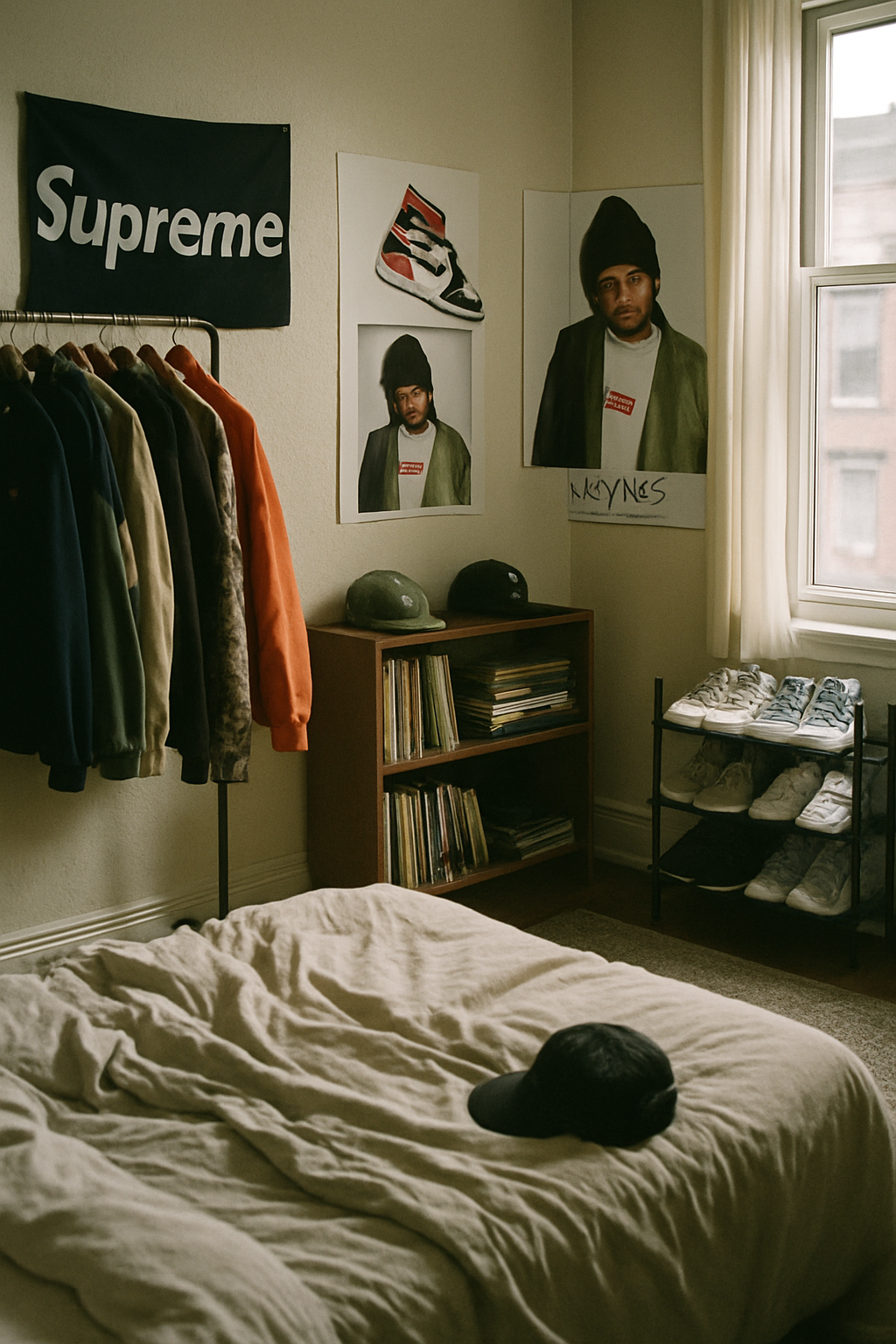
The $400 acrylic sneaker display case that every streetwear room guide recommends will destroy your shoes if it sits near a west-facing window. Direct sunlight degrades EVA foam in as little as six months. A reader sent me a photo of what happened to her Jordan 1s — yellowed midsoles, the whole thing. The case looked incredible. The shoes were done.
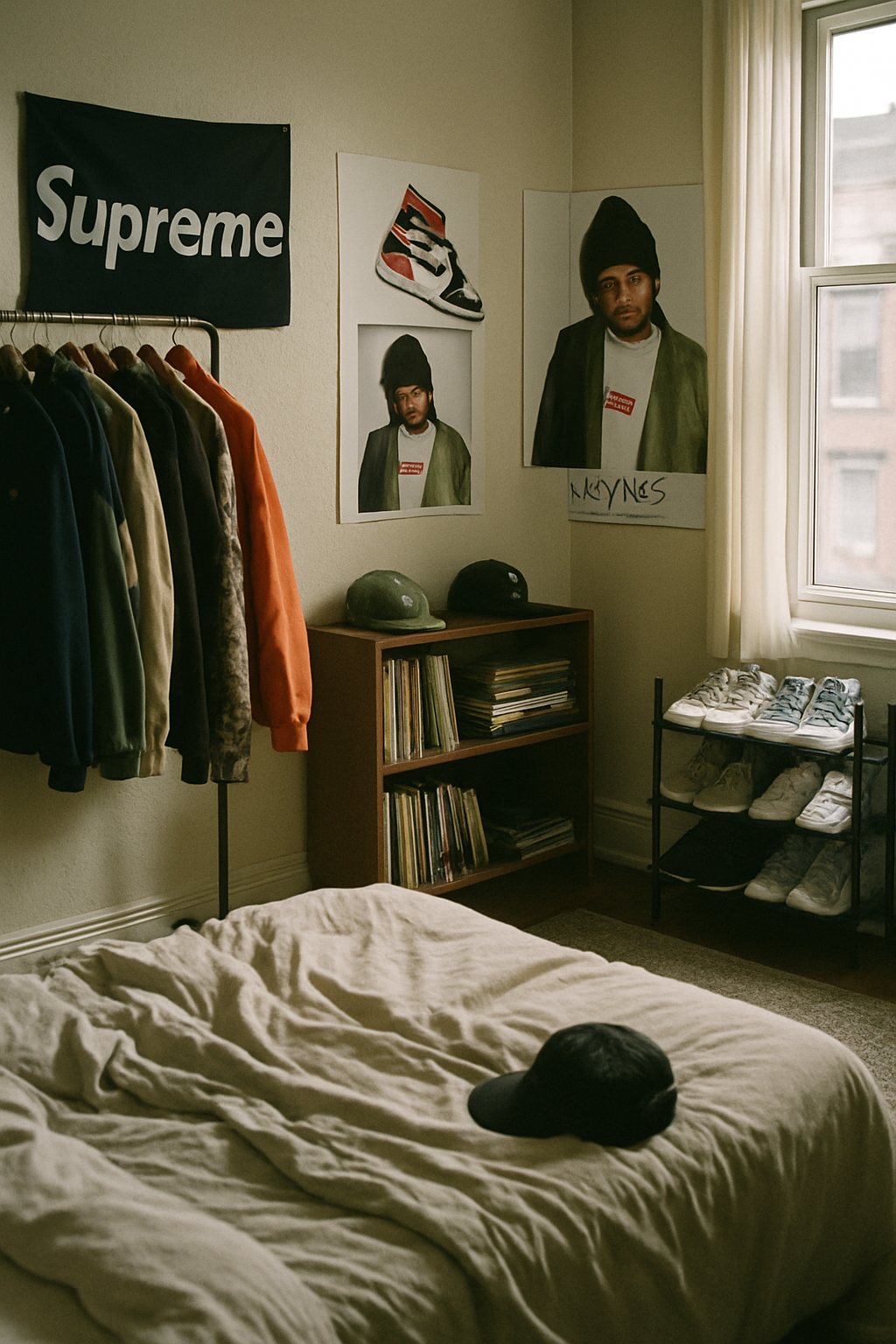
Most streetwear room guides start with the aesthetic and work backward, if they work backward at all. Neon signs. Floating shelves packed wall to wall. A Supreme box logo somewhere. What they don’t tell you is that those YouTube room tours are staged. The person filming has spent three hours arranging things for the camera and then immediately moved everything back. That’s not a room. That’s a set.
Real talk: studies show people wear only about 20% of their wardrobe regularly. The average streetwear collector owns twelve or more hoodies. A standard bedroom closet rod gives you roughly 36 inches of hanging space. Do that math before you buy a single shelf, because copying someone else’s room tour is the fastest way to build a room that works for them and nobody else, including you.
Visually impressive does not mean well-designed. Six months in, the “impressive” room is buried under new drops, seasonal pieces shoved anywhere they’ll fit, and a general feeling that none of it is actually accessible. That’s not a collection. That’s accumulation with good lighting.
Audit First. Seriously, Before You Buy Anything.
Block off two hours. That’s the minimum for a real wardrobe audit. Not a quick pass, an actual count. Pull everything out. Make three piles: worn in the last year at least three times, worn once or twice, never touched. Keep the first pile without question. Everything else gets harder and more honest.
Displaying 80 pairs of sneakers you don’t wear is hoarding with better lighting. I know that’s a rough thing to say, but someone has to.
A collection is defined by what you actually reach for, not by the number of units you can fit on a shelf. The reason I’m hammering this before we talk about storage at all is that the single most common mistake is buying display solutions before knowing what you actually own. You end up with mismatched storage, stuff that doesn’t fit right, and you’re buying twice — I’ve done exactly that with shelving in my own house, thought I knew what I needed, measured wrong, dragged it home anyway. A standard IKEA KALLAX unit (the 58x58cm version) holds eight sneaker boxes. That’s a real number. If you own 40 pairs, you need to know that before you drag a flatpack home.
The edit hurts. Do it anyway.
Sneaker Storage That Won’t Ruin What You Paid For
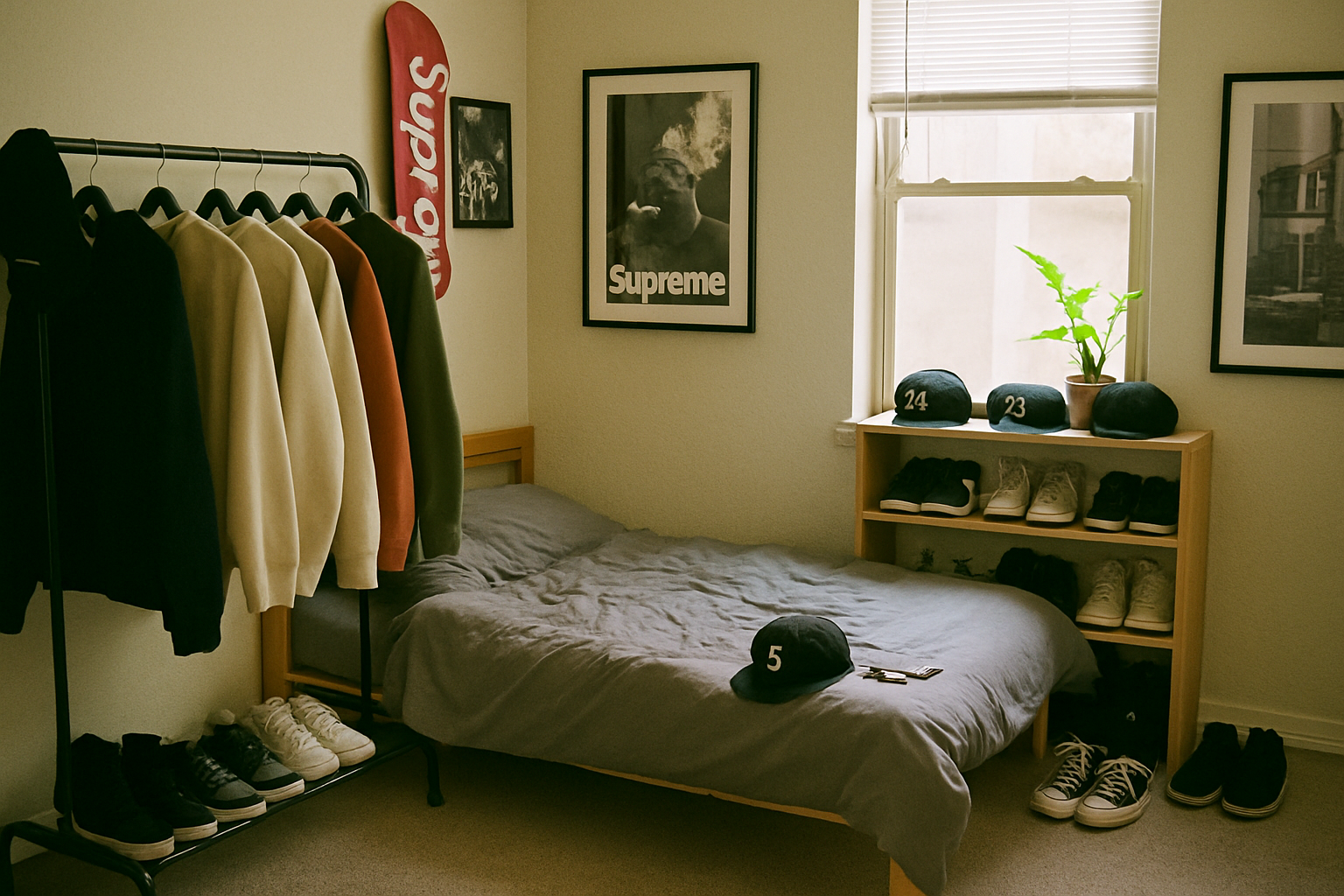
Open floating shelves look incredible in photos. They are genuinely bad for sneakers. Dust settles. Light hits. Every time you pull a pair and put it back, you’re handling adjacent shoes. That damage adds up faster than you’d think.
The airtight acrylic case isn’t automatically better, either. Without silica packs inside, you’re sealing humidity in with the shoe, and that accelerates midsole breakdown. Crep Protect silica packs run about $8 for a 10-pack. That’s not optional, that’s part of the storage cost. And those cases still need to stay away from direct sun, because UV exposure accelerates sole yellowing regardless of whether the case is open or closed.
My practical recommendation for most people: drop-front sneaker boxes. Brands like Kicks King or Snkr Dunk make them for $3 to $6 per unit. They’re stackable, you can see the shoe, and they actually protect from dust and light if you’re not putting them in a sun-blasted corner.
Ideal storage humidity is 40 to 60 percent relative humidity. If you live somewhere humid, that means a small dehumidifier in the room, not just a silica pack. Keep original boxes for anything you’re storing long-term and not displaying. Boring advice. It works.
If you want display pieces, limit them. Pick your five or six most visually interesting pairs and display those. Protect the rest.
Lighting Does More Work Than Any Piece of Decor
RGB LED strips are the most overused element in streetwear room design, and they’re also the first thing that dates a room to a specific moment. Four years from now those pink and purple gradients are going to read the same way a lava lamp reads now. Not as style. As a time stamp.
Here’s what lighting actually needs to do in a room you dress in: it needs to let you see colors accurately. A 2700K bulb produces warm light that will make your navy look black and your olive look brown. For outfit checks, you want 4000 to 5000K — closer to natural daylight, which I learned the hard way after painting my hallway a color that looked completely different under the warm builder-grade bulbs than it did on the paint sample. Put that temperature bulb wherever you’re actually checking your fit, near a full-length mirror, ideally with the light source in front of you, not behind. The functional standard is a mirror with front-facing light at about 60 inches height. That’s where your face and torso are.
The other mistake I see constantly is backlighting sneaker shelves. It looks dramatic in photos. It makes color-matching an outfit nearly impossible in real use. If you want to add accent lighting to a shelf, put it above the shelf angled down, not behind. IKEA SILVERGLANS LED strip is about $20 for 2 meters, it’s clean and neutral, and it draws roughly 14W per meter. Easy to run off a standard outlet without doing anything weird with your wiring.
Warm ambient light for the room. Neutral-to-cool task light where you’re getting dressed. That division does more for the room than any color-changing strip ever will.
Hanging, Folding, and the Hoodie Problem
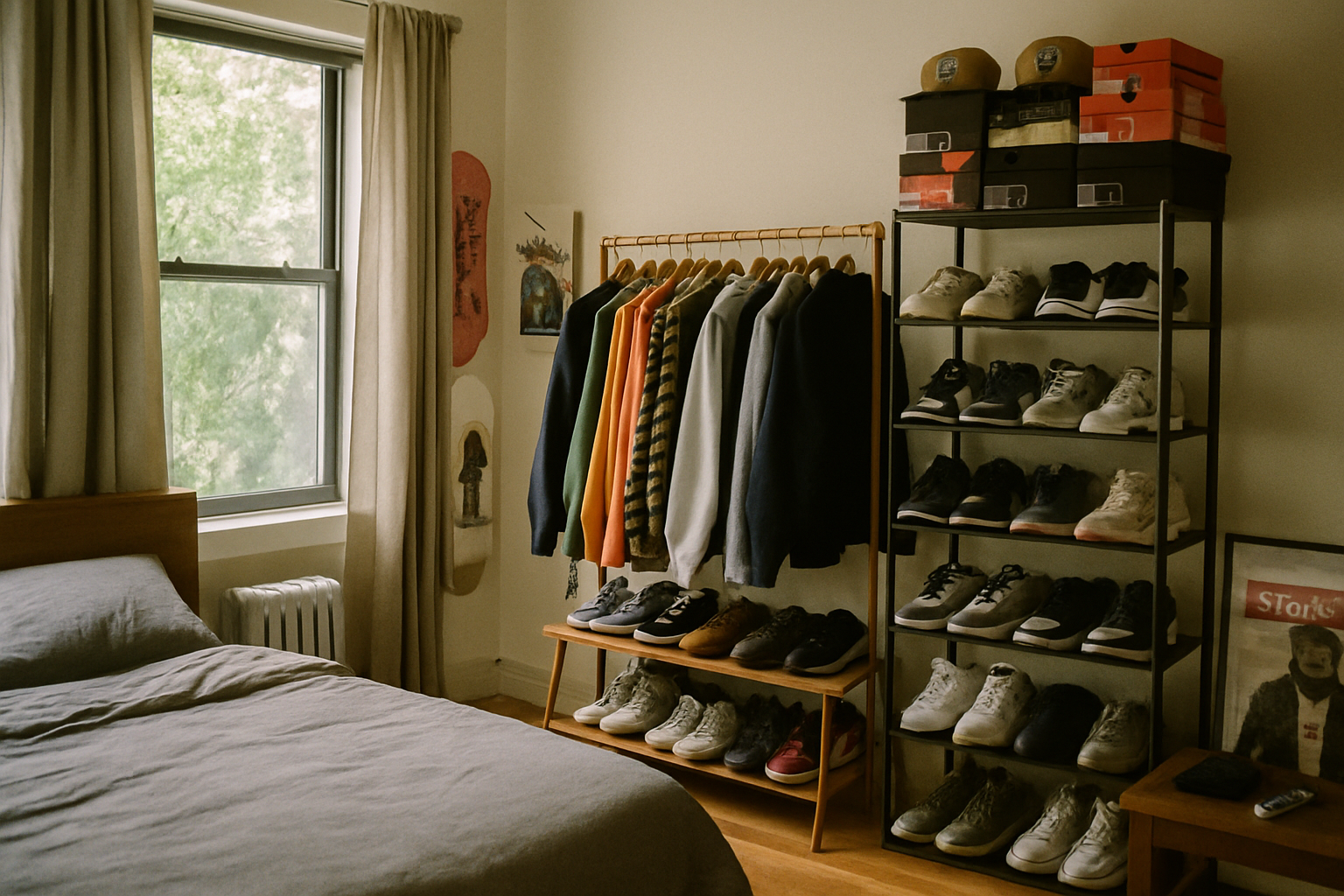
The hoodie problem is real and specific: hoodies hung on standard wire hangers lose their shape within three months. The shoulders dimple, the fabric stretches unevenly, and eventually the whole thing just looks worn out while it’s hanging. Use wide-shoulder velvet hangers. Or fold them.
Honestly, folding is underrated. The ranger roll method keeps hoodies compact and unwrinkled, and stacked on an open shelf they’re actually easier to grab than something crushed on a rod. If you do want to keep hoodies on a rod, that’s fine. Just not by the hood. Hanging a hoodie by the hood stretches the neckline permanently within weeks. Every single time.
For graphic tees: KonMari folding, face-up in shallow drawers, is genuinely the most practical system for streetwear. Not because it’s trendy, but because you can see every shirt without digging. Shelving for folded pieces should be no deeper than 14 inches. Deeper than that and you’re constantly pulling everything forward to find what’s in back.
If your closet rod space is the bottleneck, a double hanging rod setup (a lower rod added below the existing one) can roughly double your usable space for under $30. Not glamorous. It works.
The top rod handles longer pieces, the bottom rod handles jackets, flannel, anything that hangs short. Most split-level bedrooms from the late ’70s have shallow closets — mine is 22 inches deep and I’ve had my contractor look at it twice, and both times he just shrugged. This is how you deal with it without a renovation.
Walls That Aren’t Just Filler
A graffiti-style mural is the most expensive way to make a room look like a skate shop from 2012. I know murals photograph well. I also know they cost anywhere from several hundred to several thousand dollars depending on the artist, they’re permanent, and in three years you’ll want something different and the wall will need to be fully repainted.
One strong piece does more than a gallery wall of eight things.
A single large-format print, at least 24×36 inches, reads as intentional. Six small frames at random heights read as accumulated. There’s a difference between a wall that has thought behind it and a wall that just has stuff on it. Limit yourself to three focal points per wall, maximum. A dominant print, maybe one smaller piece, and some negative space. The negative space isn’t empty. It’s breathing room that makes the things you chose actually land.
Command strips rated for 16 lbs handle most framed prints without wall damage, which matters if you rent or if you’re the type to change things out. Both are fine.
The wall’s job is to back the collection, not compete with it. If your sneakers and your clothing are the thing you want people to look at, the walls should make that easier.
Building a Room That Can Actually Grow
Committing to a fixed, maximalist layout when you’re 22 is a mistake. Your taste will change. Your collection will change. In three years you might be deep into something totally different, and if your whole room is built around one specific aesthetic era — early Supreme, techwear, gorpcore, whatever — you’ll either live in a room that feels like a museum to a previous version of yourself, or you’ll start over. Starting over is expensive.
Build modular from the beginning. The IKEA BOAXEL wall-mounted rail system starts at $55 and is fully expandable. You add to it rather than replace it. Plan for 20% more storage capacity than you currently need. That’s not wasted space, that’s room for the collection to grow without forcing a re-layout.
Keep walls neutral. Warm whites like Benjamin Moore OC-17 White Dove or a similar warm gray age better than any accent color when your collection changes over time. I’ve repainted rooms in my house chasing trends and I always end up back somewhere close to where I started — the trim stays, the collection changes, the neutral wall just keeps working.
The collection is the color. The room is the frame. A loud frame fights with whatever you put in it. The flexibility isn’t boring. It’s how you keep the room working for you instead of working against you every time your taste moves somewhere new. Which it will. That’s not a flaw. That’s just how this goes.