The $40 Upgrade That Made My Ceiling Look Worse
Three years ago, the painter I hired for my kitchen talked me into a satin ceiling. Forty dollars extra, he said. More durable, he said. Easy to clean. I said fine without thinking — didn’t even look up from writing the check — and I have been annoyed about it every single time the afternoon light rakes across that ceiling and shows every lap mark and touch-up patch in high relief. The flat ceiling in my dining room, painted the same week by the same guy, still looks perfect. Same house. Same age. Different sheen.
That experience sent me down a rabbit hole I did not expect to end in chemistry and gloss meters. Here’s what I found out.
What Sheen Actually Does to a Ceiling
On a wall, light hits the surface somewhere between 45 and 90 degrees. Roller marks and texture variations get diffused. On a ceiling, you’re dealing with light angles under 30 degrees — especially from recessed cans — and that raking light is brutal. Any sheen you add to a ceiling doesn’t decorate it. It interrogates it.
There’s a real measurement for this. A 60-degree gloss meter puts flat paint in the 15–20 range. Satin reads roughly 35–45 on the same scale. That difference is dramatic on a horizontal surface because every imperfection becomes a tiny mirror. The seam between drywall sheets that was invisible under flat? Under satin, with a recessed light at an angle, it reads like a fault line.
Most guides treat ceiling paint sheen the same way they treat wall paint sheen. They shouldn’t. A wall can absorb some forgiveness from its own verticality. A ceiling can’t. Roller marks that would disappear on a vertical surface show up sharp and permanent above your head. The default should always be the flattest finish the room can tolerate, and “what the room can tolerate” is a specific functional question, not a matter of taste.
The Case for Flat: It’s Not the Budget Option
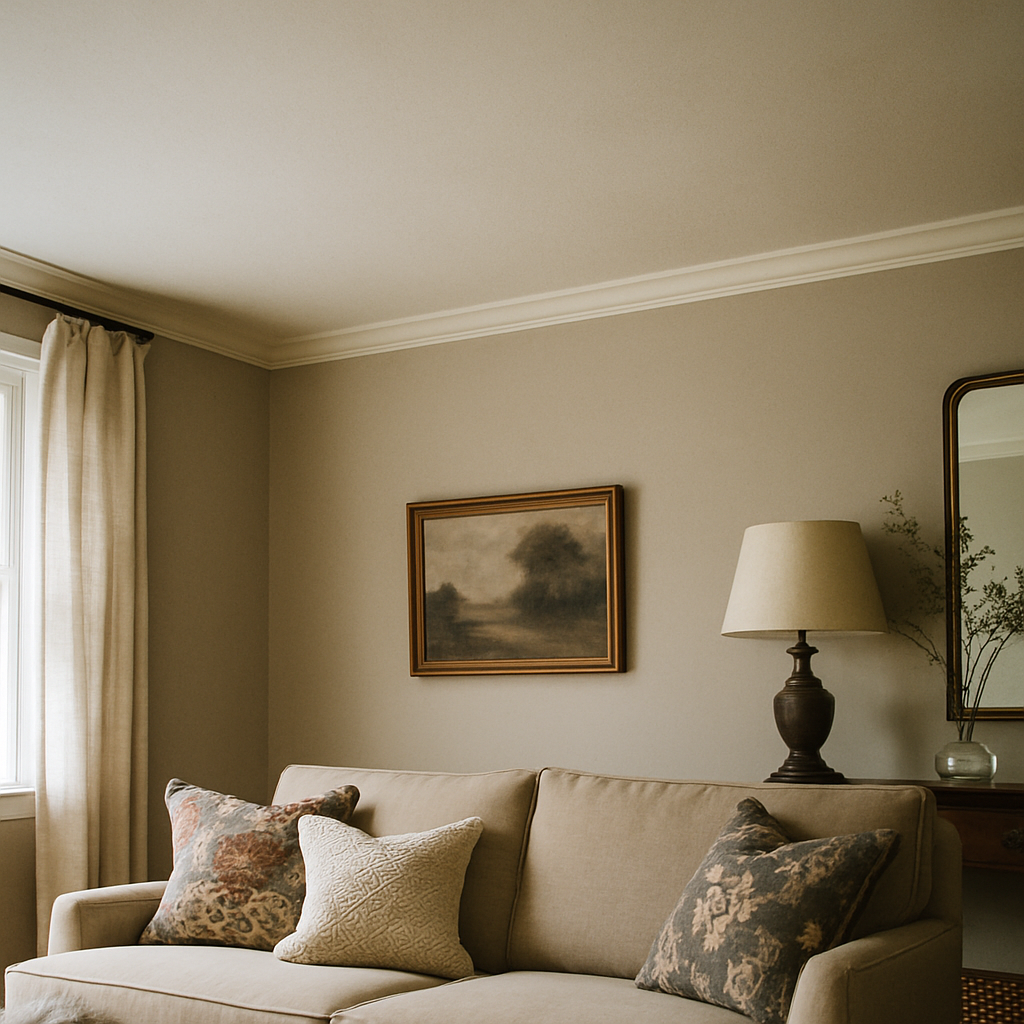
Flat paint runs 0–10 on a 0–100 gloss scale. That near-zero reflectivity means it absorbs light instead of bouncing it around, which makes imperfections disappear instead of announce themselves. On a textured ceiling especially, the visual difference between flat and anything shinier is not subtle.
Sherwin-Williams Ceiling Flat runs about $45–$55 per gallon and covers roughly 400 square feet per gallon on smooth drywall in two coats. For a standard 12×16 kitchen ceiling, you’re looking at one gallon. That math matters when I get to pricing later.
I’ve repainted my living room ceiling twice. First time I used a standard wall paint in eggshell because I had leftover — do not do this. Eggshell is genuinely the worst of both worlds on a ceiling: no hiding power, still enough sheen to show every flaw. Second time I used a proper ceiling flat, and I stood on my ladder in the afternoon light basically daring it to show me something wrong. Nothing. Even over my popcorn texture removal patches, which are not pretty up close, the flat finish made them disappear at normal viewing distance.
The misconception I keep hearing is that flat is what you use on old, damaged ceilings to hide the damage. That’s backwards. Even a perfect new drywall ceiling benefits from flat because any sheen will telegraph the seams under raking light. Flat isn’t remedial. It’s correct.
Satin’s Actual Advantage: It’s Narrower Than You Think
Satin does have a real use case. It’s just not “the bathroom” or “the kitchen.” It’s about two feet of ceiling directly above a steam source.
A ten-minute shower can push localized ceiling humidity to 85–95%. That’s not the whole bathroom — that’s the zone directly above the showerhead. Per paint manufacturer technical data, satin resists moisture penetration roughly twice as long as flat before blistering in direct steam zones. That’s a real number that matters in a real place.
But what gets lost in the “use satin in bathrooms” shorthand: if your bathroom has an exhaust fan rated at least 50 CFM (the minimum is 1 CFM per square foot of floor space), the steam clears before it has a chance to condense and sit on the ceiling. The whole premise of satin’s moisture advantage dissolves. My upstairs bathroom is 48 square feet. I put in a 70 CFM fan when I renovated it six years ago and used flat ceiling paint. It looks the same today as the day I painted it.
If you’re going to use satin in a bathroom, use it in the roughly two-foot radius above the shower. Not the whole ceiling. Benjamin Moore Aura Bath & Spa in satin runs $75–$85 per gallon, which is a lot of money to spend on a ceiling that’s going to look shinier and older faster everywhere it doesn’t need the protection. Paint the zone that takes the steam hit. Leave the rest flat.
Why Satin Ceilings Often Look Worse After Two Years
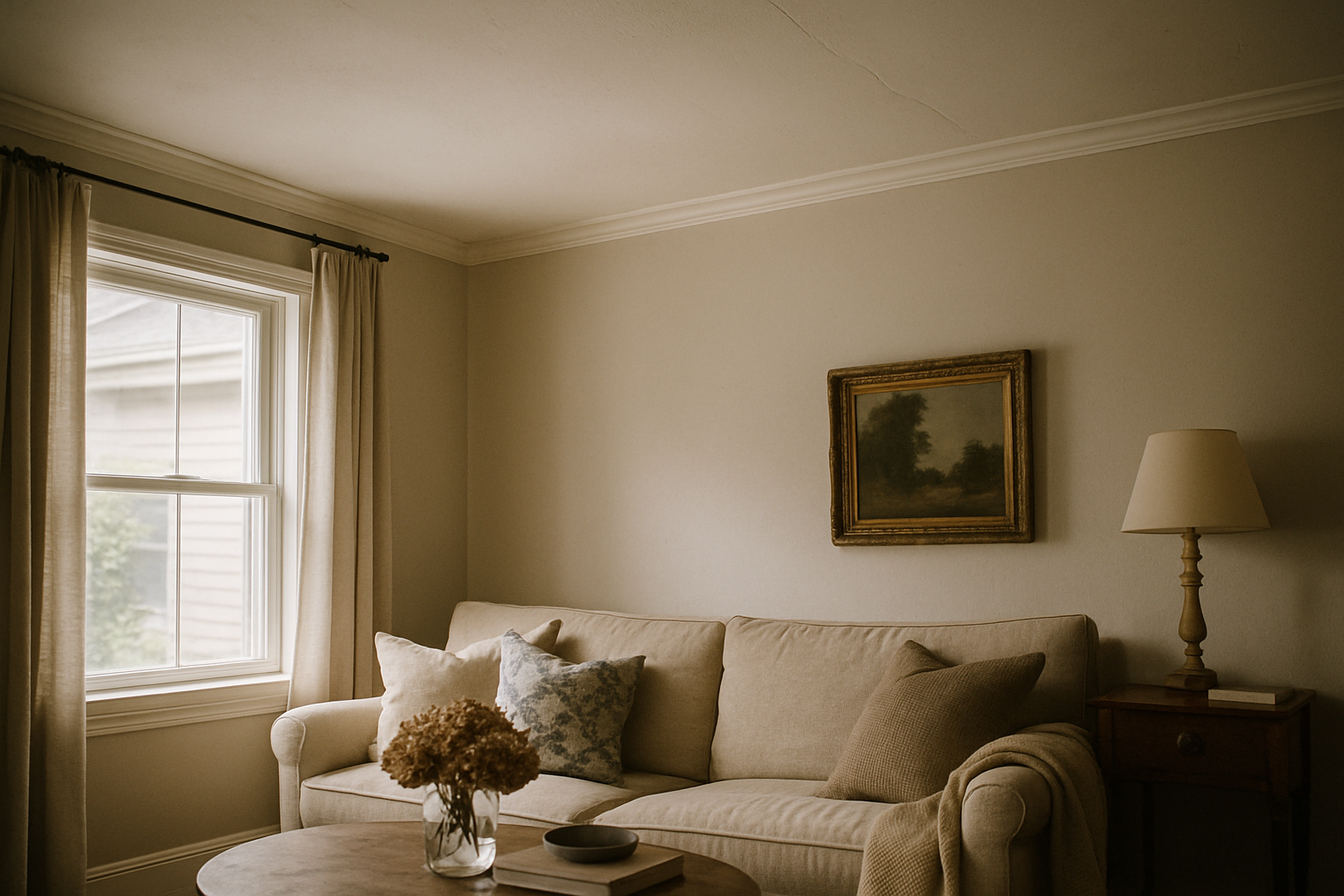
This is the part the upgrade pitch never covers.
Satin is sold as more durable. And in a narrow technical sense, on a surface that gets scrubbed regularly, maybe. But you don’t scrub your ceiling. Nobody scrubs their ceiling. The washability benefit that gets cited constantly for satin is essentially irrelevant for overhead surfaces, and meanwhile the actual downsides show up fast.
Touch-up patches on a satin ceiling are visible from 8–10 feet away under recessed lighting. On a flat ceiling, the same touch-up blends from 3–4 feet. I found this out in my kitchen when my contractor bumped the ceiling moving a refrigerator and left a scrape. I touched it up with the same satin paint, same roller, waited two days for full cure, and I can still see exactly where it is from across the room. The sheen doesn’t match. It never fully matches on touch-ups.
And in kitchens specifically, satin ages faster. Cooking oils and heat accelerate yellowing, and satin’s higher resin content means it yellows roughly 15–20% faster than flat in that environment per accelerated aging tests. So the ceiling you paid extra to protect is, in the room where you’d theoretically most want protection, aging more visibly than flat would have. That’s the durability paradox nobody selling you the upgrade mentions.
Room-by-Room Verdict
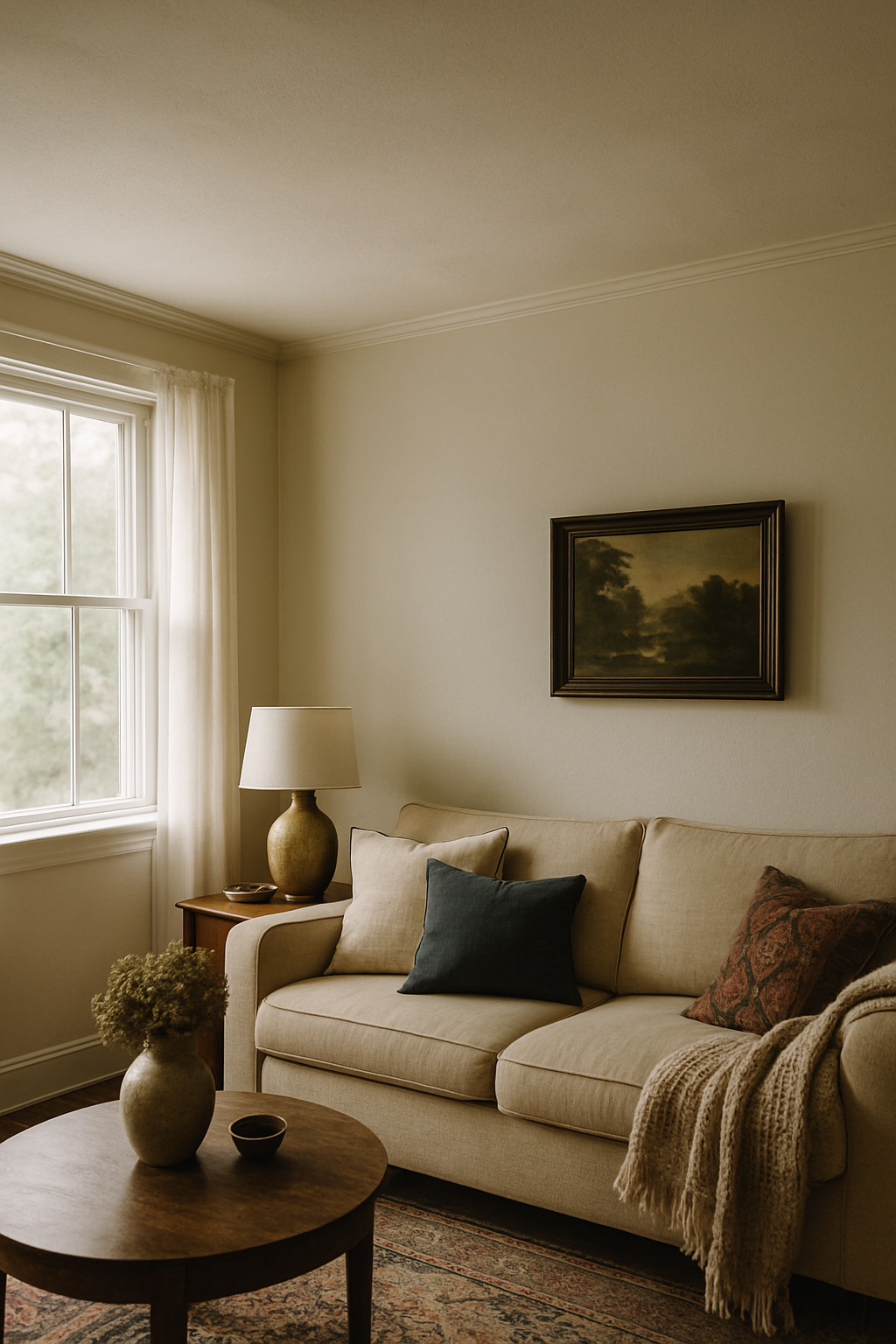
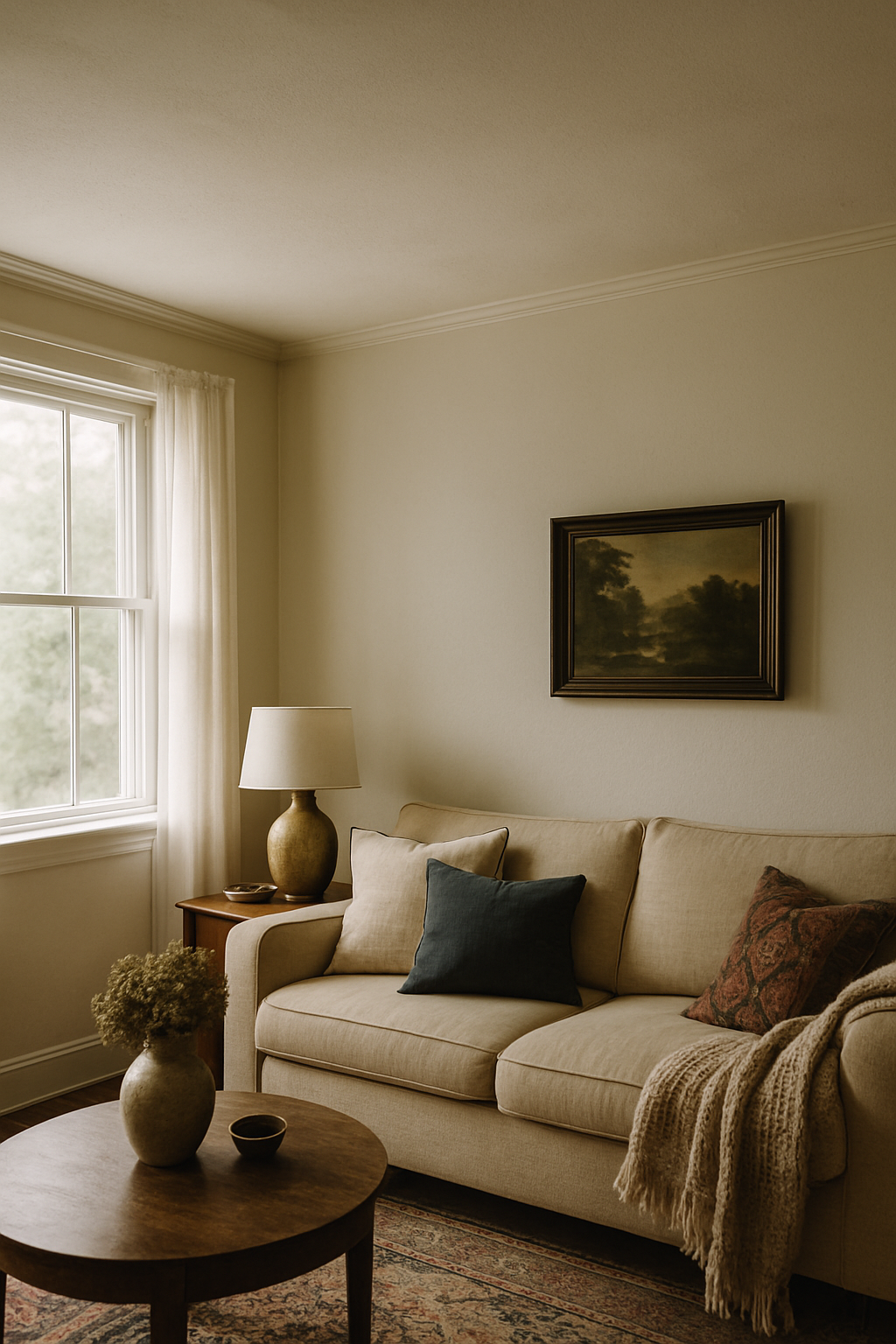
Living room and bedroom: flat, full stop. No steam, no scrubbing, no argument. Any sheen is a liability with no offsetting benefit.
Kitchen ceiling more than 3 feet from the range: flat. Kitchen ceiling within 3 feet of an unvented range: satin is justified because you’ve got genuine grease-laden steam hitting that surface directly. But 3 feet is the threshold. Don’t paint the whole ceiling satin because your range is unvented.
Bathroom with an exhaust fan rated 50 CFM or higher: flat is completely acceptable, and I’d argue it looks better. Bathroom without an exhaust fan: use satin in the shower zone at minimum, and honestly fix the ventilation problem first. Satin is not a substitute for moving air out of the room.
Laundry room: this one gets painted with satin constantly and I think it’s the wrong call. The humidity in a laundry room is cyclical — it spikes during a wash cycle and drops. Satin doesn’t prevent mold. It just cleans easier, which is the wrong solution to the wrong problem. A mold-resistant flat primer with a quality flat topcoat does far more work in a laundry room than satin does. Address the biology, not the surface.
Basement ceiling with known humidity above 65%: mold-resistant flat primer plus a flat topcoat. Not satin. If the humidity is that consistent, you need to solve the moisture source. Satin will still fail in those conditions. It just fails slightly more slowly and costs more while doing it.
Application Method Matters More Than the Finish Level
Something I wish someone had told me before I repainted my dining room ceiling twice: if your ceiling looks bad, the finish is probably not the problem. The application is.
Use a 3/8-inch nap roller on smooth ceilings, 1/2-inch if you’ve got orange peel texture. Roll in one consistent direction and keep a wet edge. Dried lap marks from rolling too slowly or stopping mid-ceiling are responsible for probably 80% of the streaky ceiling complaints I hear from people who then blame their paint choice. Minimum two coats, with at least a 2-hour dry time between coats at 70°F and around 50% humidity. If your house is hotter and drier, the paint skins over fast and you get lap marks. If it’s humid, it stays open too long and you overwork it.
Apply in natural daylight or with a work light held at a low angle. I know this sounds backward — you’d think harsh light would make everything look worse — but catching lap marks before they dry is far better than discovering them the next morning when the room is repainted and you can’t fix anything without starting over. I learned this one the expensive way on my bedroom ceiling, which is north-facing and gets almost no direct sun, so I thought I could skip the work light. I could not.
Switching to satin to hide bad application technique will not work. It will make it worse. Satin amplifies application inconsistency because any variance in thickness has more reflectivity to advertise itself. If your flat ceiling looks streaky, the problem is the roller speed or a dried lap mark. Fix the method, not the product.
How to Make the Final Call Before You Buy
Before you commit to a sheen, answer four things. One: what’s your exhaust fan’s CFM rating? Check the label or look up the model number online. If you don’t have one or it’s under 50 CFM, that changes the bathroom math. Two: how close is the ceiling to a direct steam source? Measure it. Three: what’s the existing texture? Smooth drywall forgives more than orange peel. Four: what kind of light hits it? Diffuse overhead fixtures are kinder than angled recessed cans.
The math on quality paint is worth running before the store upsell happens. Budget $45–$55 per gallon for a quality flat. Quality satin runs $65–$85. A standard kitchen ceiling takes one gallon, so the premium is a fixed $20–$30 — not a compounding expense. But you’re still paying real money for a product that will show its age faster and make touch-ups harder. That’s a bad trade on a single ceiling, and it’s a worse trade if you ever have to repaint.
I keep a few paint samples taped up in the hallway — different sheens, different whites — because that’s the one spot in my house where the light shifts enough through the day to show you what you’re actually buying. If you’re genuinely unsure, roll a sample patch and live with it for 48 hours before you commit to a gallon. The downside of choosing flat in a room that maybe could have used satin is repainting a two-foot section above the shower. The downside of choosing satin “just in case” is a ceiling that looks shiny, laps visibly, and yellows unevenly for the next decade. That’s not a safer hedge. It’s a different set of problems.
Don’t buy satin to be cautious. That’s not what it is.