I have a corner in my living room that used to make me cringe every single time I walked past it. Plain beige curtains from a big-box store, sad and stiff, blocking the light in the least interesting way possible. Then I hung a $22 macrame panel I found at a thrift store, and I literally stood there for ten minutes just watching it move. That’s the thing about hippie curtains — they don’t just cover a window. They completely change how a room feels.
I’ve tried pretty much every style at this point (some worked great, some were disasters, I’ll tell you which), and further down I’ll walk you through macrame, tie-dye, beaded, tapestry, bamboo, fringe, hemp, peace sign, mandala, and patchwork options — with real tips on where they actually work and where they don’t. Stick around for the patchwork section especially. That one surprised me.
Macrame Curtains That Actually Live Up to the Hype
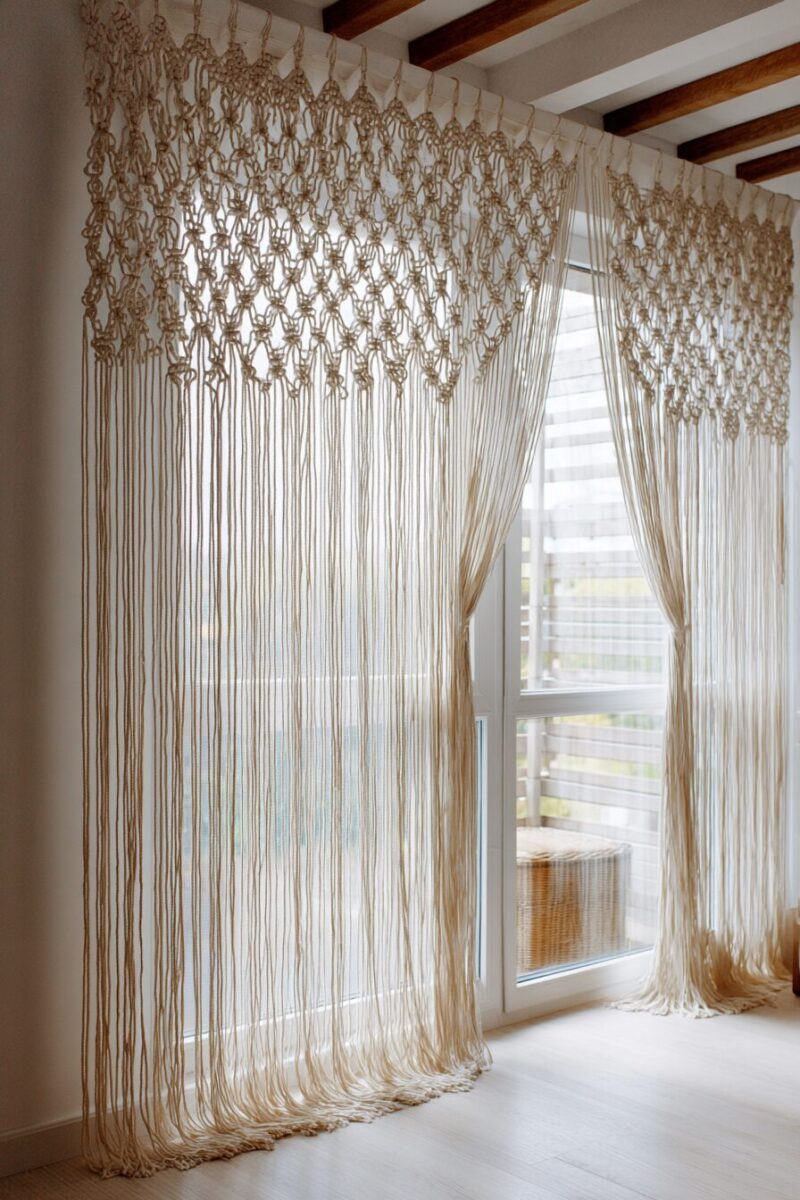
Okay so the first time I tried macrame at a window, I put it in my kitchen facing west. Huge mistake. That harsh 3pm light just blasted straight through the knots with zero softening effect and I basically had a fancy rope hanging in front of a spotlight. Lesson learned: macrame works best on north- or east-facing windows where the light is softer and more diffused. That’s where you get those gorgeous shifting shadow patterns on the wall that look like moving art.
The hand-knotted texture is something photos honestly can’t capture. Natural cotton macrame has this satisfying weight to it, and the way it filters light — not blocking it, just softening it — is genuinely unlike anything a regular fabric panel does. If you find one with a driftwood or thick wooden dowel at the top, that’s the sweet spot for a bohemian bedroom. Mine hangs in my bedroom now and every morning the light comes through those knots in a completely different pattern depending on the clouds. I’m obsessed.
You can find simple geometric designs that stay subtle, or go full statement with patterns featuring cascading fringe, shells, or wooden beads woven into the knots. The beaded versions especially catch light beautifully. I picked up a 36-inch wide cotton panel at a local artisan market for around $45 — but honestly I’ve seen comparable ones at thrift stores for $8. Keep your eyes open.
A few practical things nobody tells you:
- Macrame panels are not privacy curtains. Don’t hang them somewhere you need actual coverage unless you layer them over a simple linen panel behind.
- Dust collects in the knots faster than you’d expect. A light shake outside every couple of weeks keeps them looking fresh. For a real wash, hand wash in the sink with gentle soap and hang dry outside — never put them in a dryer or you’ll end up with a tangled mess (I learned this the expensive way).
- Custom sizing is easy to find on Etsy if your window is an odd width. Search for “custom macrame window panel” and you’ll find makers who’ll size to order for usually $10–20 more than a standard piece.
They also work beautifully framing sliding glass doors as side panels — not covering the door itself, just flanking it. That’s a low-commitment way to test the look before committing to a full window treatment.
Tie-Dye Curtains That Are Better Than You Remember From Summer Camp
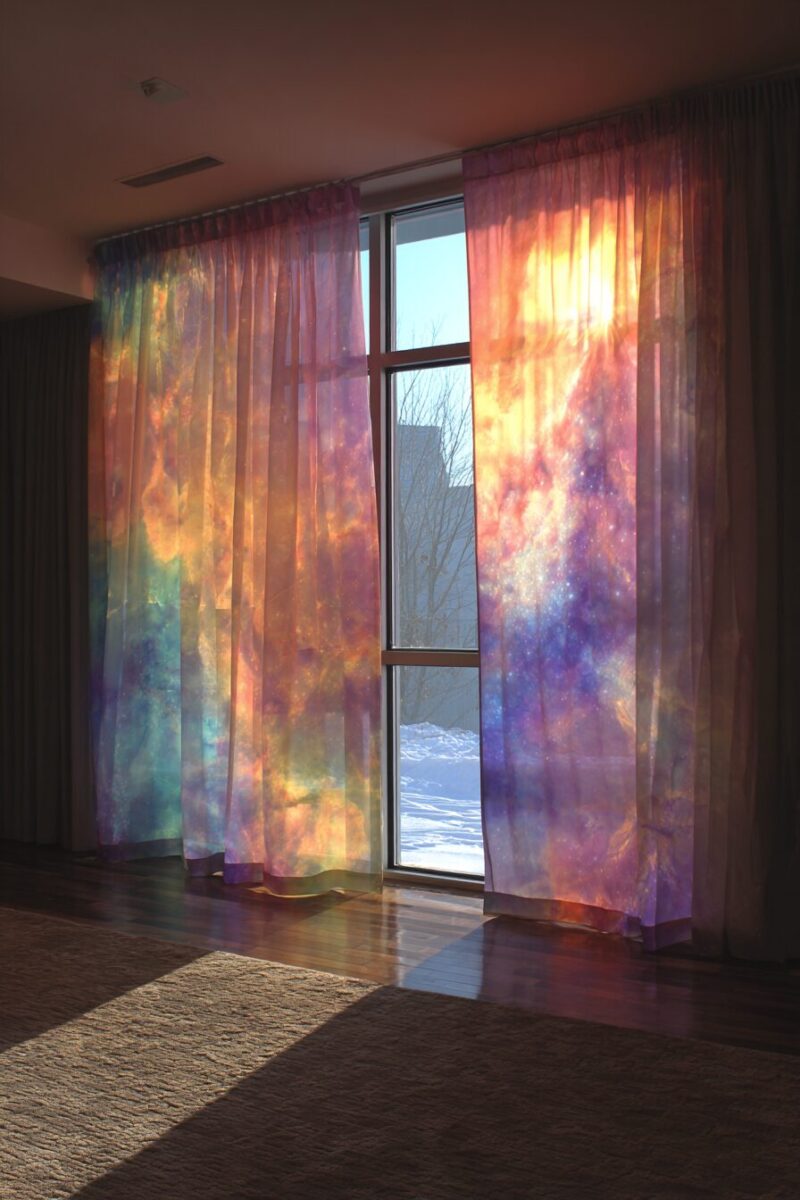
I’ll be honest — when someone first suggested tie-dye curtains I pictured something chaotic and very 13-years-old. I was wrong. The right tie-dye in a window is legitimately stunning, especially when the sun hits it in the morning and throws soft pools of color across the floor.
The key is choosing a colorway that matches your existing room rather than fighting it. I have warm wood floors and terracotta accents, so I went with a rust, dusty rose, and cream spiral pattern — very subtle, very grown-up. The more classic rainbow spiral reads younger and louder, which is perfect for a kid’s room or a space where you want maximum energy. Neither one is wrong. They’re just different moods.
What makes tie-dye curtains genuinely special is the no-two-are-alike thing. Every fold and resist point in the dyeing process creates a unique pattern. You’re not buying a printed copy of a design — you’re buying an actual one-of-a-kind piece. That matters when you’re trying to make a room feel personal rather than catalog-perfect.
Fabric weight is something to think about carefully here. Sheer tie-dye fabric in front of a bright window glows like stained glass — it’s beautiful but offers zero privacy. Heavier cotton gauze gives you color and some privacy without feeling heavy. I have a set of medium-weight cotton tie-dye panels in my bedroom (I found them on Etsy for about $38 for two panels) and they’re perfect — enough coverage that I’m not silhouetted at night, light enough that mornings feel soft and warm.
Care is simple: cold water, gentle detergent, line dry. Don’t put them in a hot dryer or the colors will fade faster. The slight fading that happens over time actually looks great — like a vintage find — as long as it fades evenly. Avoid direct intense sun for long stretches if you want to keep the colors rich longer.
One thing I’d push back on: the idea that tie-dye is only for boho spaces. A single pair of subtle indigo-and-white shibori-style panels in an otherwise minimal room is genuinely chic. It’s all about the colorway.
Beaded Doorway Curtains That Earn Their Reputation
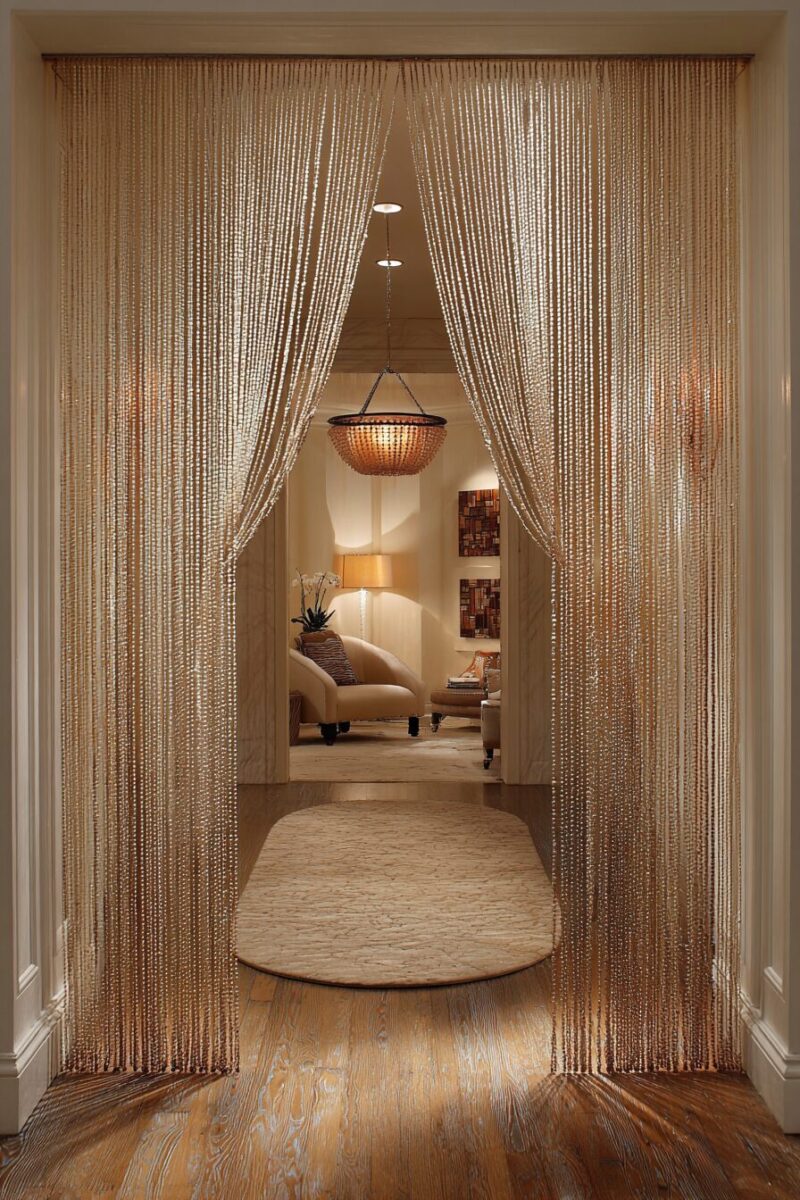
There’s something about walking through a beaded curtain that just feels inherently delightful. Even Biscuit (my dog, who is not exactly a decor enthusiast) stops to sniff mine every single time. The gentle clicking sound as the strands brush together is honestly one of my favorite ambient sounds in the house. It’s subtle. Like a very quiet wind chime made of wood.
I have wooden bead curtains between my living room and the hallway — natural bamboo-toned beads, nothing fancy, about 36 inches wide. They cost me $19 at a home goods store a few years ago and they still look great. The wood beads warm up the space in a way that plastic beads just don’t. If you want maximum warmth and that earthy, natural look, go wood or bamboo beads every time.
Glass beads are a completely different vibe. They create prismatic little light effects when the sun hits them, which is genuinely beautiful — but they’re heavier, louder, and more fragile. I’d use glass beads in a space that doesn’t get a lot of through-traffic. A decorative room divider in a corner reading nook? Yes. A doorway that a dog crashes through at full speed? Hard no.
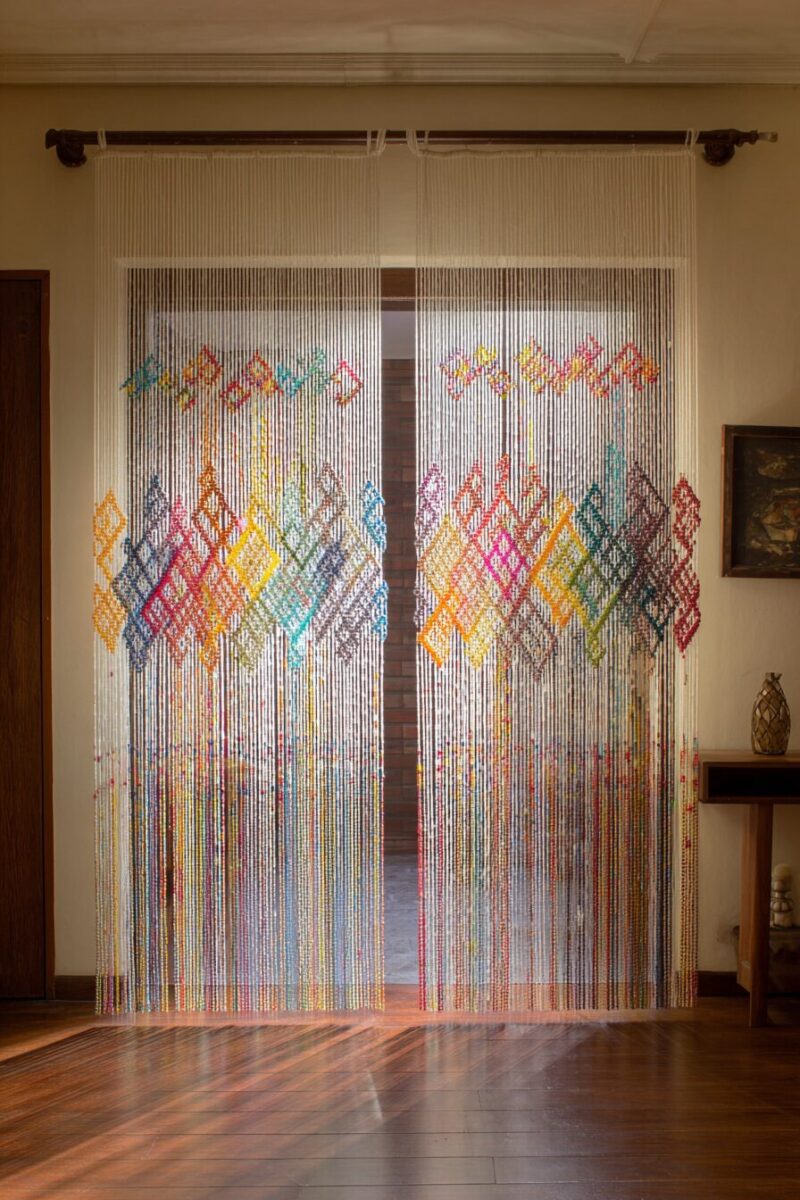
Plastic beads are the most affordable option and come in the widest color range. They’re loud — the clicking is more pronounced — and they look more costume-y up close. That said, if you want a bold pattern like a sunrise, a peace sign, or a lotus flower rendered in colorful beads across a full doorway, plastic is where you’ll find those graphic designs. And honestly, in the right room they’re super fun.
A few things that make beaded curtains better in practice:
- Mount them on a tension rod inside the door frame for a no-damage installation. Most standard beaded curtains fit a tension rod just fine.
- If the strands tangle (they will, sometimes), just work through them with your fingers from the bottom up. Takes two minutes.
- To clean: a damp cloth wiped down individual strands works well. For wooden beads, don’t soak them or they can warp.
- You can absolutely customize length by tying a knot partway up a strand to shorten it, or by adding purchased loose beads to extend strands that are too short for a tall doorway.
They’re also one of the most renter-friendly curtain options out there since most require zero permanent hardware.
Tapestry Curtains That Do Two Jobs at Once
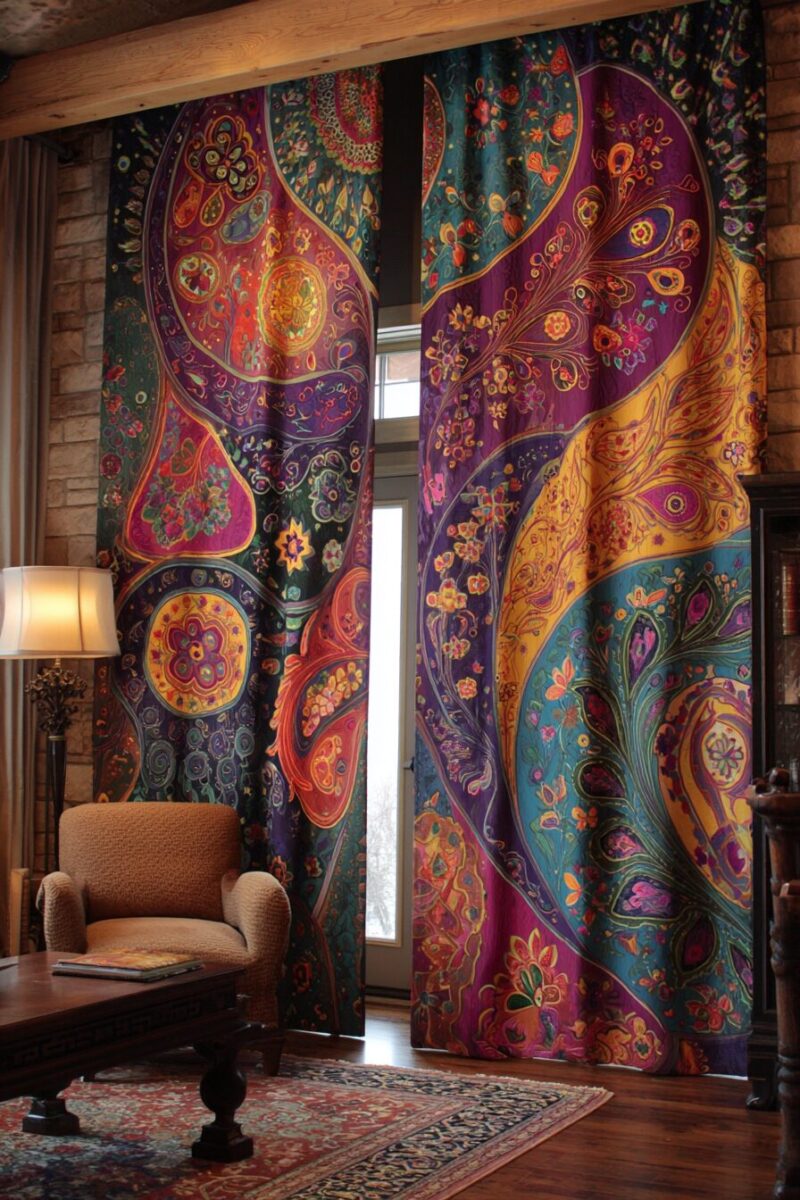
My former roommate had a massive mandala tapestry hanging as a curtain in her bedroom and I honestly coveted it for two years before I finally got my own. There’s something about a tapestry curtain that functions as a window treatment and a piece of wall art simultaneously — and if you’re decorating on a budget, that double-duty thing matters a lot.
Traditional Indian block-print tapestries with deep indigo blues, rich ochre, and burgundy are my personal favorites. They have a weight and a density that provides real light control — not blackout, but close to it through a heavier weave. The colors stay rich even in rooms that get good sun, and the fabric develops this beautiful soft drape over time. I hung a 44×90 inch block-print tapestry in my home office last year, used two clip rings on a simple black rod, and it cost me $27 total including the rod from a discount store. It completely changed the room.
Mandala prints and sacred geometry designs are probably the most popular style right now, and for good reason — the circular patterns draw your eye in a really satisfying way and they work in pretty much any color palette. Earth tones feel grounding. Jewel tones (emerald, sapphire, deep violet) feel rich and dramatic. Soft pinks and creams feel romantic.
Celtic knotwork tapestries are less common but genuinely stunning if you’re going for a more woodland or cottagecore vibe rather than strictly boho.
Hanging options matter more than people think:
- Simple curtain rod with clip rings: easiest, most adjustable, gives a relaxed gathered look.
- Rope through the top hem: hippie-authentic, low cost, works beautifully if the tapestry has a rod pocket or top hem.
- Decorative wooden dowel with twine: gorgeous, especially for tapestries that are decorative rather than functional privacy curtains.
- Tension rod inside the window frame: great for apartments.
Care: hand wash or gentle machine cycle, cold water, lay flat or hang to dry. Most quality tapestries hold their color well for years. I’d avoid anything cheap that smells strongly of chemicals when it arrives — those dyes tend to fade fast.
Bamboo Bead Curtains for Serious Zen Energy
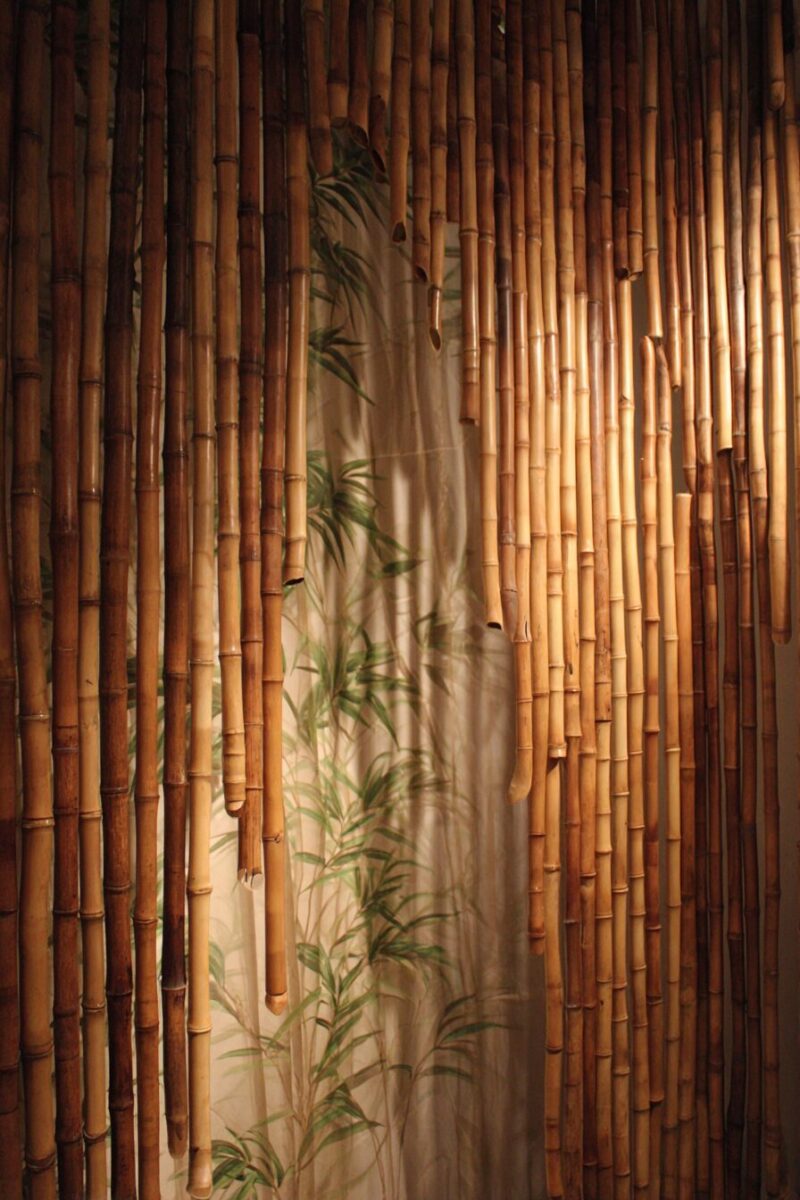
These are different from wooden bead curtains, and the difference is worth understanding. Bamboo curtains are typically made of thin flat bamboo slats or small bamboo tubes strung on cotton or nylon thread — they have more of a woven, slightly opaque quality, somewhere between a curtain and a shade. The sound is softer than round wooden beads. More of a gentle knock than a click.
I have a set in my sunroom (technically an enclosed porch I converted into a reading room) and they’re perfect for that space. They filter the afternoon light beautifully without fully blocking it — the light that comes through has this warm golden quality that feels like being in a Japanese tea house. Very peaceful. My dog Biscuit’s favorite nap spot is directly under those curtains, which I take as a solid endorsement.
Natural bamboo color — that warm golden tan with subtle variation between pieces — works with almost everything. If you find painted versions, dark green and deep brown are the most natural-looking. I’d avoid the brightly painted colors if you’re going for actual zen vibes, but if you want something more playful for a porch or kids’ room, they’re genuinely cute.
The eco-friendly angle is real, not just marketing. Bamboo grows extremely fast without pesticides, and unlike synthetic window treatments, these will biodegrade at end of life. If that matters to you, it’s a genuinely good choice.
Trimming bamboo strands is easy — just use strong scissors or craft shears and cut to your desired length. The cut ends don’t fray or unravel. If a strand breaks, you can usually re-thread it with a large needle and matching cotton cord, so these are very repairable compared to fabric curtains.
One caveat: these are not privacy curtains and they don’t insulate at all. If you need blackout functionality or warmth retention, pair them with a liner behind them. On their own they’re purely decorative and light-diffusing.
Fringe Curtains — More Versatile Than You’d Think
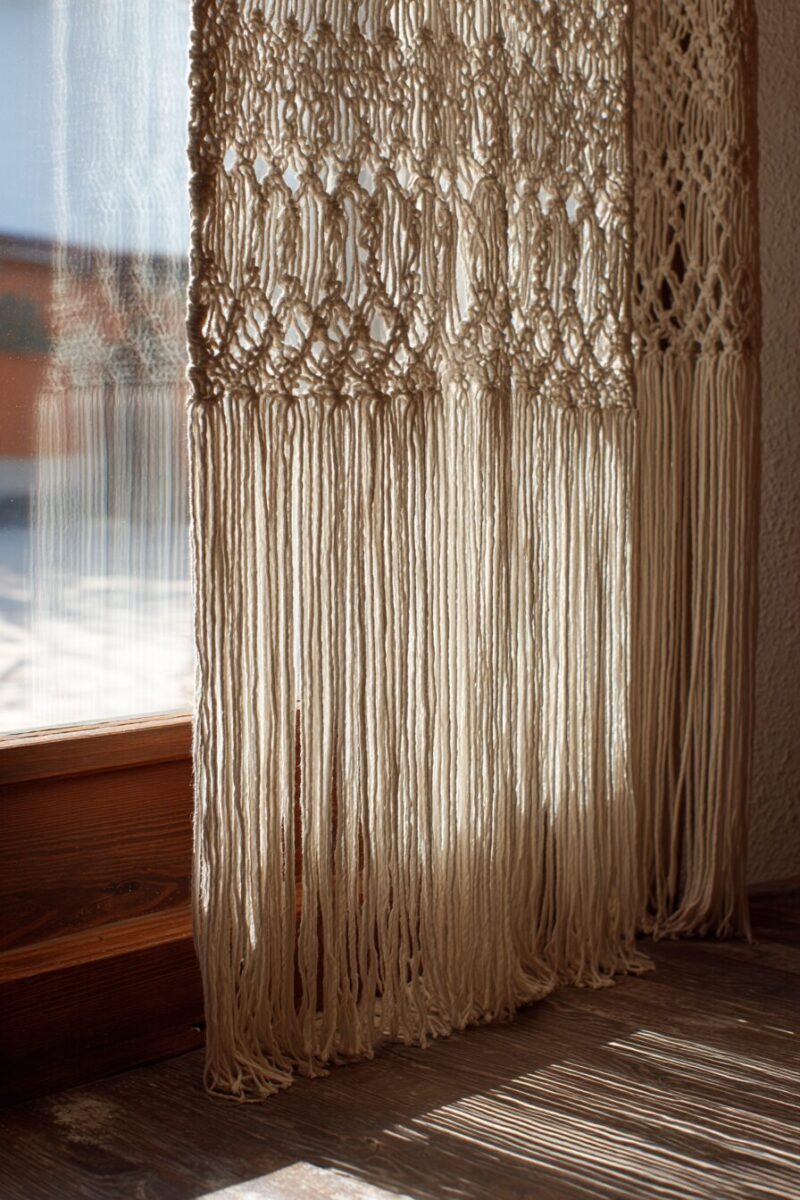
When I first looked at fringe curtains, my reaction was “that’s going to look like a costume store in my house.” Then I saw them in a friend’s apartment — natural cream cotton fringe layered over a white linen panel in her bedroom — and I completely changed my mind. The movement is what does it. Even with the AC running on low, that fringe was doing this slow, hypnotic sway that was genuinely beautiful to watch.
The length of the fringe totally determines the feeling. Short fringe (2–3 inches) is subtle and textural — it adds interest without drama, works in more restrained spaces, looks sophisticated. Long fringe (8–12 inches or more) is theatrical and maximalist — it creates significant visual weight and movement, reads more strongly bohemian. Both are valid. It just depends on how far you want to commit to the look.
Material matters a lot here. Natural cotton or linen fringe has a soft, organic quality and hangs beautifully. It can look a little limp in humid environments though. Hemp fringe is stiffer and has more body — the strands hold their shape and move as a group rather than individually, which creates a different kind of drama. Synthetic fringe in bold colors (think mustard, burnt orange, rust) is cheerful and very washable, but it doesn’t have quite the same organic feeling up close.
Layering fringe over a plain linen or cotton backing panel is my actual favorite way to use this style. The backing gives you privacy and light control, the fringe gives you movement and texture, and you can change out the fringe layer seasonally without replacing the whole curtain. I did this in my bedroom with a warm white cotton panel underneath and mustard yellow cotton fringe over it, and it took a really plain window from forgettable to genuinely pretty for under $40 total.
Practical tip: fringe tangles when you wash it. Turn the curtain inside out, put it in a mesh laundry bag, and run it on a gentle cold cycle. Hang to dry, then gently work out any tangles while it’s still slightly damp. Pulling on tangled dry fringe can break strands.
Hemp Rope Curtains That Get Better With Age
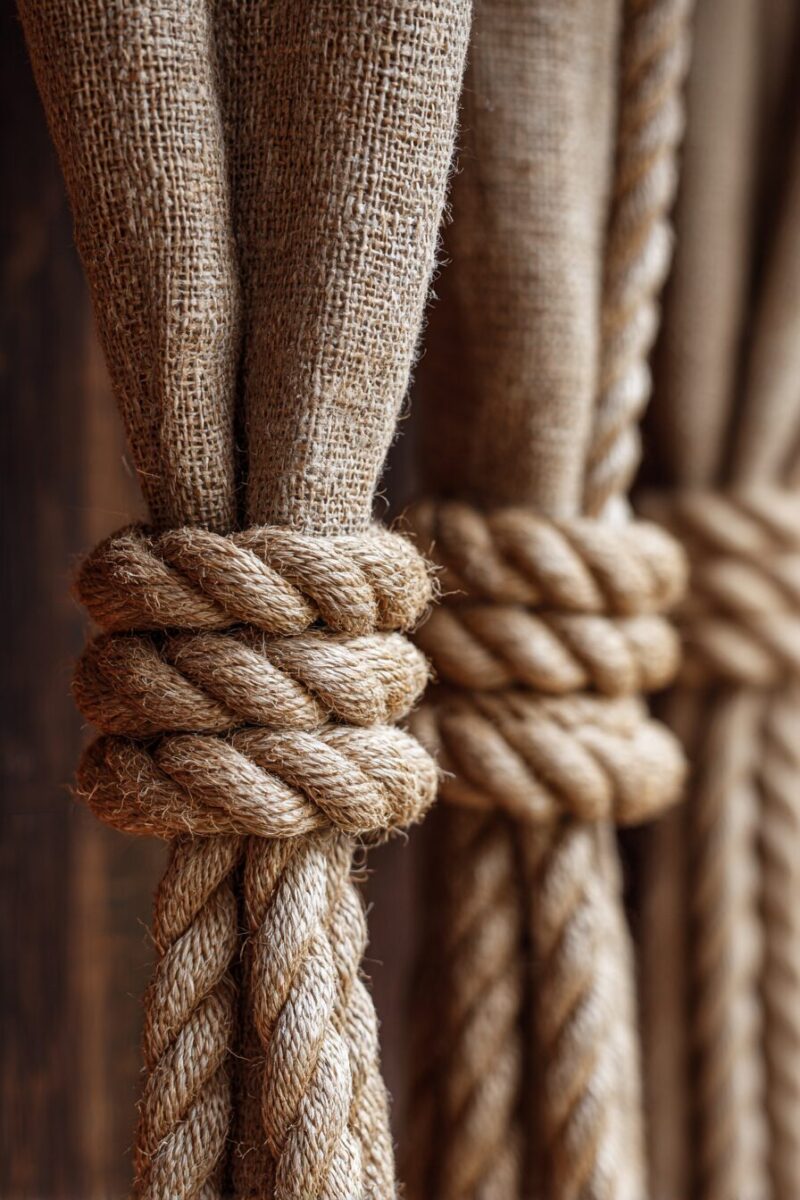
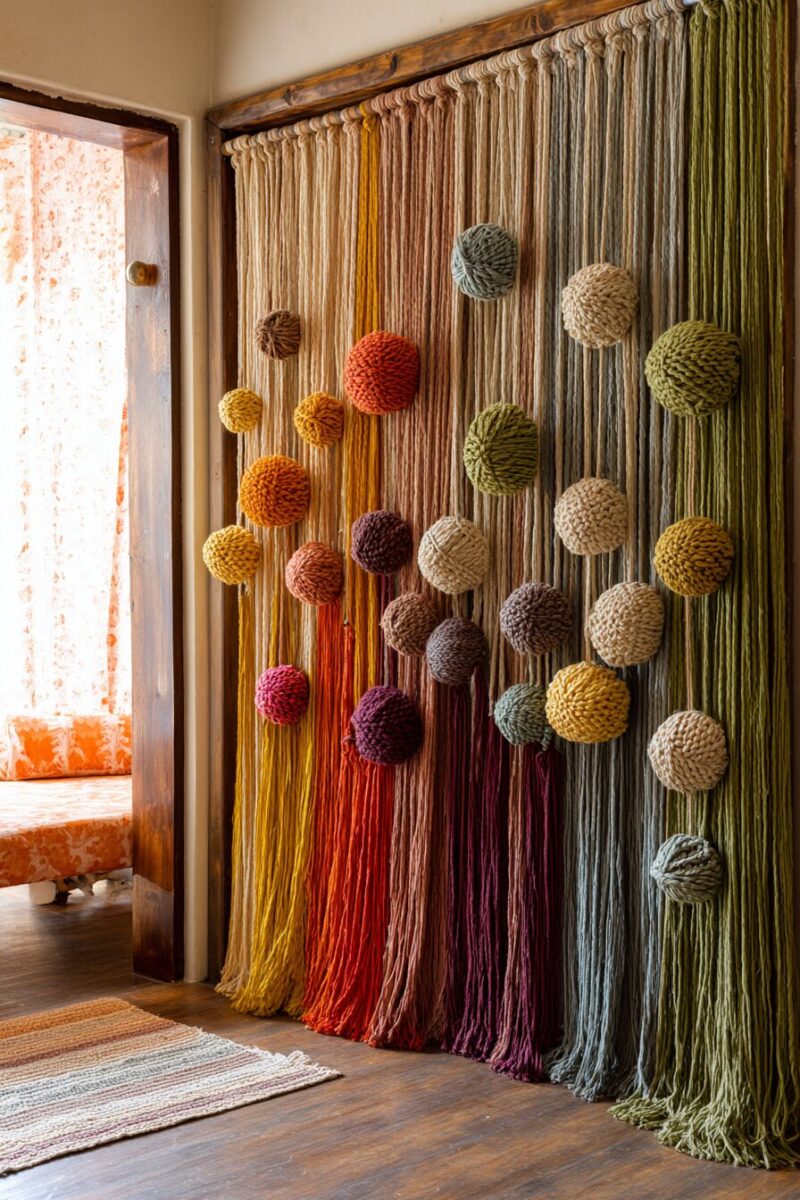
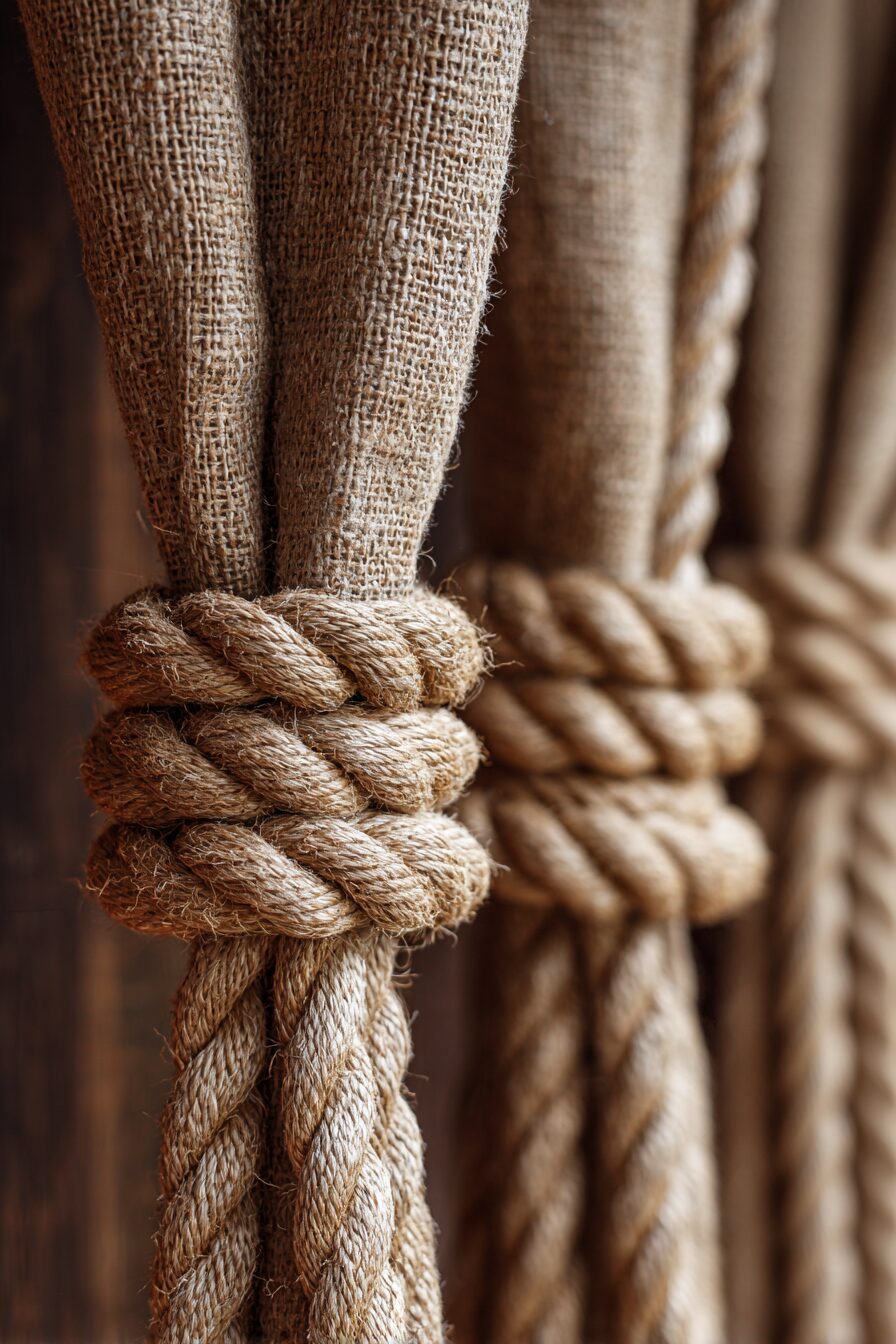
Hemp rope curtains are the most low-key of all the hippie curtain styles, and I mean that in the best possible way. They’re not trying to be bold or colorful. They just bring this quiet, earthy, natural presence to a window that’s really hard to achieve with any manufactured material.
The natural golden-brown color of undyed hemp rope goes with warm wood tones, terracotta, olive green, rust, cream — basically the whole earth-tone palette that’s been everywhere in home decor. It also works in greige-and-white minimalist spaces as a warm natural contrast. This is genuinely one of the more versatile options on this list even though it looks like it would only suit one very specific boho aesthetic.
The knotted designs range from simple parallel strands (very clean, very minimal) to elaborate macrame-style patterns with geometric or botanical motifs worked into the rope. The latter gets into macrame territory, honestly — the line between “hemp rope curtain” and “macrame curtain” is pretty blurry, and that’s fine. The real distinction is usually in the rope gauge: thinner rope creates more delicate patterns; thicker rope (3/8 inch or bigger) creates bold, graphic knotwork.
What I find genuinely compelling about hemp is the UV resistance. Other natural fibers fade relatively quickly in sunny windows. Hemp is naturally resistant to UV degradation, which means a sunny south-facing window that would destroy a cotton curtain in a couple of years won’t phase hemp nearly as much. That longevity matters when you’re buying something handmade that costs a bit more upfront.
The patina hemp develops over time — a slight softening of the fiber, a gradual deepening of the texture — is actually beautiful. This is one of those materials where a five-year-old curtain looks better than a brand new one. I find that genuinely satisfying in a world of fast furniture and disposable decor.
Maintenance: shake out regularly, spot clean with a damp cloth, and if you need a full wash, hand wash gently and hang dry. Avoid the dryer entirely — heat will shrink and stiffen the fibers.
Peace Sign Print Curtains Done Right (Not Cheesy)
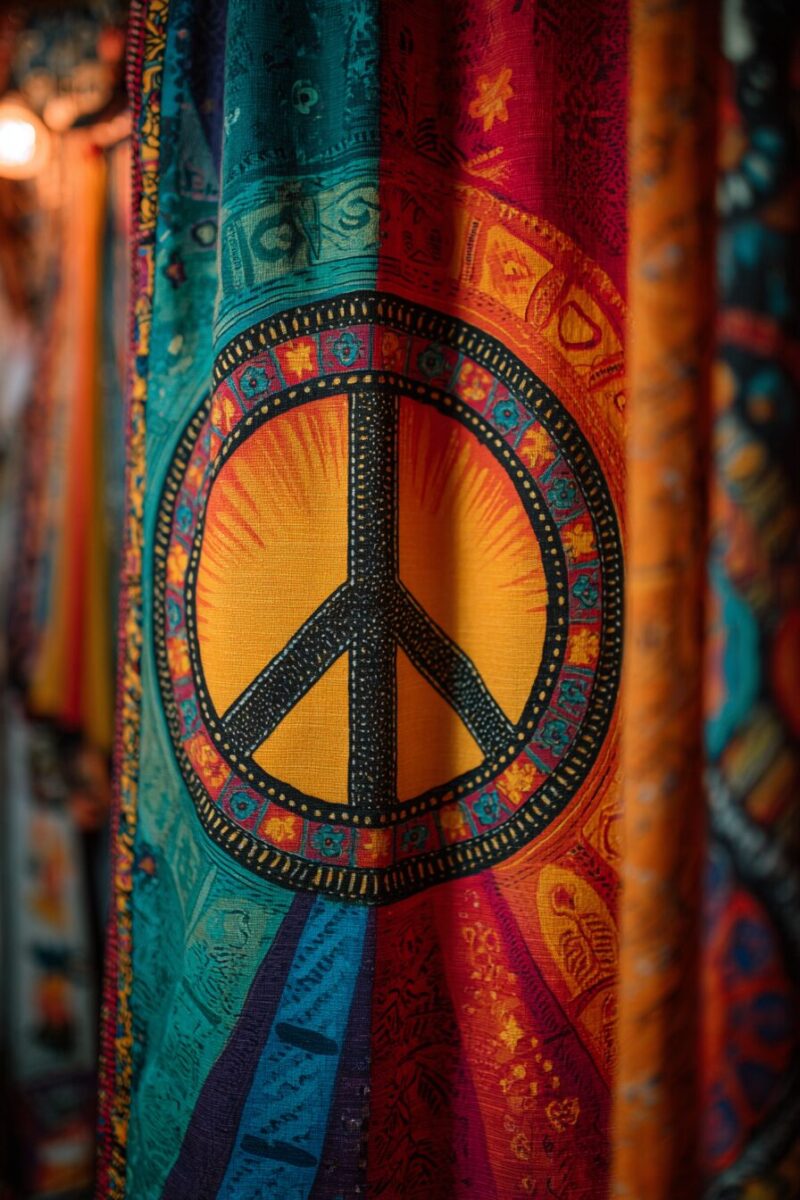
I’ll say the quiet part out loud: peace sign curtains can absolutely look cheap and costume-y, and the difference between that and something genuinely cool comes down entirely to execution. Clunky neon peace signs on bright white polyester: not great. A subtle tone-on-tone peace symbol woven into a natural cotton fabric in slate blue and cream: actually really nice.
The prints I’m most enthusiastic about are the ones where the peace symbol is incorporated into a larger pattern — mixed with florals, embedded in a paisley repeat, or part of a denser all-over design — rather than displayed in isolation. Isolated large-scale symbols on solid fabric tend to read like novelty items. Integrated patterns read like actual textiles.
Color palette makes a huge difference too. Earth tones (rust, olive, cream, warm brown) age really well and feel sophisticated. Classic black-and-white peace sign prints are clean and graphic — they actually work in a mid-century modern or even somewhat minimalist space if you’re going for a 1960s activist aesthetic. Rainbow multi-color prints are the most traditionally “hippie” and the most maximalist — they work great in kids’ rooms, creative spaces, or committed boho living rooms, less well in rooms where you want a quieter background.
These are genuinely great conversation starters. I’ve had guests notice my peace sign throw pillow covers and it always leads somewhere interesting — talking about the actual history of the symbol (it was designed in 1958 for the British nuclear disarmament movement, originally), about what peace means to people personally, about the 1960s counterculture. If you like having a home that sparks conversations, this is an easy way to do it.
They pair beautifully with other retro elements — a lava lamp on the side table, some vintage record albums displayed on a shelf, a beanbag chair. But they also work as a single statement piece in an otherwise neutral room if you want just a hint of the aesthetic without going all in.
Mandala Curtains That Make a Room Feel Like a Sanctuary
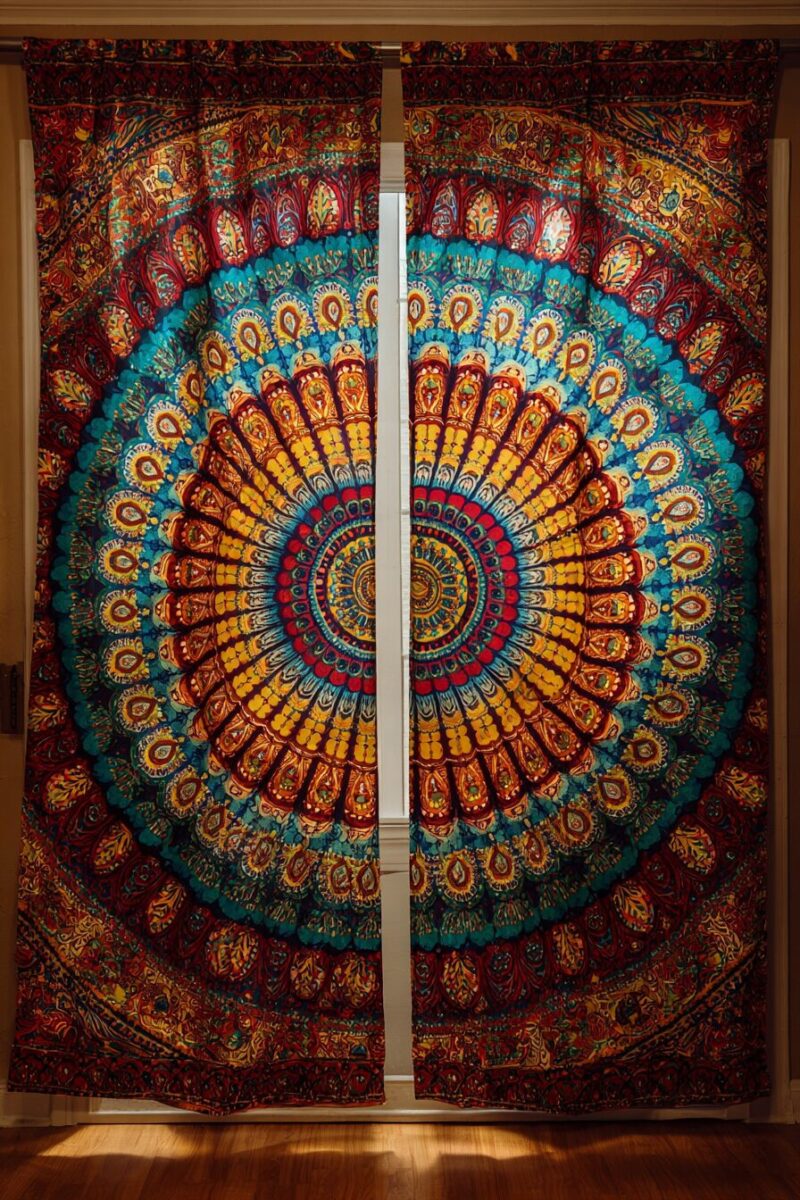
My favorite mandala curtains hang in my home office, which is also my meditation corner (it’s a small house — rooms have to multitask). The design is a Tibetan-style mandala in deep teal, gold, and burgundy on a cream background. When the morning light comes through, the colors almost glow. It genuinely changes the quality of the whole room.
What makes mandala patterns psychologically interesting — and I don’t mean this in a woo-woo way, it’s actually documented in design psychology — is that the radial symmetry and the repeating concentric patterns are inherently calming to look at. Your eye follows the pattern inward and it’s naturally focusing and quieting. That’s part of why they’ve been used in meditation traditions across multiple cultures for centuries. Tibetan sand mandalas, Hindu yantra diagrams, Buddhist thangka paintings — the basic visual principle is consistent.
For windows, the key is choosing a scale that matches your window size. A large mandala design centered on a small window can look awkward — the design gets cut off at the edges and you lose the radial symmetry that makes it work. Bigger windows handle large-scale mandalas beautifully. For smaller windows, look for all-over mandala repeat patterns (multiple smaller mandalas tiled across the fabric) rather than a single centered medallion.
Metallic printing adds a beautiful dimension to mandala curtains. The gold or silver accents catch light differently than the printed colors, so the pattern subtly shifts as the light changes throughout the day — softer in morning, more vivid in afternoon sun, warm and glowing in lamplight at night. That quality makes them genuinely interesting to live with over time.
From a practical standpoint, look for curtains where the mandala design is printed on 100% cotton or a cotton-poly blend. Pure polyester fabrics can look plasticky up close and they don’t hang with the same soft drape. The hand of the fabric matters as much as the print when you’re looking at something every day.
Care: most are machine washable on gentle cold, but I’d hand wash the nicer ones to preserve the metallic printing. Air dry flat or hang — the dryer can crack metallic inks over time.
Patchwork Curtains That Might Be the Most Personal Option of All
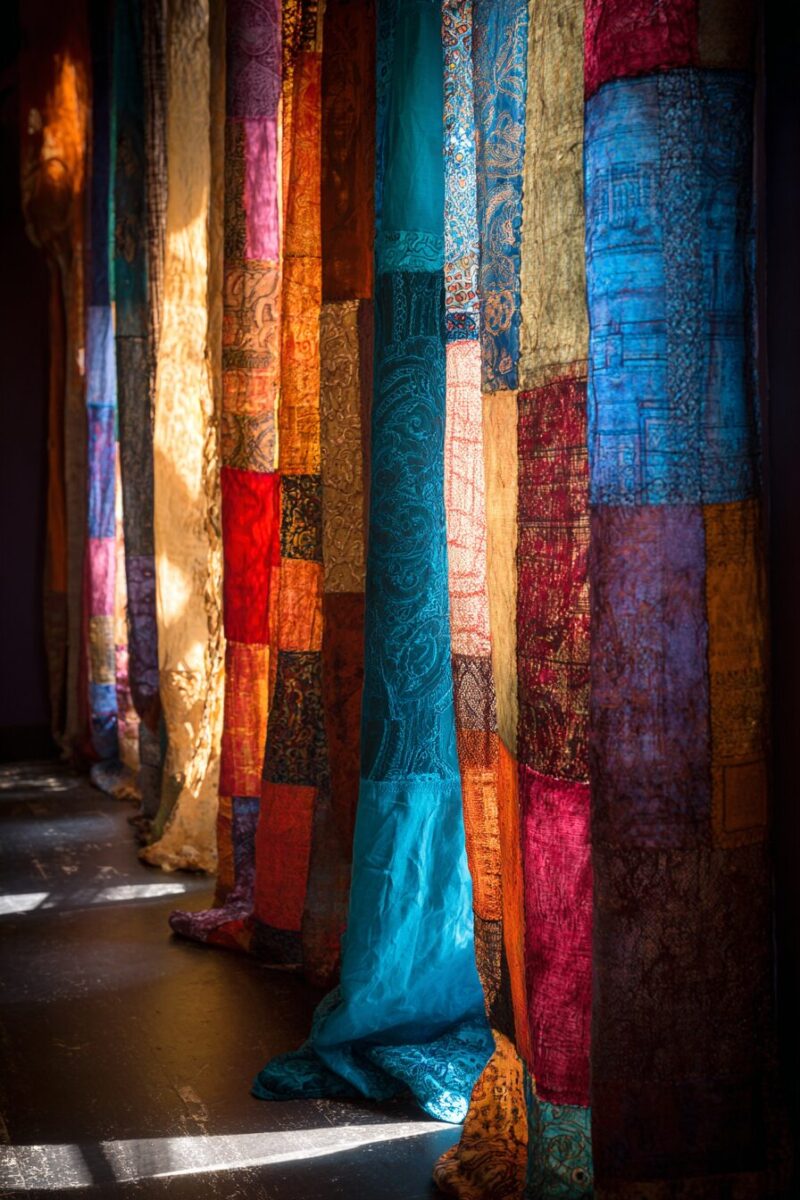
Okay, this is the one I said to watch for, and here’s why: patchwork curtains are the only style on this list where you can genuinely put your own history into the window treatment. I made a set for my bedroom a couple of years ago from fabric scraps — a piece of a flannel shirt I loved that had worn out, some vintage feedsack cotton I found at an estate sale, a few yards of discount fabric from a remnants bin, a scrap of my grandmother’s old apron fabric. The resulting curtains aren’t the most polished things in my house. But they make me happy every single morning in a way that no store-bought curtain ever has.
That’s the real point of patchwork in a home context. It’s not about frugality (though it is genuinely economical — I spent maybe $8 total on my panels). It’s about having objects in your home that carry meaning. The hippie aesthetic has always been about that: valuing things for their history and personal significance over their brand or their price tag.
If you want to make your own, the process is genuinely accessible even if you’re not an experienced sewer:
- Cut fabric pieces to a consistent shape (squares or rectangles are easiest). I used 6-inch squares.
- Sew them together in rows, pressing seams open as you go.
- Line the finished patchwork with a simple cotton muslin backing for stability and to protect the varied fabrics from direct sun.
- Add a rod pocket at the top by folding over 3 inches of the top edge and sewing it down.
- For a 36×84 inch panel (one standard curtain panel), you need roughly 84 six-inch squares. That sounds like a lot but it goes faster than you’d think.
If sewing isn’t your thing, you can find handmade patchwork curtains from Etsy makers — search “boho patchwork window panels” and filter by handmade. Expect to pay $60–120 for a quality pair, which is honestly reasonable for something genuinely one-of-a-kind.
The one maintenance reality with patchwork: different fabrics behave differently when washed. Pre-wash all your fabrics before you sew them together to prevent uneven shrinking afterward. And wash finished patchwork curtains on gentle cold, always. The varied fabric types in one panel can’t handle aggressive treatment.
Patchwork ages in this wonderful uneven way too — different fabrics fade and soften at different rates, so the panel keeps slowly changing over the years. It’s genuinely alive in a way that a solid fabric panel never is. That, to me, is what hippie curtains are really about: things in your home that breathe, move, change, and mean something.