Does Light Flooring Really Make a Room Look Bigger?
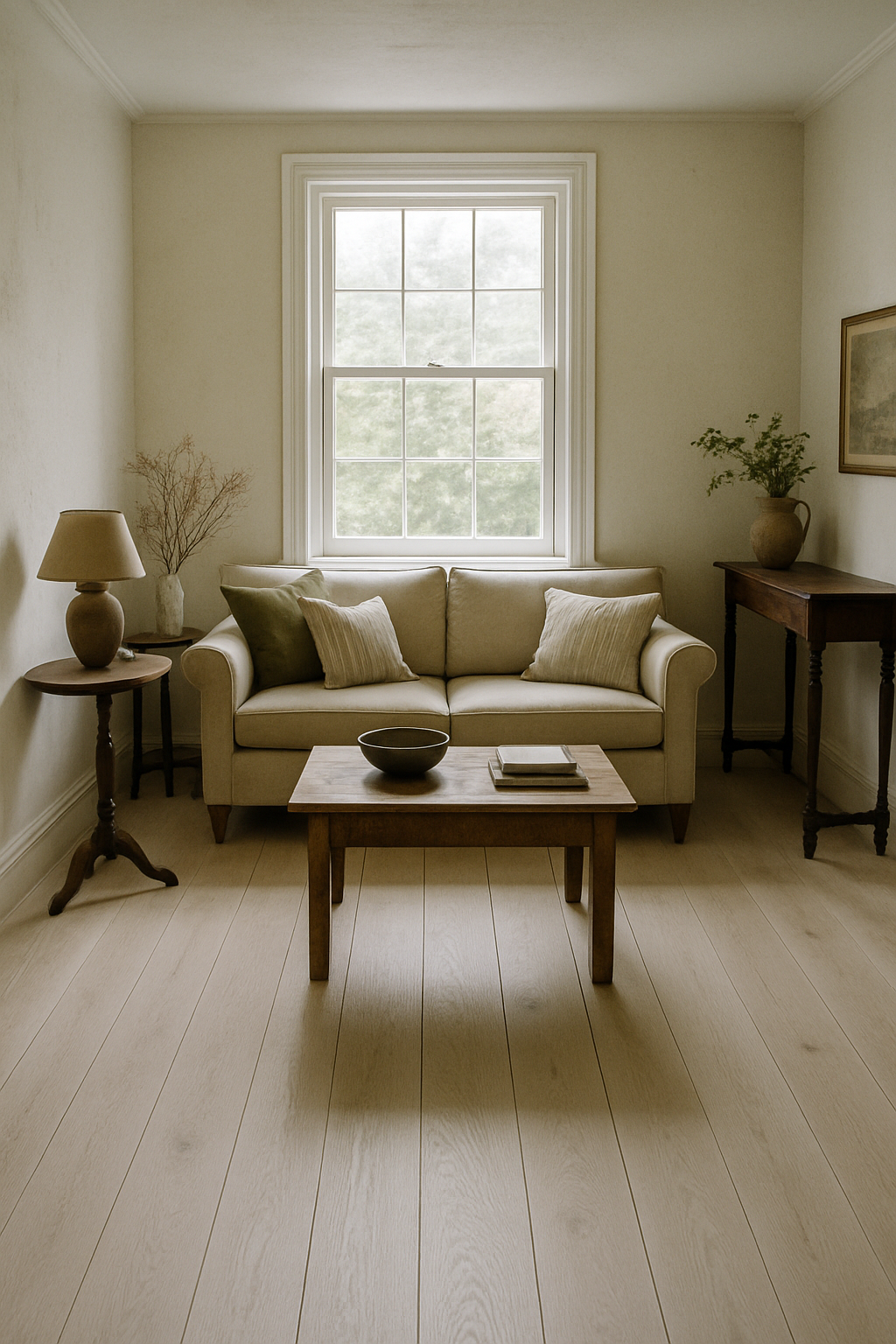
Interior designers charge $200 an hour partly because they know a secret the flooring blogs won’t tell you: the same white oak floor that made a Manhattan studio look twice its size made a Seattle bungalow feel like a hospital corridor. Same LRV. Same plank width. Completely different result. I’ve been in both rooms, and honestly, the difference wasn’t the floor. It was everything surrounding it.
The Science Behind Floor Color and Perceived Space (It’s Not What You Think)
The flooring industry settled on “light floors make rooms look bigger” and just… stopped. Never finished the sentence. Actual psychophysics are more interesting and way more useful.
Spatial perception research shows that what your eye reads as “big” isn’t brightness. It’s contrast ratios. Specifically, the relationship between the floor’s Light Reflectance Value and the walls around it. LRV runs on a scale of 0 to 100, with 0 being absolute black and 100 being theoretical pure white. White oak flooring typically scores somewhere between 55 and 65. Genuinely light. But here’s what the flooring blogs skip: rooms where the floor-to-wall contrast ratio sits below 30% on the LRV scale actually show measurable, documented size expansion in perception studies. Below 30%. Not intuitive.
What that means practically is that a light floor surrounded by similarly light walls reads as more spacious than a light floor next to walls that are dramatically darker or lighter. That gap between them is the variable that matters, not the floor color alone. I repainted my front room three times before I understood this — two gallons of Benjamin Moore each time, and I will not tell you what that costs.
Three Room Types Where Light Flooring Genuinely Works
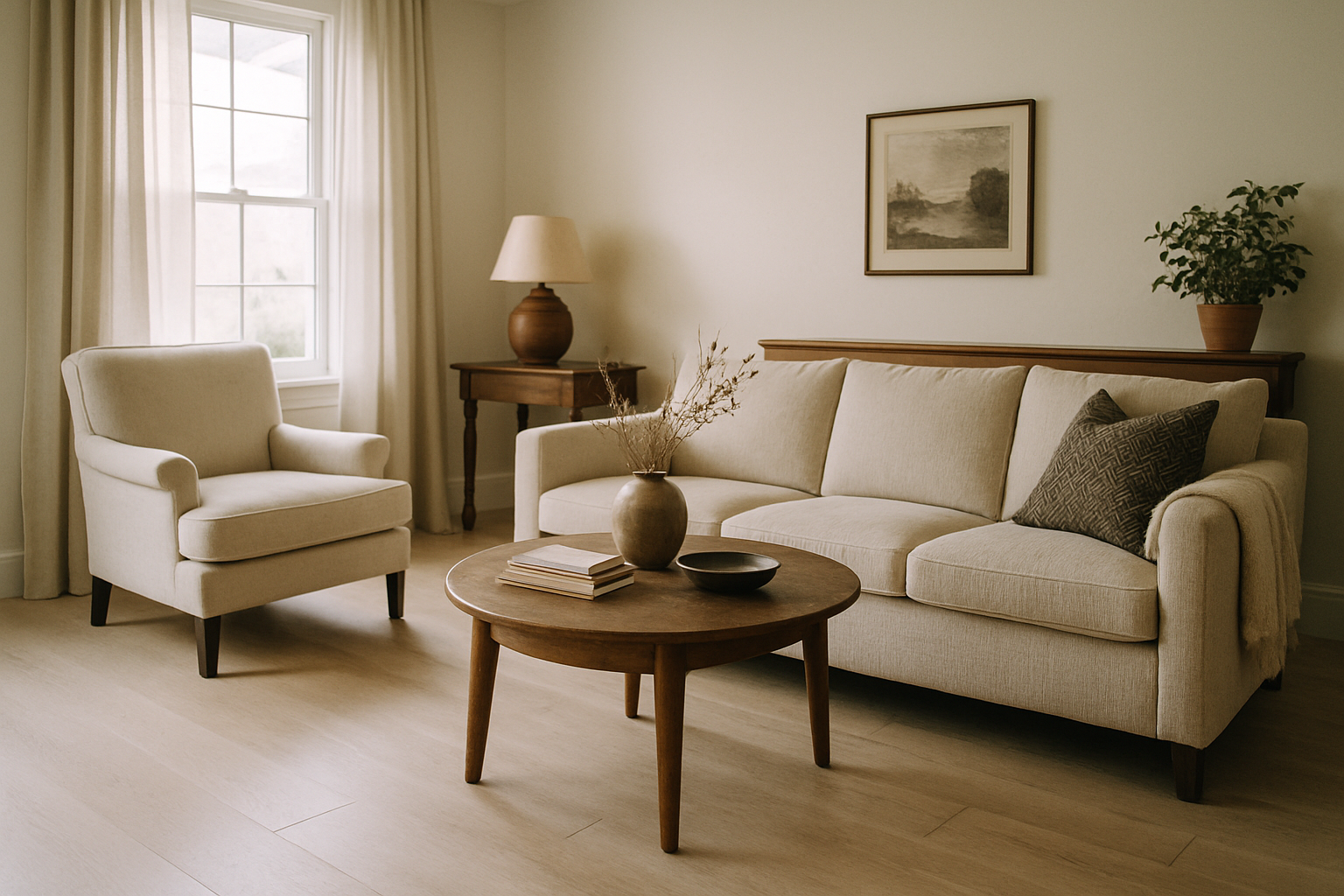
Open-plan spaces. Full stop.
An unbroken expanse of continuous light floor doing its job across a kitchen-to-living room stretch does more spatial work than any mirror or paint color you’re going to find on a mood board. No transitions, no rugs, no interruptions. This is where light flooring genuinely earns its reputation.
Beyond open plans, two more situations work reliably. Rooms with ceilings at or above 9 feet get a compounding effect, where the floor lightness reads upward and that vertical space amplifies it. North-facing rooms that receive under 3 hours of direct sunlight daily are actually better candidates for light flooring than sunny rooms — turns out in a dim space a lighter floor is doing real reflective work instead of competing with natural light that’s already handling the job. My hallway faces north and it’s the one room in my house where I’d put light flooring back without hesitating.
Narrow rooms benefit too, but with one hard rule: no rugs. Rooms narrower than 12 feet need that continuous light floor surface to pull the walls apart visually. Lay an 8×10 area rug in a 10-foot-wide room and you’ve canceled the entire effect. I see this constantly. Someone spends $4,000 on white oak and then immediately covers 70% of it with a jute rug. The rug wins. The room shrinks back.
When Light Floors Shrink a Room Instead
A white floor in a room with dark furniture and an 8-foot ceiling is one of the most common expensive mistakes in home renovation. Not a stylistic preference. A mistake. Furniture looks like it’s hovering in a void, all that pale floor making dark pieces look heavier, more isolated, more crowded together even when they’re not.
Ceiling height is the issue nobody talks about loudly enough. At 7.5 feet or below, a very light floor draws the eye down and makes the ceiling press in. My split-level has a section that tops out at 7’8″ and I tried white oak in there. Hated it for two full years before I ripped it out. Looked fine in photos and claustrophobic in person — my contractor thought I was crazy when I called him back, but he’d seen it before.
Furniture tone matters just as much. If more than 60% of your furniture runs dark (espresso, charcoal, black), light flooring creates a high-contrast chessboard effect that reads as chaotic, not spacious. Warm-toned walls above LRV 70 paired with light floors produce something genuinely unfortunate: a washed-out flatness where depth cues disappear entirely. Just bleached. So the idea that light flooring is a safe, neutral choice is wrong. In the wrong room, it’s the single most destabilizing element in the space.
Dark Flooring’s Underrated Case for Small Rooms
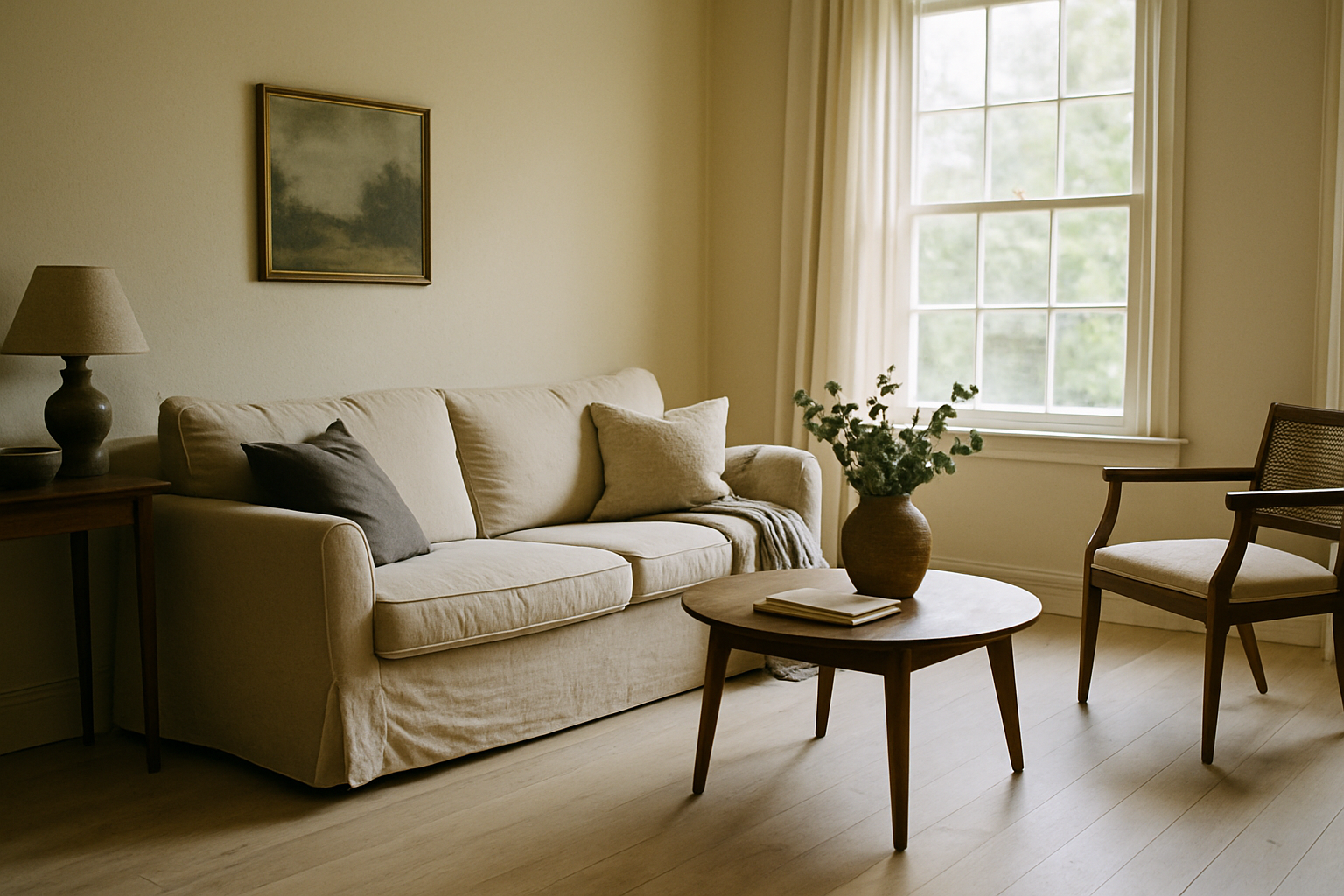
Dark walnut flooring runs an LRV of roughly 10 to 20. On paper, that sounds like the wrong direction for a small room. In practice, in the right conditions, it’s not.
Japanese interior design has used this for centuries. “Ma,” which is essentially intentional negative space, uses dark floors in rooms as small as 80 square feet to create perceived depth. A dark floor recedes. It becomes the ground plane that the eye moves past rather than landing on. In a room under 150 square feet with white walls and genuinely minimal furniture, dark walnut doesn’t read as heavy. It reads as purposeful.
Honest caveat: this only works with discipline. Dark flooring in a small room with white walls and minimal furniture outperforms light flooring with cluttered, mixed-tone furniture every single time. Most people aren’t willing to edit that hard, which is why dark floors in small rooms go wrong more often than they go right. But when they go right, they really go right.
The Wall Color Variable Nobody Mentions
Matching light floors with stark white walls is the single most over-recommended combination in home decor. Looks spectacular in professional photography with three softboxes and a wide-angle lens. In most real homes it looks clinical. Cold. Oddly flat.
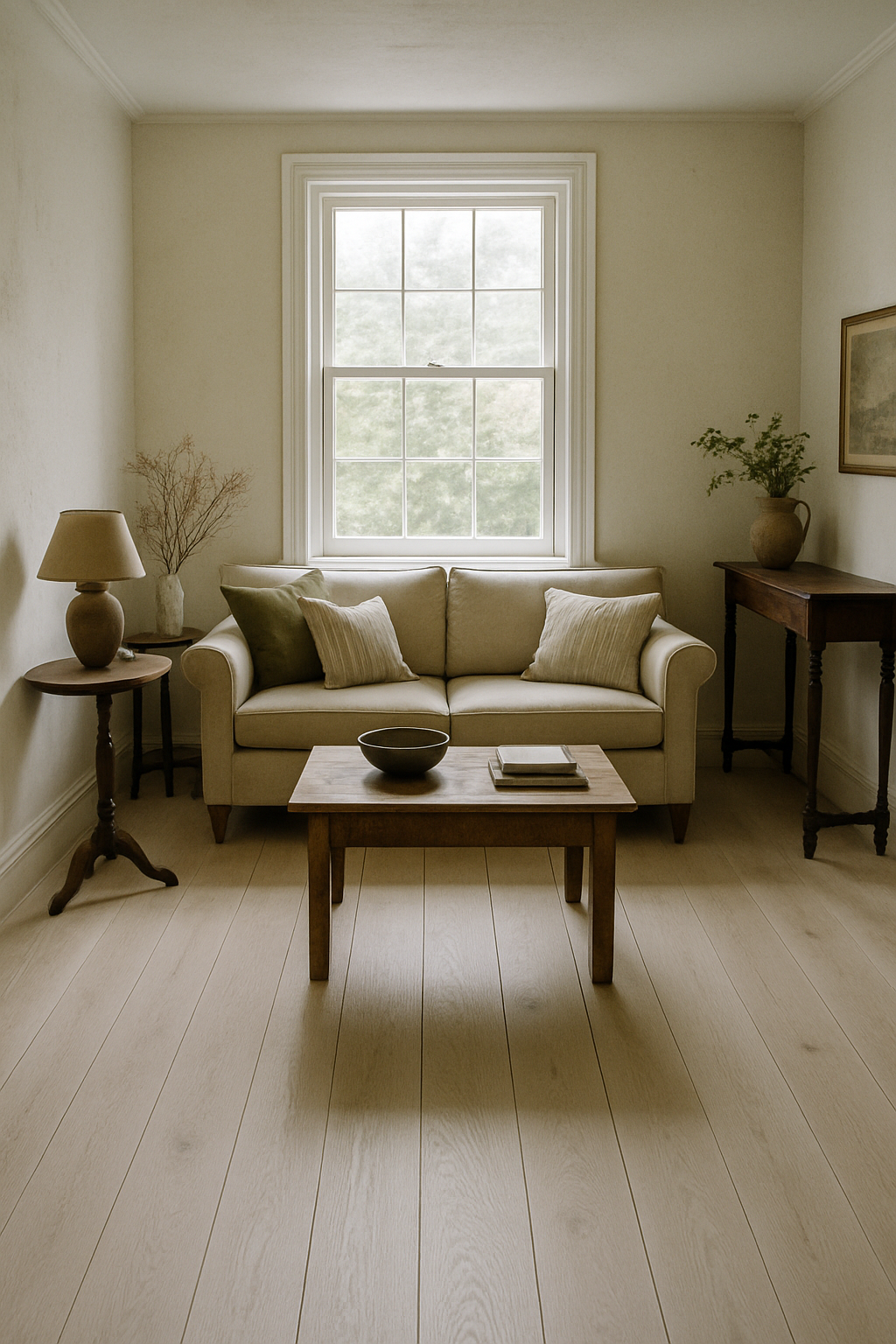
Specific reason: Benjamin Moore White Dove OC-17, which is a gorgeous paint color, sits at LRV 85. Paired with light oak floors at LRV 60, you get what designers call a “visual merge.” Contrast between floor and wall drops low enough that depth cues disappear. No visual layering. Everything blurs. I had White Dove in my living room for three years and kept thinking something was off — I had paint samples taped to the wall for months before I finally committed to a change. Replaced it with Sherwin-Williams Accessible Beige SW 7036 at LRV 58, and the room suddenly had dimension. That mid-tone wall sitting closer to the floor’s own LRV is what produces the strongest size illusion, not the stark white everyone defaults to.
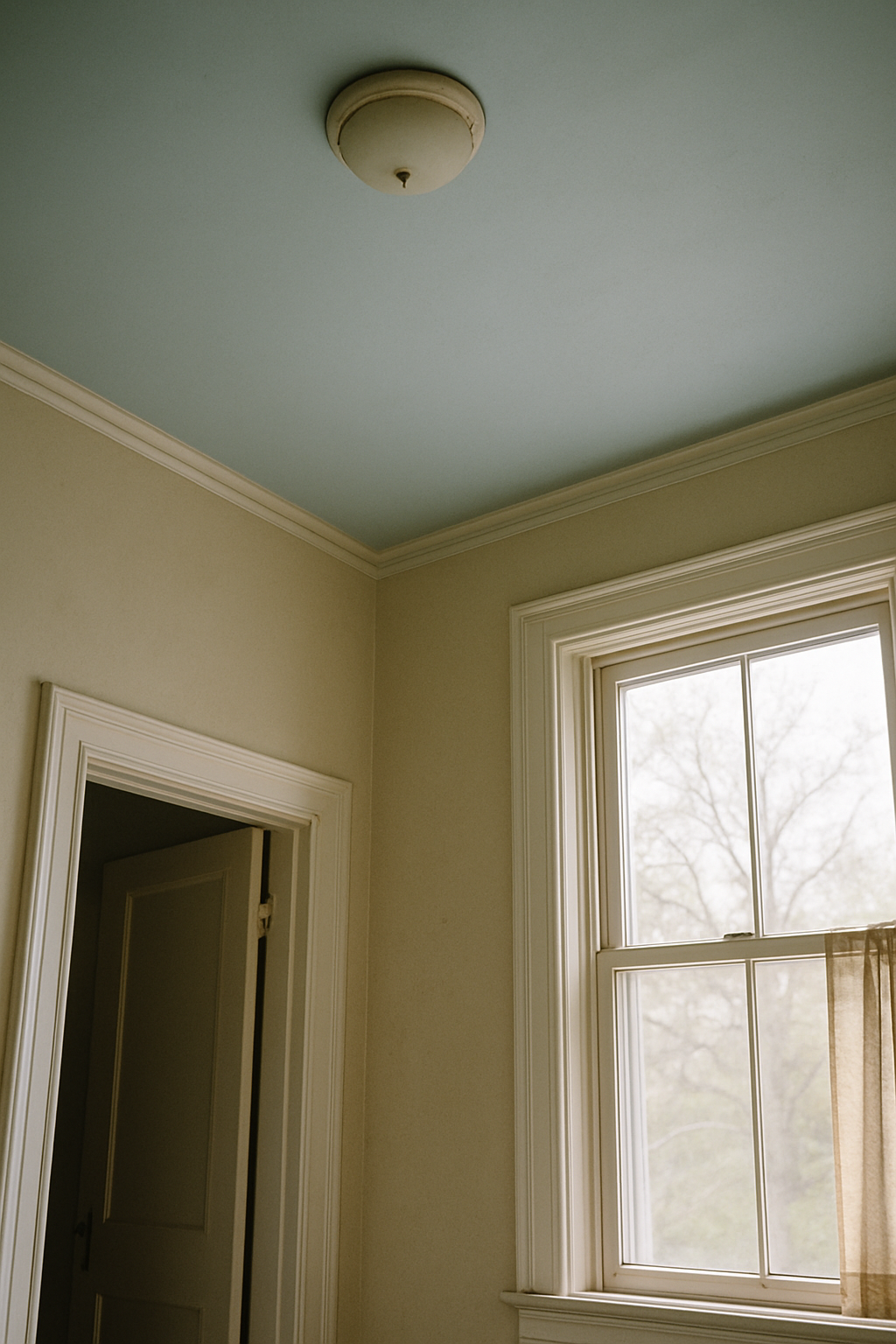
One more specific worth knowing: keeping your baseboard color within 10 LRV points of your floor color visually raises ceiling height. Eliminates the hard stop at the base of the wall. I repainted the trim in my dining room to test this and the ceiling reads at least two inches higher. Small thing. Real effect.
Floor color is a relational decision. No correct answer in isolation. A sample on the showroom floor means almost nothing without knowing what’s going next to it.
Flooring Materials Change the Equation
Two light floors with identical LRV can behave completely differently depending on plank width and finish. Wide planks at 5 inches or wider reduce the total number of seam lines across a floor. Fewer visual interruptions increase perceived floor expanse by roughly 15%. Not subtle once you’re looking for it.
Finish sheen is where I see the worst decisions made. A matte light floor in a room with limited natural light doesn’t reflect anything. It absorbs. A high-gloss finish in a room under 200 square feet can reflect the ceiling back at you and effectively double perceived vertical height. Real optical effect, not marketing language. My semi-gloss white oak kitchen has an 8-foot ceiling that reads higher than the 9-foot ceiling in my dining room, which has matte floors. Context, finish, sheen. It all interacts.
On cost: quality luxury vinyl plank in light tones runs $2 to $5 per square foot installed. Light hardwood runs $8 to $15. Spatial effect is genuinely near-identical. I’ve stood in rooms of both and struggled to articulate a size difference. If you’re spending the extra money for hardwood, spend it because you want hardwood — the grain, the longevity, the way it feels underfoot. Not because you think it’ll make the room look bigger. It won’t, not compared to good LVP in the same tone.
How to Actually Decide: A Room-Specific Framework
Most people choose flooring from a sample swatch in a showroom under fluorescent light. Light flooring almost always wins there. Pops, reads clean, looks bigger than everything next to it. Then it goes into a real home with east-facing windows and warm afternoon light and suddenly the room looks like a bleached-out waiting room. Broken process, and it explains why light flooring underperforms in so many real homes.
Do this instead. Get the LRV of your current wall paint — your paint brand’s website has it, or measure it with a free spectrophotometer app on your phone. Count your daily direct sunlight hours with a $15 digital lux meter, which is worth every dollar. Honestly look at your furniture: if more than 40% of the pieces you’re keeping are dark-toned, run the numbers before assuming light floors will solve anything.
Bring your top two flooring samples home and tape them to the floor in the actual room. Look at them at 8am, at noon, and at 6pm. If you only like one of them in the morning, that’s information. Your showroom told you what it looks like under controlled light. Your home will tell you the truth.