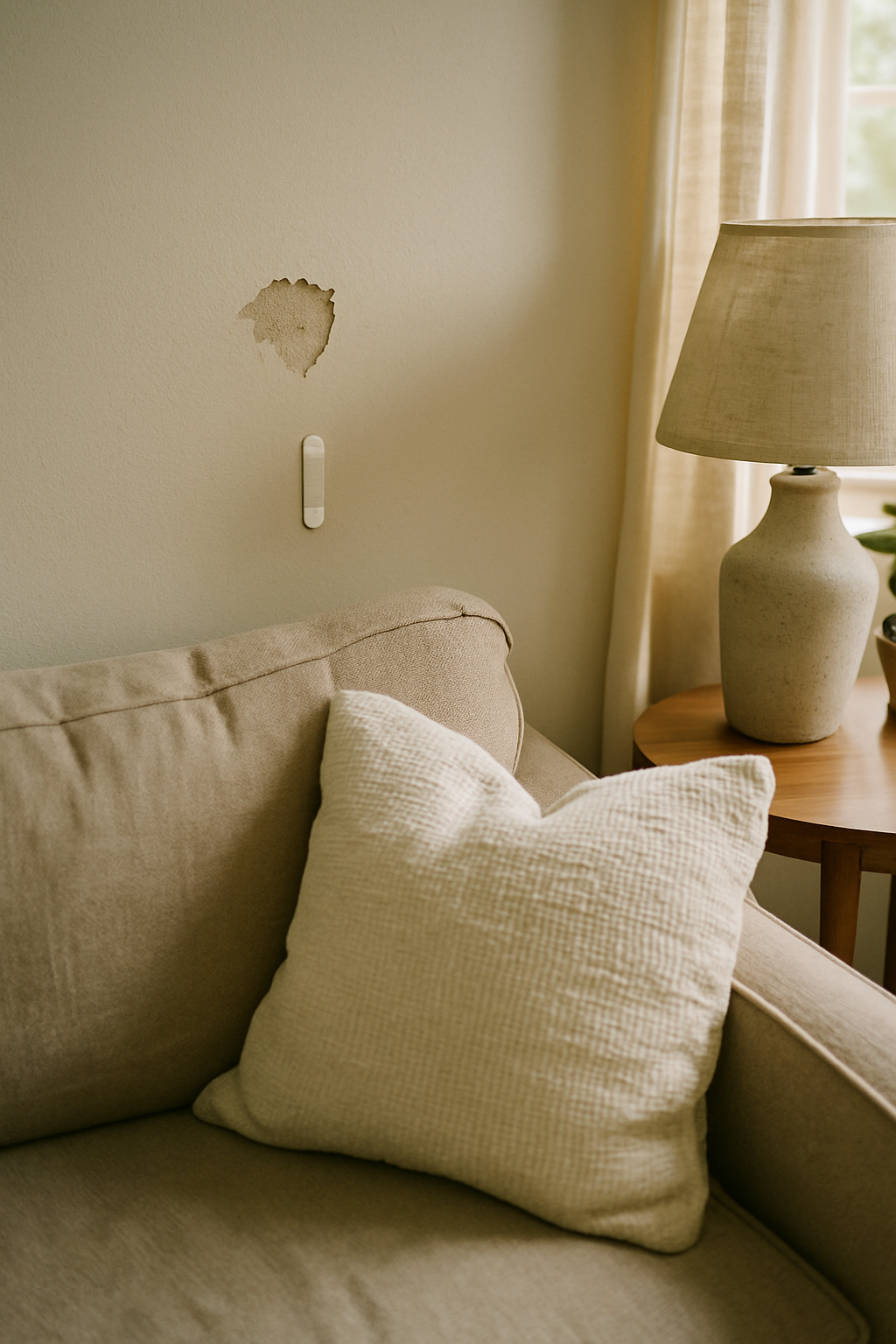
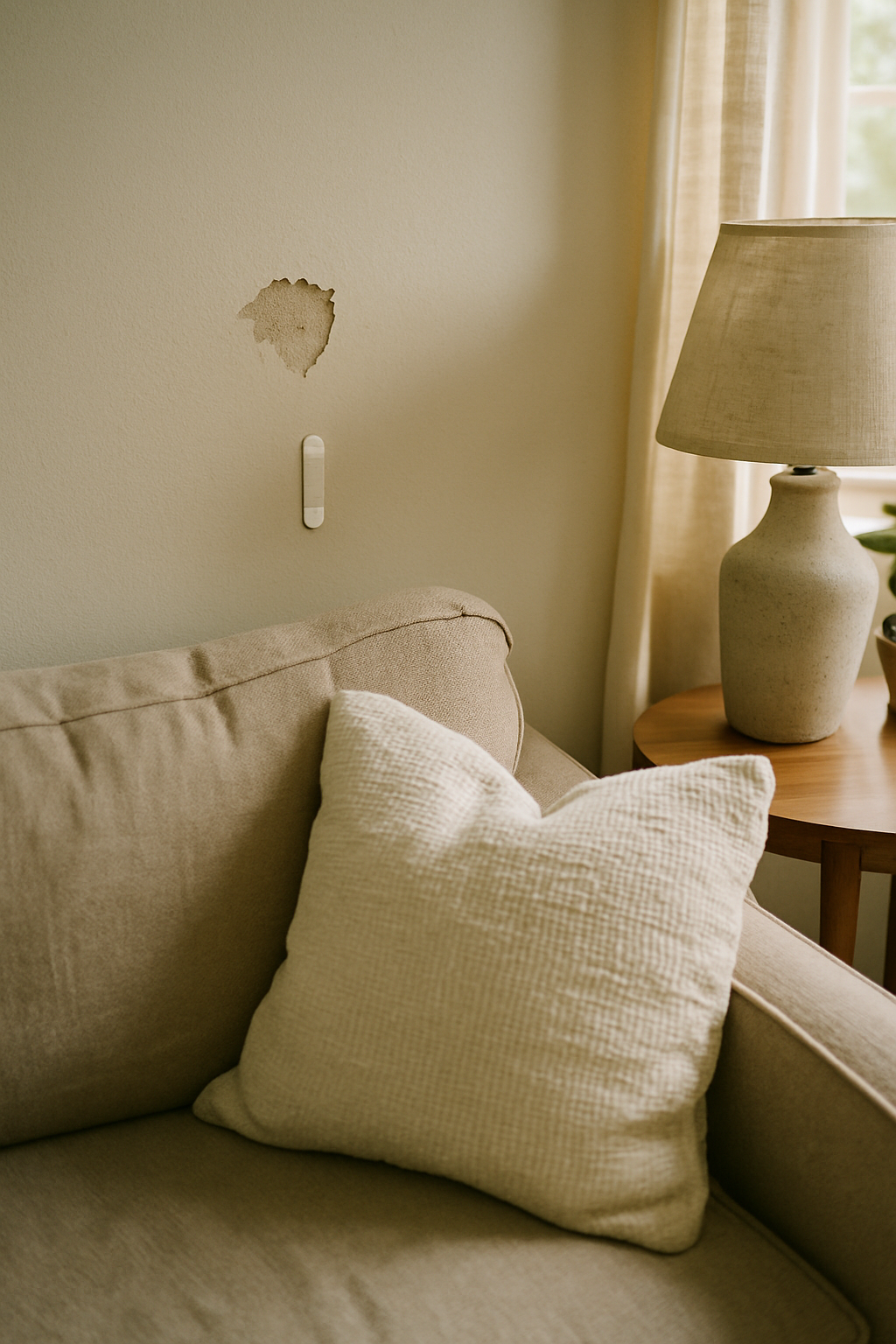
The strip held for fourteen months. I know because I put it up the week I moved into that apartment and took it down the afternoon I handed back the keys. Fourteen months, zero wobble, never budged. I pulled it off in about eight seconds and took a quarter-sized chunk of wall with it. The super charged me forty dollars even though the actual repair costs about eight. I paid it because I was in a hurry and because, honestly, I knew I’d done something wrong.
The Two Instructions Nobody Reads (and Why They’re the Whole Story)
There are two steps on the Command Strip package that most people skip. Not skim. Skip entirely. And these two steps are, functionally, the whole product.
The first one is the 15-second press. When you apply the strip, you’re supposed to press the object firmly against the wall for a full fifteen seconds. Not a quick push. Fifteen counted seconds of steady pressure. 3M’s own technical documentation cites roughly 1 pound of force per square inch of adhesive contact area to reach full bond, and you don’t get that from a two-second shove. I know because I timed myself once after I kept having things slowly peel off walls — this was in my hallway, the long one, where I’d hung about six frames in an afternoon — and realized I’d been pressing for maybe four seconds while thinking about something else.
The second one is the 90-degree pull. This is the one that cost me that rental deposit. When you remove a Command Strip, you’re supposed to hold the bottom tab and stretch it straight down, parallel to the wall, at a precise 90-degree angle. Slow and steady, yes, but the angle is the actual mechanism. The adhesive is designed to release under that specific directional tension. What almost everyone does instead (what I did) is grab the strip and pull it outward, away from the wall. That’s not slow removal. That’s the exact wrong geometry. The adhesive doesn’t release; it tears. And it takes paint or drywall paper with it.
3M wrote some of the clearest removal instructions I’ve seen on any consumer hardware product. They drew a little arrow on the packaging. People still ignore it. That’s a reading problem, not a product failure.
Surfaces Command Strips Actually Cannot Handle — and the List Is Shorter Than You Think
Brick. Rough stucco. Wallpaper of any kind, including vinyl-coated (I don’t care how smooth it feels). Unprimed drywall. And flat or matte paint with a gloss rating below 10%.
That last one is the one that gets people. Brick is obvious. Nobody looks at a rough mortar joint with a pore size over 0.5mm and thinks that’s a good adhesive surface. But a wall that looks smooth and painted? Most people assume they’re fine. They’re not, if the paint is flat.
Flat paint has almost no surface hardness. The pigment particles sit on top of each other with minimal binder. When you pull a strip, even perfectly at 90 degrees, the adhesive bond to the paint can be stronger than the paint’s bond to the wall underneath it. You’re not pulling off the strip. You’re peeling up the paint layer like a sticker.
Here’s the part that makes me genuinely annoyed on behalf of renters everywhere: landlords paint apartments in flat paint specifically because it’s cheap and covers old stains in one coat. Your rental’s walls are almost certainly flat paint. The internet keeps saying Command Strips are “rental safe” without mentioning this. That combination — cheap flat paint plus adhesive strips — is where the majority of damage stories come from. Not technique. Not the product. The paint sheen on a wall someone else chose.
What ‘Damage’ Actually Looks Like in Four Distinct Scenarios
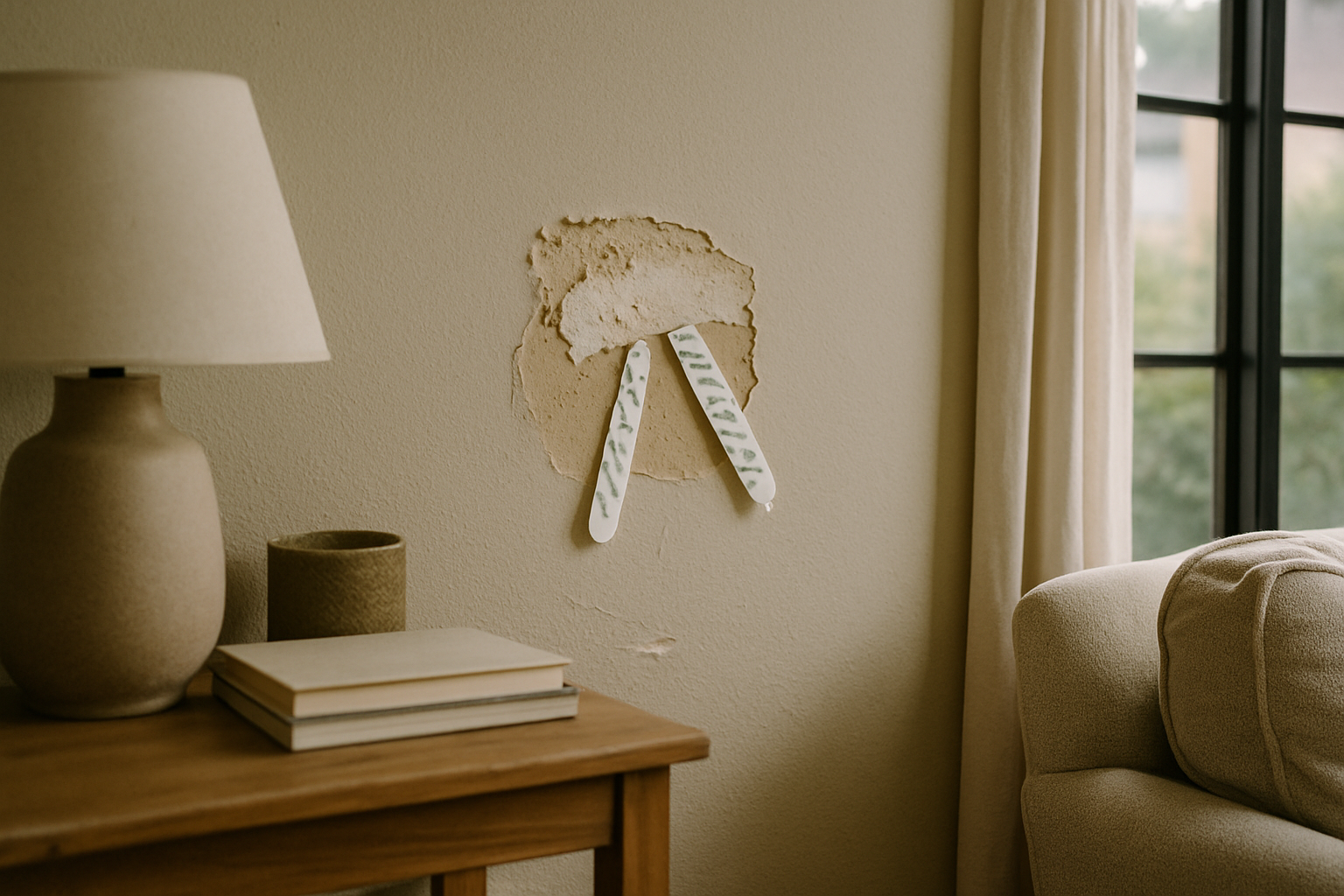
Paint peel. Drywall paper tear. Adhesive residue. Nothing at all.
Paint peel is the most common complaint. It shows up in roughly 30% of documented removal complaints in consumer review aggregations. It looks dramatic but it’s usually shallow. A quarter-sized paint chip. Annoying, patchable in twenty minutes.
Drywall paper tear is worse and less common. It almost exclusively happens on unprimed drywall that’s less than six months old, where the paper facing hasn’t fully cured and hardened. If you’re hanging stuff in a newly constructed room or a freshly renovated one, wait. Just wait.
Adhesive residue is not damage. I want to be clear about this because I’ve watched people post photos of a slightly sticky wall patch like it was a crime scene. Isopropyl alcohol at 70% concentration or higher takes it off. You dab, you wait thirty seconds, you wipe. Under two minutes. If you’ve been calling this “damage,” you’ve been inflating the strip’s reputation problem with a cleaning task.
And sometimes — probably more often than the horror stories suggest — you pull the strip at the right angle and the wall looks exactly like it did before. This happens. It just doesn’t get posted.
How Long You Leave Them Up Changes the Risk Calculus
The adhesive bond on a Command Strip is not static. It gets stronger over time. After 72 hours, the bond has strengthened significantly past initial application. That’s why they tell you to wait an hour before hanging anything heavy. By month six, you’re working with a fundamentally different adhesive situation than day one.
This matters most in humid rooms. Strips left up for over 18 months in environments with humidity above 60% show measurably higher paint-pull rates. The adhesive absorbs some moisture, the bond chemistry shifts, and removal becomes unpredictable. 3M actually recommends a maximum one-year hang time in bathrooms. I looked this up after my rental situation and felt stupid for never having considered it.
The mistake people make is the opposite of what you’d expect. They think: it’s been up two years and hasn’t moved, so it must be stable and easy to remove. Nope. Long hang time in a humid room means you should expect more resistance, not less. Plan accordingly. If you’re in year two in a bathroom, consider yourself warned.
Matching Strip Size and Weight Rating to Your Actual Object
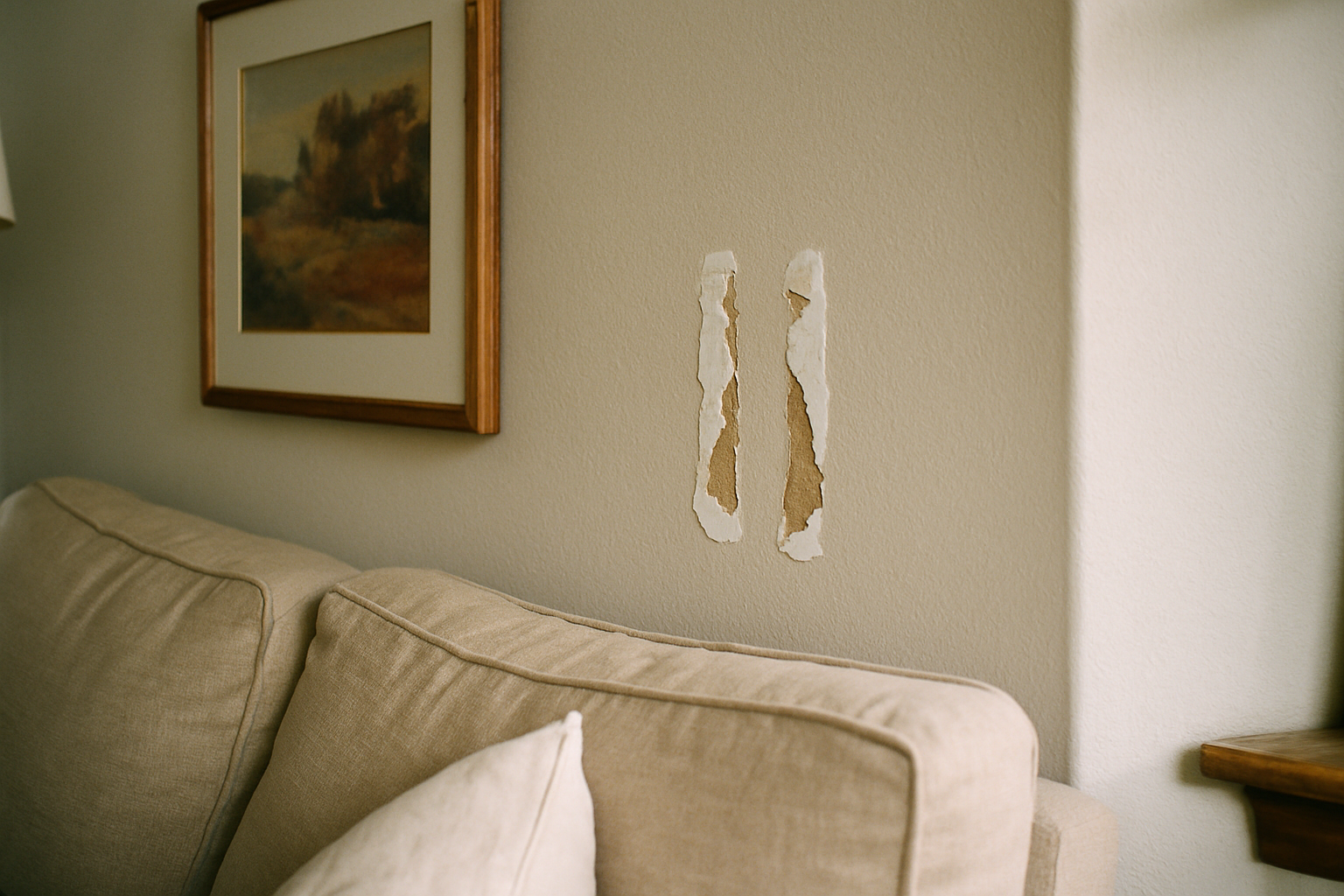
Small strips hold up to 1 pound. Medium strips hold up to 3 pounds per pair. Large strips hold up to 5 pounds per pair. These are ceilings, not targets.
A standard 8×10 framed photo runs between 1.2 and 2.4 pounds depending on whether the frame is plastic or wood with glass. Most people grab two small strips and call it done. That’s potentially 2 pounds of frame on 2 pounds of rated capacity with no margin. When the strip inevitably starts edge-lifting (and it will, because it’s been overloaded) the peel damage on removal is so much worse than a properly supported hang. Edge lifting means uneven tension. Uneven tension on removal means a rip instead of a clean release.
Weigh the thing. I have a small kitchen scale I paid eleven dollars for, and I use it more than I’d like to admit. People guess at the weight of their objects constantly and then blame the strips when the math was wrong from the start. Use the weight rating as a ceiling. Build in a 25% buffer at minimum. Hang two large strips on something that only needs one medium strip. The strips are cheap. Repainting is not.
Rental Apartments: An Honest Risk Assessment by Wall Age and Paint Type
The blanket internet reassurance that Command Strips are “rental safe” is irresponsible without two pieces of information you almost certainly don’t have: the paint’s age and its sheen level. Most renters know neither.
Here’s what actually matters. Walls repainted within 30 days of your move-in should not get Command Strips for at least 7 days after you move in. Fresh paint is soft. The binder is still curing. It bonds to adhesive more aggressively than paint that’s a year old, and it pulls up more easily when you remove it. A freshly painted wall is more vulnerable, not safer. This is counterintuitive and almost nobody knows it.
On the other end: paint applied over three or more previous layers has a significantly higher peel risk because you’re relying on the adhesion between multiple paint generations, none of which you applied or know anything about. The strip doesn’t peel just the top layer. It peels whatever was most weakly bonded in the stack.
Practically speaking, ask your landlord what paint they used and when. Most won’t know. In that case, do a test. Apply one strip in an inconspicuous spot — behind a door, low on a wall near the trim — press firmly for 15 seconds, wait 72 hours, and pull it at 90 degrees. What comes off tells you everything about what’s going to happen when you do this across twelve picture hooks.
And if something does peel? Security deposits in most states cap damage deductions at actual repair cost. A 4-inch paint chip is a $8 to $15 repair. Not a deposit. People stress about this more than the math warrants.
If the Wall Already Came Off With the Strip, Here’s the Actual Repair Path
Two scenarios. Paint peel, which is shallow, and drywall paper tear, which is slightly more involved.
For a drywall paper tear, the single mistake people make is going straight to spackling without sealing the exposed paper first. Don’t. The raw drywall paper will absorb the spackle’s moisture and bubble under the finish coat. Prime the exposed area first with a shellac-based primer (Zinsser BIN, about $12 for a small can). Let it dry. Then apply DAP DryDex spackling. It goes on pink and turns white when it’s fully dry, which means you stop guessing and stop sanding too early. That indicator alone is worth the few extra dollars over generic spackling.
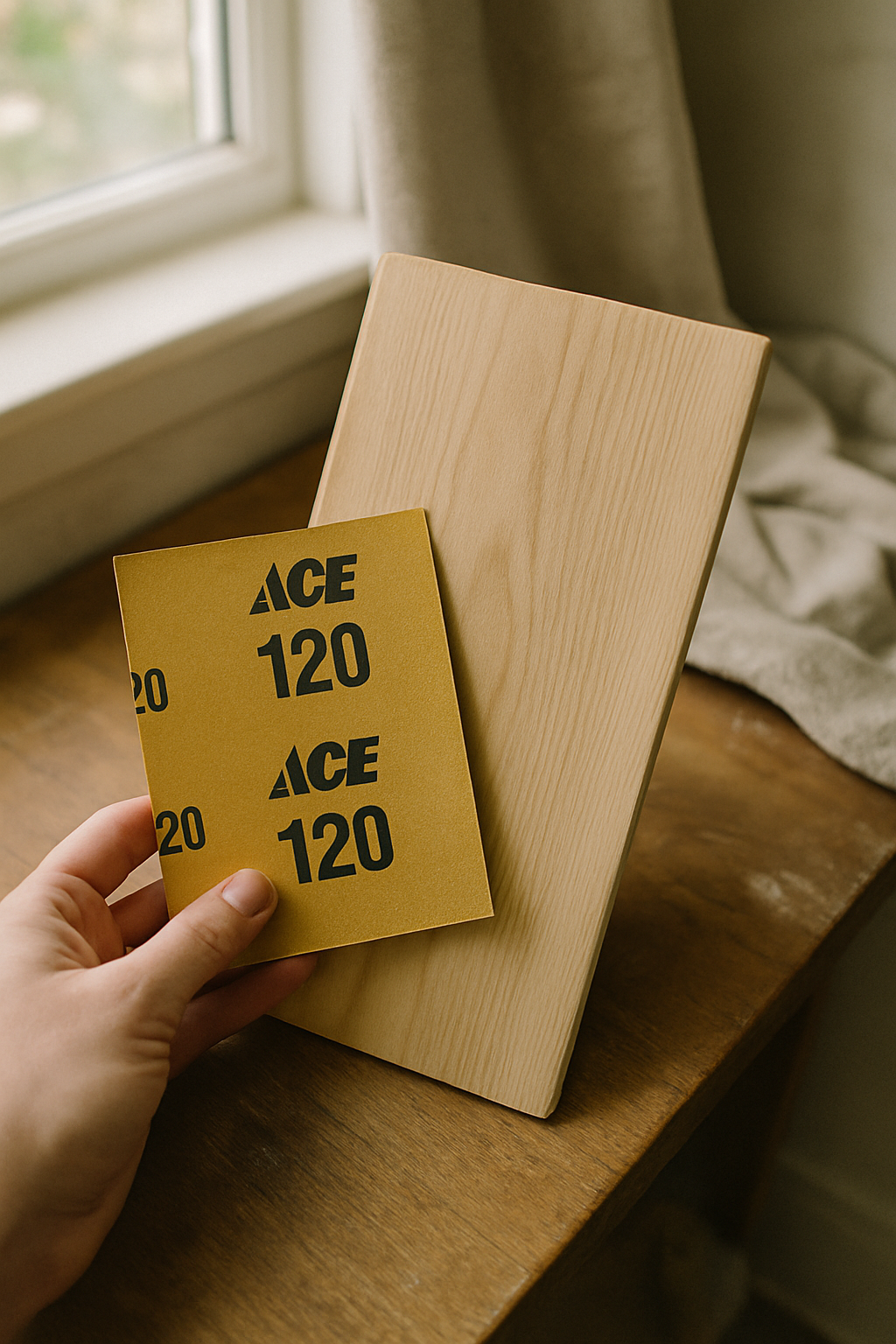
Sand lightly with 220-grit. For paint matching, the Benjamin Moore Color Capture tool at roughly $6 per sample does a genuinely good job on most painted walls — turns out it’s pretty accurate even on north-facing rooms where the light is weird and the color reads differently at noon than it does at four in the afternoon. Two thin coats, not one thick one. Total materials for a 4-inch damaged area: about $8 if you already own primer, maybe $20 if you’re buying it for the first time.
The whole repair takes maybe 45 minutes of actual work spread over a day of dry time. The anxiety people carry around Command Strip damage is almost always bigger than the repair itself. Which is why the overcautious advice online (“never use them in rentals,” “always patch professionally”) ends up being more paralyzing than the situation actually calls for. Patch it yourself. It’s fine.