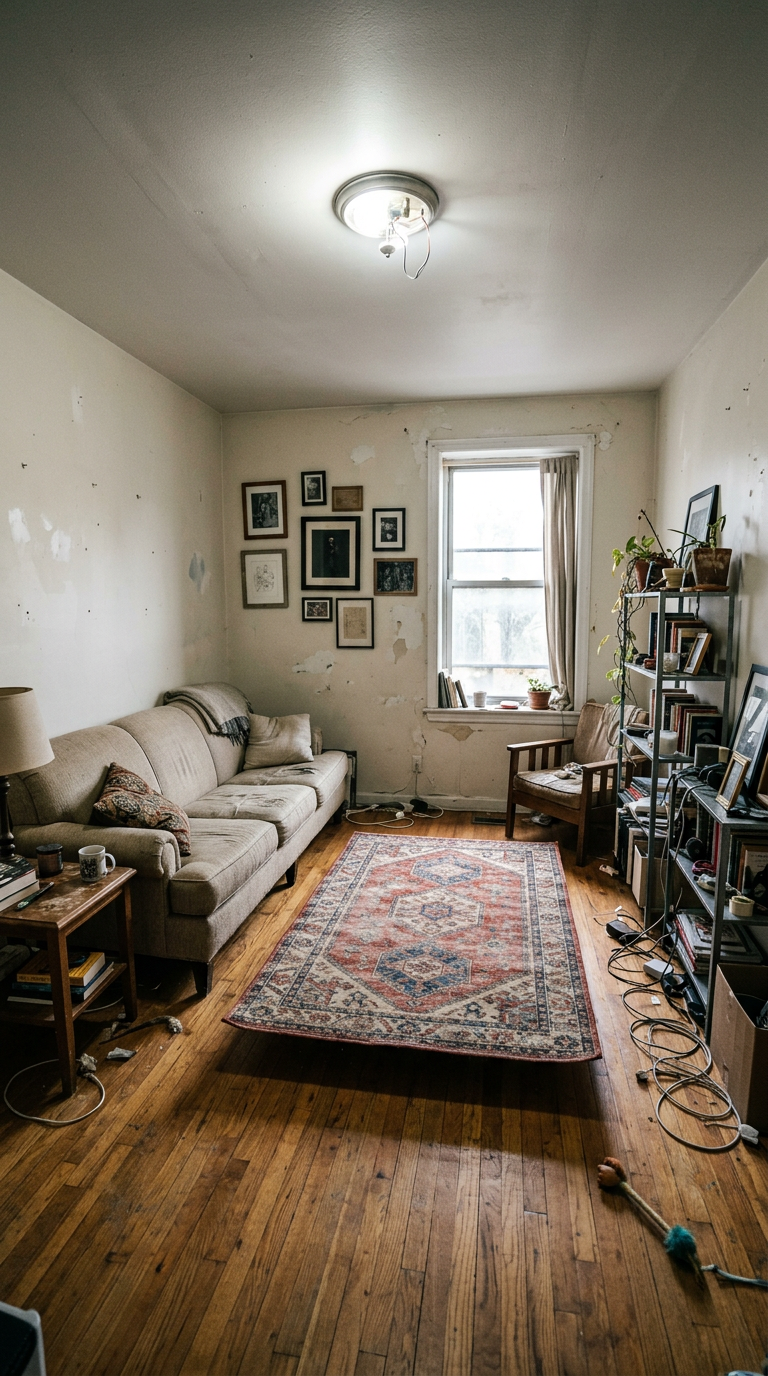
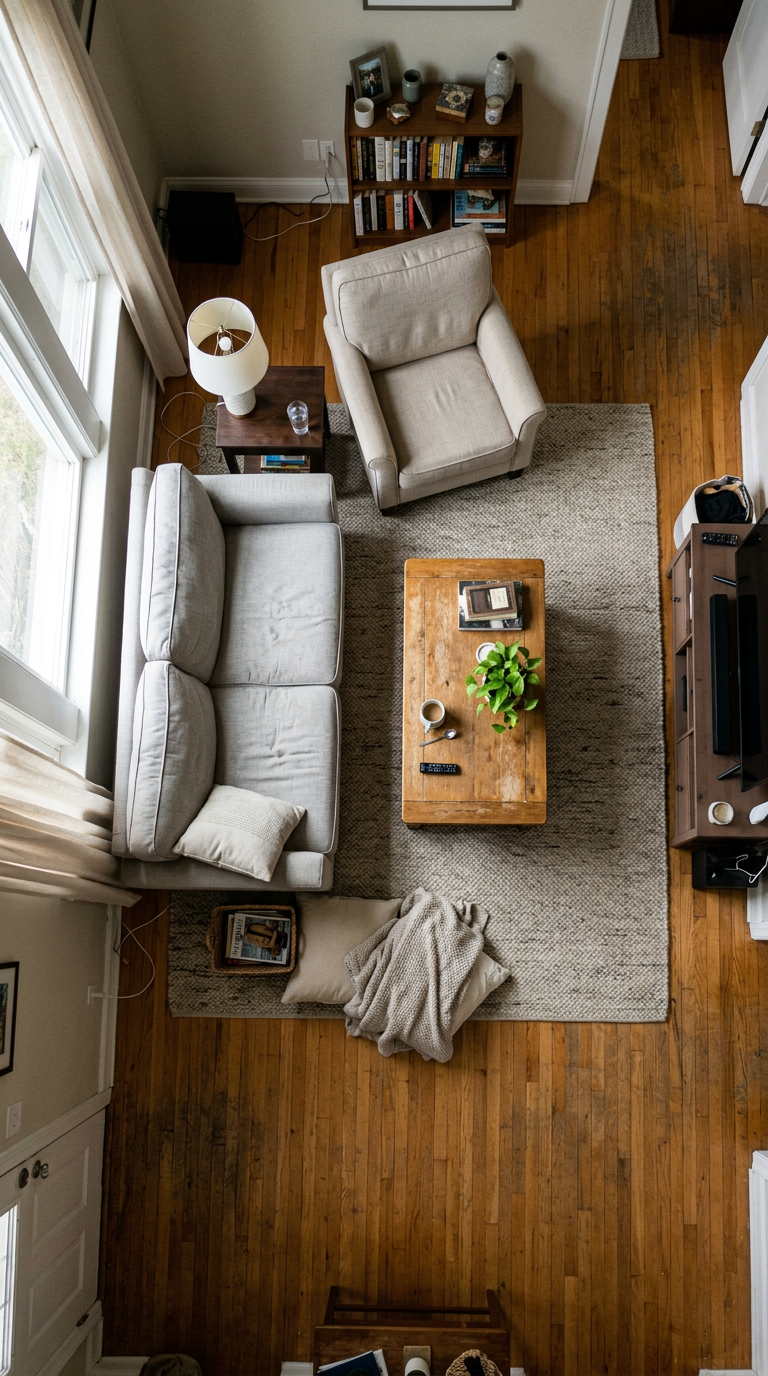
I didn’t realize I’d been placing my living room rug wrong for three years. Three years of something feeling slightly off, of guests sitting awkwardly, of the room looking sort of… unfinished, even after I’d spent real money on furniture I loved. Then a designer friend came over, tilted her head, and said, ‘Your rug’s floating.’ I didn’t even know what that meant. But the second she slid it forward so the front legs of the sofa actually sat on it, the whole room exhaled. It clicked instantly. And I’ve been kind of obsessed with rug placement ever since — because it’s one of those things that costs nothing to fix but changes absolutely everything.
The ‘Floating Rug’ Problem Nobody Talks About
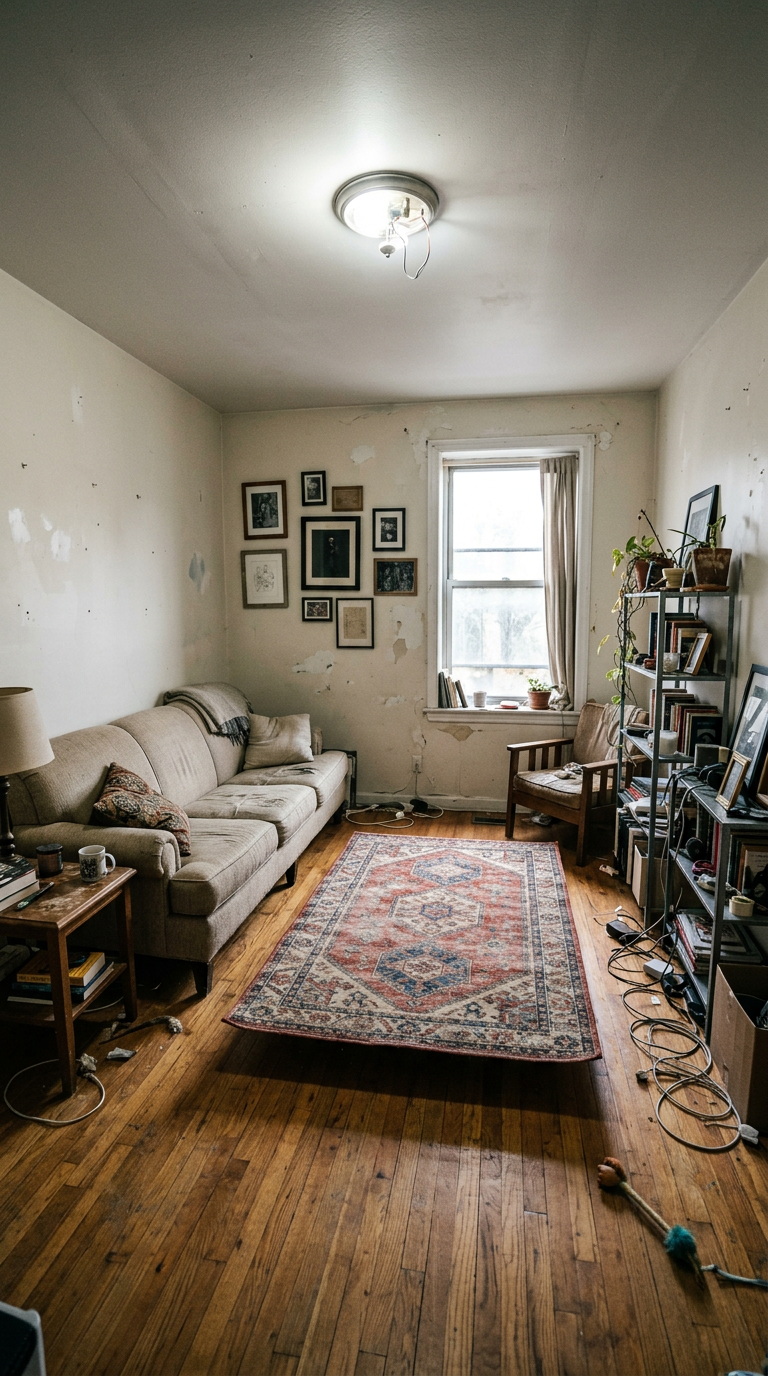
A floating rug is exactly what it sounds like. It’s sitting in the middle of your room like an island, not connected to anything — all your furniture pulled back, legs off the rug entirely.
This is probably the most common rug mistake I see, and honestly, it’s totally understandable. People think the rug should be centered in the open floor space, like a math problem. But rooms aren’t math problems.
What actually happens visually is the rug and the furniture look like two separate decisions that never met each other. The space feels choppy. Unsettled.
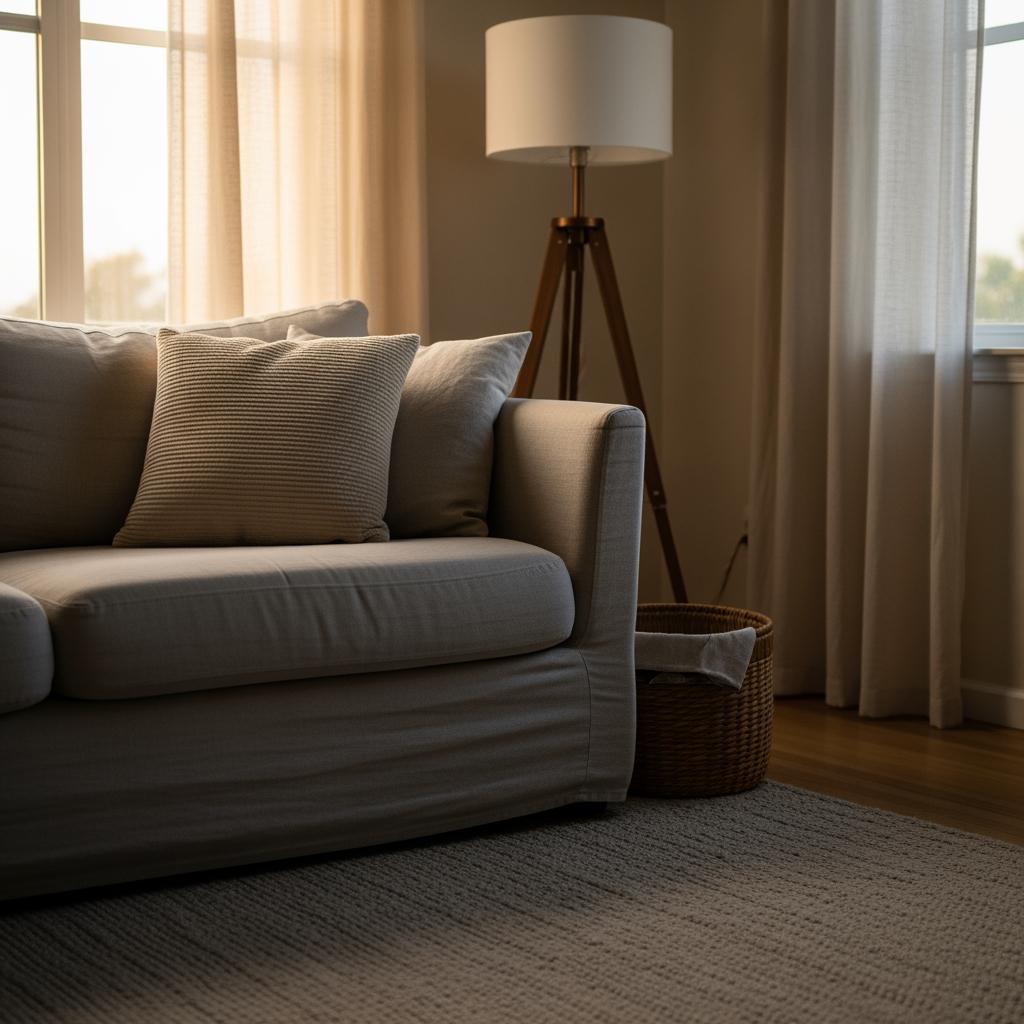
When I tackled my own cramped guest room last fall, the first thing I did was drag the rug under the front legs of the bed. Just that. The room looked pulled together for the first time in months.
Why Centering by Eye Almost Always Goes Wrong
Our eyes lie to us in rooms. I mean that sincerely.
When you stand in the doorway and eyeball the center of your floor, you’re measuring the empty floor — not the room as it functions with furniture in it. So you place the rug in the visual center of the bare floor, push your furniture back, and wonder why everything still looks weird.
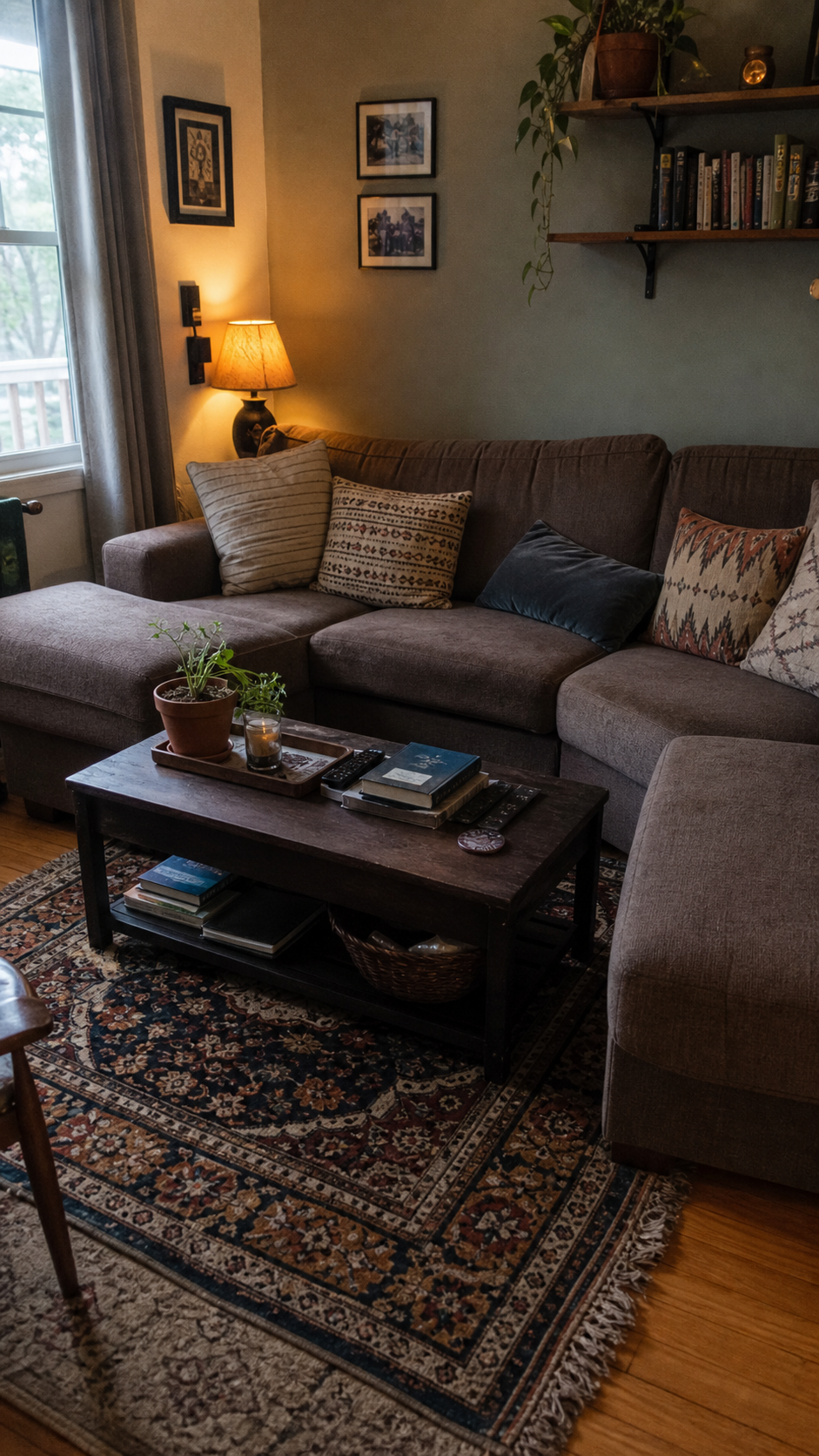
The actual optical center of a furnished room shifts toward where people gather. Toward the seating. Toward the coffee table. That’s your real anchor point.
I made this mistake in my own den with a gorgeous hand-knotted wool rug I saved up for. Placed it perfectly centered on the floor, stood back, and it looked like it was sliding toward the TV. Moved it six inches toward the sofa. Instantly better. Tiny shift, huge difference.
The Front-Legs-On Rule and When to Break It
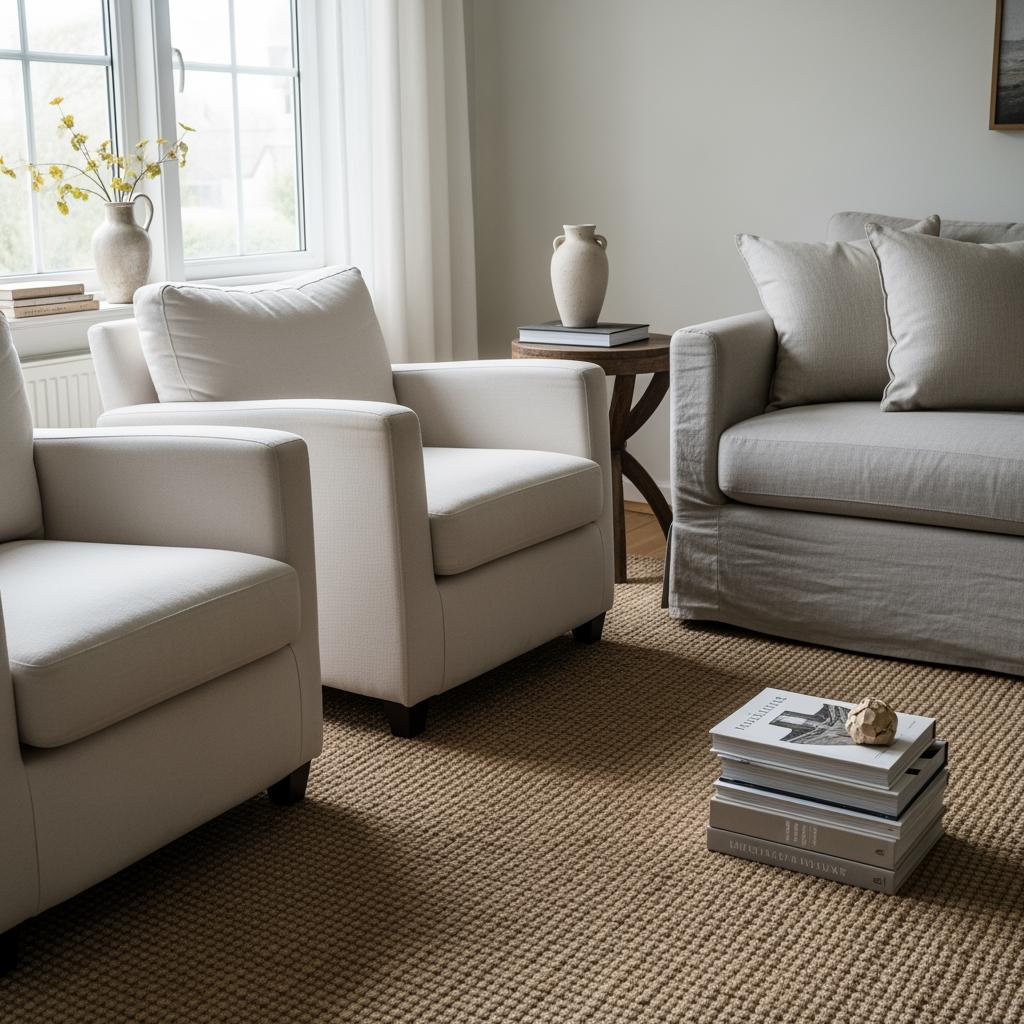
You’ve probably heard the ‘front legs on the rug’ rule. It’s real, and it works beautifully in most living rooms.
Basically, the front two legs of every seating piece in your grouping rest on the rug. The back legs stay on the floor. This visually connects all the furniture into one conversation without requiring a rug so large it eats your entire floor.
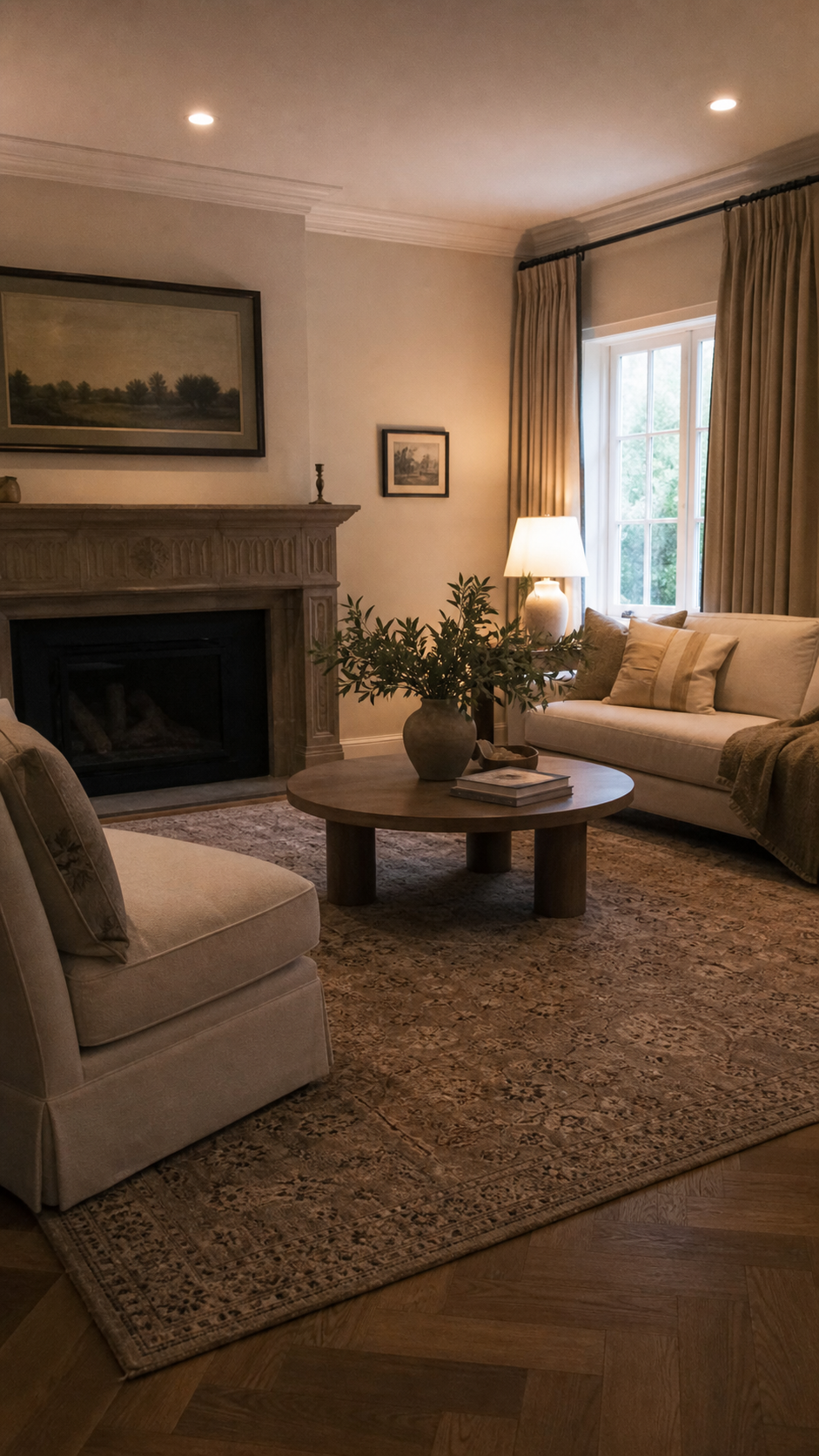
But here’s where I’ll be a little controversial: I actually prefer all legs on the rug when I can swing it. It feels more luxurious. More intentional. Like the room is wearing a proper foundation instead of just socks.
That said, all-legs-on requires a significantly larger rug, and sizing up is genuinely expensive. So front-legs-on is a smart, beautiful compromise. Not a lesser option.
Rug Sizing: The One Mistake That Costs You Everything
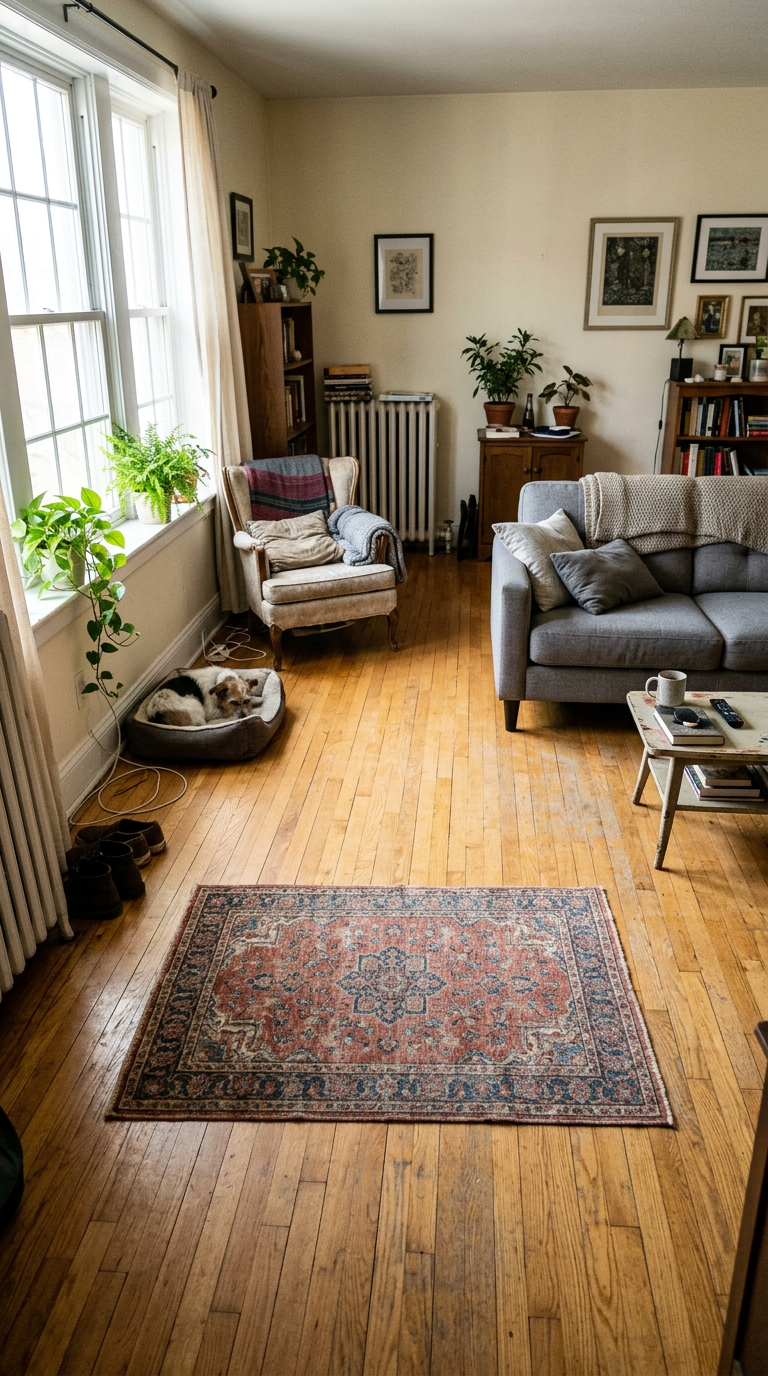
Too small. Almost always too small. This is the number one rug placement error and it’s also the one people resist fixing most because sizing up costs money.
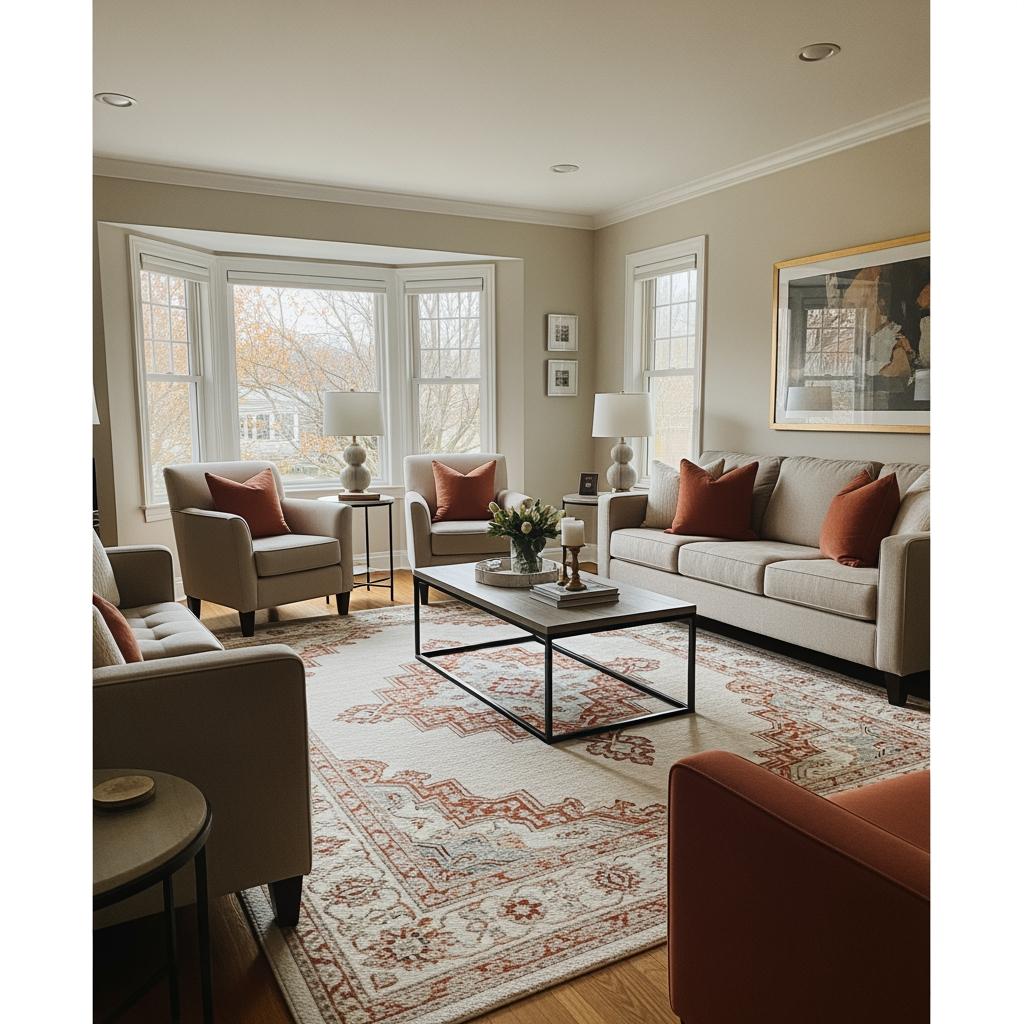
A rug that’s too small makes your furniture look like it’s hovering above the floor. Even beautiful furniture. Even expensive furniture. Scale matters so much more than most people expect.
In a standard living room, you generally want at least a few inches of bare floor visible between the rug edge and the wall — but your seating should comfortably land on or at the rug’s edge. If your coffee table is on the rug but your sofa is a full foot behind it, the rug is too small.
I went through two rugs in my sunroom before I accepted I needed to size up. The $180 rug I finally returned was gorgeous. The larger version of it changed the whole room. Worth the extra spend.
Dining Room Rugs: The Sizing Rule That’s Actually Non-Negotiable
 Dining Room Rugs: The Sizing Rule That’s Actually Non-Negotiable” />
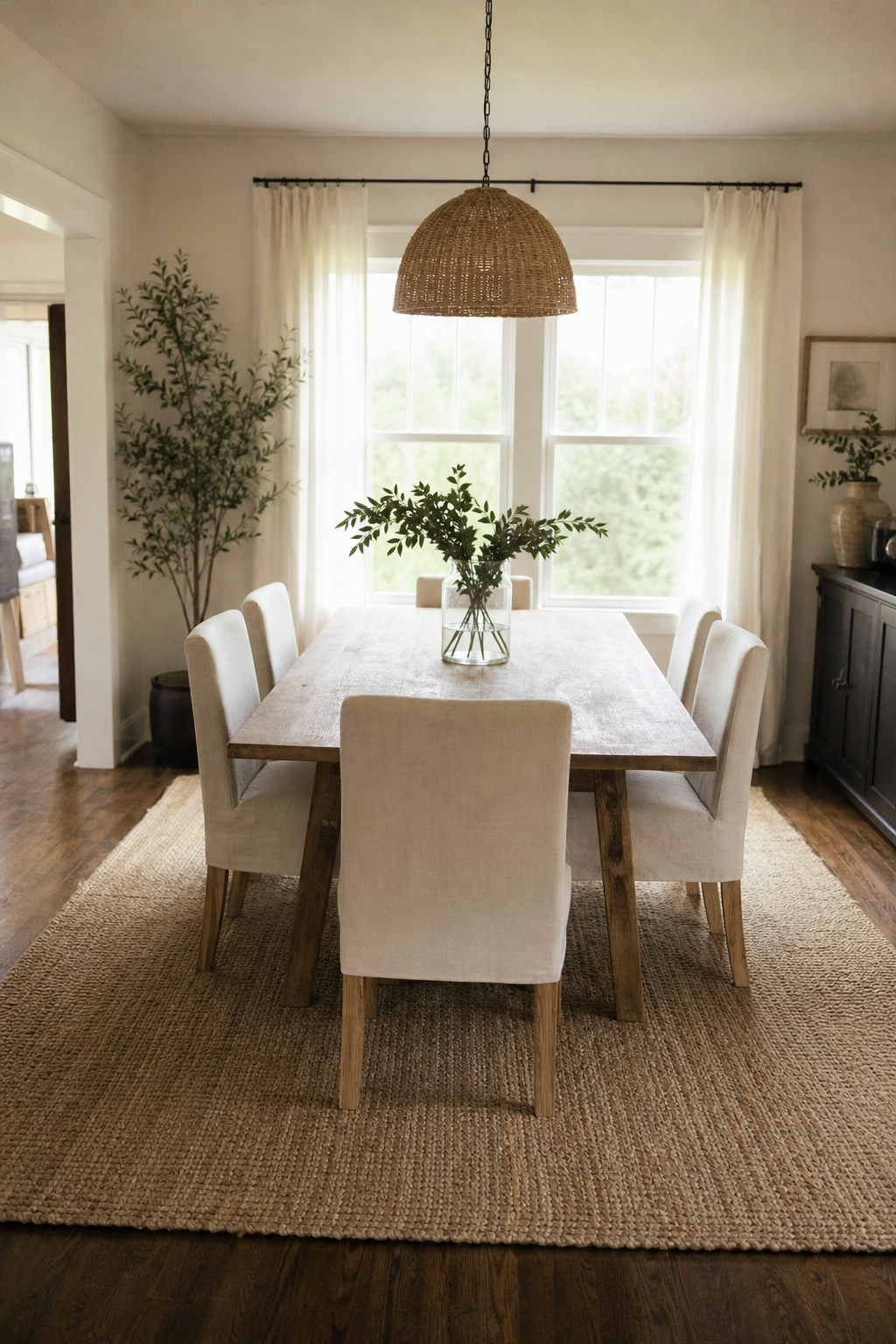
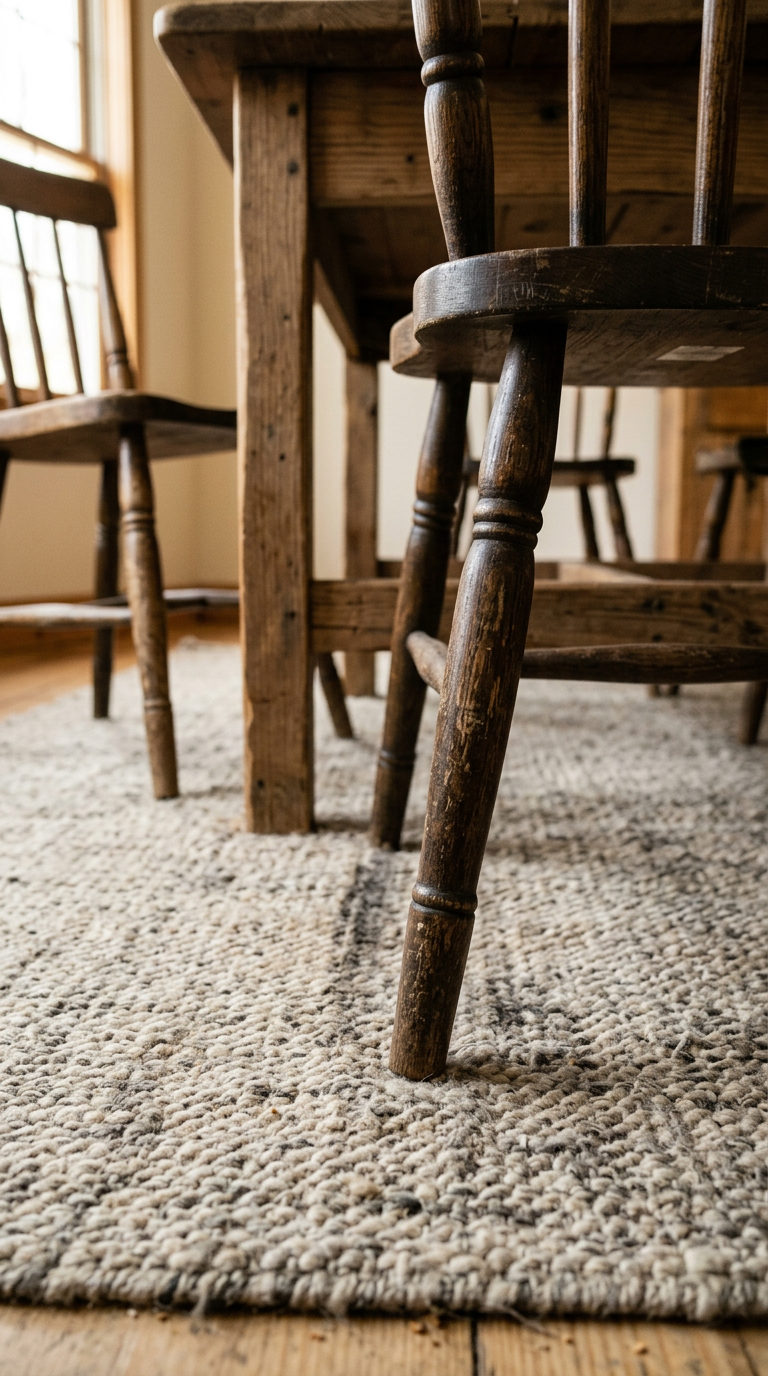
Dining rooms have one hard rule. When chairs are pulled out, all four legs should still be on the rug. If someone scoots back to stand up and the back chair legs fall off the edge, your rug is too small.
This one actually is non-negotiable. Not because of aesthetics (though it does look terrible). Because chair legs catching on the rug edge every single meal is genuinely maddening.
I’d say measure your table, then add at least twenty-four to thirty inches on every side before you pick your rug size. Most people add twelve. It’s not enough.
A good tip I learned the hard way: tape out the rug dimensions on your floor before you buy. Blue painter’s tape. Sit in your chairs. Pull them out. See what happens.
Bedroom Rug Placement: Three Ways to Do It and One You Should Avoid
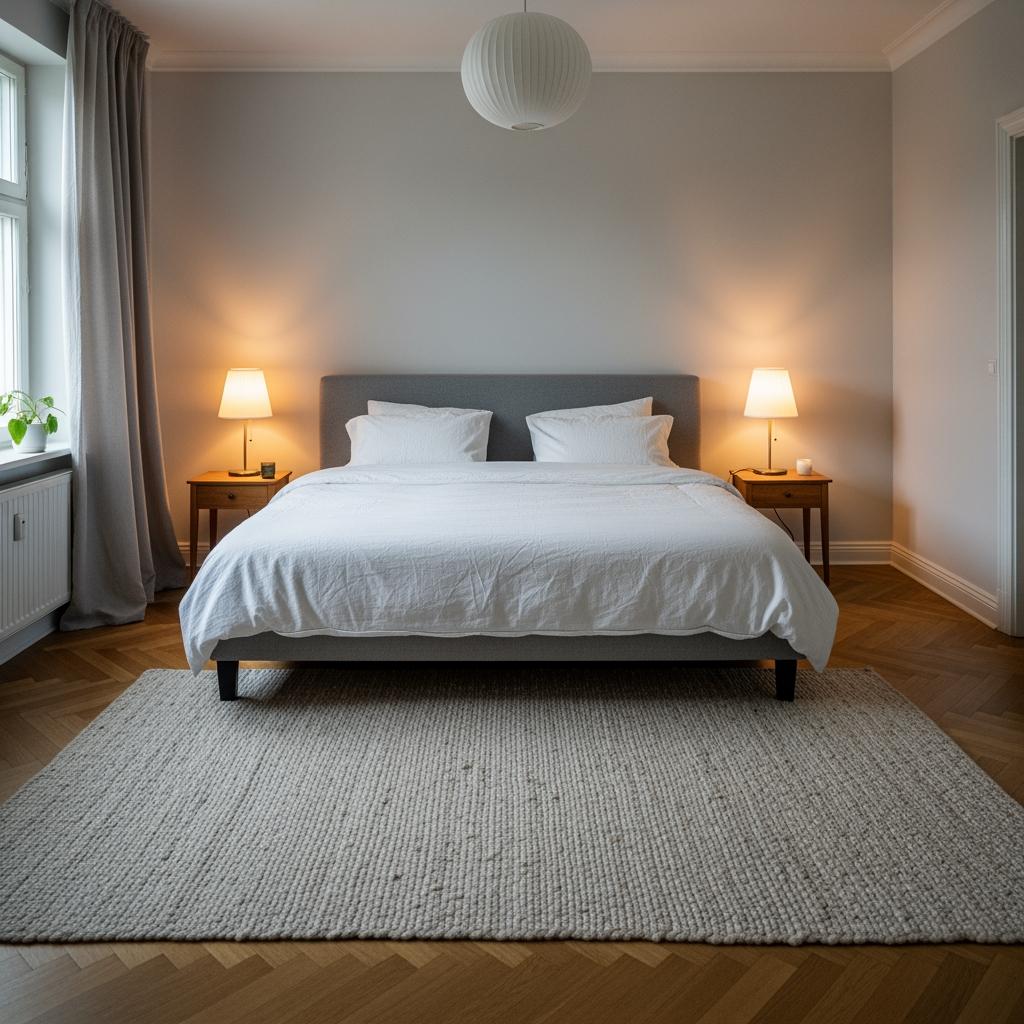
Bedrooms are forgiving. There are a few genuinely good options here and I love that.
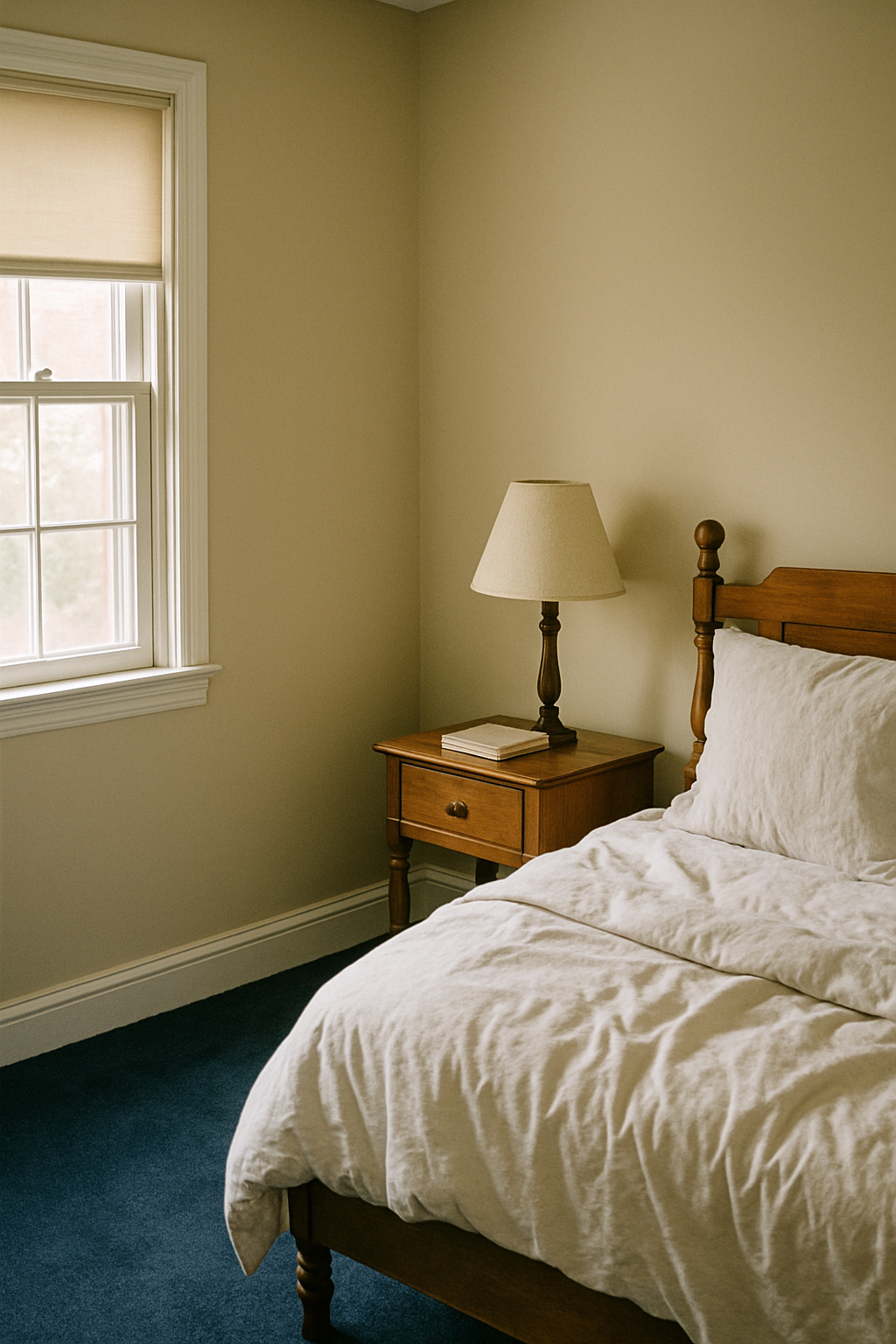
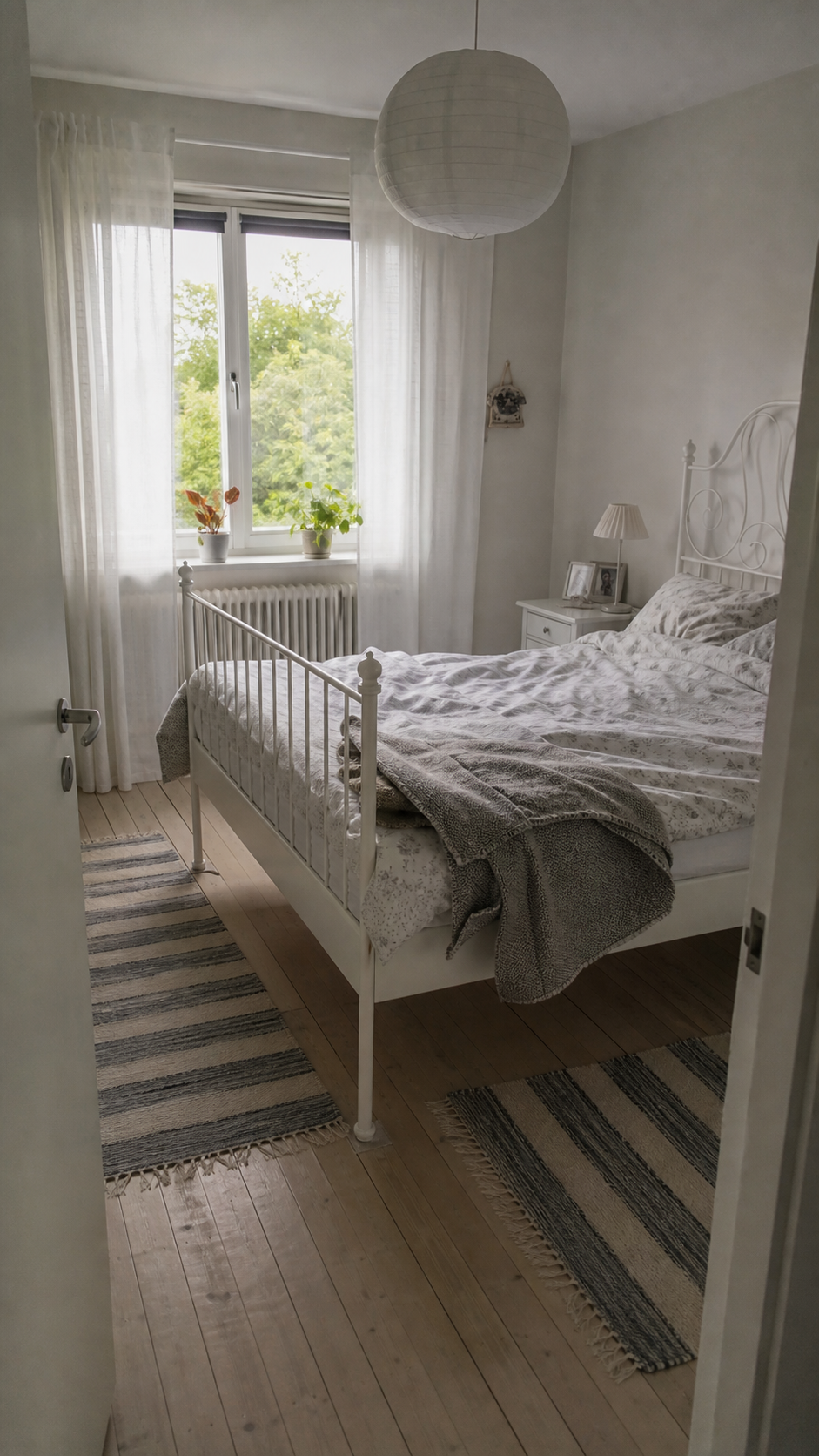
Option one: a large rug centered under the bed, extending two to three feet on the sides and foot. You step out of bed onto softness every morning. This is my personal favorite — pure luxury feeling for a surprisingly affordable fix.
Option two: two matching runners, one on each side of the bed. Great for smaller rooms. Feels intentional and a little boutique-hotel, which I’m very into.
Option three: a rug placed at the foot of the bed only, extending under the lower third. Works best with a larger statement rug.
The one to avoid: a small accent rug pushed directly in front of a nightstand. It just looks lost. Confused. Like it wandered in from another room.
What Happens When Your Room Isn’t Square
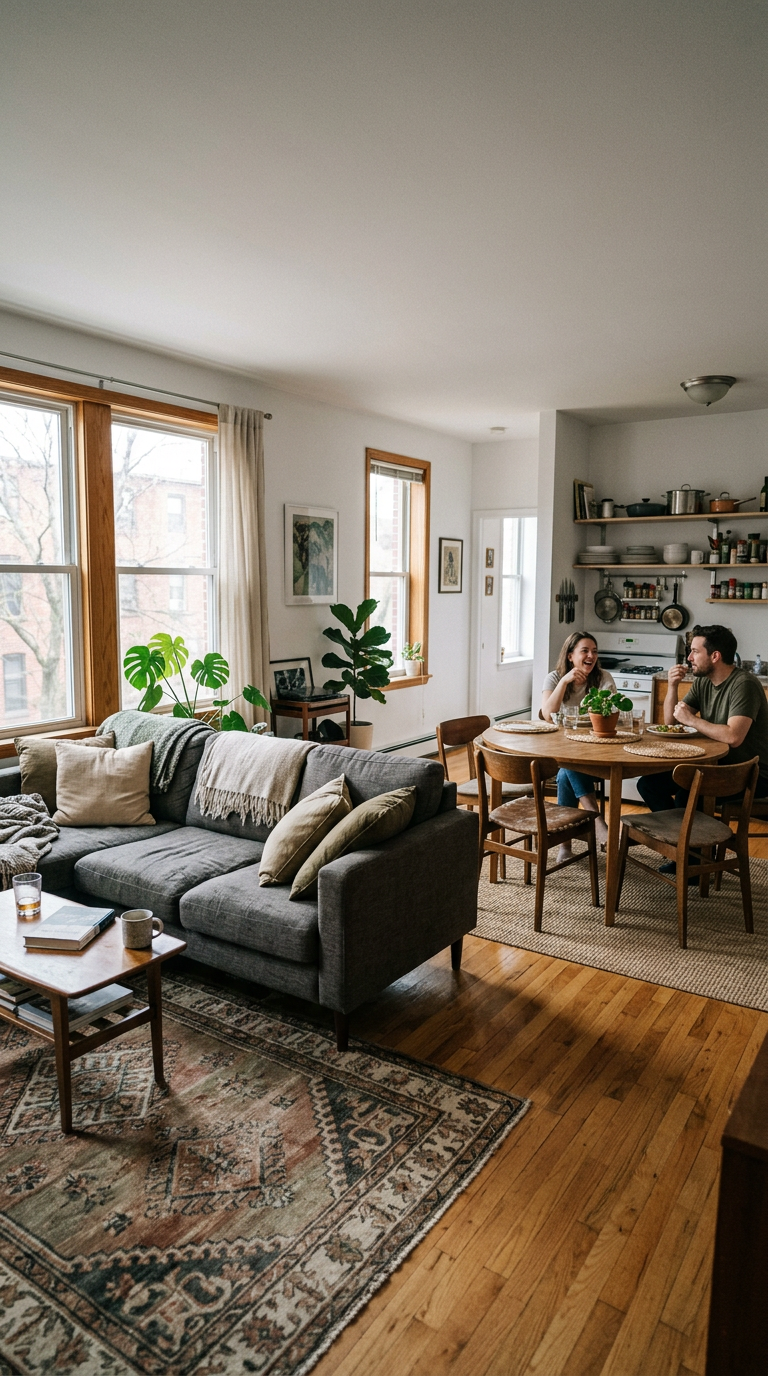
Not every room is a clean rectangle. Open-plan layouts, L-shaped spaces, rooms with weird alcoves — these are where rug placement gets genuinely tricky and where most advice falls apart.
In an open-plan living and dining space, I always recommend defining each zone with its own rug rather than trying to find one enormous rug that covers everything. Two rugs create two conversations in the space. That’s the goal.
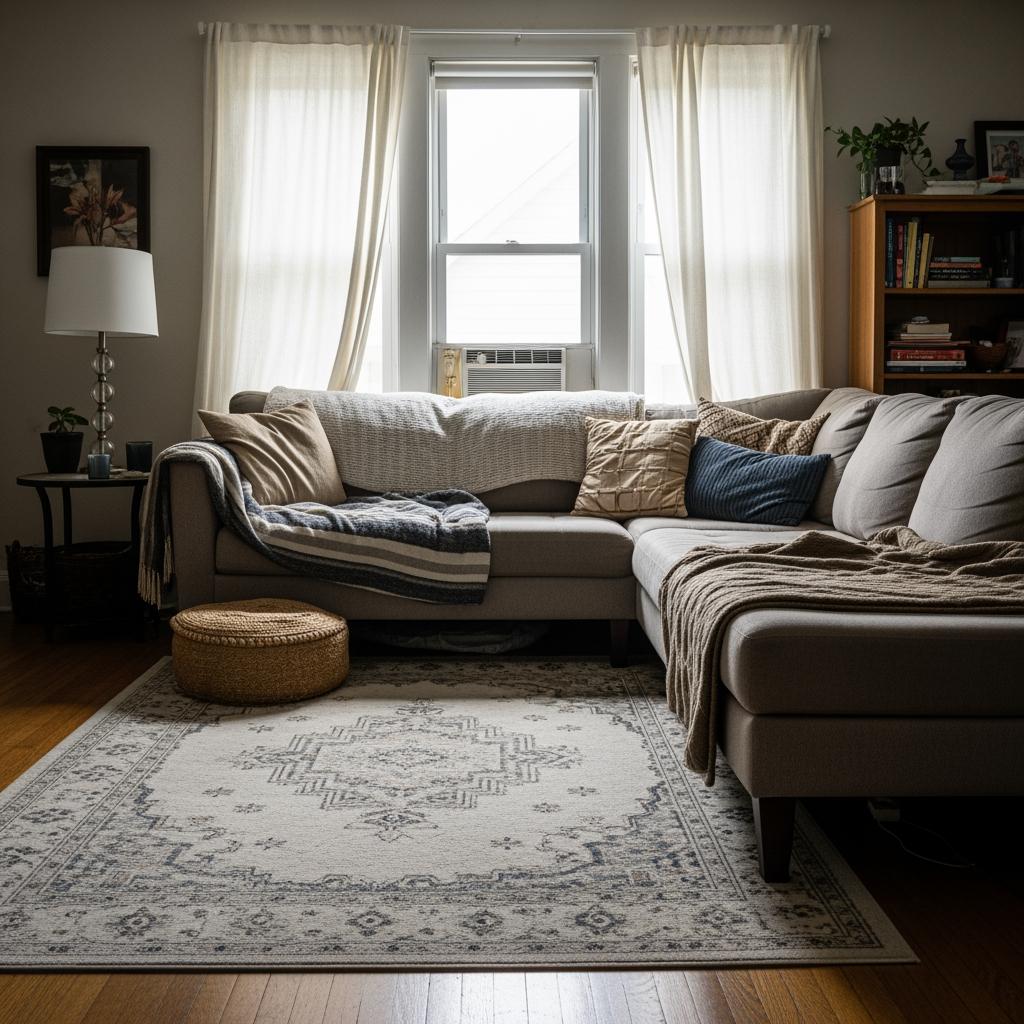
For L-shaped seating, anchor the rug to the longest sofa. Let that be your north star. The rest of the seating can graze the edge or float slightly, and it still reads as intentional.
Honestly, asymmetrical rooms are where rug placement becomes more of a feel thing than a rule thing. And that’s okay. Trust what makes the conversation area feel connected.
The Direction of Your Rug Matters More Than You Think
Orientation. This one is so overlooked and it genuinely bugs me when I see it done wrong.
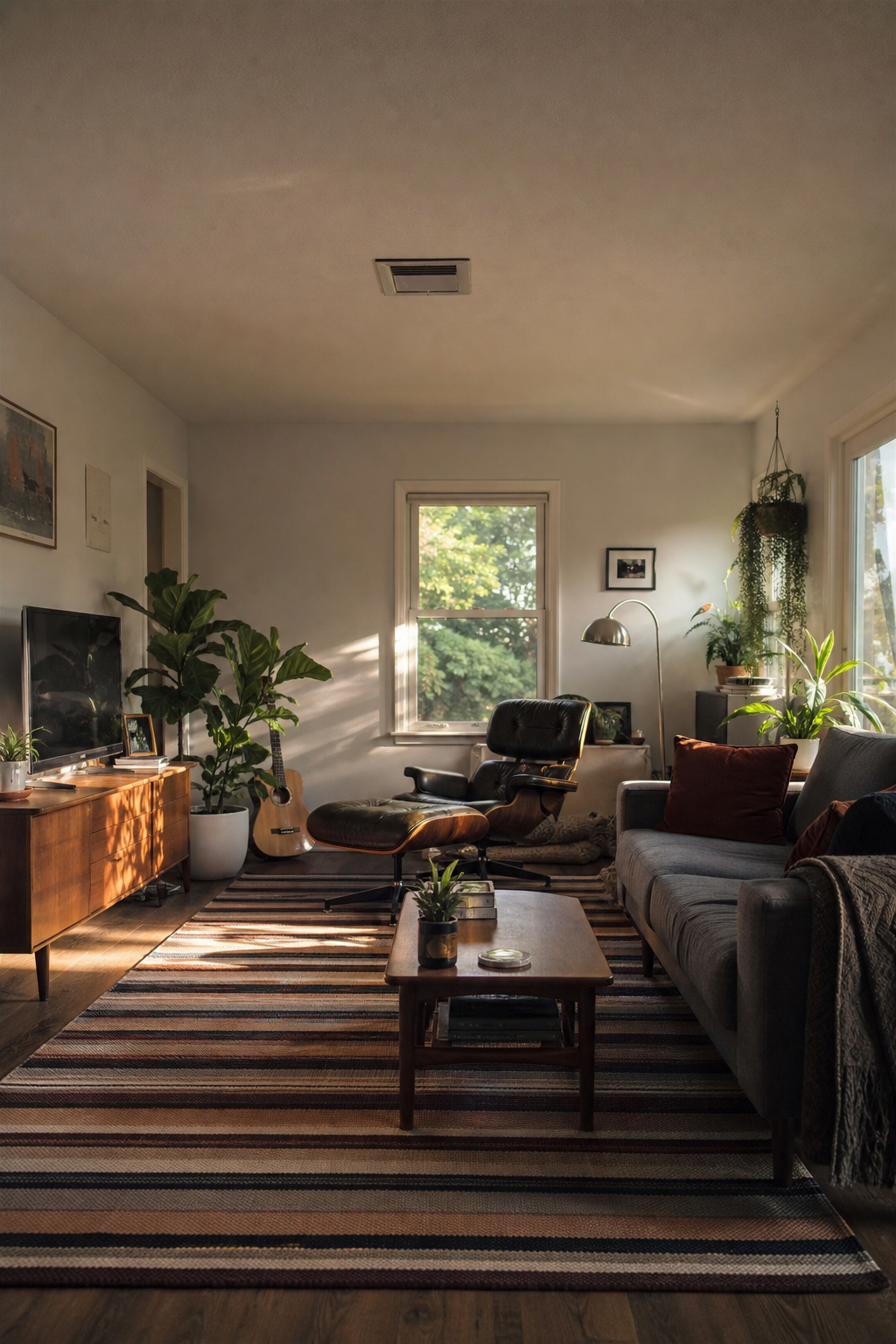
In a rectangular room, a rectangular rug should almost always run in the same direction as the room’s longest wall. It lengthens the space visually. Running it the opposite way cuts the room in half.
In a long, narrow hallway, a runner should always follow the length of the hall. Obviously. But in a hallway that’s wider than expected, you can play with a shorter runner placed at an angle. I’ve seen it look incredible.
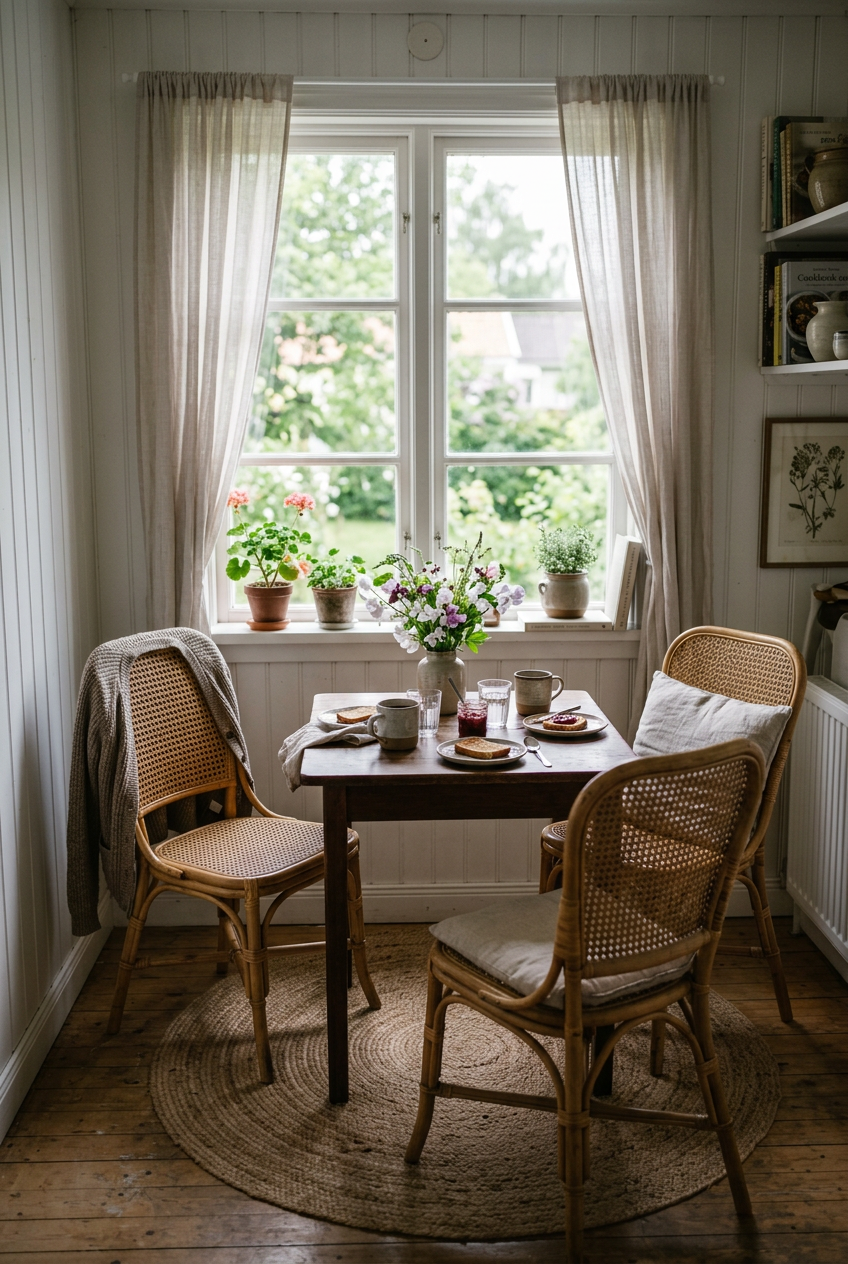
And in a square room? A round rug can be magic. Soften all that boxy symmetry. I put a round sisal rug in my square breakfast nook and it was a moment.
Layering Rugs: When It Works and When It’s Just a Mess
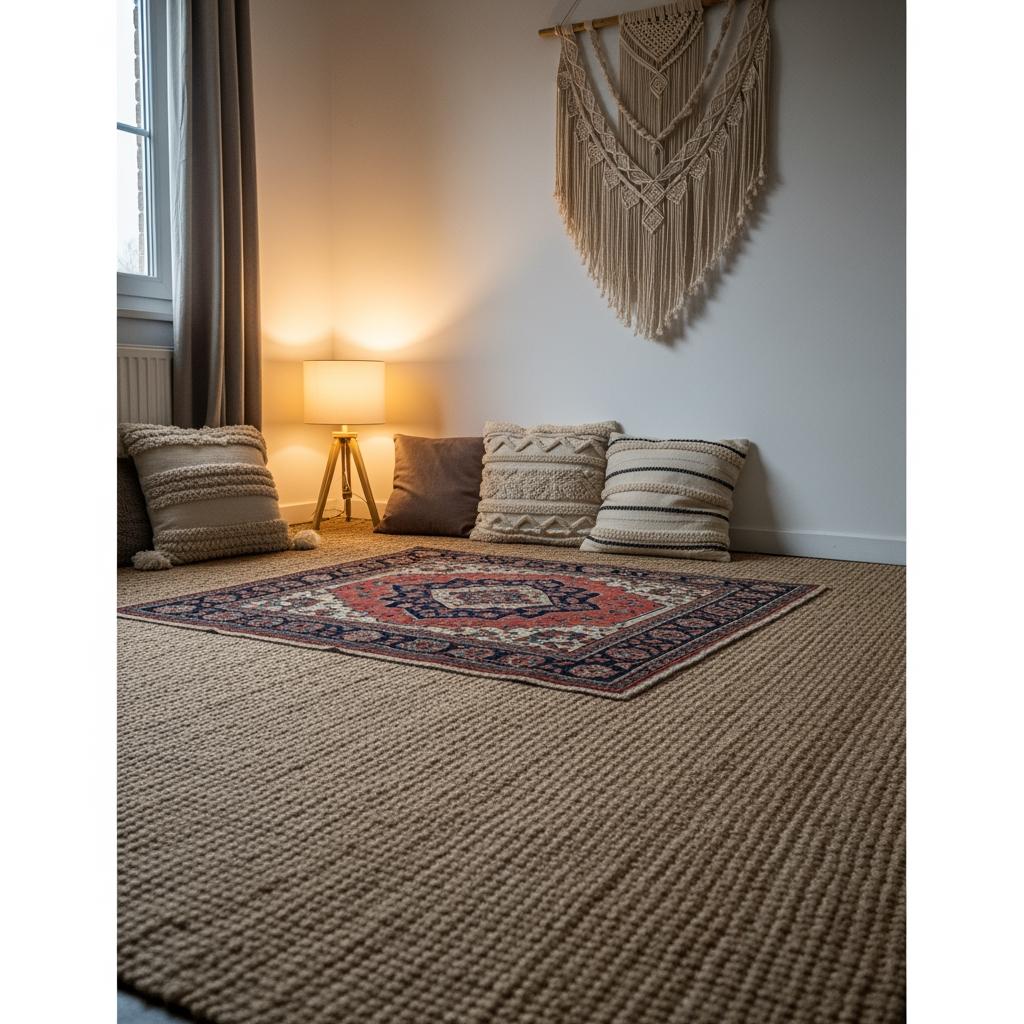
Layering rugs is having a serious moment right now and I am mostly here for it.
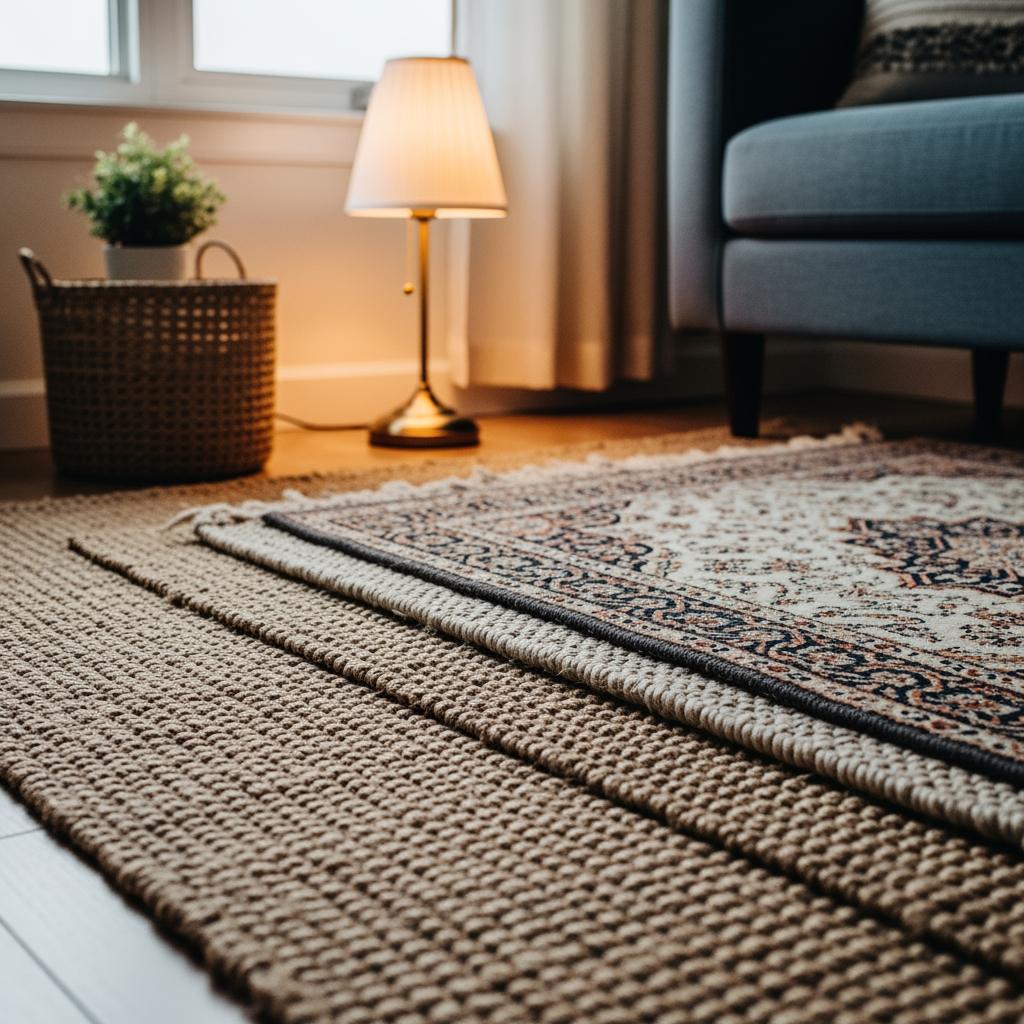
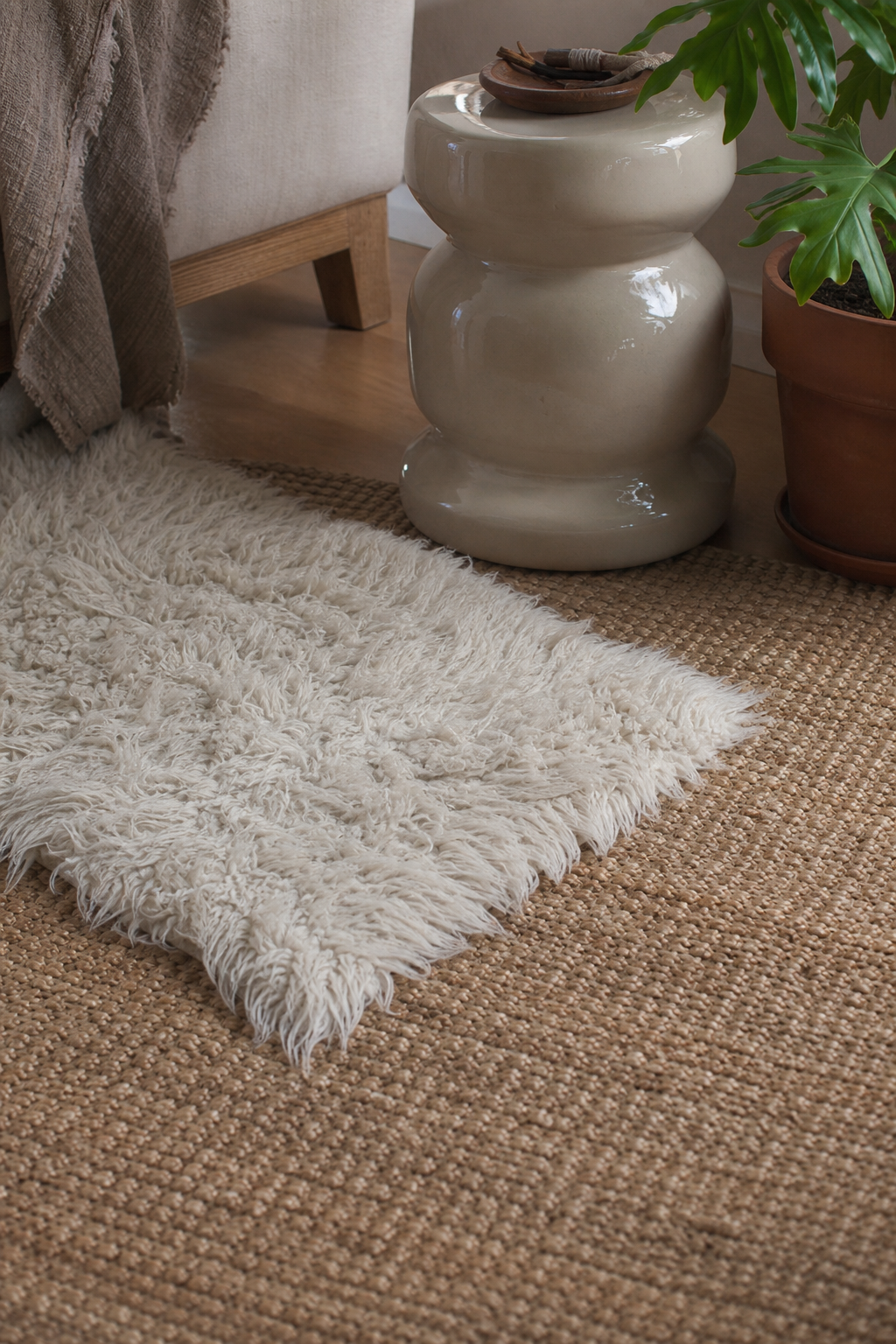
The key to layering that actually works: start with a flat-weave, lower-pile rug as your base — something like a simple kilim or jute. Then layer a smaller, softer, more textured rug on top. The contrast in texture is what makes it look intentional.
Where it goes wrong is when both rugs are similar in pile height or pattern. They compete instead of complement. It reads as an accident.
Also, be honest about whether your layered rug situation is an aesthetic choice or just two rugs you couldn’t decide between. I’ve been there. Sometimes editing down is more beautiful than stacking up.
If you try layering and it bugs you after a week, trust that instinct.
Rug Pads: Not Optional, Actually
I used to skip rug pads. I thought they were sort of unnecessary, an upsell. I was wrong about this.
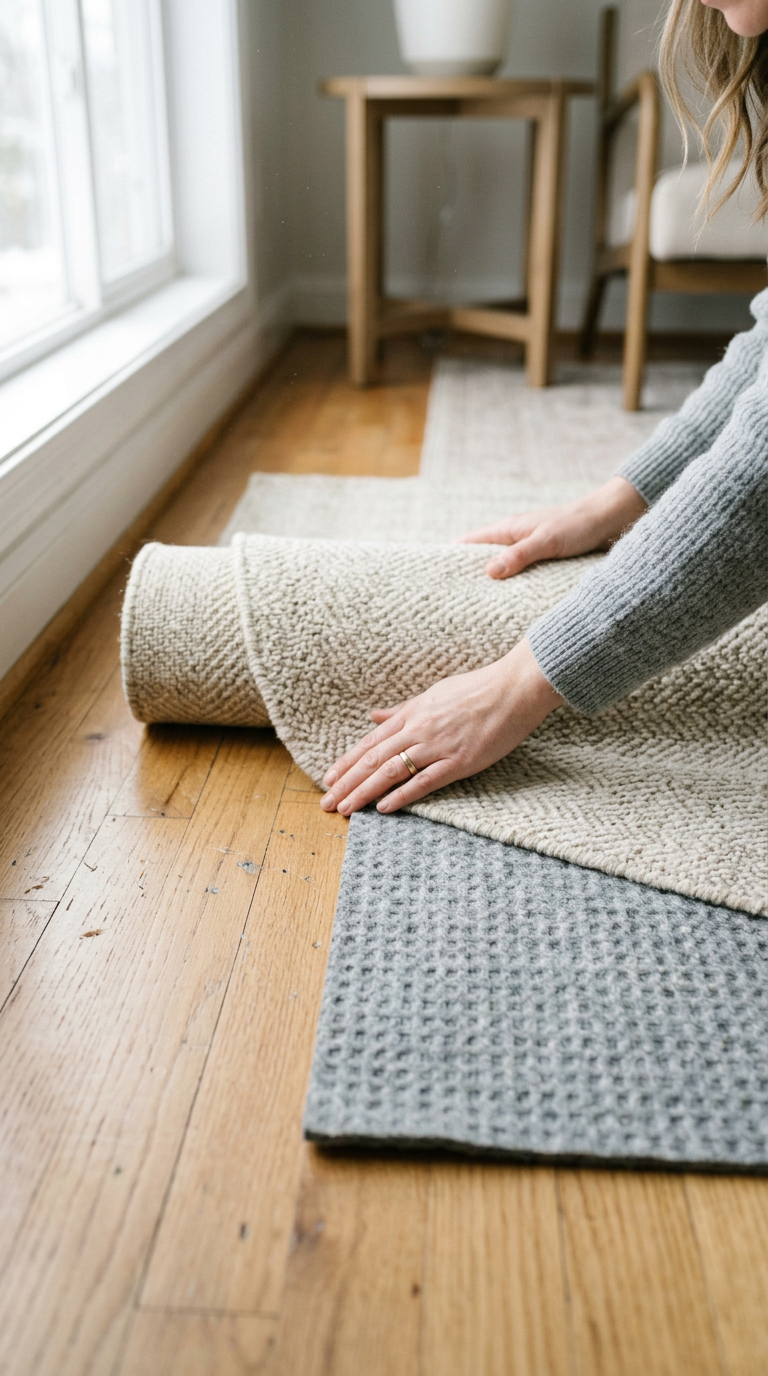
A good rug pad keeps the rug from creeping. Rugs move, especially on hardwood. And a floating, shifting rug is not just a visual problem — it’s genuinely a tripping hazard.
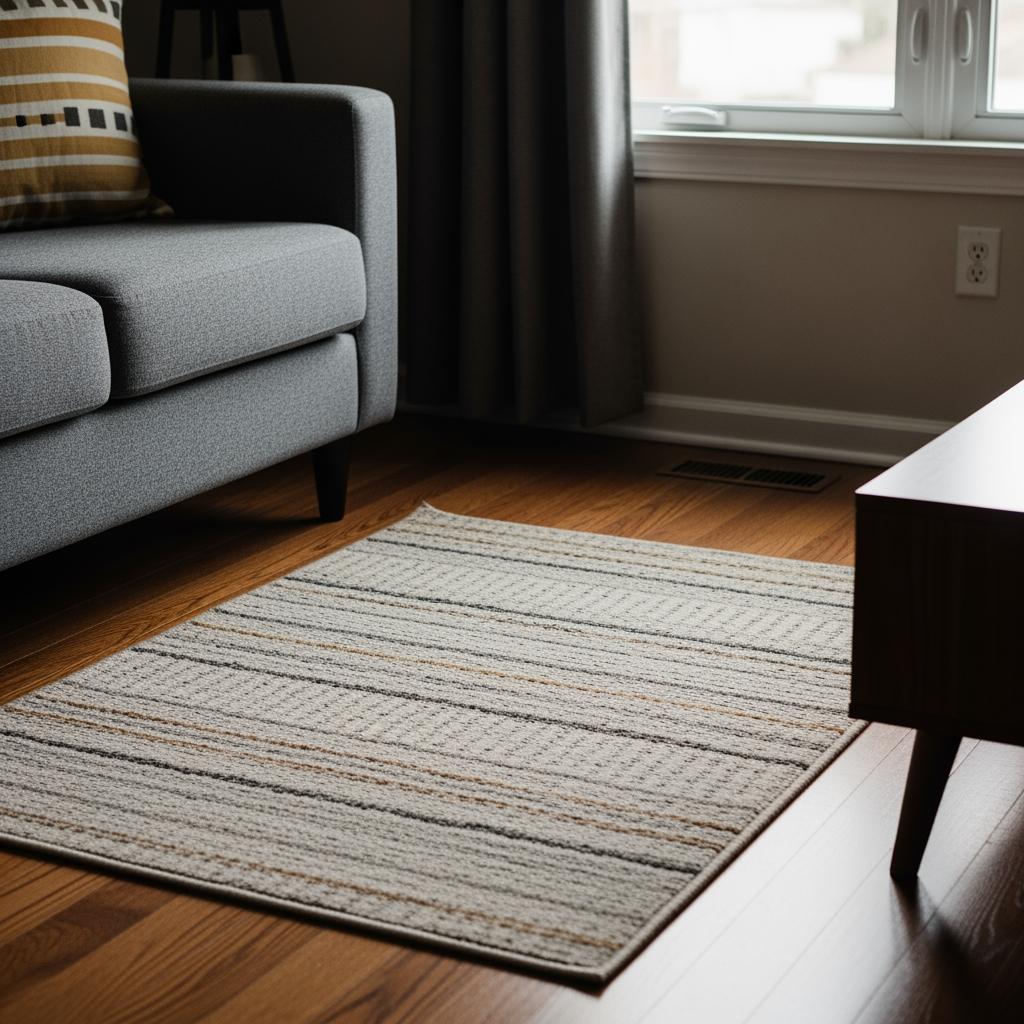
Beyond safety, a pad adds cushion under a flat-weave rug that would otherwise feel like standing on paper. It also protects your floor. And it keeps the rug from bunching at the edges, which is a thing that makes me irrationally annoyed.
Size your pad so it’s about an inch smaller than the rug on every side. You don’t want pad peeking out from under the edges. That’s its own kind of sad.
Small Rooms: How to Use a Rug to Make Space Feel Bigger
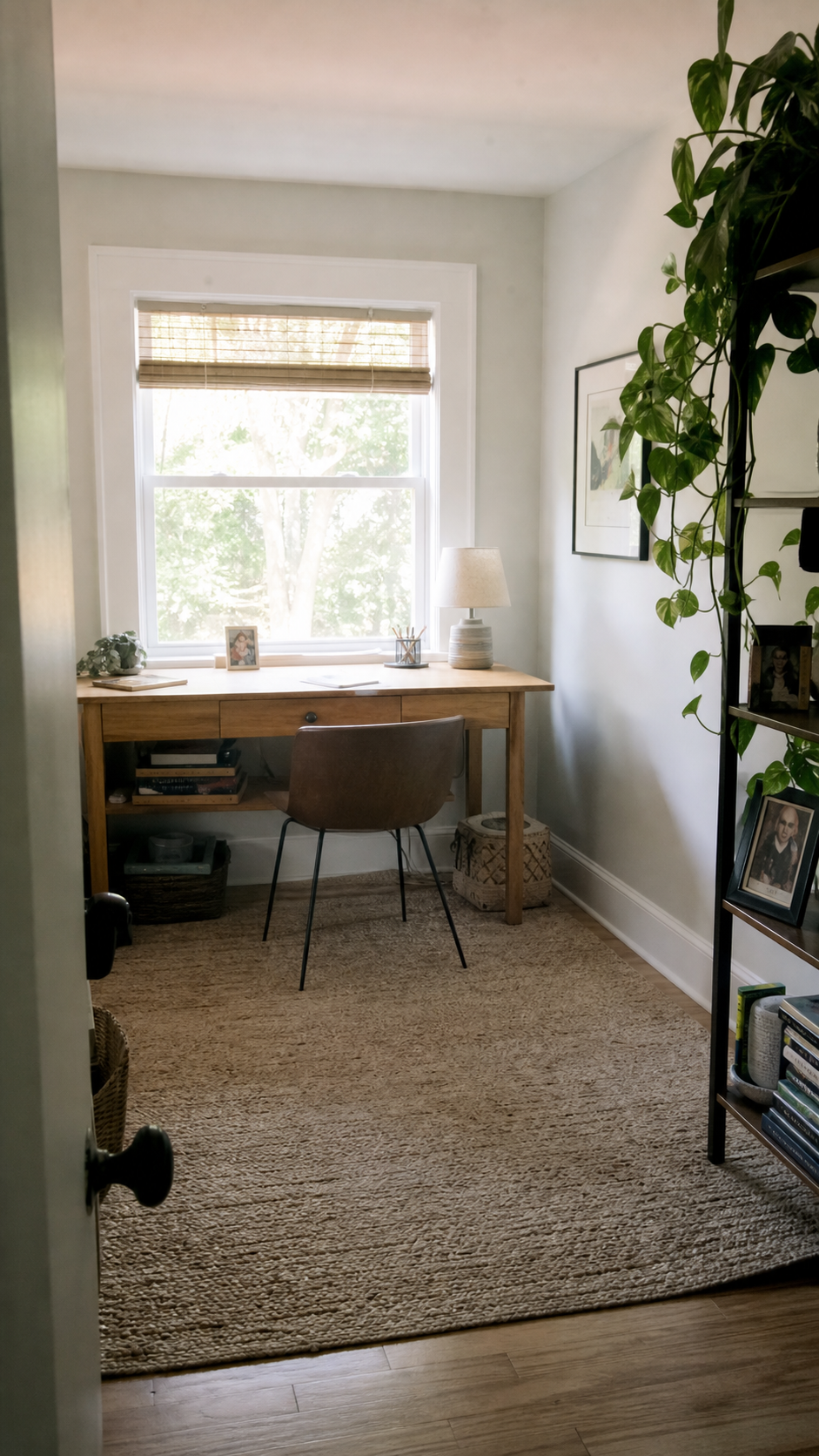
Small rooms need rugs more than big ones do. Counterintuitive, maybe, but it’s true.
A rug in a small room creates a visual boundary that makes the space feel purposeful rather than cramped. It says: this is a room, not just a corner.
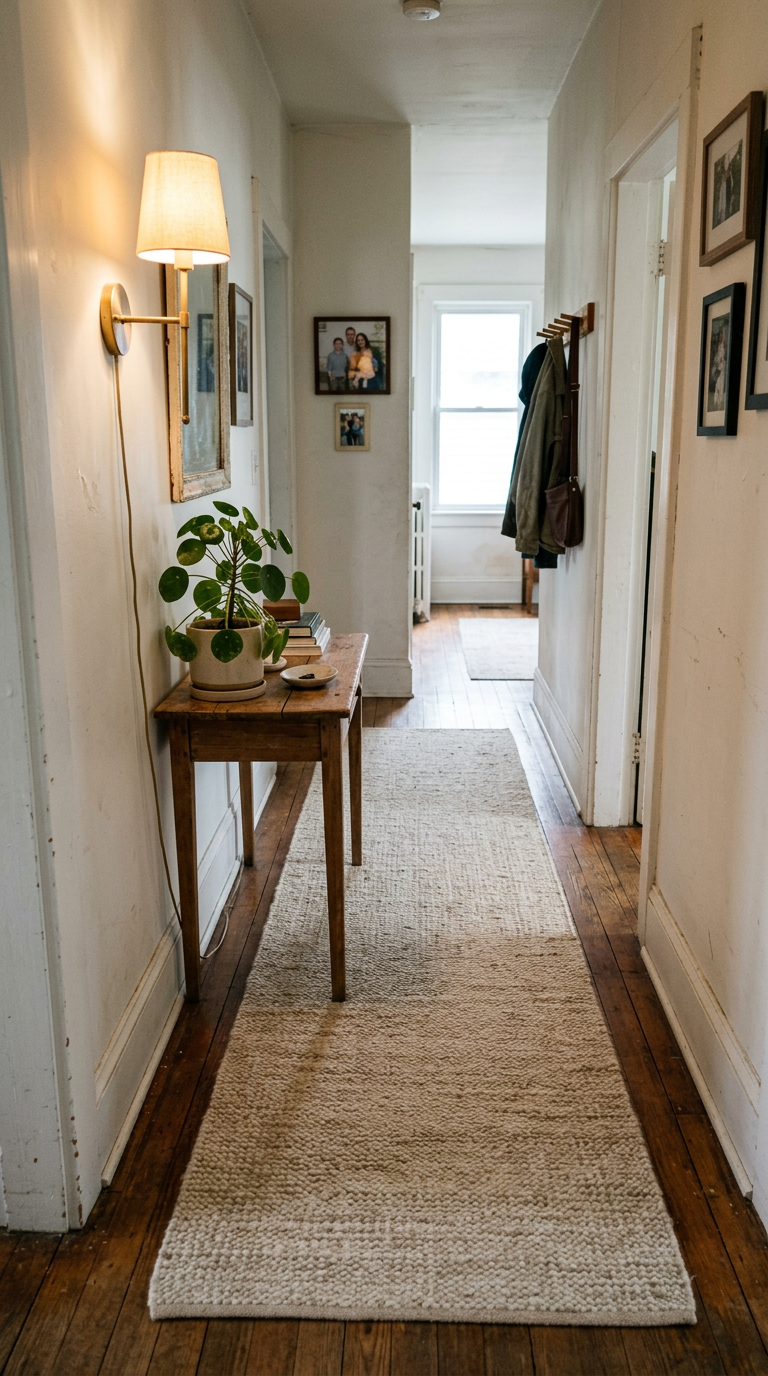
Go lighter in color when you can. A soft ivory or warm stone rug reflects light and opens things up. Dark rugs absorb it and pull the walls in. In my small home office, I switched from a dark charcoal rug to a pale natural fiber one and the room felt noticeably larger within a day.
Also, don’t be afraid to let a rug fill more of the floor in a small room. The floor-hugging effect is a friend here. If I had a small hallway, this is what I’d do first — drop a runner that goes nearly wall to wall.
Pattern and Color Placement: Where the Rug’s Design Falls in the Room
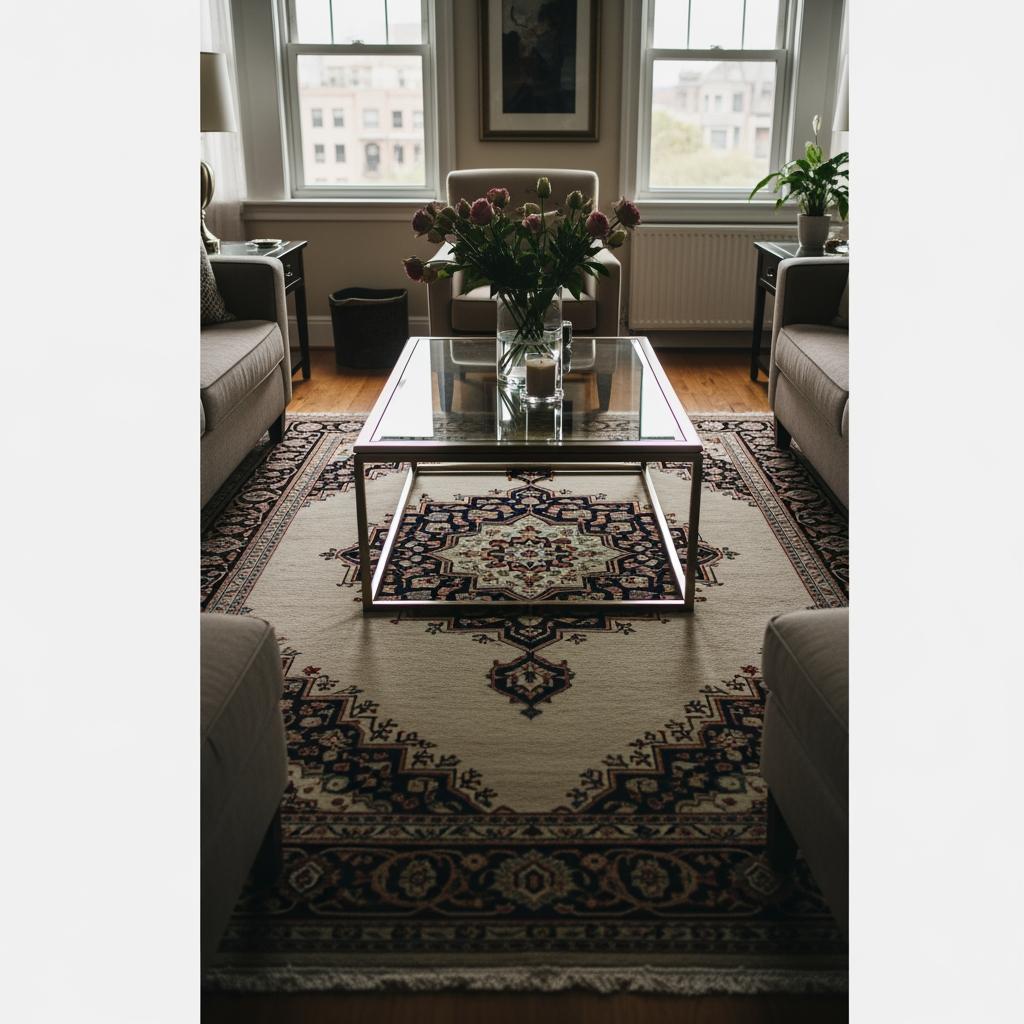
This is something nobody warned me about. Where the pattern of your rug lands matters — not just which rug you pick.
If your rug has a central medallion, that medallion should ideally sit under the coffee table or the center of your seating grouping. Not under the sofa. Not half-hidden under a chair. Centering a patterned rug incorrectly hides the best part of it.
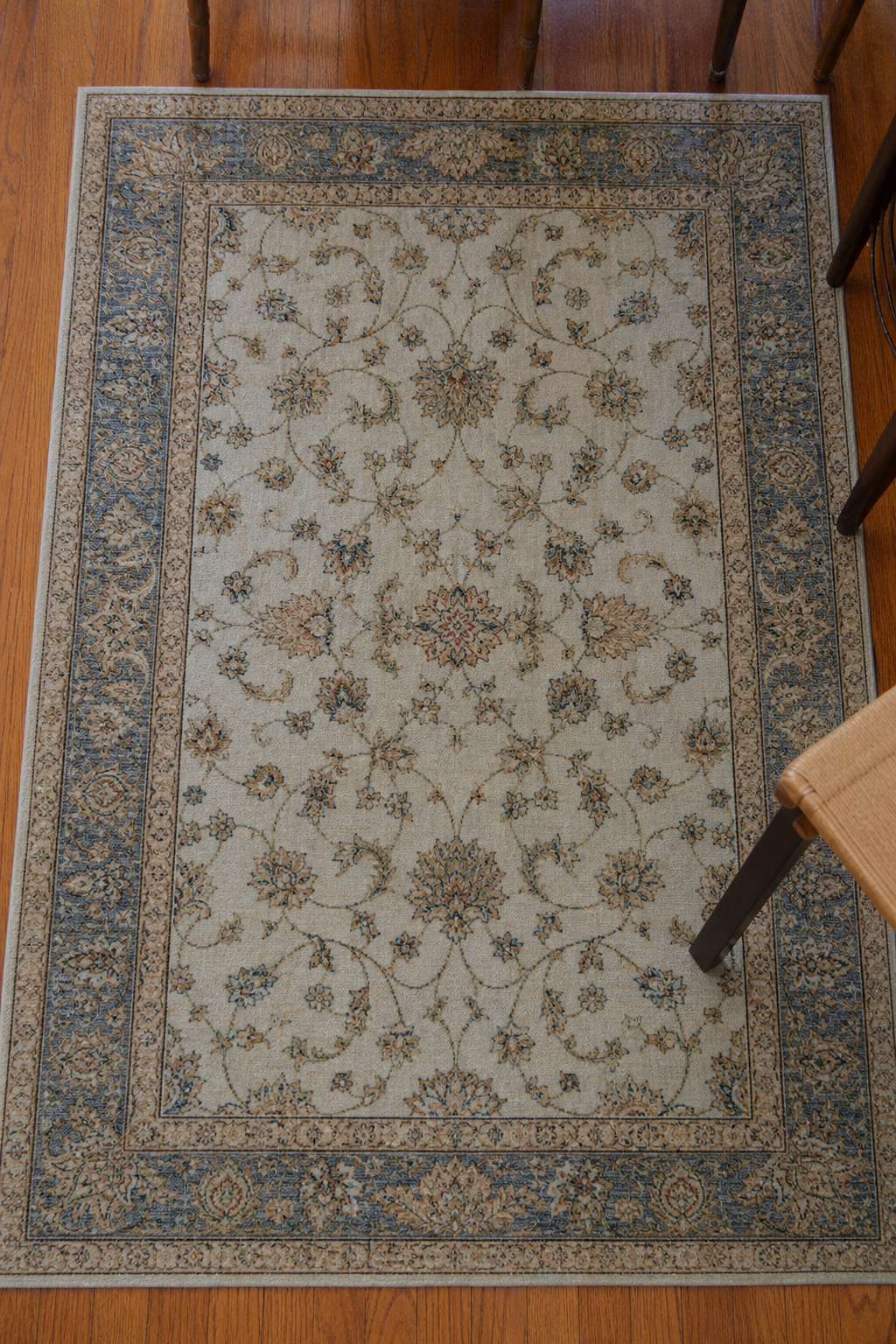
Same thing with bordered rugs. If your rug has a wide decorative border, you want that border visible and even on all sides. A bordered rug tucked mostly under furniture with one edge peeking out looks chopped.
I learned this with a gorgeous floral rug from a small shop. The main motif was completely hidden under my armchairs for two years. Moving it forward was like getting a new rug.
Fixing It Without Buying a New Rug
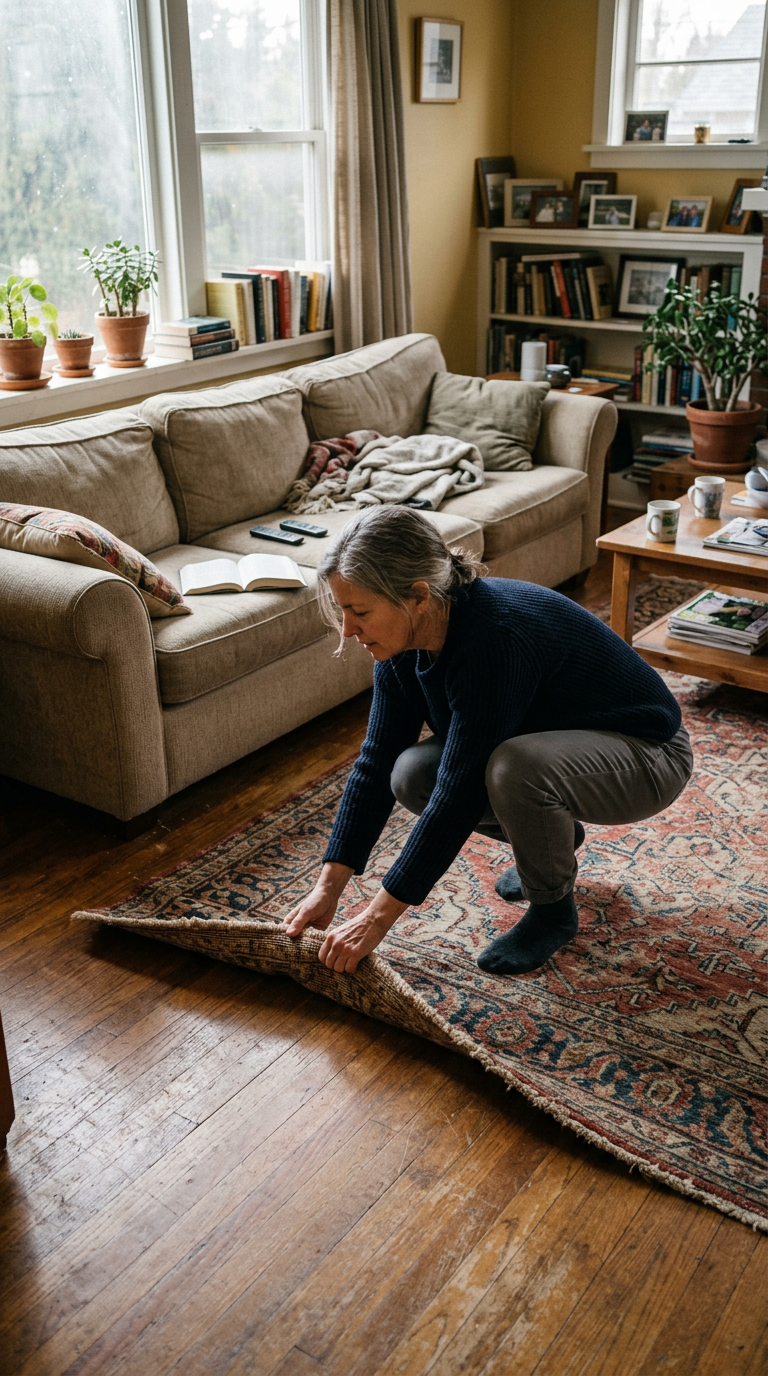
Good news: most rug placement mistakes don’t require a new rug. Just a shift.
Before you do anything else, push your existing rug forward so at least the front legs of your main seating are on it. Just try it. It takes thirty seconds and it might fix everything.
If the rug is genuinely too small to make that work, try layering it over a larger flat-weave base — even an inexpensive jute from a big box store creates the size you need without starting over.
And sometimes the fix is rotation. Turning a rug ninety degrees in a room can completely change how it reads. I rotated a striped rug in my den on a whim one afternoon and it made the room feel longer. Something I’d never considered in all the time I’d had it.
Look at what you have before you shop. Usually the rug is fine. The placement isn’t.