Confession: I have repainted my own kitchen cabinets three times, and the shade I keep coming home to — the one that finally made me put the paintbrush down — is sage green. So when readers email me asking whether sage is “still in” or “too trendy to commit to,” I always laugh a little, because I think sage has quietly graduated from trend to classic. It’s the color equivalent of a linen shirt: calm, natural, a touch earthy, and it plays nicely with absolutely everything.
If you’ve been sage-curious, let me pour you a cup of tea and walk you through exactly how to bring it into your kitchen — whether you’re doing a full remodel or just want a low-commitment refresh this weekend.
Why sage green works so ridiculously well
Here’s the secret: sage behaves like a neutral. It’s a muted, grayed-down green — think dried herbs, sea glass, eucalyptus — so it never shouts. It reads fresh without being loud, it makes a space feel instantly more expensive, and it flatters both warm materials (oak, brass, butcher block) and cool ones (marble, matte black, stainless). That flexibility is precisely why designers keep reaching for it and why it never seems to age badly. If you love the “quiet color that acts like a neutral” idea, you’ll see the same philosophy in my guide to curtain colors for gray walls — muted tones are the ones you never tire of.
There’s a whole spectrum of sages, too, from soft and grayish to deeper and more herbal. If you want a specific, tried-and-true cabinet shade, I geek out over one of my favorites in the beauty of clary sage kitchen cabinets — it’s the kind of green that looks different (in the best way) depending on the light.
Where to add sage — pick your commitment level
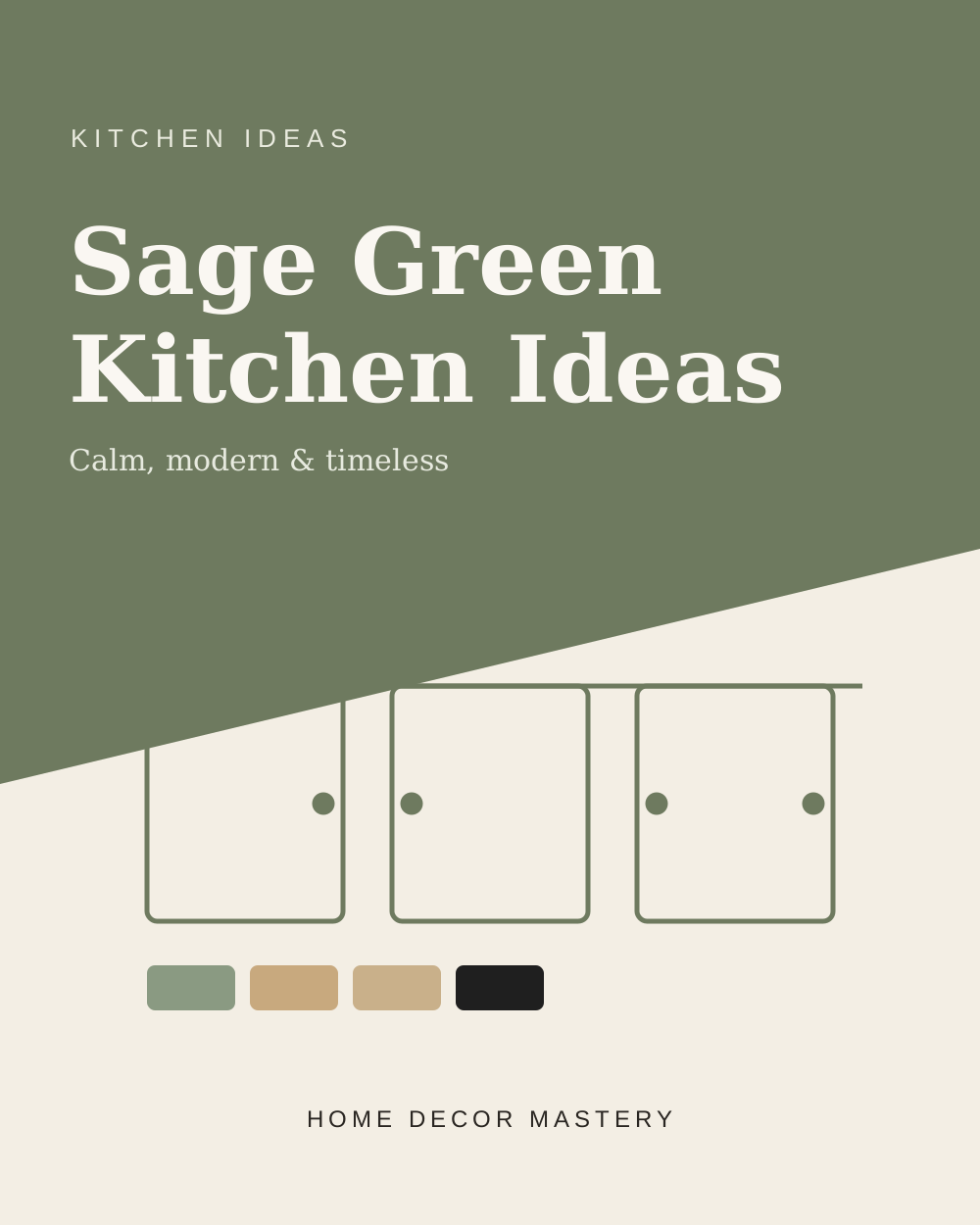
You do not have to gut your kitchen to get the look. This is the part I want you to really hear, because so many people talk themselves out of a color they love by assuming it’s all-or-nothing. Here are three levels, from “toe in the water” to “cannonball.”
Accessories
The island only
Full lower cabinets
My honest recommendation for most people? Start with the island or the lower cabinets. Sage on the bottom with warm-white uppers is the combination that photographs like a dream and never feels overwhelming, because your eye still gets plenty of light up top. If you’re the type who loves a bolder cabinet moment, though, you’re in excellent company — the whole painted-cabinet world is having a moment, and I rounded up a bunch of directions in my kitchen cabinet color ideas.
The finishing touches that make it look designer
Sage is the canvas; these details are what make it sing:
- Hardware: matte black for a crisp, modern edge, or unlacquered brass if you want warmth and a little old-world romance. (I’m firmly team brass, but I won’t judge.)
- Countertops: creamy quartz or butcher block keep things soft and inviting. I’d steer away from stark, cool-white counters — they fight sage’s warmth.
- Backsplash: a zellige tile in white or a warm off-white gives that handmade, light-catching texture that makes sage look elevated.
- Greenery: a few real herbs on the windowsill or a trailing pothos echo the sage and keep the whole thing feeling alive and lived-in.
And don’t forget the walls and window treatments — a warm white on the walls lets sage be the star, and simple linen café curtains or a Roman shade keep it unfussy. If you want help choosing, the temperature logic in pairing colors with green translates directly to kitchens.
Not sure sage is “your” color? A couple of gorgeous alternatives
Look, I want you to love your kitchen, and if sage isn’t quite it, I’d rather point you somewhere better than talk you into it. If you crave something sunnier and more cheerful, butter yellow kitchens have that same warm, inviting softness with a happier twist. And if you want drama — deep, moody, jewel-toned drama — you have to see what’s happening with aubergine cabinets. Both scratch a similar “grounded, characterful color” itch that sage does. And if you’re really just here for one statement piece, a painted island can carry the whole room — I share a bunch in my painted kitchen island ideas.
Making sage flow into the rest of your home
One thing I love about sage is how easily it connects to adjoining rooms — especially in open-plan homes. Carry a whisper of it into the living space through a green couch or the layered, garden-y palettes in these green-drenched living rooms, and suddenly your whole downstairs feels like it was designed by one calm, confident hand. That sense of a color “traveling” through a home is the difference between a kitchen that looks decorated and a home that looks collected.
The bottom line
Sage green is that rare color that manages to feel both of-the-moment and completely timeless. Start small — an island, some accessories, a can of your favorite sage — pair it with warm wood and brass, add a couple of plants, and keep your counters and walls soft. I genuinely believe you’ll walk into that kitchen every single morning and feel your shoulders drop half an inch. That’s what the right color does.
Go paint something, friend. And send me a photo — I mean it.
xo,
— Savannah
More kitchen & color inspiration