I used to deep-clean my kitchen every single weekend and still walk in on Monday morning feeling like the whole house was falling apart. Couldn’t figure it out. The counters were clear. The dishes were done. But something felt… off. Turns out it wasn’t the big stuff that was wrecking the vibe. It was seven tiny zones I’d completely ignored. The little corners and surfaces that collect chaos so quietly you stop seeing them. Once I tackled those? The whole kitchen — honestly, the whole house — felt different. Calmer. More like mine.
The Drawer Right Next to the Stove
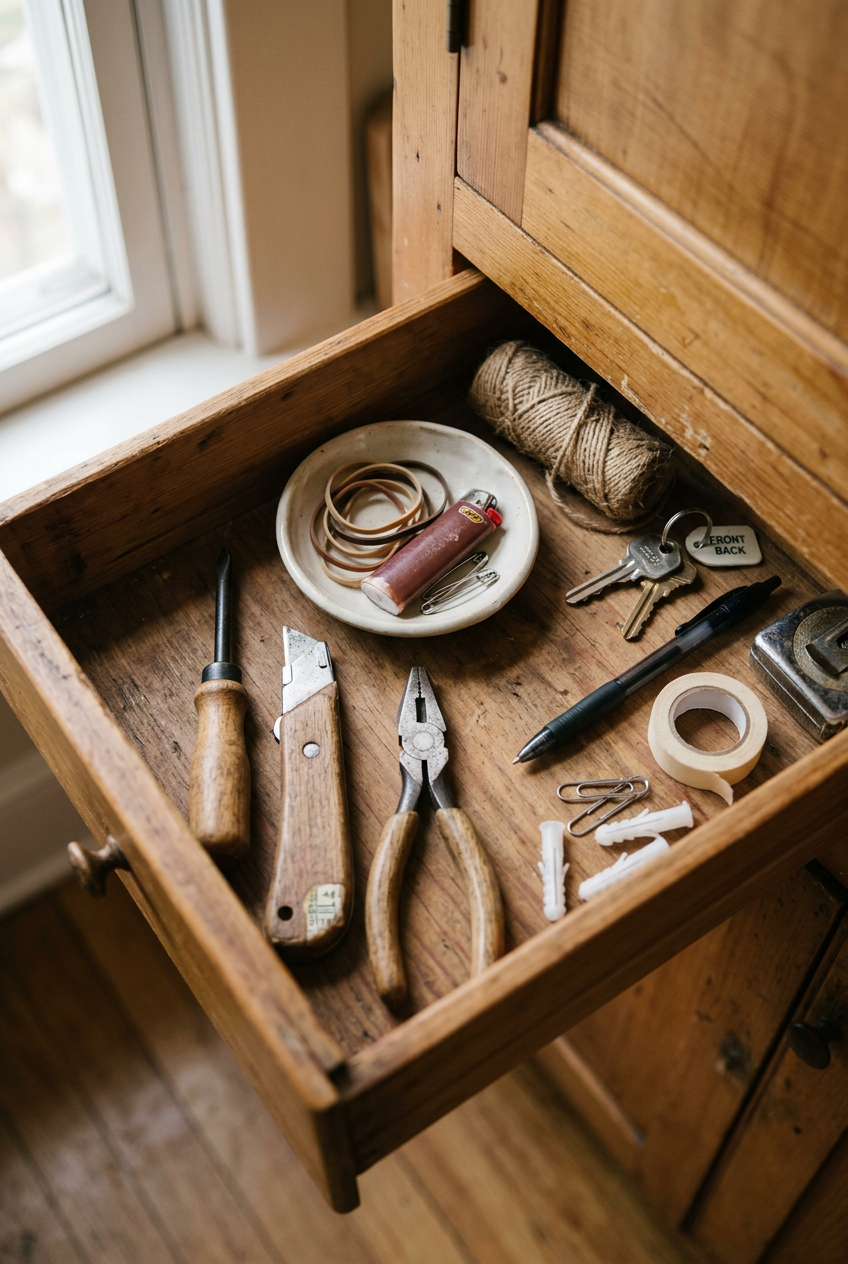
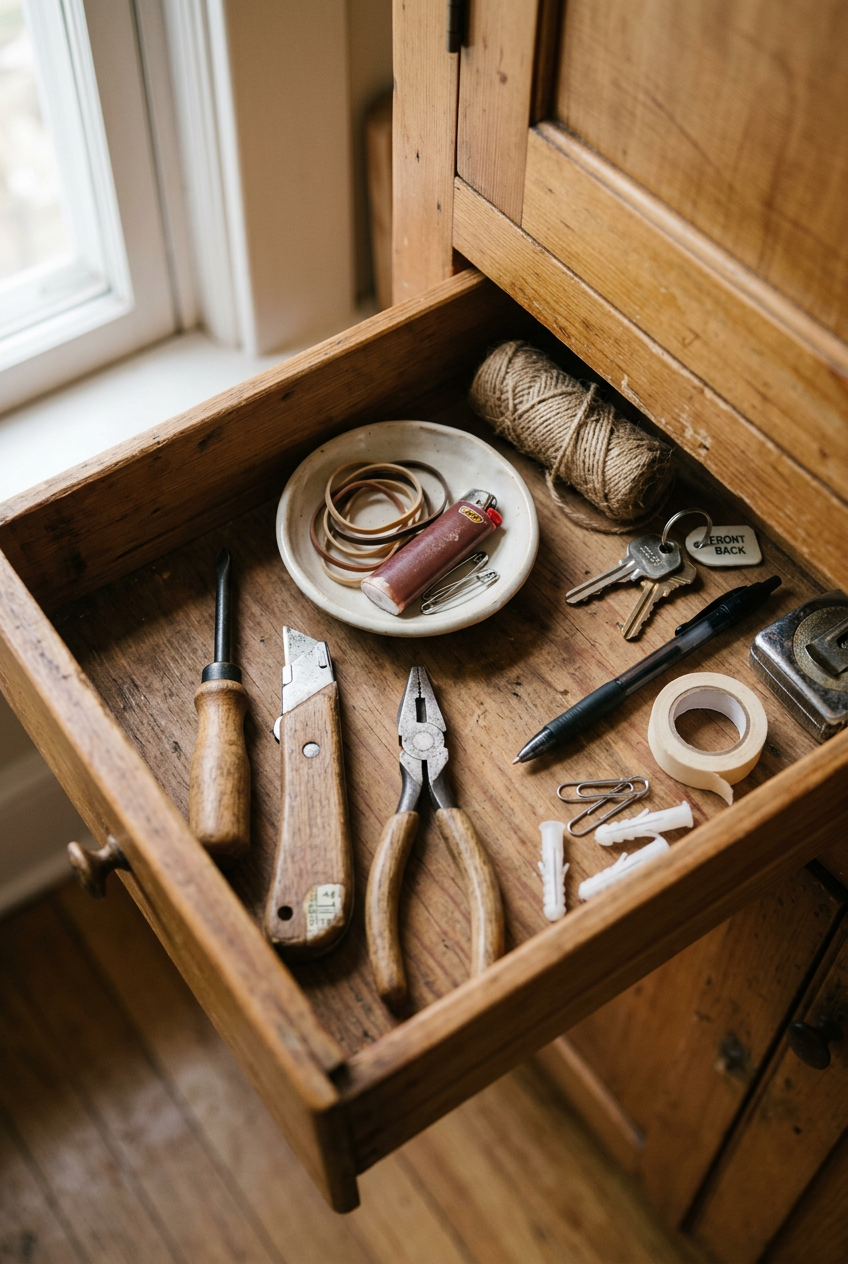
You know the one. It’s got a broken rubber band, three menus from restaurants that closed in 2019, a birthday candle, and maybe a mystery key. Every kitchen has this drawer and almost nobody deals with it.
I finally emptied mine out onto the counter last spring and genuinely could not believe what I found. A tiny screwdriver. Chapstick. A coupon for 40% off something I’ll never buy. It took me maybe 25 minutes to sort through all of it.
What I do now: this drawer holds only cooking-adjacent tools. A meat thermometer, a timer, a lighter for candles. That’s it. When I open it, I immediately find what I need. And weirdly? It made the whole kitchen feel more intentional.
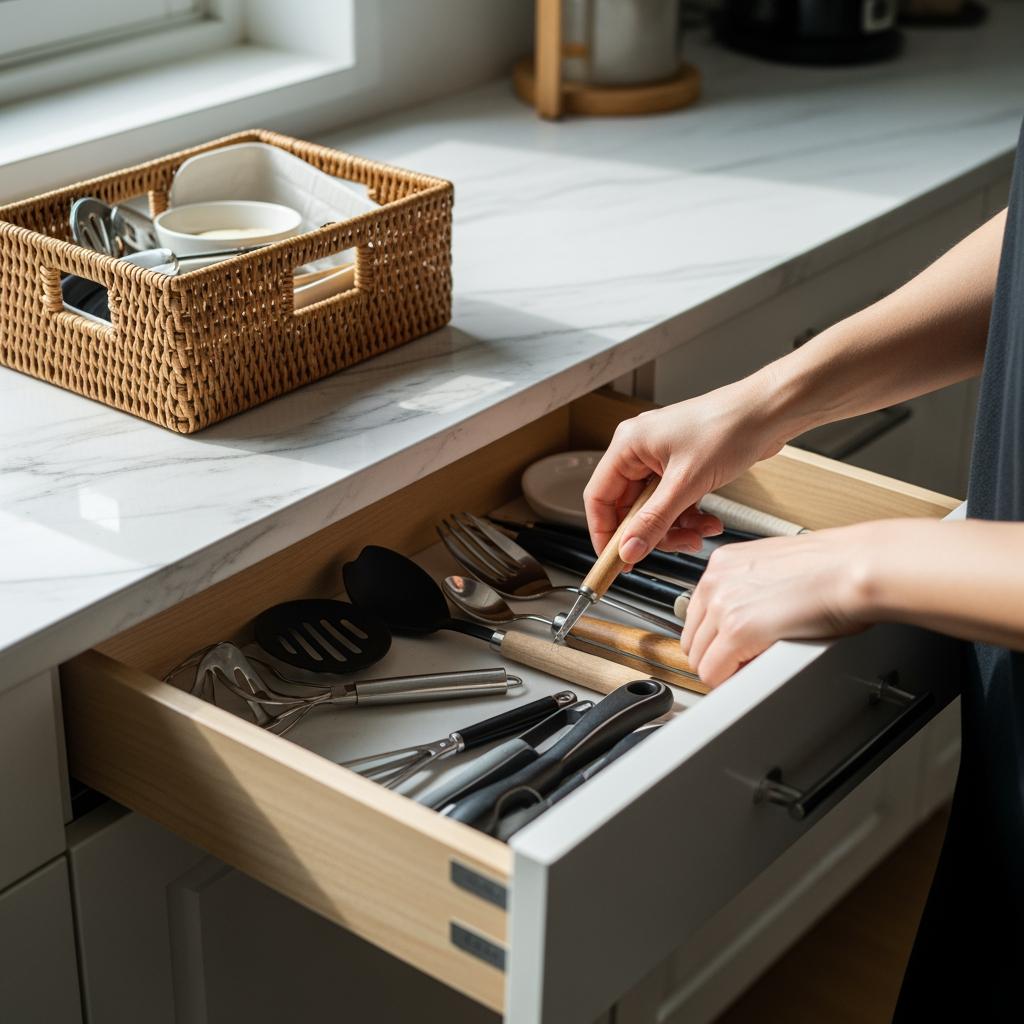
If you only organize one thing this week, make it this drawer. Small space, huge payoff.
The Narrow Gap Between Your Fridge and the Wall
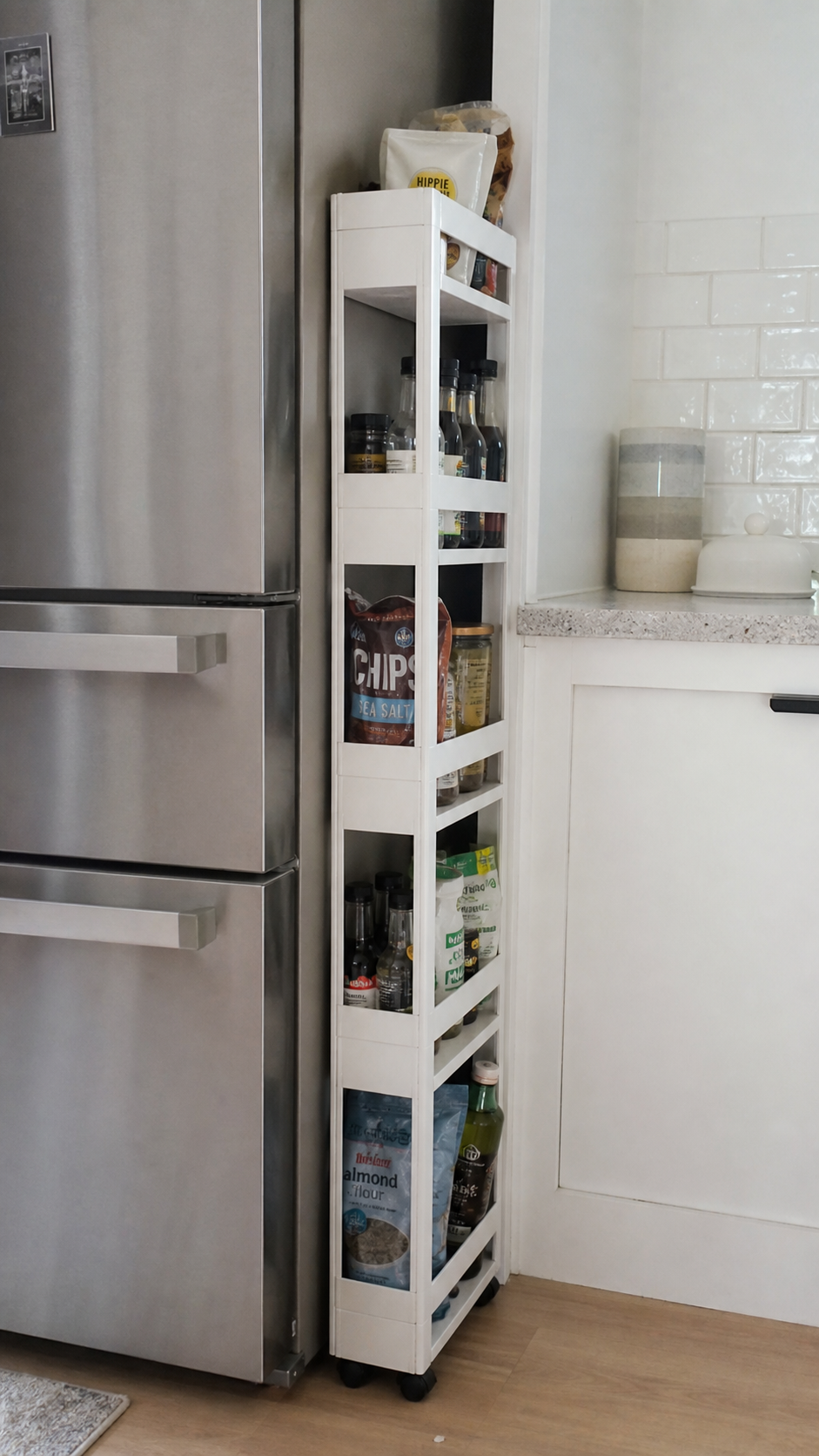
Out of sight, out of mind. Until you drop a spatula back there and suddenly you’re on your knees with a flashlight discovering things you’d rather not.
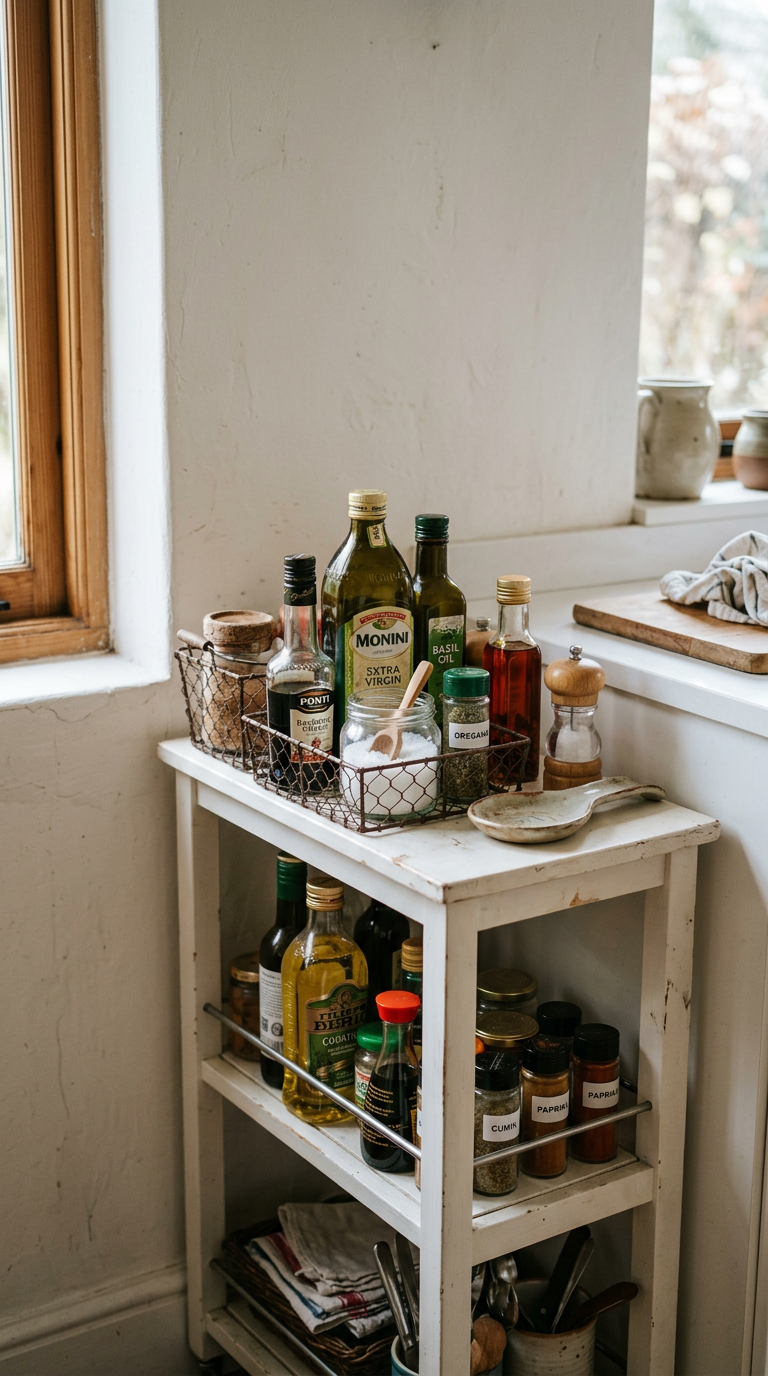
That gap collects dust, rogue lids, the occasional forgotten grocery receipt. And even though you can’t really see it, the mess is still there. I think we feel clutter even when we can’t technically see it.
A pull-out slim storage cart changed my life here. I know that sounds dramatic. But sliding out a little tower of organized snacks and cooking sprays instead of a sticky chaos zone genuinely makes me happy. I found mine at a home goods store for under $30.
Clean the floor back there first. Just once. You’ll feel so much better about the whole kitchen.
The Top of Your Refrigerator
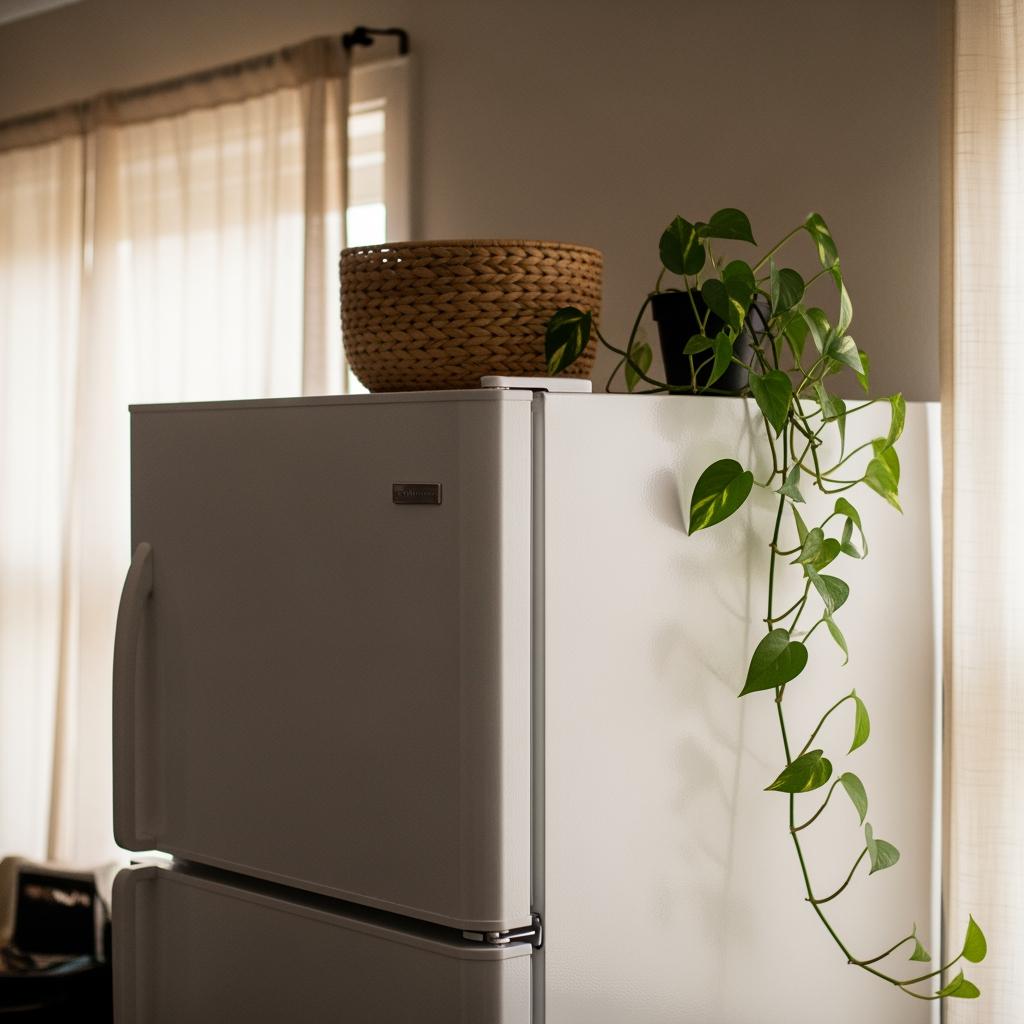
Flat surface. Vertical space nobody uses intentionally. Which means it slowly becomes a landing zone for cereal boxes that don’t fit anywhere else, paper bags, and random stuff you were ‘going to deal with later.’
I’m guilty. When I tackled my kitchen last fall, the top of my fridge had a box of crackers, a reusable shopping bag, and a candle I’d bought two years ago and never burned.
You’ve got two real options here. Use it purposefully — a pretty basket for overflow pantry items, or a tall plant if you get good ambient light up there. Or keep it completely clear. Both are valid. But ‘random pile’ is not a third option.
A trailing pothos up there looks genuinely beautiful and costs almost nothing. Just saying.
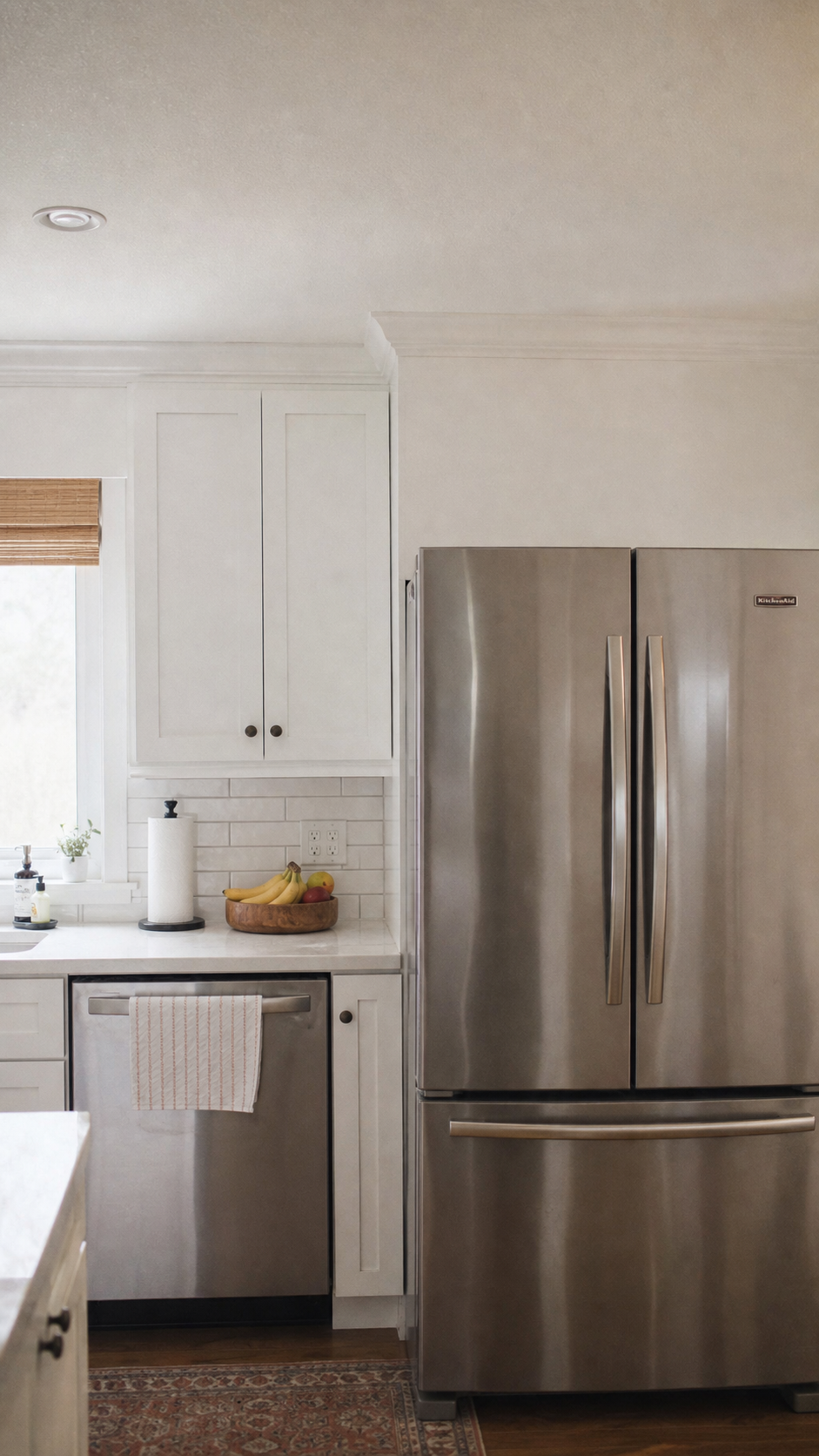
The Inside of Your Cabinet Doors
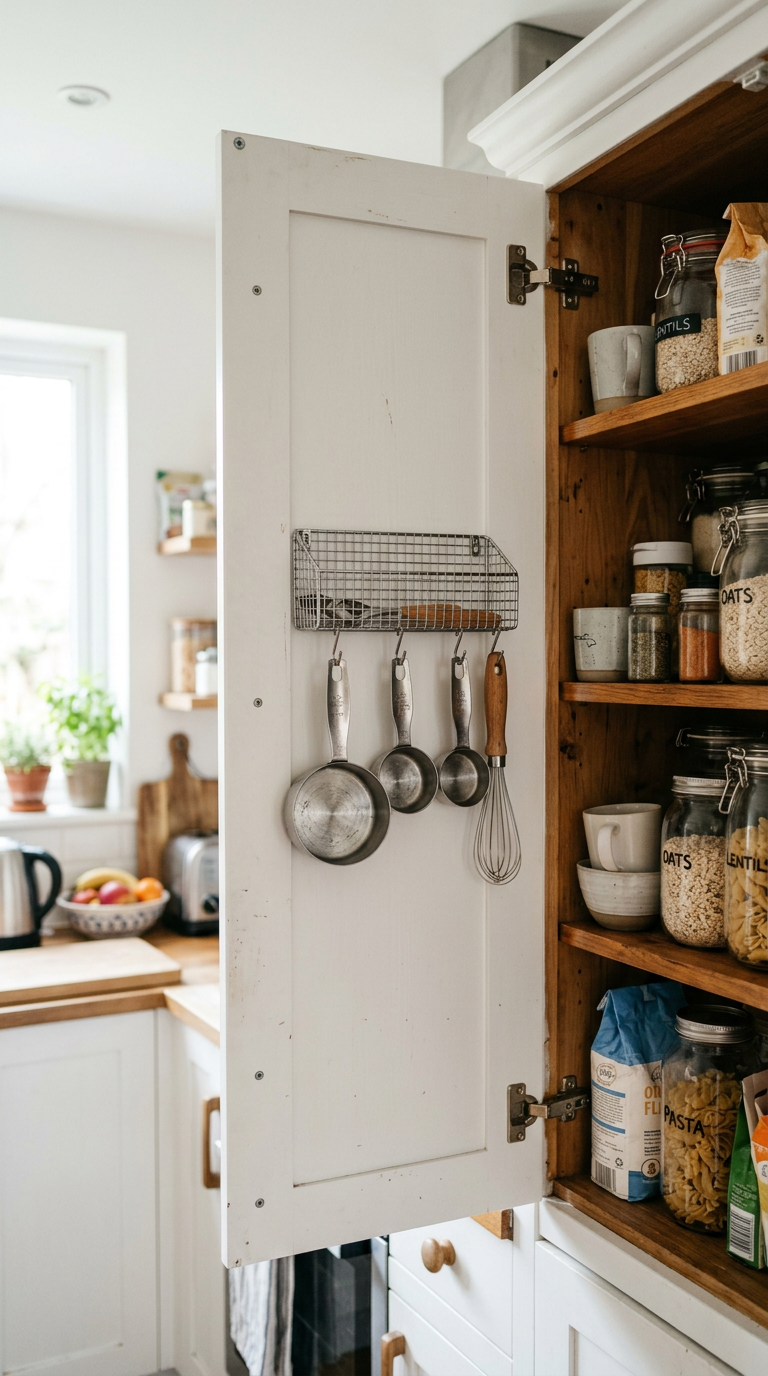 Inside of Your Cabinet Doors” />
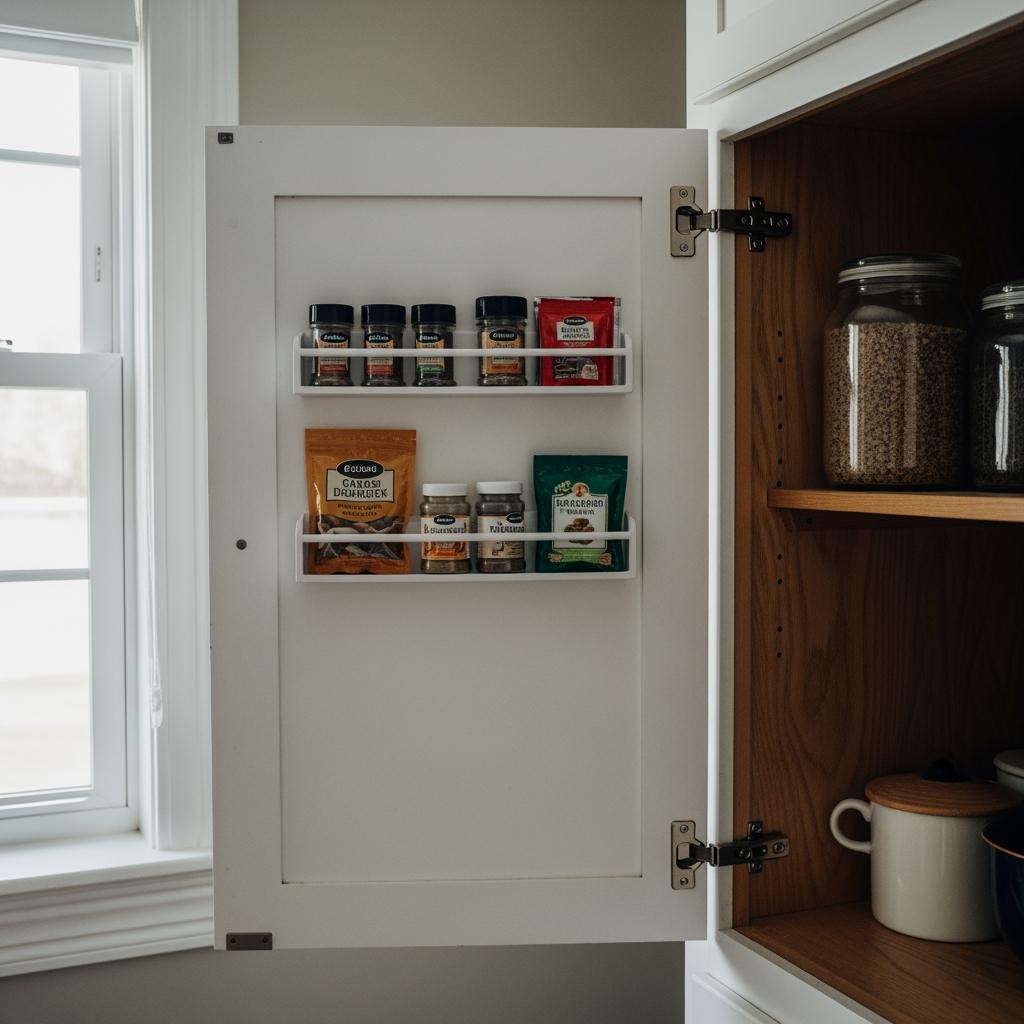
This is genuinely wasted real estate in most kitchens. The inside face of a cabinet door is smooth, vertical, and just… there. Doing nothing.
Adhesive hooks or a small mounted rack on the inside of a pantry door can hold measuring cups, pot lids, or spice packets. When I added a simple wire rack to the inside of my under-sink cabinet door, I got back a whole shelf’s worth of space underneath.
It takes like ten minutes and costs almost nothing. The before and after difference is sort of shocking.
Start with one cabinet. The one that makes you cringe when you open it. You know which one.
The Corner of Your Counter Where Things Just… Land
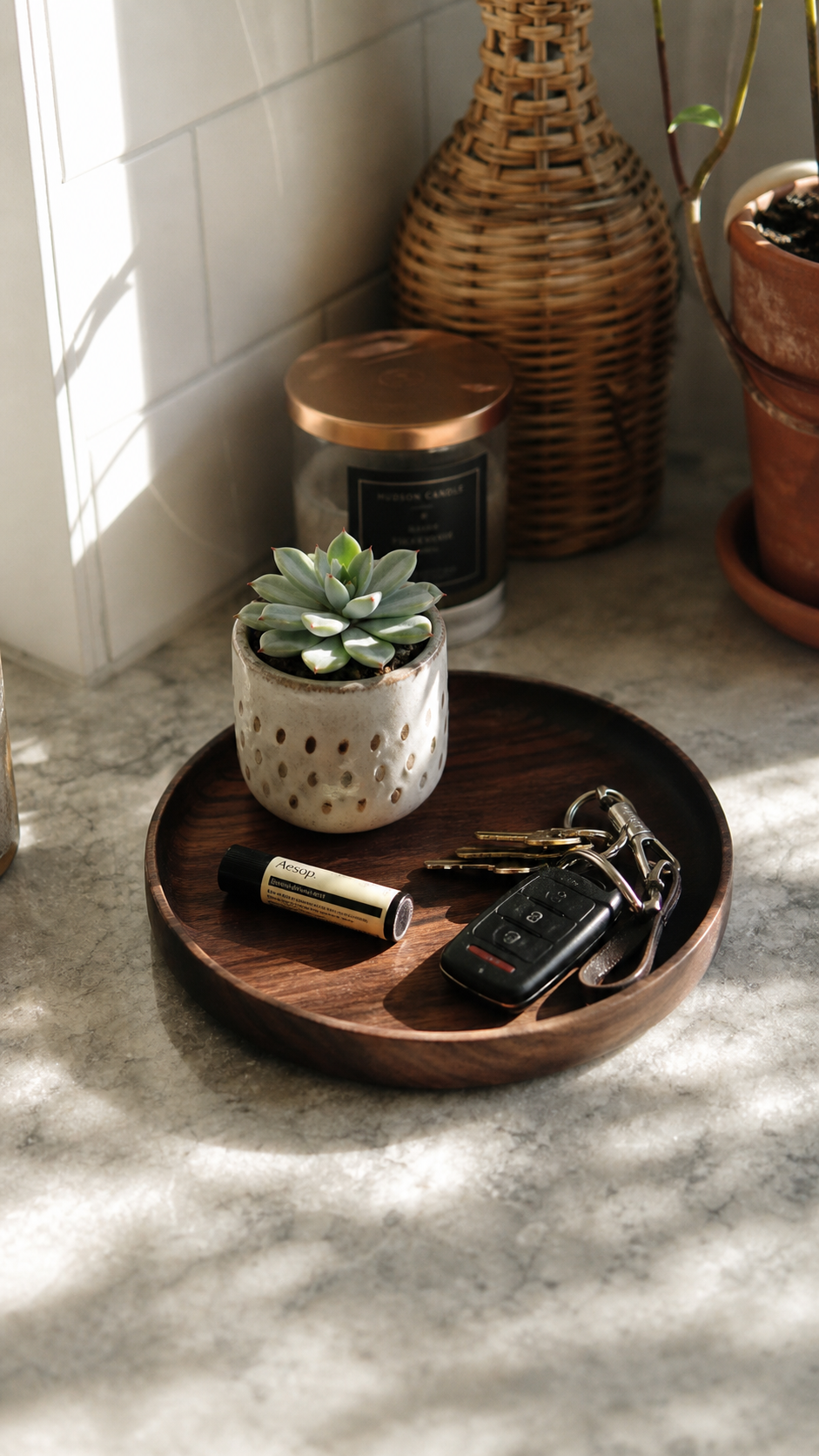
Every kitchen has a landing strip. That one corner where keys get dropped, mail accumulates, and the random vitamin bottle ends up after grocery shopping. It’s not really a kitchen zone, but it’s in your kitchen, so it affects everything.
Mine was the far left corner near the back door. I finally accepted that people were always going to drop stuff there, including me. So instead of fighting it, I contained it.
A small tray. That’s it. Everything that lands in that corner has to fit inside one shallow tray. Keys, a lip balm, a notepad. When the tray gets full, it’s time to sort it. The tray acts like a boundary — a visual fence for chaos.
Sounds simple because it is. But it works every single time.
Under the Sink
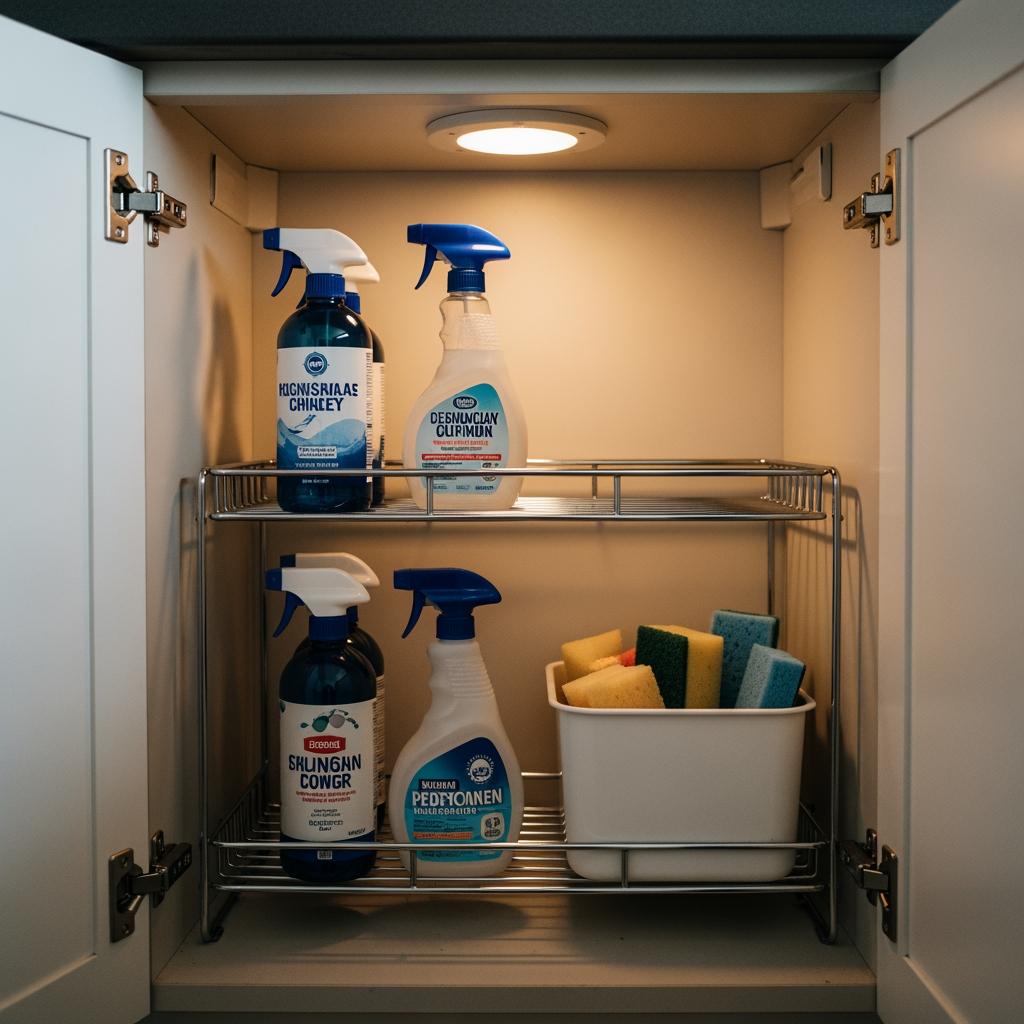
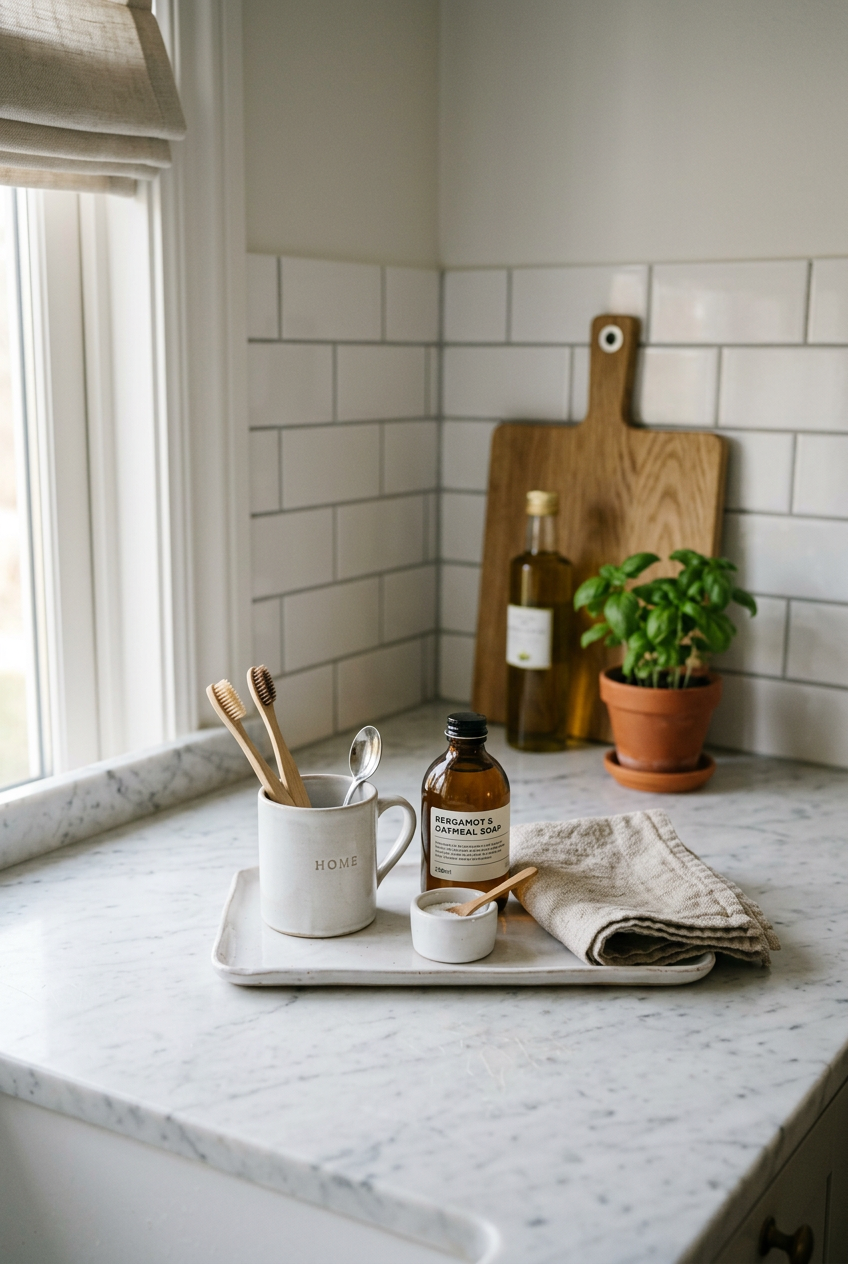
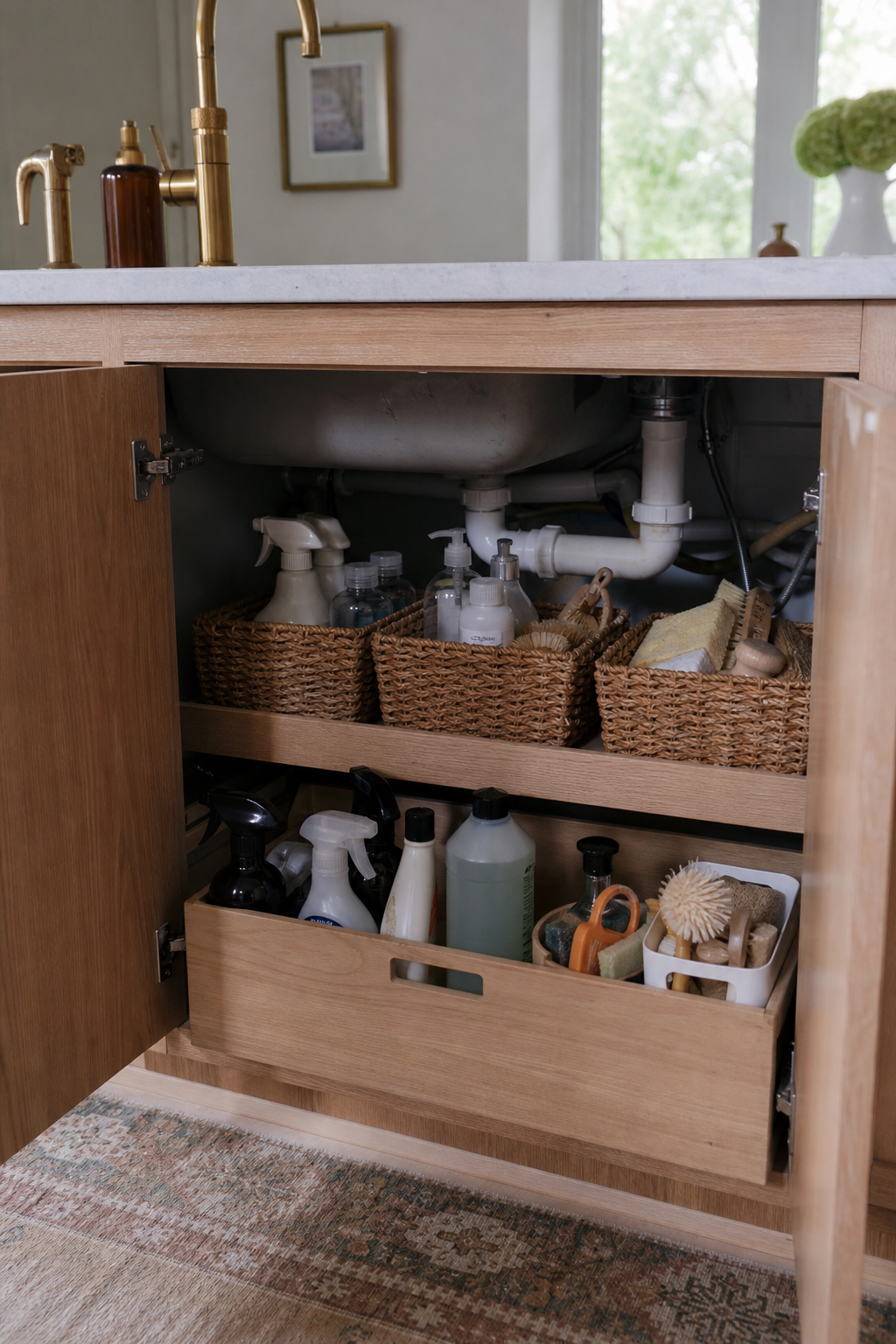
Dark, awkward, plumbing in the way. Under-sink cabinets are the wild west of kitchen storage and most people just kind of throw things in there and hope for the best.
I did this for years. Then I spent one afternoon pulling everything out and I found three duplicate sponges, cleaning sprays I’d forgotten I owned, and a grocery bag full of more grocery bags.
A two-tier expandable shelf makes a massive difference here. It works around the pipes and doubles your usable surface. Pair it with a small bin for sponges and brushes, and suddenly you actually know what you have.
Honestly, under-sink organization is one of those things that makes you feel more put-together even though nobody else ever sees it. It’s for you.
The Back of Your Pantry Shelf
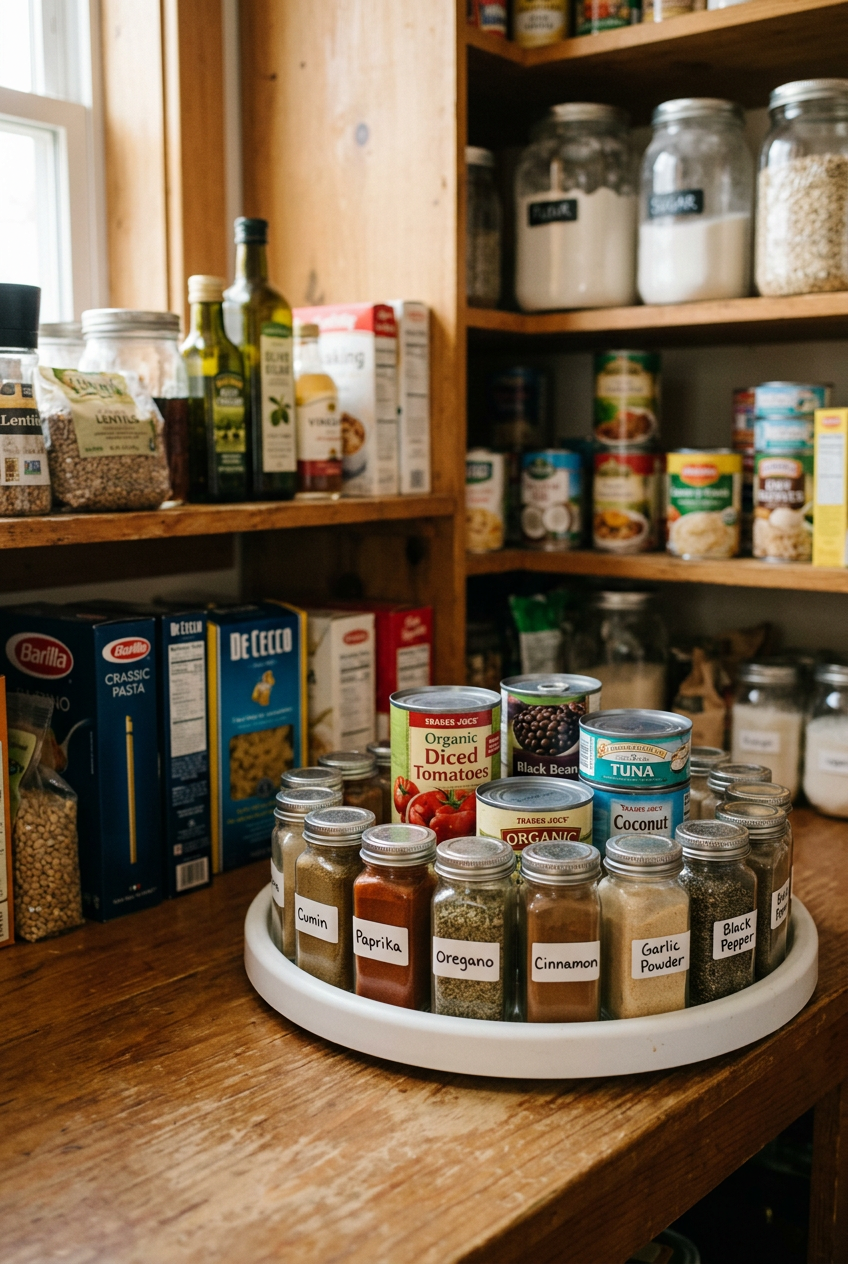
The graveyard of canned goods you bought with good intentions. The soy sauce from three years ago. The pasta shape you tried once and didn’t love but felt too guilty to throw away.
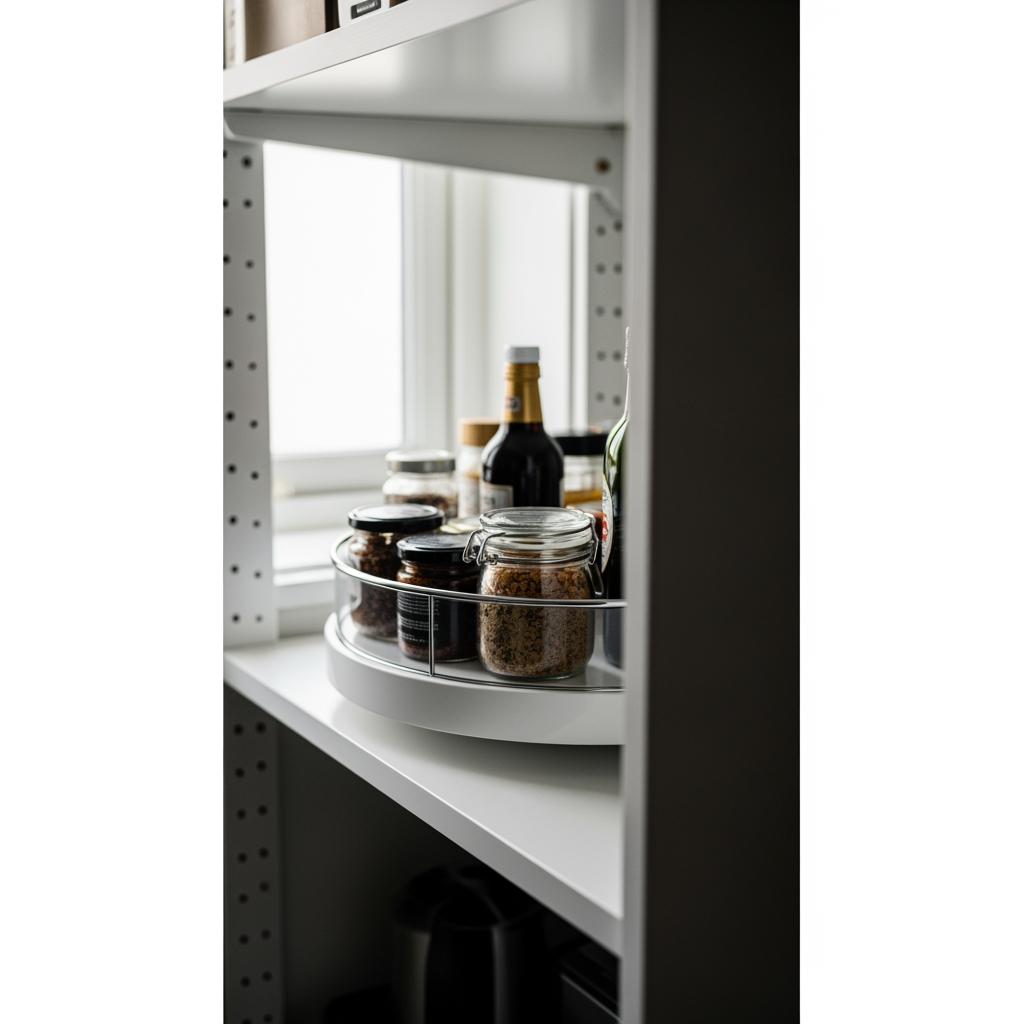
Deep pantry shelves are genuinely hard to manage. Things get pushed to the back and disappear. And then you rebuy them, so now you have two. I’ve done this with coconut milk so many times it’s embarrassing.
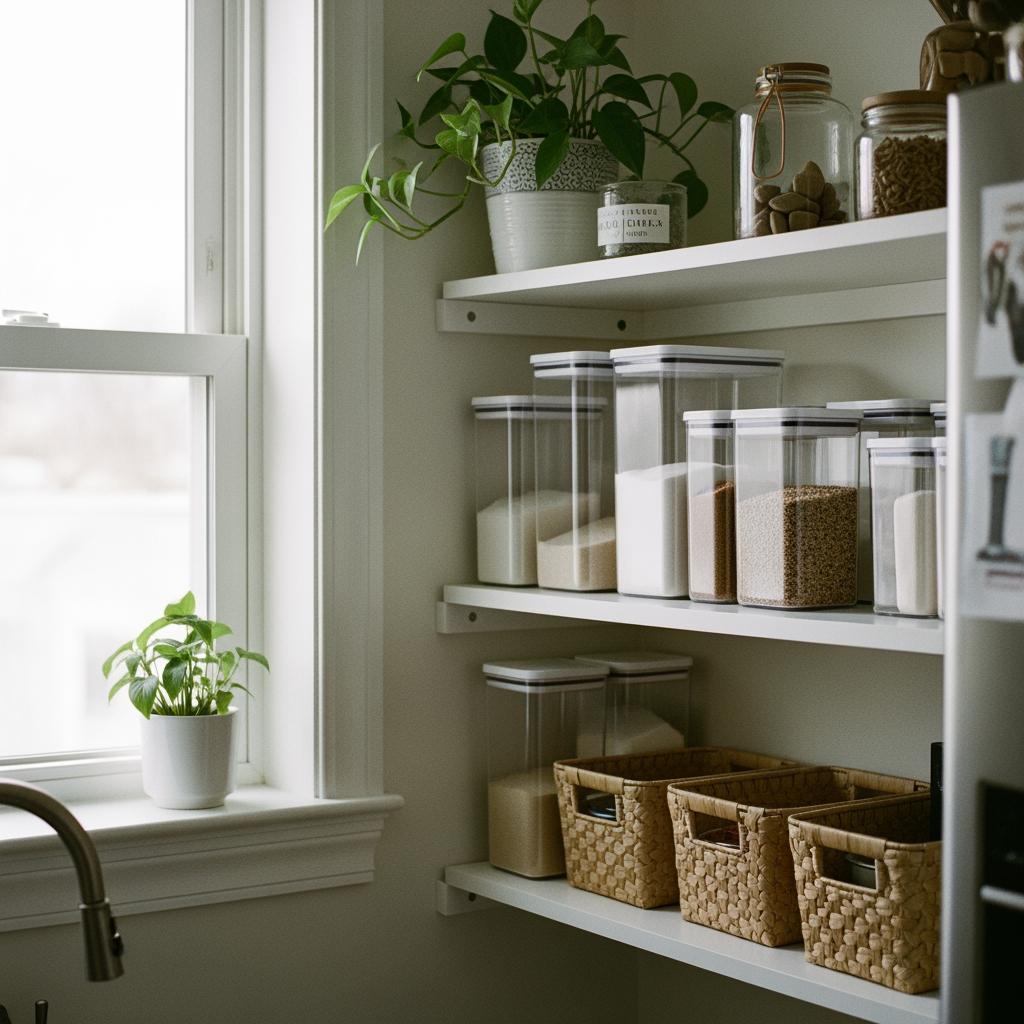
Lazy Susans are the answer. A small turntable on a pantry shelf means you spin, not dig. I also love the idea of pulling everything forward every month or so, just a quick reset.
First-in, first-out like a little grocery store. It sounds fussy but it takes less than five minutes.
Your Knife Block or Knife Drawer
A knife block with four empty slots and two mystery knives you’ve never once used is just visual clutter sitting on your counter. Every day.
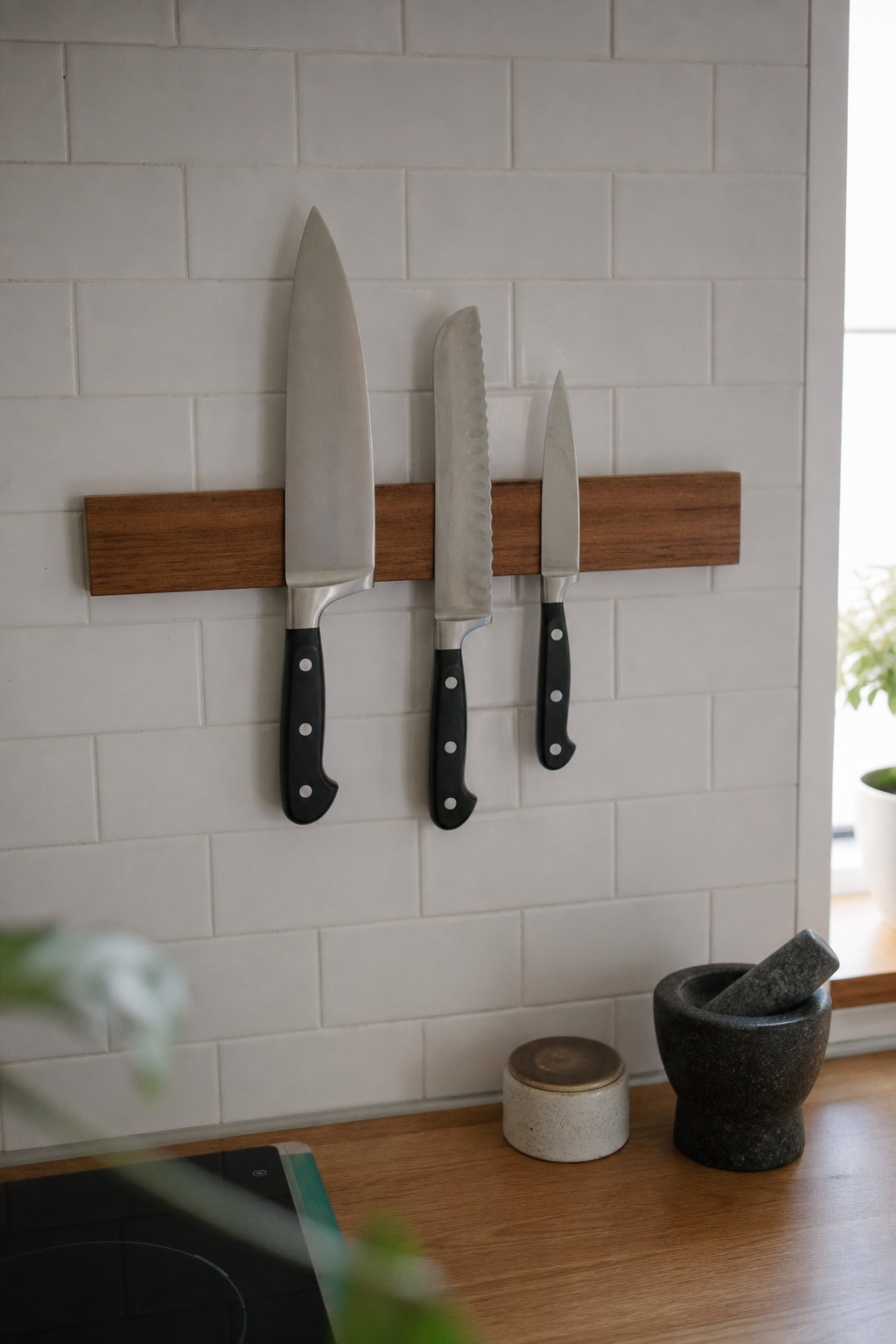
I used to have a block like this. When I finally pulled every knife out and was honest about what I actually used — a chef’s knife, a serrated bread knife, and a small paring knife — I realized I didn’t need the block at all.
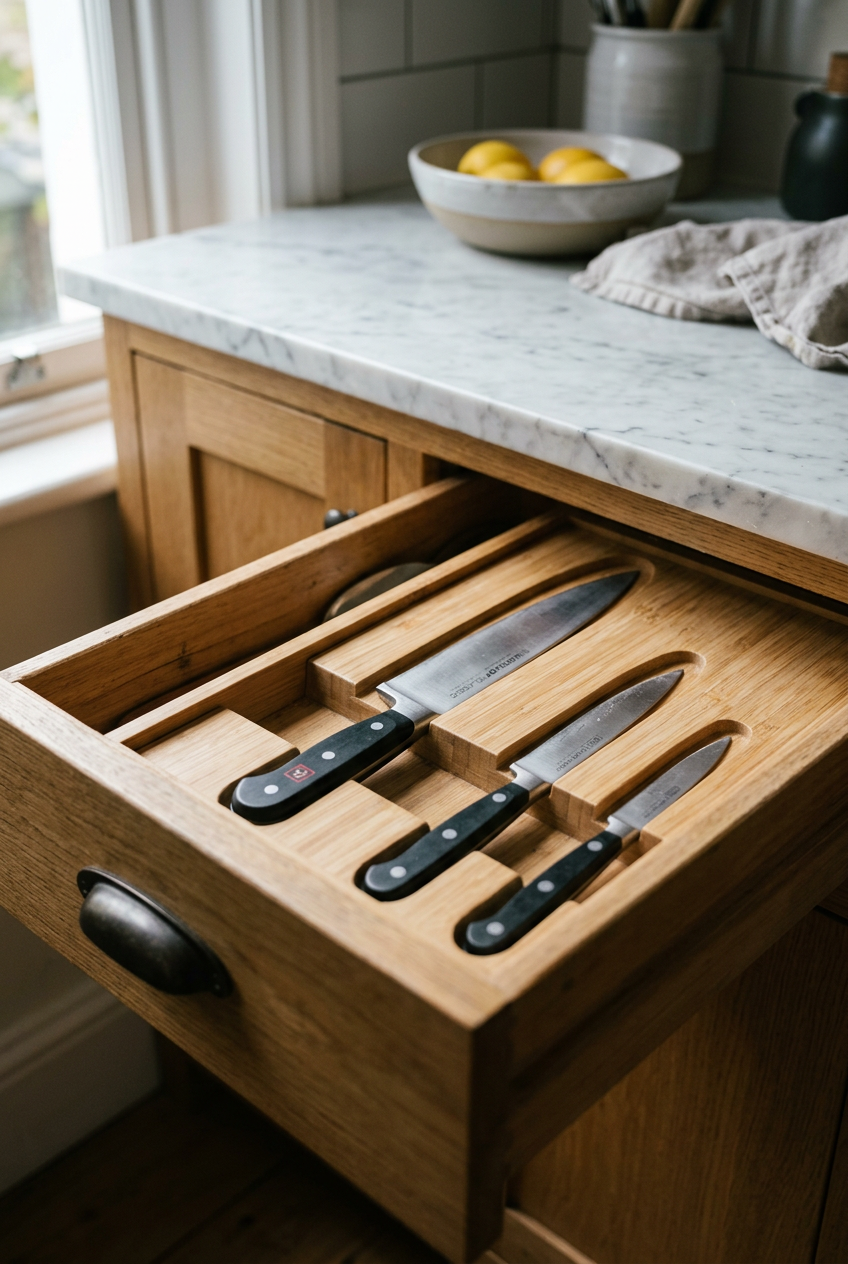
A magnetic wall strip is cleaner, safer for the blades, and takes up zero counter space. If a wall strip doesn’t work for your kitchen layout, a slim in-drawer knife organizer is genuinely so satisfying to open.
Edit down to what you actually cook with. Donate the rest. You won’t miss them.
The Spice Cabinet (or Spice Catastrophe)
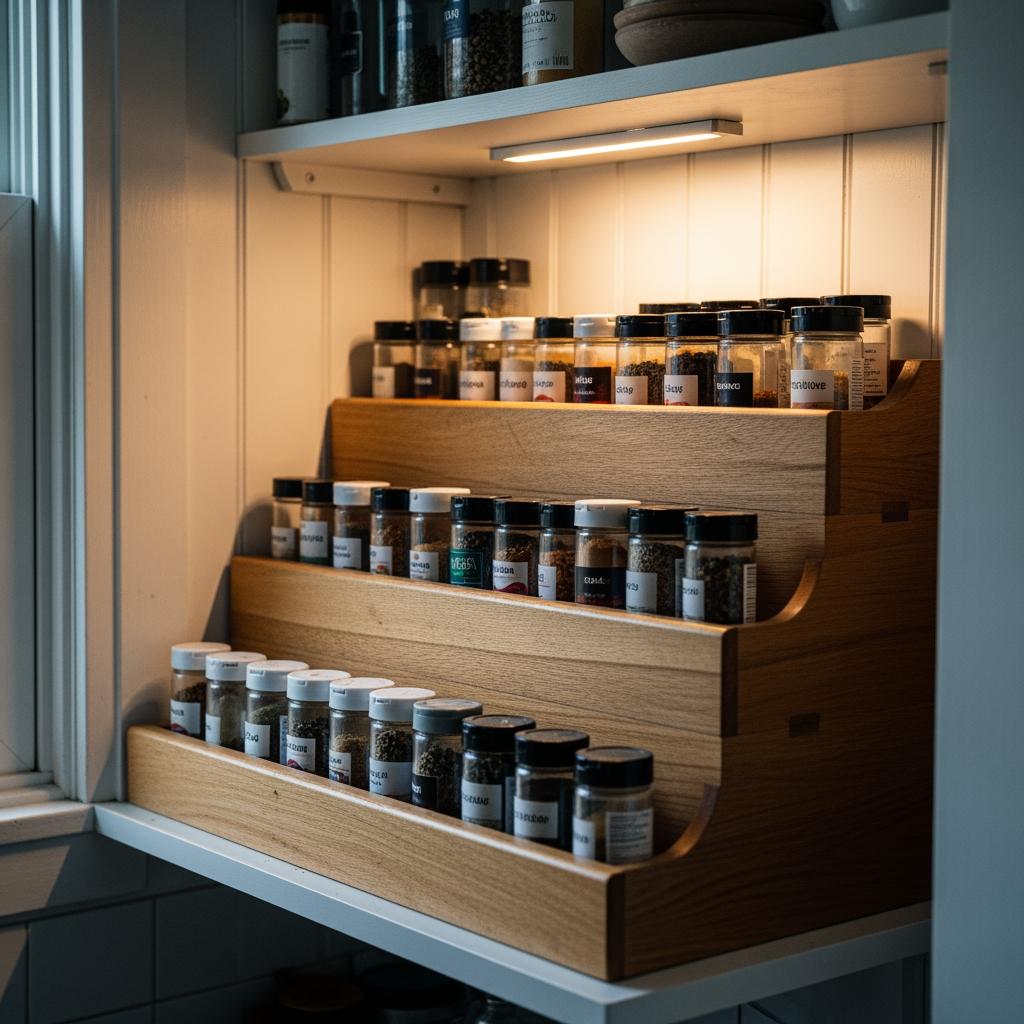
I will not pretend I had this figured out for a long time. My spices were in a cabinet, yes, technically organized, but actually just a pile of bottles that fell over every time I opened the door.
The problem with most spice storage is depth. You can’t see what’s behind the front row, so you forget what you have, you overbuy, and the whole system collapses.
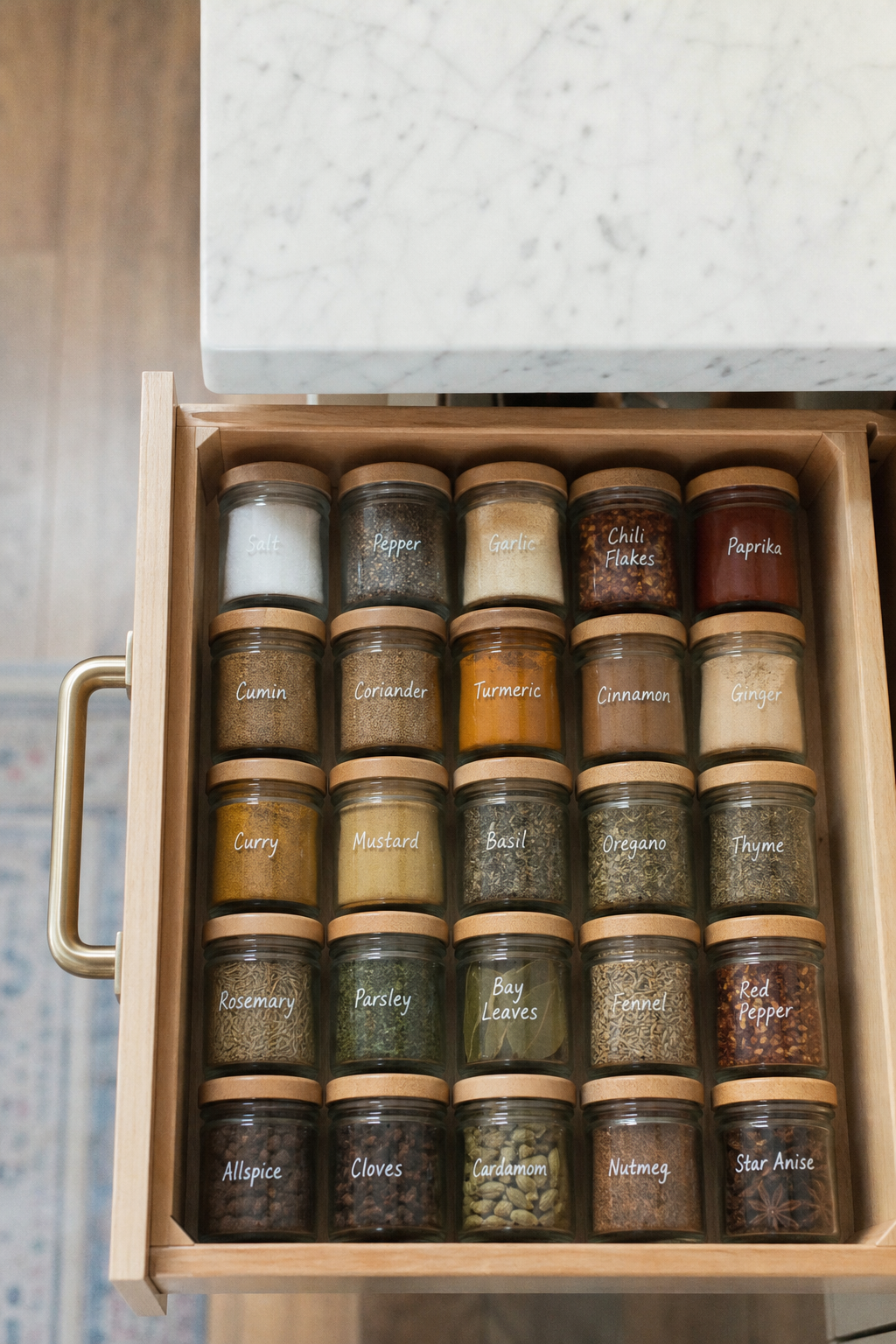
Tiered shelf risers inside a cabinet work beautifully. So does a shallow pull-out drawer dedicated to spices if you have the cabinet space. The goal is being able to see every label without picking anything up.
Check expiration dates while you’re in there. Half of those spices probably lost their punch two years ago anyway.
The Pot Lid Situation
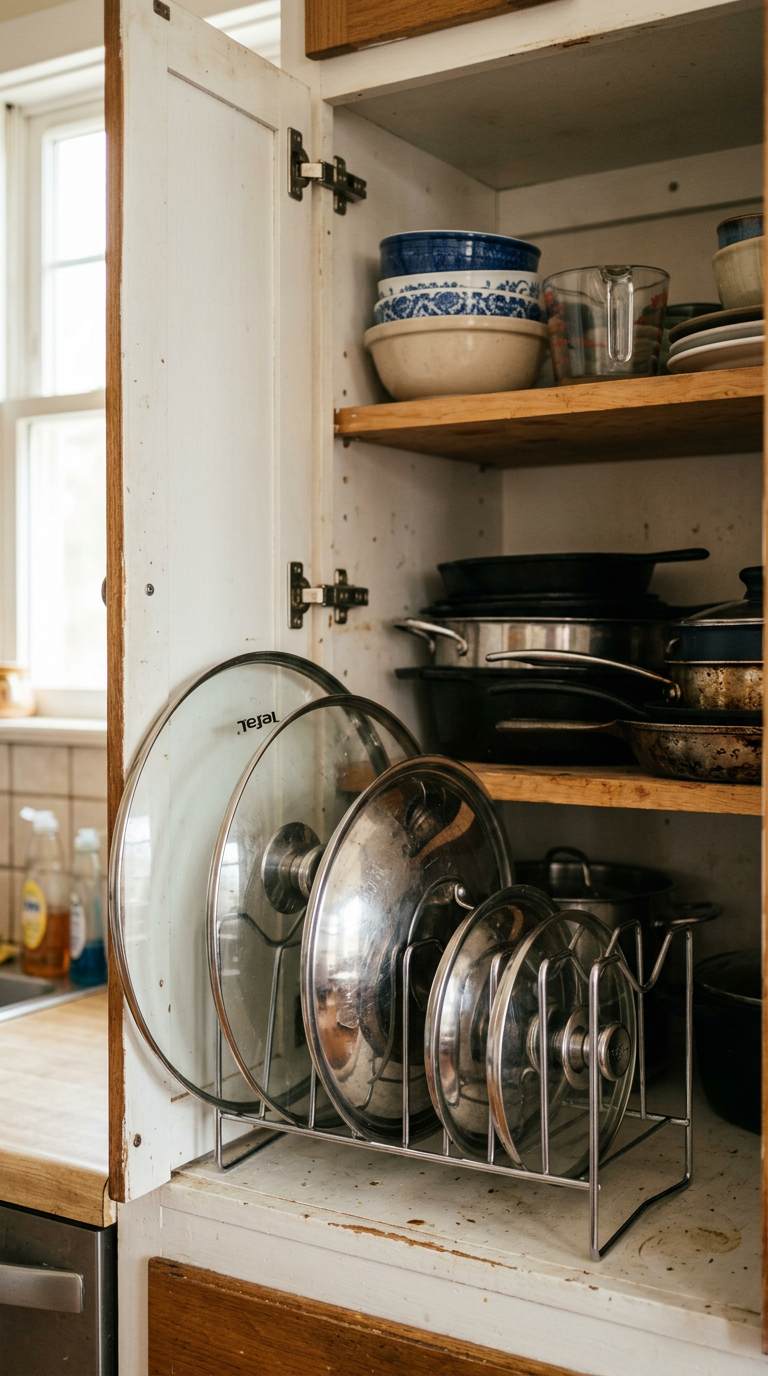
Pot lids. The nemesis of every organized kitchen. They don’t stack. They slide. They clatter. And somehow they multiply.
If you’ve ever opened a cabinet and had a lid fall out and crash onto the floor, you know the specific annoyance I’m talking about. It’s a small thing that just makes cooking feel harder than it needs to be.
A vertical lid organizer inside a deep cabinet or on the inside of a door changed everything for me. Lids stand up, sorted by size, instantly accessible. Some people like a tension rod trick in a drawer too, where lids lean against the rods vertically.
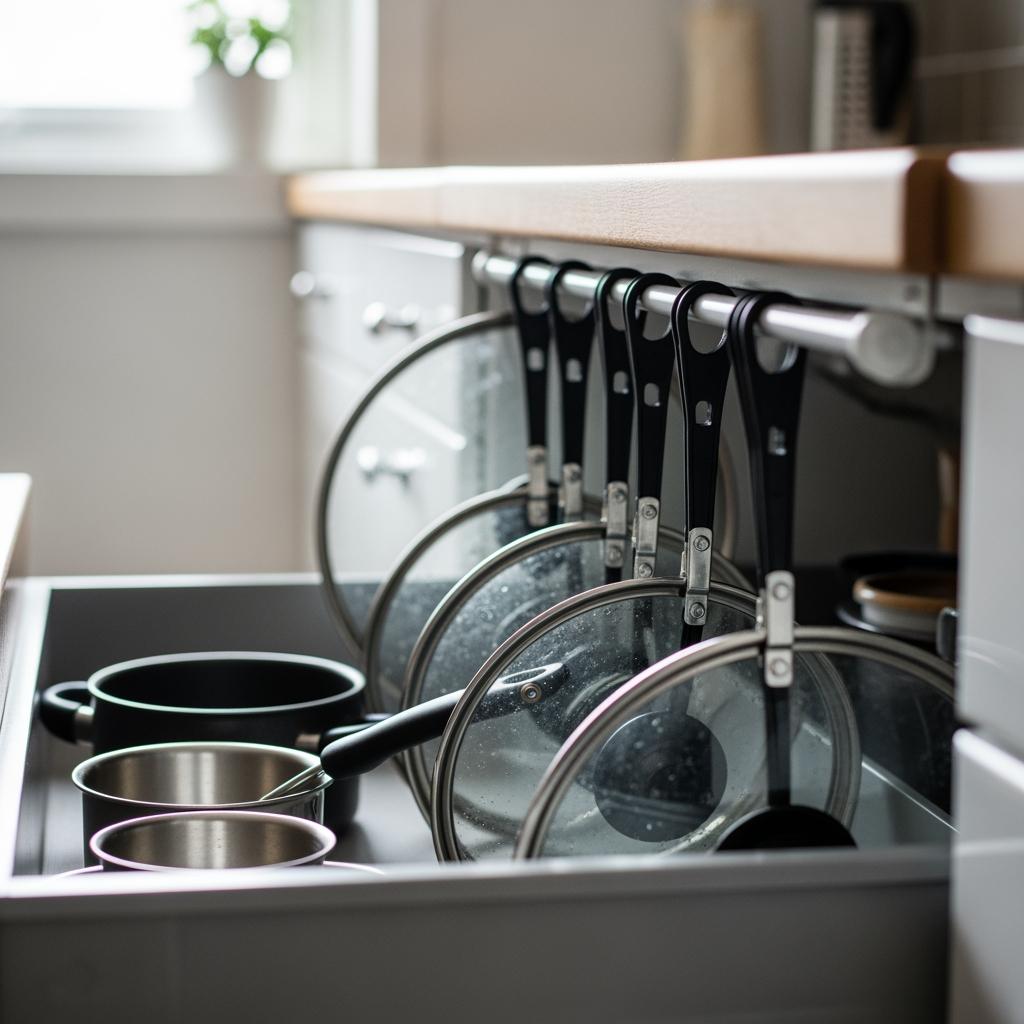
Pick a system and actually stick with it. Even an imperfect system beats the avalanche.
The Dish Towel and Rag Zone

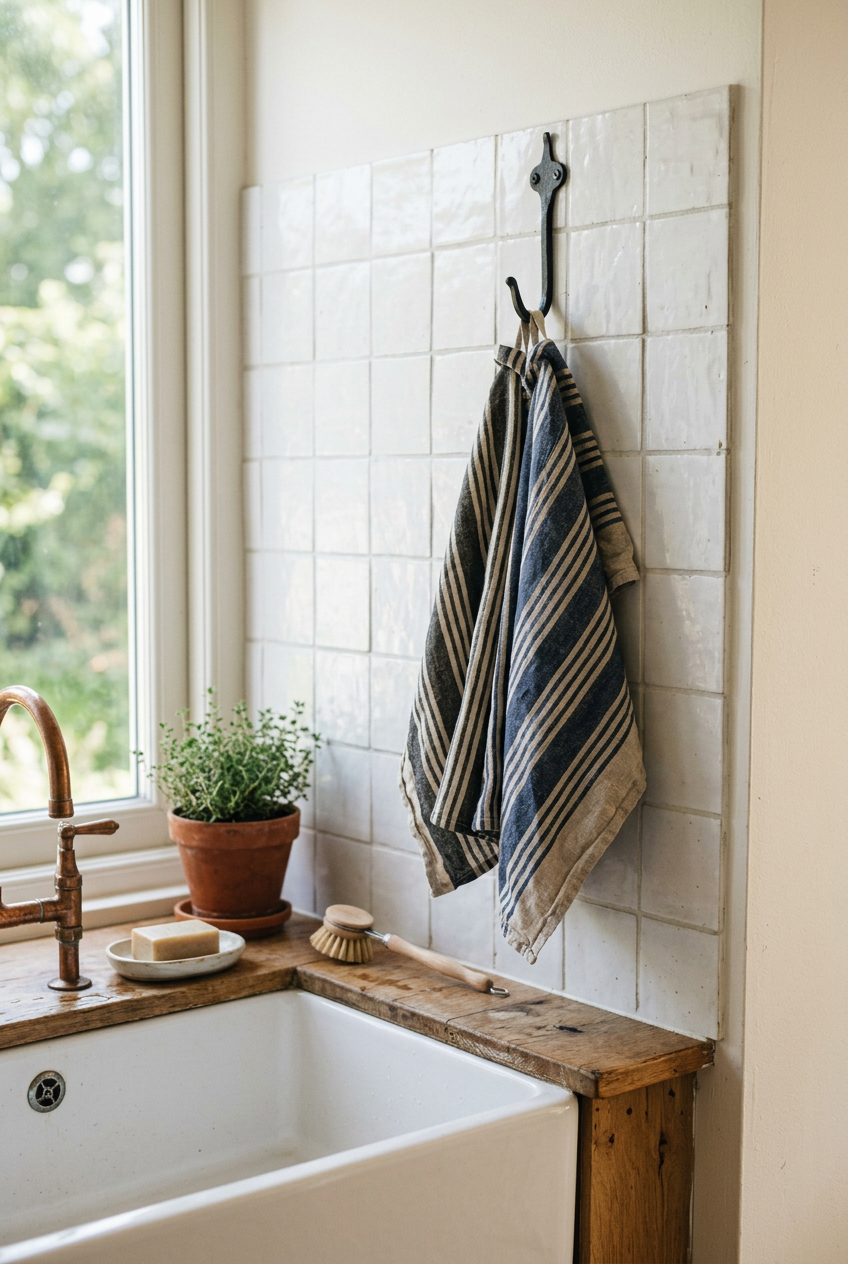
You probably have a drawer or a hook where dish towels live. But do they actually live there, or do they sort of pile up and spill out and end up draped over the oven handle in a heap?
I changed how I store mine and it genuinely made my kitchen look cleaner, which is a weird thing to say about towels.
I keep only four or five out at a time. They’re folded in thirds and stacked flat in one drawer. When they’re dirty, they go in a small bin I designated specifically for used kitchen linens — not the laundry basket in the other room, not the random heap on the counter.
Less is more here. Having ten mediocre dish towels is worse than having five good ones you actually like.
The Charging Station That Moved Into Your Kitchen
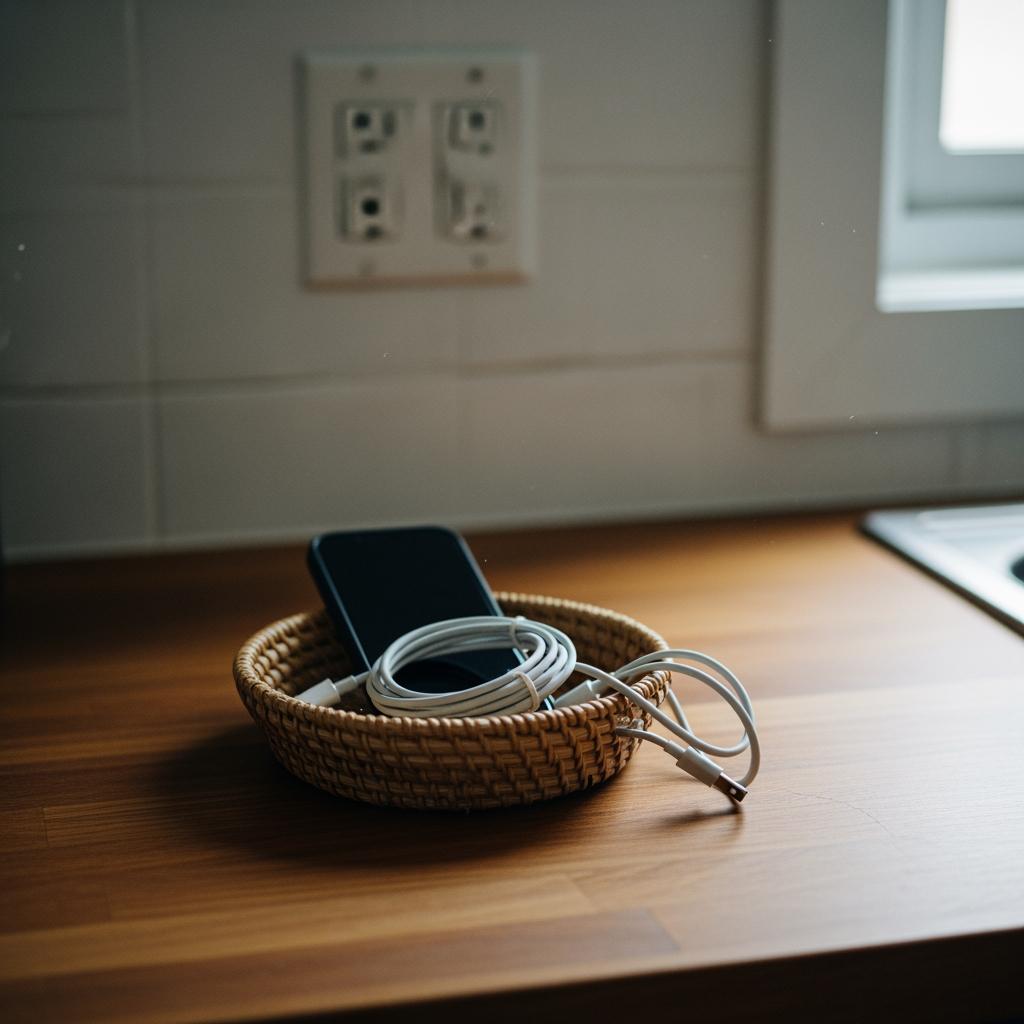
Nobody plans for this. It just happens. A phone charger appears on the counter one day, then a tablet, then suddenly there’s a tangle of cords next to the fruit bowl and it looks like a tech store exploded.
The kitchen isn’t the right place for a charging station, but I also know that’s where most people’s phones end up overnight. If that’s your reality, at least make it intentional.
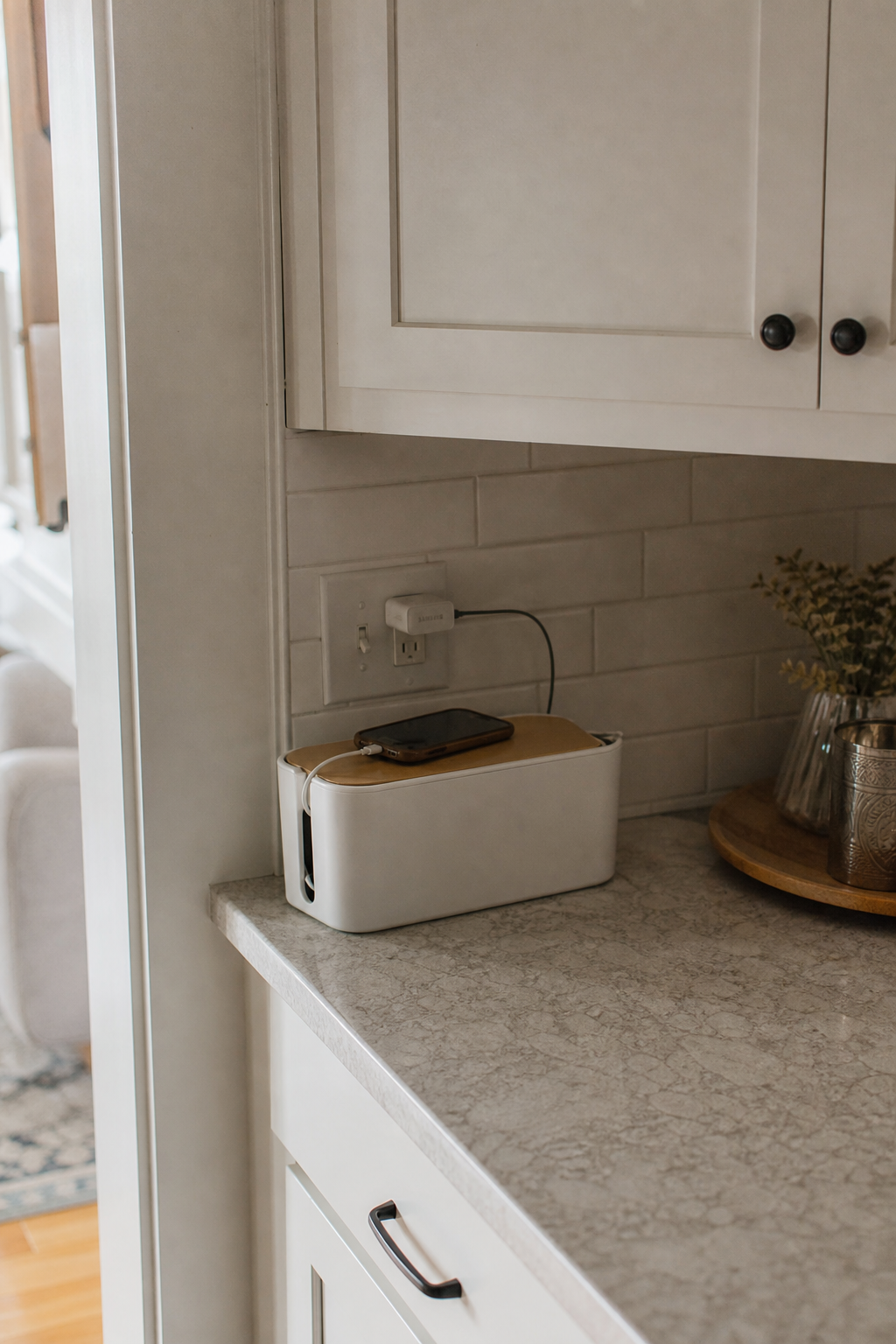
A small basket or a cord organizer box specifically for this purpose keeps the clutter contained. Some people use a single outlet strip tucked behind a counter appliance. Out of sight, still accessible.
If there’s a drawer near an outlet, that’s your best option. Charge inside the drawer. Revolutionary and also kind of obvious.
The Expired, Forgotten, and Overflow Pantry Zone
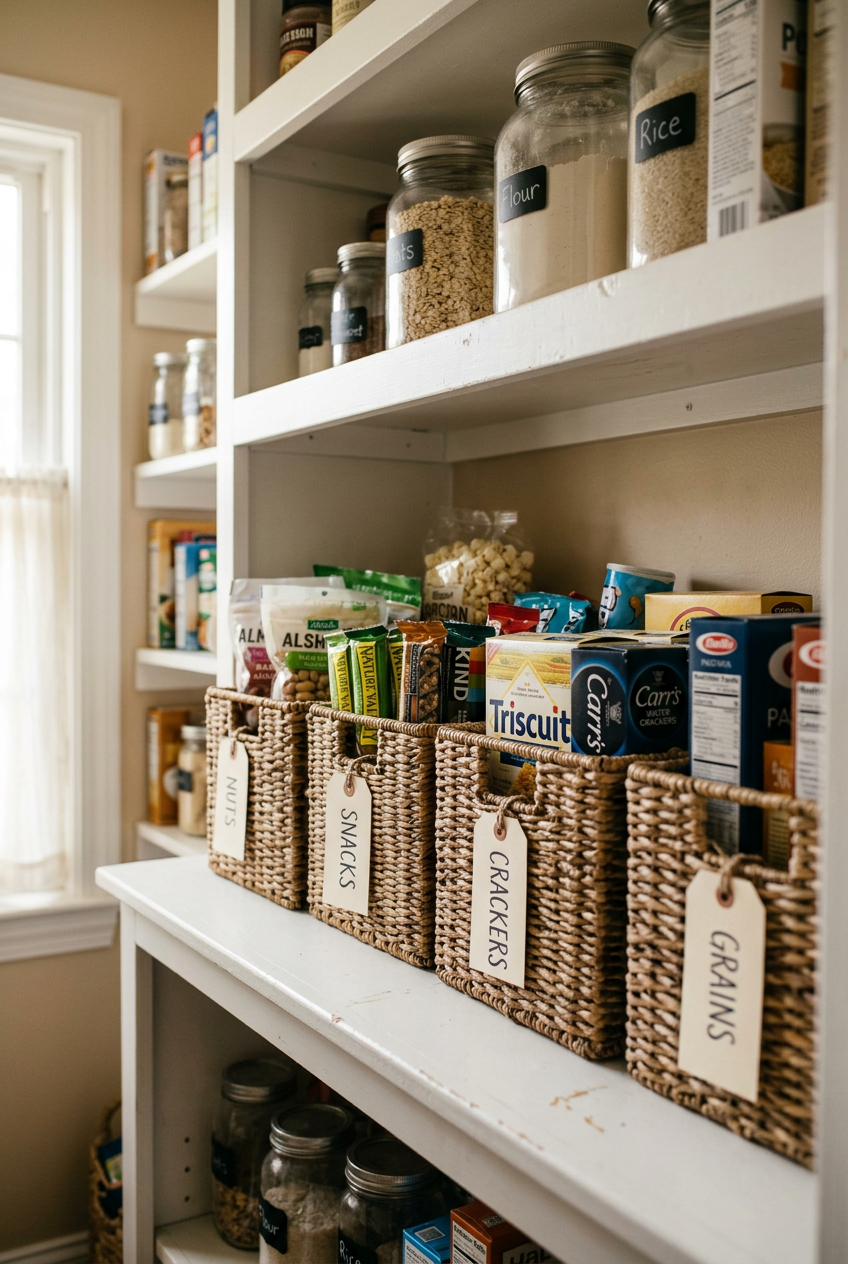
This is the section of your pantry that’s sort of… vague. Not the spices, not the canned goods, just the zone where things land that don’t have a real home. Extra napkins. A box of something you bought for one recipe. Snacks you impulse-bought.
When I finally purged this area — and it took a full hour, I’m not going to sugarcoat it — I threw away more than I expected. Stuff that had expired quietly. Stuff I’d completely forgotten I had.
Giving every item a home is the actual goal of pantry organization. If something doesn’t have a designated spot, it’s going to contribute to chaos.
A small labeled bin for ‘overflow’ or ‘use soon’ pantry items actually works. It’s not a perfect system but it beats the creeping disorder.