I used to buy those sad little grocery store bouquets, stuff them into a mason jar, and call it a day.
And every single time, I’d walk past them and feel… nothing.
No warmth.
No that cozy “someone actually lives here and loves this home” feeling I was chasing.
Then one Saturday morning, I spent maybe twenty minutes rearranging just three stems of ranunculus into a tiny ceramic vase on my kitchen windowsill — and I genuinely stopped and stared.
It looked like something from a boutique hotel lobby.
That’s when I realized it’s never really about how many flowers you have.
It’s about how you place them, what you put them in, and the tiny decisions that make something feel considered.
The Secret Is Choosing One “Star” Stem and Building Around It
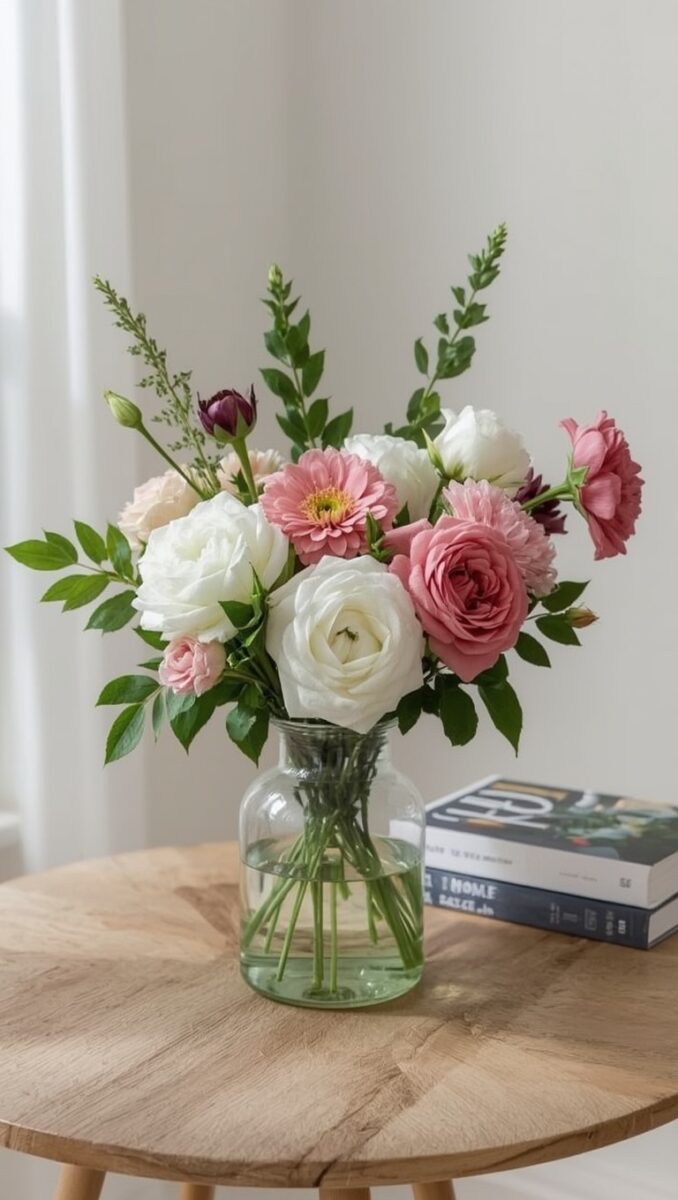
When I first started experimenting with my own small arrangements, I kept making the same mistake.
I’d grab five different flower types, jam them all in together, and wonder why it looked chaotic instead of chic.
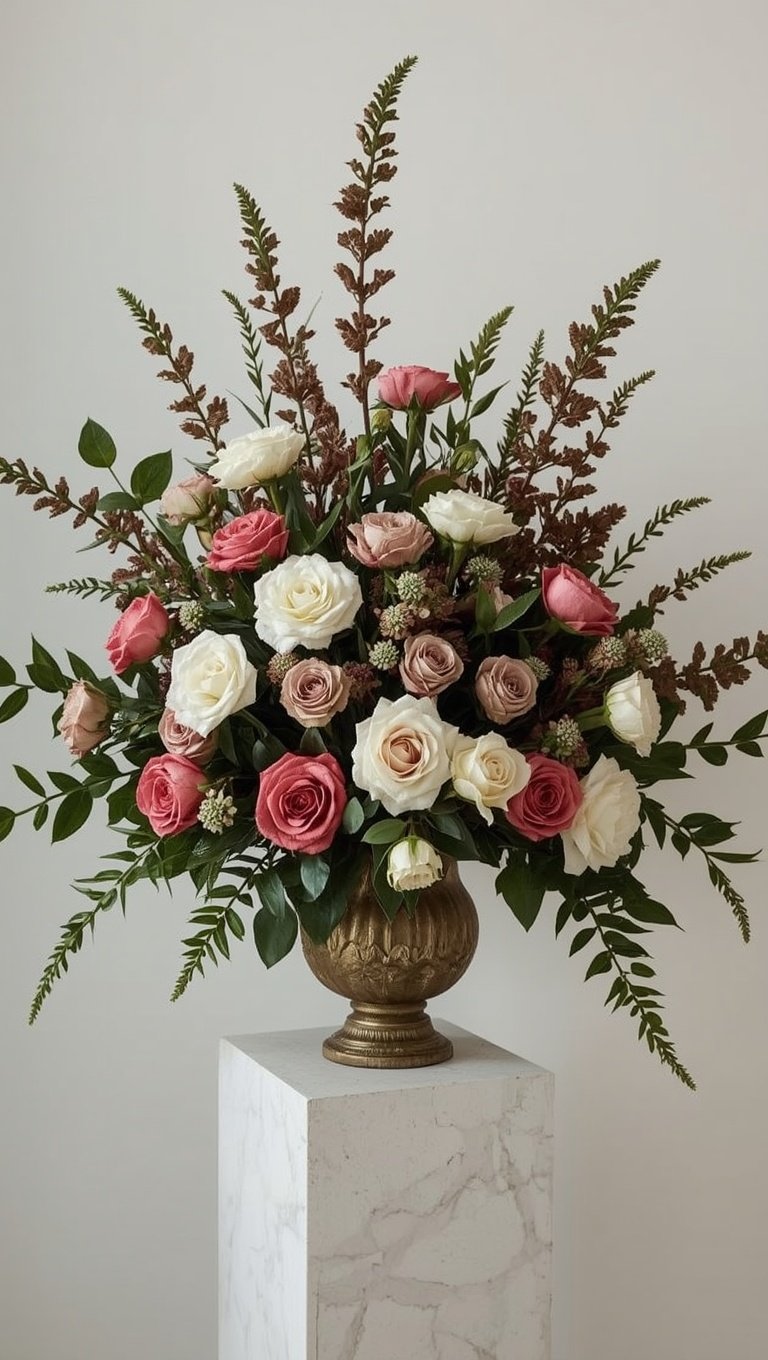
The florist trick — and I mean the actual trick — is picking one statement stem and letting everything else support it quietly.
Think a single garden rose, a full peony, or even one oversized ranunculus.
That’s your star.
Then you add one or two softer, smaller blooms around it — something like wax flower or tiny spray roses — just to fill in the negative space.
And then one trailing or textural element.
Something like eucalyptus, a sprig of thyme, or even a single wispy grass stem.
Three layers.
That’s it.
When I did this with just a blush peony, two stems of white wax flower, and a eucalyptus sprig last spring, people genuinely asked me if I’d had flowers delivered.
I paid maybe six dollars for the whole thing at the farmer’s market.
The structure is what sells it, not the price tag.
Why the Vessel Matters More Than You Think
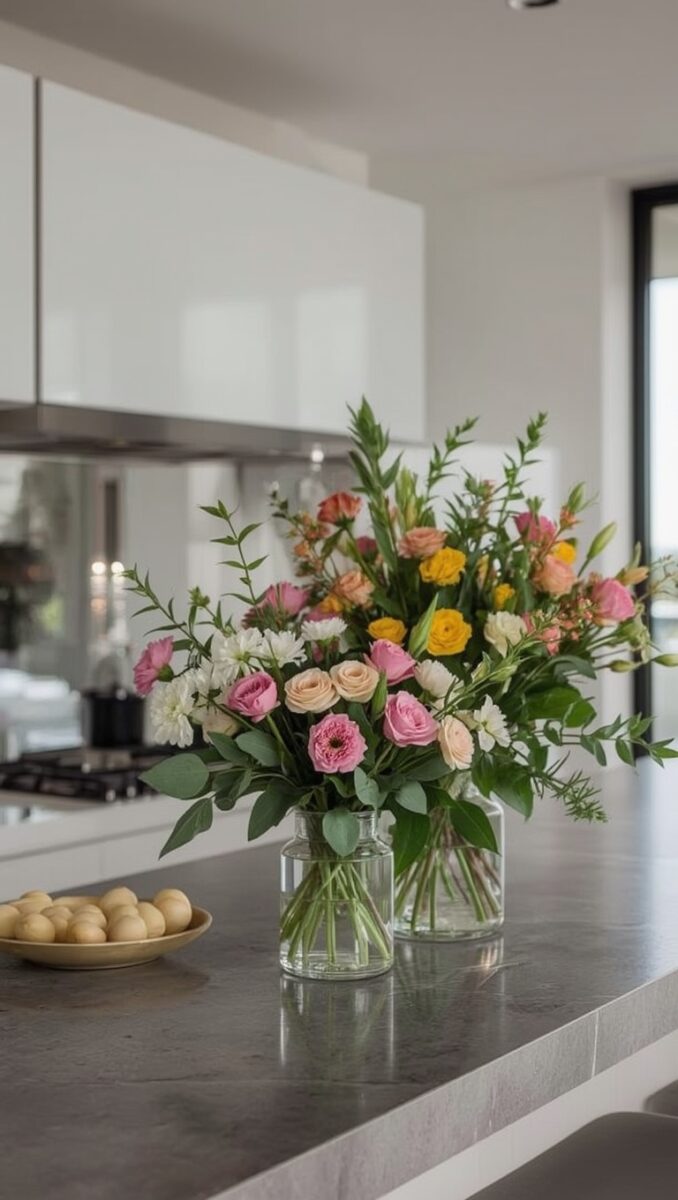
I know it sounds basic, but hear me out — the vase or container you choose is doing about fifty percent of the work.
A floppy bouquet in a boring clear cylinder looks like an afterthought.
The exact same flowers in a little antique bud vase, a matte black ceramic, or even a pretty vintage bottle?
Suddenly it looks intentional.
I’m a little obsessed with collecting interesting small vessels whenever I travel or thrift shop.
Old apothecary bottles, tiny terracotta pots, cut crystal juice glasses — they all become flower vessels in my world.
The rule I live by: the opening of the vessel should be narrow enough to actually hold the stems in place.
Wide-mouth jars are the enemy of a tidy small arrangement unless you add a frog or a crumpled piece of chicken wire inside to create structure.
If I had to recommend just one vessel style to start with, I’d say a small, slightly tapered ceramic vase in a neutral tone.
It works with every flower, every season, every countertop.
It disappears into the background in the best way — letting the blooms be the whole story.
Grocery Store Flowers Can Look Expensive, I Promise
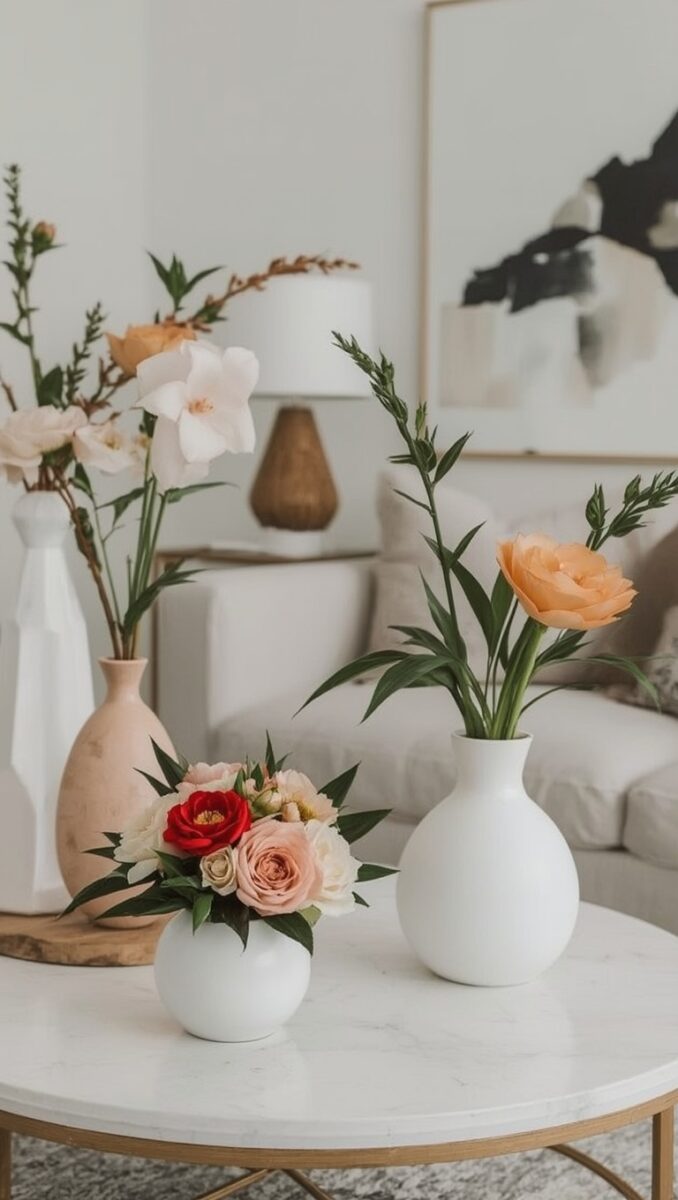
Okay, real talk.
Not everyone lives near a farmer’s market or has a Trader Joe’s with those dreamy flower buckets by the door.
And that’s totally fine, because grocery store flowers can absolutely look florist-quality with just a little editing.
The first thing I do when I bring home a grocery bouquet is take it completely apart.
Every stem out, on the counter, in front of me.
Then I edit ruthlessly.
I pull out the three or four stems that are the most beautiful, the most open, the most interesting in shape.
And I build just from those.
The rest?
They go into a second, simpler arrangement for another room, or I let them float in a shallow bowl of water on the coffee table.
Nothing gets wasted, but nothing gets crammed in together either.
The stems you don’t use are just as important as the ones you do.
Grocery carnations, by the way, are wildly underrated.
In a small matte vase with a sprig of rosemary tucked in?
Chef’s kiss.
My Favorite Flower Combinations for Tiny Arrangements
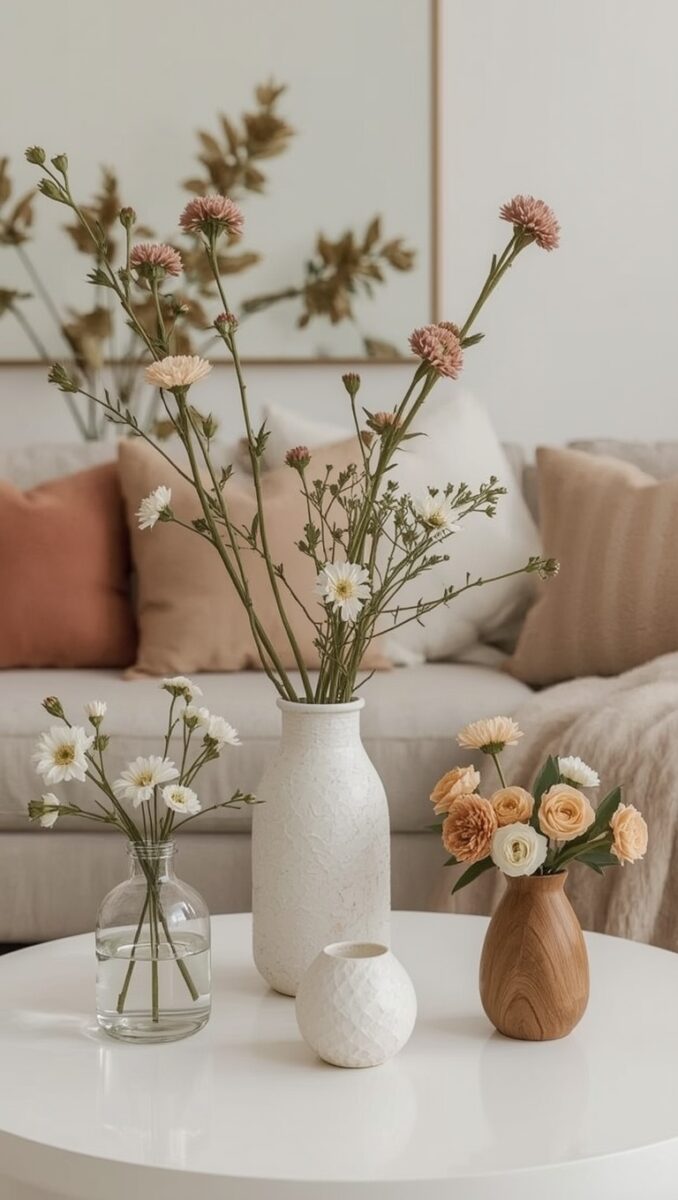
I’ve tested a lot of combinations over the years, and some just consistently feel elevated and beautiful without any real effort.
My absolute favorite for a kitchen or breakfast nook: one stem of white cosmos, two stems of chamomile, and a tiny sprig of fresh mint.
It smells unreal and looks like something from a countryside cottage.
For a bathroom or bedside table, I love blush spray roses with silver brunia berries.
The texture contrast between soft petals and those little silvery round berries is so good.
For fall vibes, burgundy snapdragons with cream ranunculus and a sprig of dried pampas — even just one small fluffy tip — feels incredibly cozy and rich-looking.
And for something super minimal and modern, a single stem of white orchid in a tall, thin bud vase says everything without saying too much.
You don’t need a formula every time.
But having a few go-to combinations in your back pocket means you never stand at the flower stall feeling overwhelmed and grabbing random things that won’t work together.
The Odd Number Rule Changes Everything
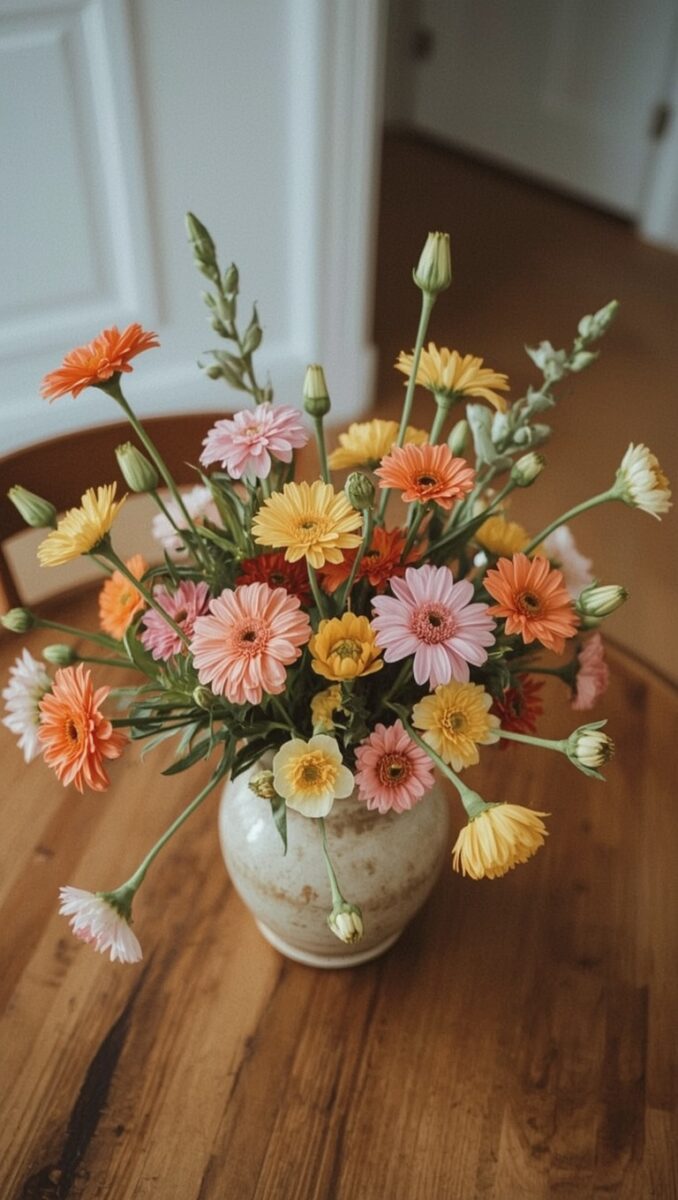
This one sounds like a design school thing, but I genuinely use it every single time.
Odd numbers of stems — three, five, seven — always look more natural and organic than even numbers.
Even numbers feel stiff.
They look paired, not arranged.
When I switched from grabbing “a bunch” of stems to intentionally placing three or five, my arrangements immediately started looking more like something a professional had done.
It’s sort of wild how much this one tiny tweak changes the whole feel.
For a really small vessel — like a bud vase or a little bottle — three stems is the magic number.
One taller star stem in the center-ish (not perfectly center), one slightly shorter bloom leaning softly to one side, and one textural element like a leaf or a berry branch on the other.
That’s your whole arrangement.
And it’ll look like you spent way more time and money than you did.
I love that about flowers — they’re so generous that way.
Height Variation Is the Florist Move Nobody Talks About
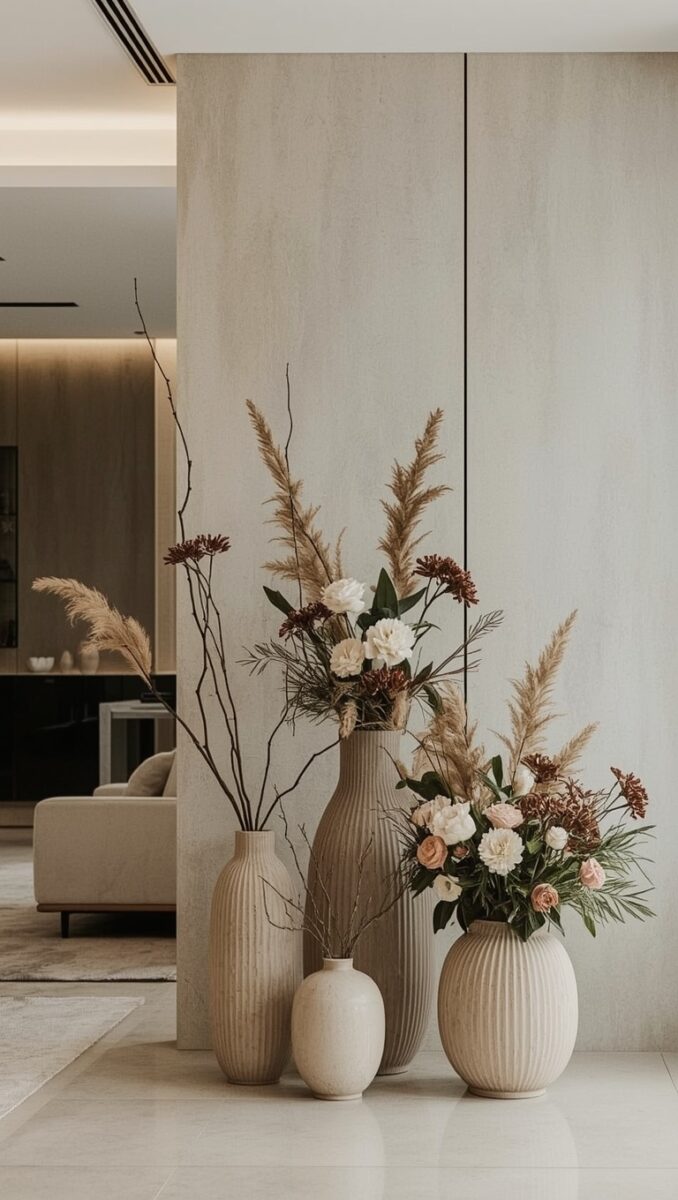
When I look at amateur arrangements versus professional ones, the thing that gives it away almost every time is the height.
Amateur: all the stems cut to the same length, everything sitting at the same level.
Professional: intentional variation, some stems taller, some shorter, some almost at the rim of the vase.
Height variation creates movement.
It makes an arrangement feel alive and dynamic instead of flat and rigid.
When I’m cutting stems for a small arrangement, I cut them in slight increments.
My tallest stem might be five or six inches above the vase opening.
My middle stems sit maybe two to three inches above.
And my lowest, softest filler sits right at the rim, almost spilling over.
That “spilling over” detail is so important.
It’s the thing that makes an arrangement look lush and generous rather than uptight.
If I had a tiny coffee table arrangement to do right now, I’d make sure at least one leaf or small bloom was draping softly over the edge of the vessel.
It immediately reads as intentional and stylish.
The One-Flower Arrangement (And Why It Works So Well)
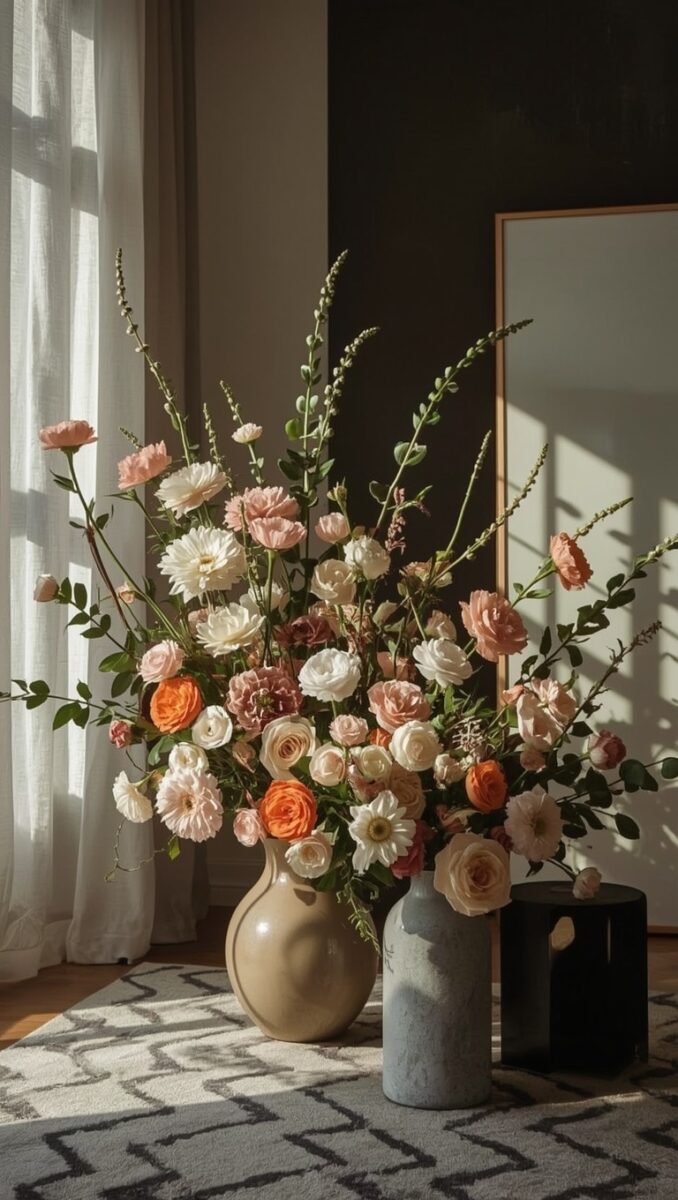
I want to talk about the single stem arrangement because I think it’s wildly underused and so, so beautiful.
There’s something about one perfect flower in a beautiful vessel that feels incredibly intentional.
It says: I chose this.
I placed this here on purpose.
It’s the opposite of clutter, and in a world where our homes can feel so visually noisy, that kind of quiet confidence is stunning.
My favorite single-stem moment is a garden rose — one fully open, slightly blowsy rose — in a short, round ceramic bud vase.
No other flowers.
Maybe one single leaf from the rose’s own stem left on.
That’s it.
I’ve done this on a guest bathroom counter and had multiple people comment on how “put together” everything looked.
It was literally one flower.
One.
The single stem arrangement also works beautifully with tulips, anemones, dahlias, or even a single tall foxglove in a narrow bottle.
Trust the simplicity.
It doesn’t need to be complicated to be stunning.
How I Style Flower Arrangements in Small Spaces
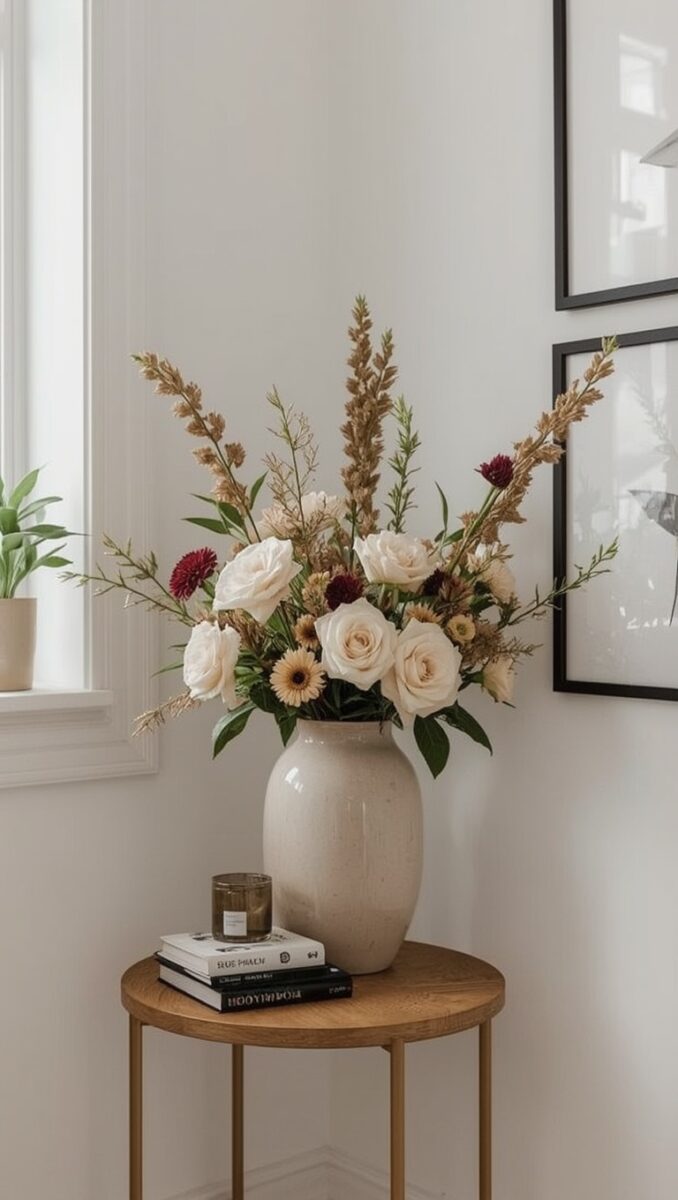
Tiny homes and small apartments — I see you, and I love you, and flowers absolutely belong in your space too.
The trick with small spaces is placement over quantity.
You don’t need flowers everywhere.
You need one perfect small arrangement in a spot where it will be noticed and felt.
For me, that’s usually the kitchen windowsill.
The morning light hits flowers there in a way that feels almost cinematic — soft, golden, glowing through petals.
Or the corner of a bathroom vanity, where one little bud vase of tiny blooms makes the whole room feel more luxurious.
Or a small entry table, where a simple arrangement is the very first thing you — and every guest — sees when walking in.
In small spaces, I also think about what the arrangement sits next to.
A little vase of flowers next to a stack of pretty books, a candle, and a small tray?
That’s a moment.
That’s styling.
Flowers don’t live in isolation — they’re part of a little scene you’re curating.
Dried and Preserved Flowers Are Having Their Moment (For Good Reason)
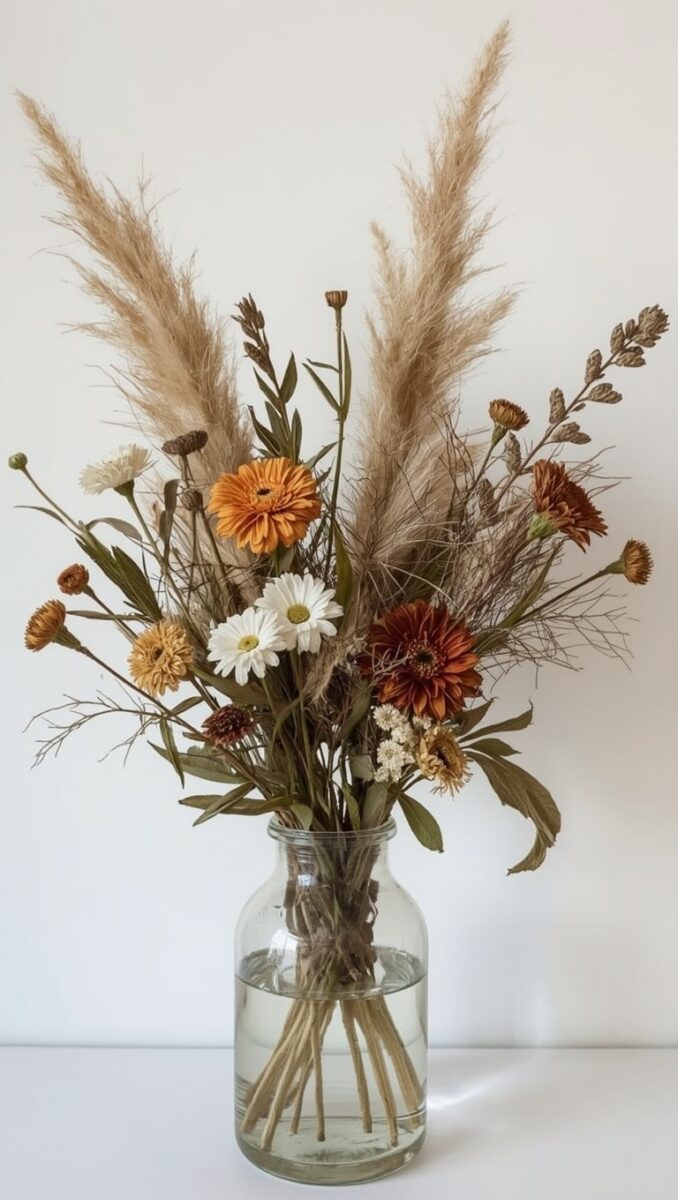
Okay, I’ll be the first to admit I was slow to the dried flower thing.
I thought they looked dusty and sad.
And then I saw a tiny arrangement of dried strawflowers and bunny tail grass in a little vintage bottle on someone’s shelf and I completely changed my mind.
Dried arrangements are a genuinely brilliant option for small spaces because they last.
We’re talking months, sometimes longer.
No water changes.
No wilting panic when you forget about them for a week.
No mess.
My current favorite dried combination: blush strawflowers, white lunaria (those papery silver dollar-looking stems), and a little bunch of dried lavender.
In a small terracotta pot, it looks like something from a Provençal farmhouse.
Dried pampas grass tips — even just one or two — in a small bud vase are also incredibly chic and architectural.
And dried citrus slices tucked into a small arrangement?
Unexpected, textural, and genuinely gorgeous.
If you’re new to dried flowers, start small and simple.
One or two stems in an interesting vessel.
You’ll be surprised how much life dried flowers can bring to a room.
Foliage-Forward Arrangements Feel So Luxurious
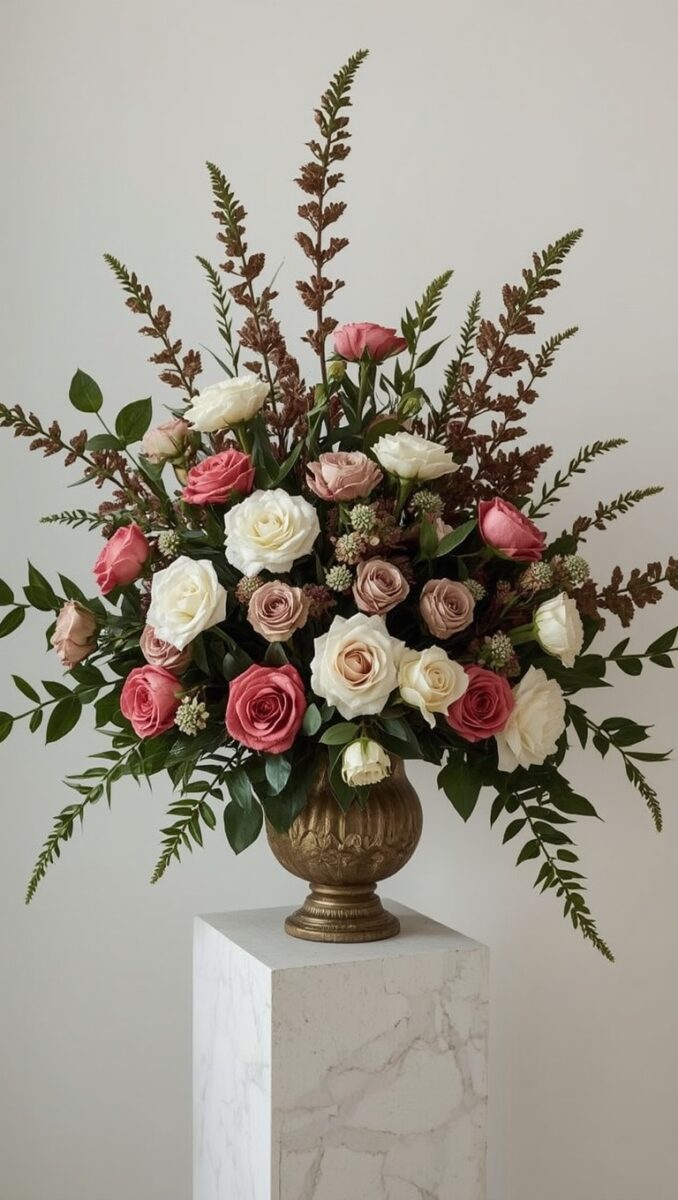
Here’s something I learned from watching florists work: they use a lot of greenery.
Way more than most of us use at home.
Foliage isn’t filler — it’s actually a design element in its own right.
Some of my favorite small arrangements are almost entirely green with just a hint of bloom peeking through.
Think: a small bunch of eucalyptus with one white ranunculus tucked in.
Or a cluster of ferns with a single blush tulip.
Or — and this is one I come back to constantly — fresh rosemary, thyme, and sage from the kitchen garden, bundled into a little jar with one tiny flower from the garden.
It smells incredible and looks like something from a Tuscan kitchen.
Foliage-forward arrangements also tend to last longer, which I appreciate.
Greenery is hardier than most blooms.
If you’re on a budget or your flowers are looking a little past their peak, strip back the blooms and let the foliage carry the arrangement for a few more days.
It works.
And it looks intentional rather than desperate, which is the goal.
The Floating Bloom Trick for Flat Surfaces
This one is so simple and so stunning and I feel like not enough people know about it.
When you have blooms that are too short-stemmed to work in a vase — or petals that have fallen — don’t throw them away.
Float them.
A shallow bowl, a pretty dish, even a pasta bowl filled with water and a few floating blooms looks incredibly luxurious.
Gardenias are famously beautiful floated.
Camellias.
Rose petals.
Even a single peony head that’s fully opened and fallen from its stem floats beautifully and looks like an editorial photo.
I’ve done this on a coffee table with a wide, low ceramic bowl and a handful of rose petals scattered around it, and guests have asked if I hired someone to style my home.
I did not.
I just refused to throw away a flower that wasn’t done being beautiful yet.
The floating bowl also works as a centerpiece on a dining table for a dinner party — add a few floating candles and some petals and it looks genuinely spectacular without being fussy or tall.
My Tips for Making Flowers Last Longer in Small Arrangements
Because none of this matters if your beautiful little arrangement wilts after two days.
First: always cut stems at an angle, not straight across.
An angled cut gives the stem more surface area to drink from.
Second: change the water every two days minimum.
I know it sounds obvious but I forget constantly, so I’m telling you so we can both remember.
Third: keep arrangements away from direct heat and direct sunlight.
That sunny windowsill I love?
I rotate the arrangement into a slightly shadier spot in the afternoon.
Fourth: strip any leaves that will sit below the waterline.
Leaves rotting in water is what causes that murky, smelly vase situation.
Strip them before the stems even go in.
Fifth — and this is my favorite hack — add a tiny pinch of sugar and a drop of bleach to the water.
The sugar feeds the flowers.
The bleach keeps bacteria from growing.
It genuinely extends the life of an arrangement by several days.
And finally: buy flowers in bud, not fully open.
You want room to watch them bloom in your home.
That slow unfolding is honestly one of the small joys I look forward to all week.