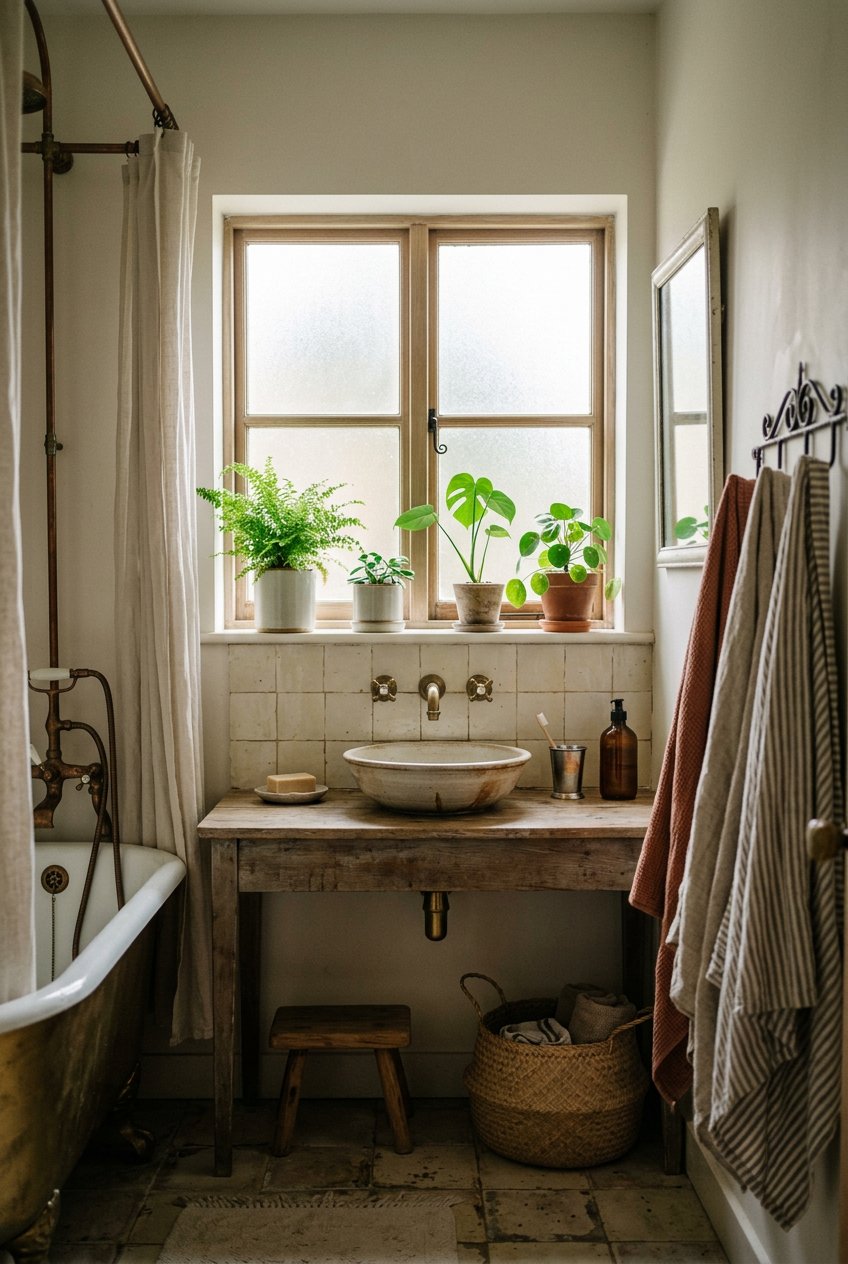
Every design rule I’d ever read told me to pick one metal finish and stick with it. Consistency, cohesion, all that. So when I accidentally ordered a chrome towel bar to go with my brass faucet and matte black cabinet hardware, I fully expected to return something. I didn’t. I hung everything up, stepped back, and honestly just… loved it. It looked layered and collected, like a bathroom that had been lived in and thought about over time. Not matchy-matchy. Not catalog-perfect. Real. That was last spring, and I’ve since done it intentionally in two more rooms. Here’s everything I learned.
Why the “Match Your Metals” Rule Exists (And Why I Think It’s Outdated)
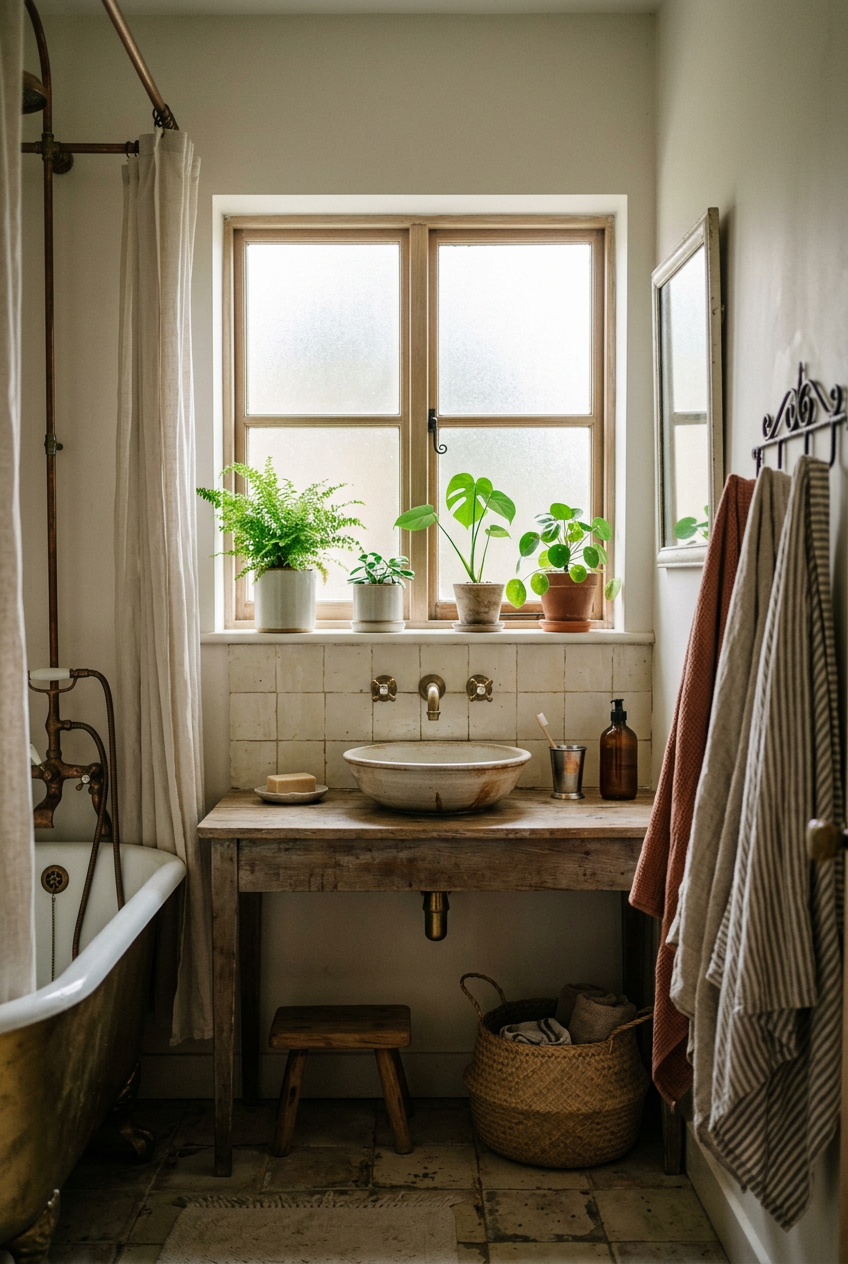
The matching-metals rule comes from a very clean, very minimal design era. It made sense then. Everything coordinated, nothing competed, you got a polished result without much effort.
But honestly? That approach can make a bathroom feel sort of flat. Like a hotel room that nobody actually lives in. Safe, yes. Interesting, not so much.
I spent years following it religiously. Swapping out perfectly fine fixtures just because they weren’t the right finish. I cringe a little thinking about it now.
The shift happened when I started noticing that the bathrooms I actually loved in design magazines were never perfectly matched. They had warmth and contrast and a little tension. That tension is what makes a space feel designed instead of just decorated.
The Specific Combo I Used and How It Actually Came Together
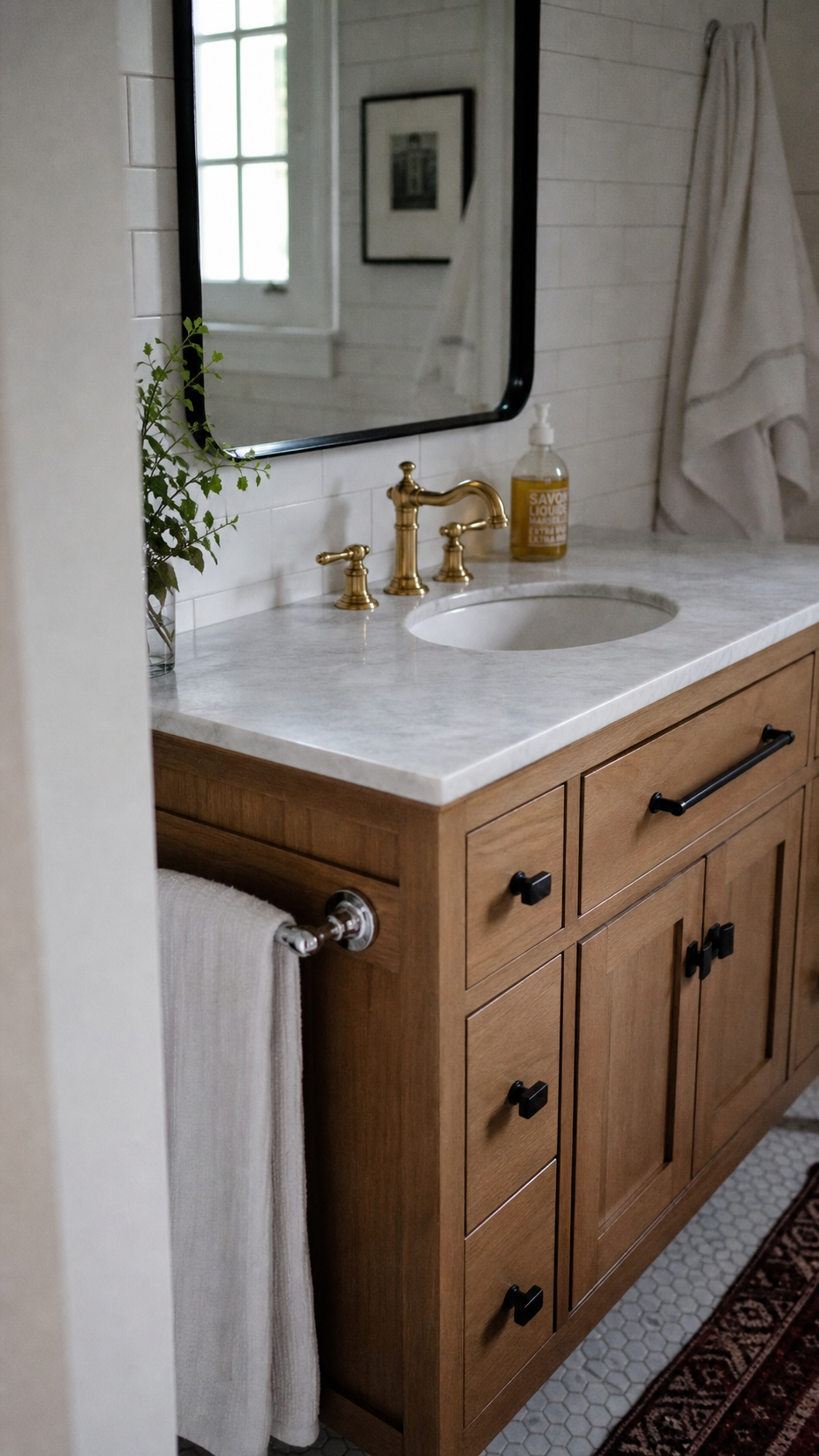
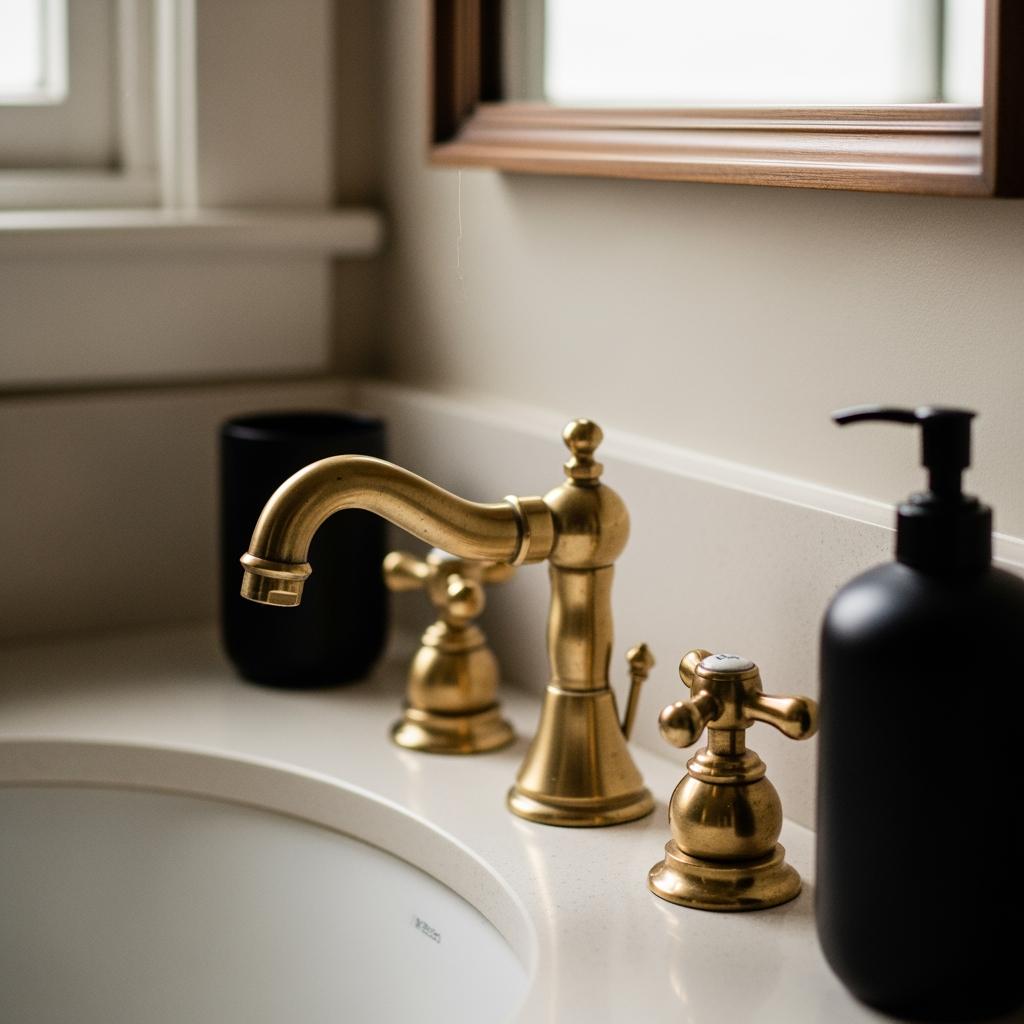
My bathroom had a vintage-style brass faucet I’d been obsessing over for months. Warm, unlacquered, kind of antique-looking. I loved it immediately.
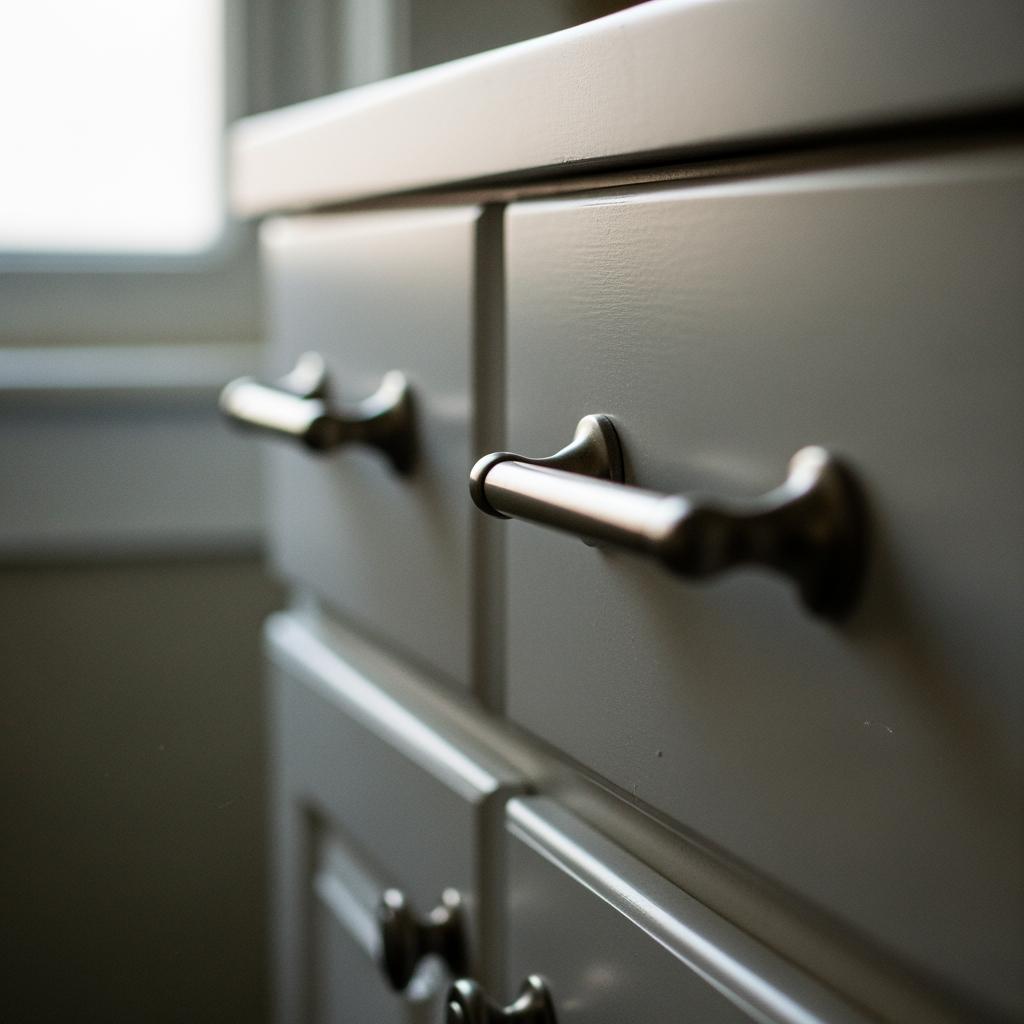
Then I found this matte black cabinet pull set on clearance. Like, a really good deal. And I thought, okay, maybe brass and black can coexist. Spoiler: they absolutely can.
The chrome came in almost by accident. My existing towel bar was chrome and replacing it felt wasteful when it was still in perfect condition. So I kept it. And it works.
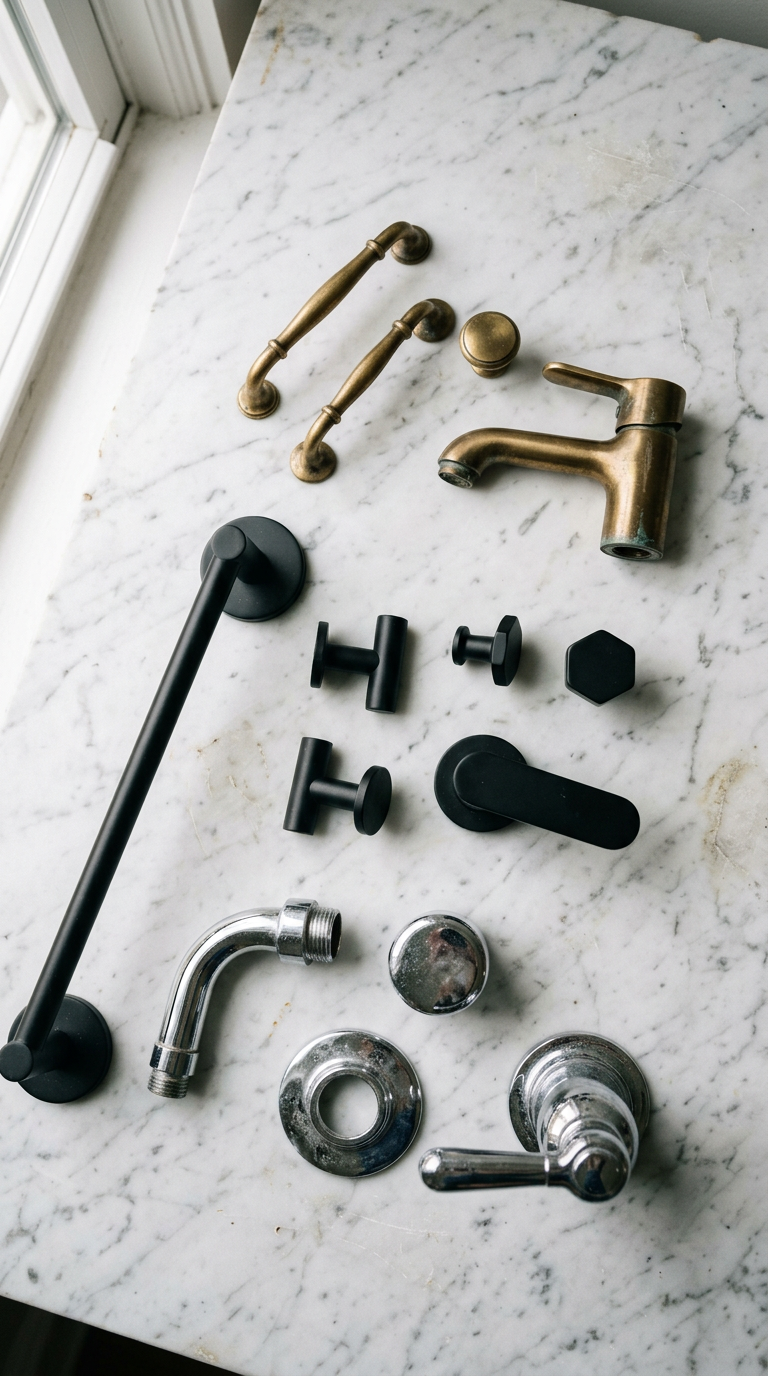
What I didn’t expect was how the chrome would actually brighten the space. It catches light differently than brass or black, and that mix of warm, dark, and cool tones gives the whole room a kind of collected, intentional feel.
The One Rule I Did Follow: Distributing the Metals Evenly
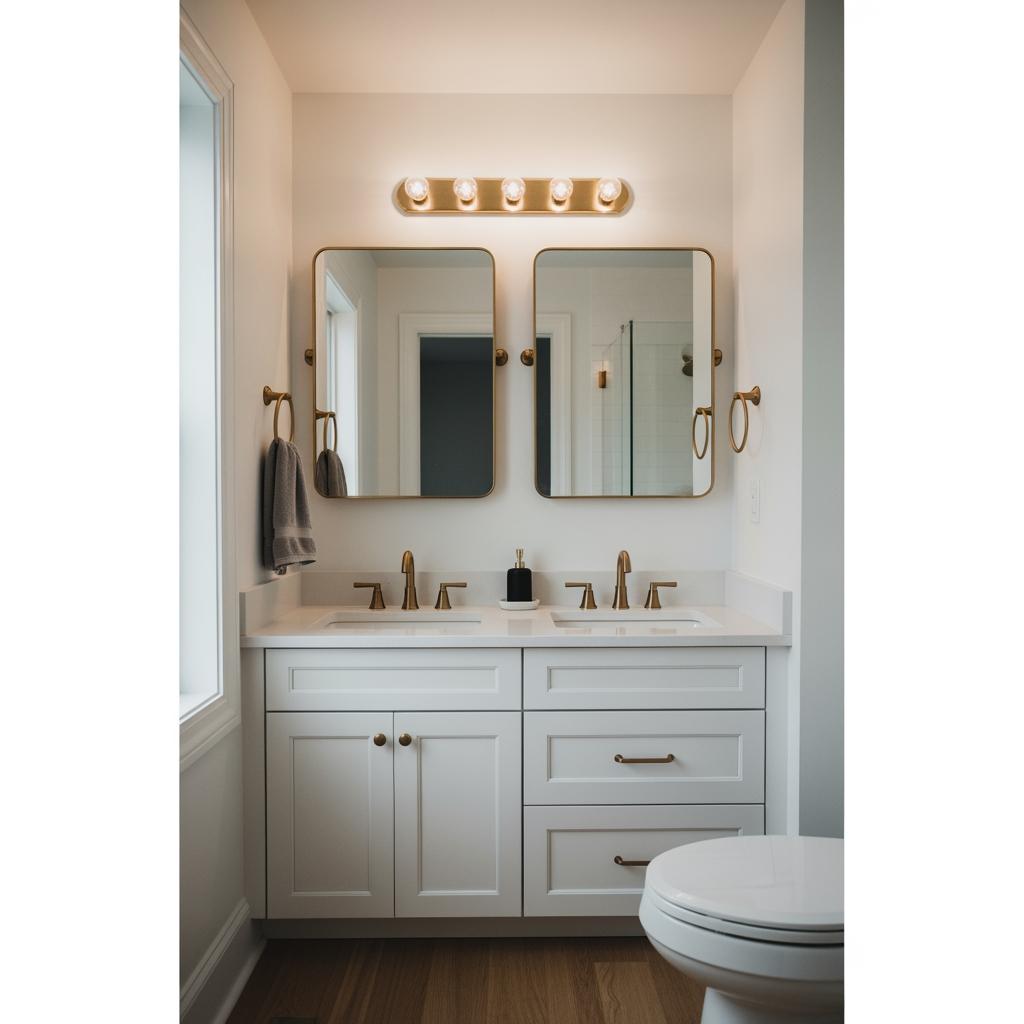
Okay, so I tossed most of the rules. But there is one principle I held onto, and it made a huge difference.
Don’t cluster. Spread each finish around the room so your eye travels. If all your brass is on one side and all your black is on the other, it looks split, not intentional.
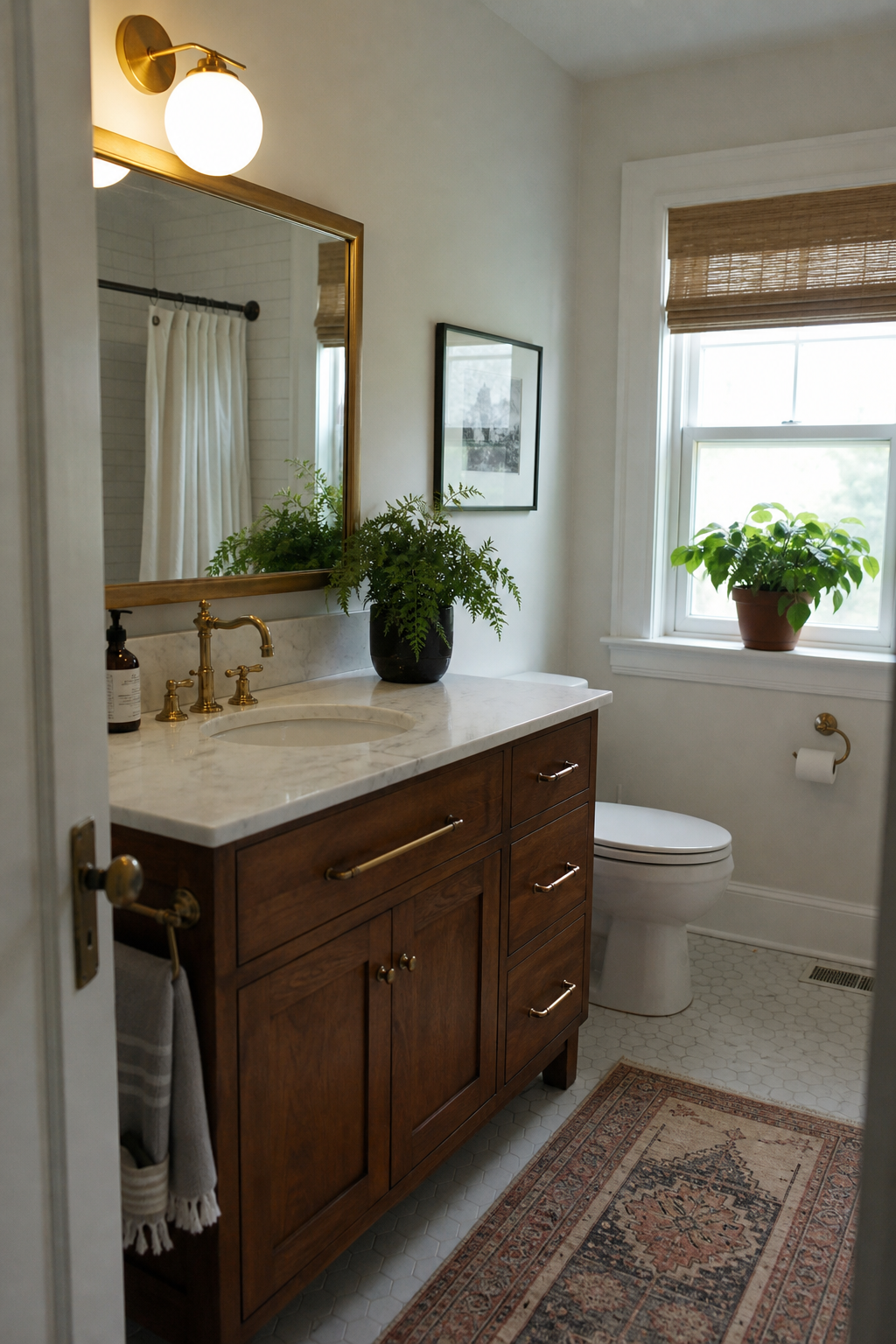
I made sure brass showed up at the faucet and the mirror frame. Black showed up on the cabinet hardware and the light fixture. Chrome on the towel bar and robe hook. Each finish appears in at least two spots.
That repetition is what makes it feel like a decision instead of an accident. You want someone to walk in and think ‘oh, she chose this’ not ‘oh, she just had all this lying around.’
What Brass Actually Brings to the Room
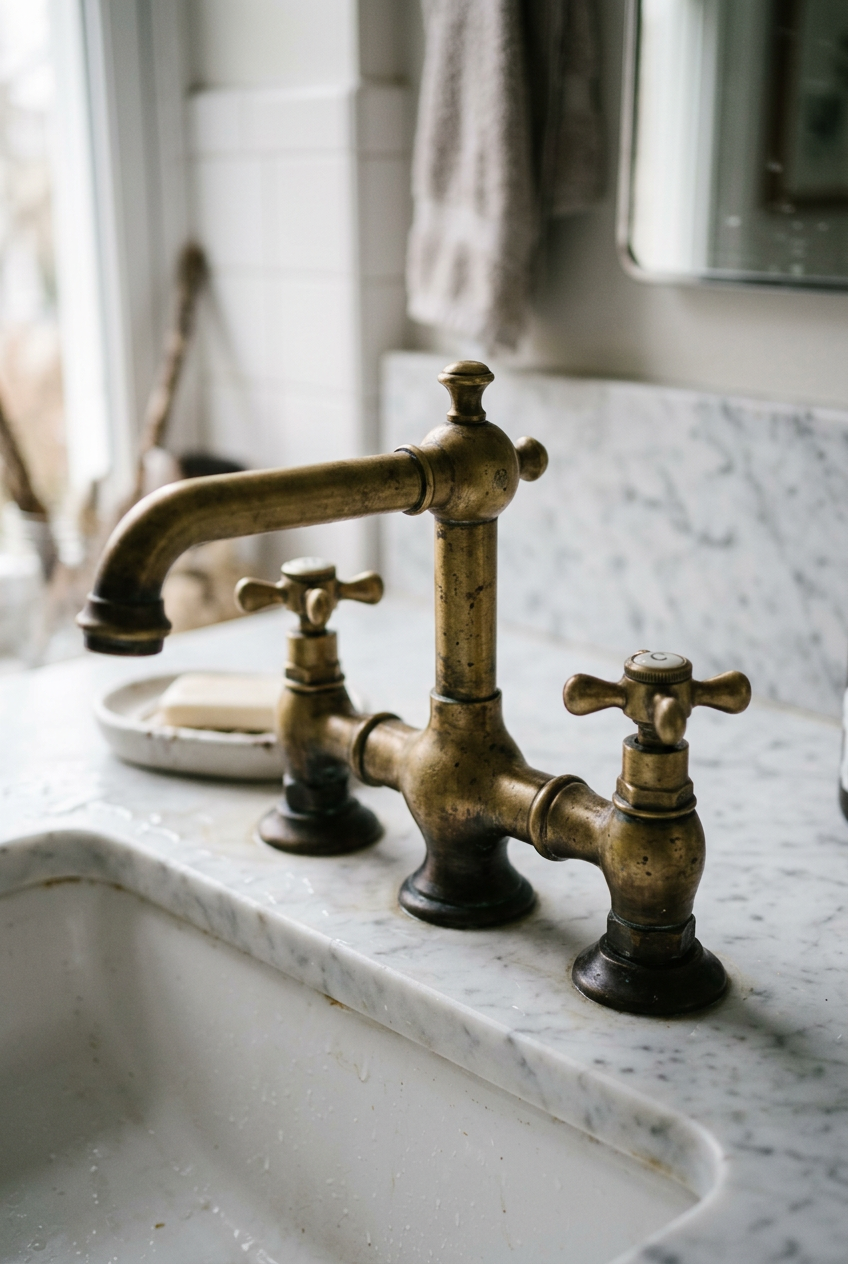
Brass is warm. That’s the short version. It pulls in golden undertones and makes everything around it feel a little softer.
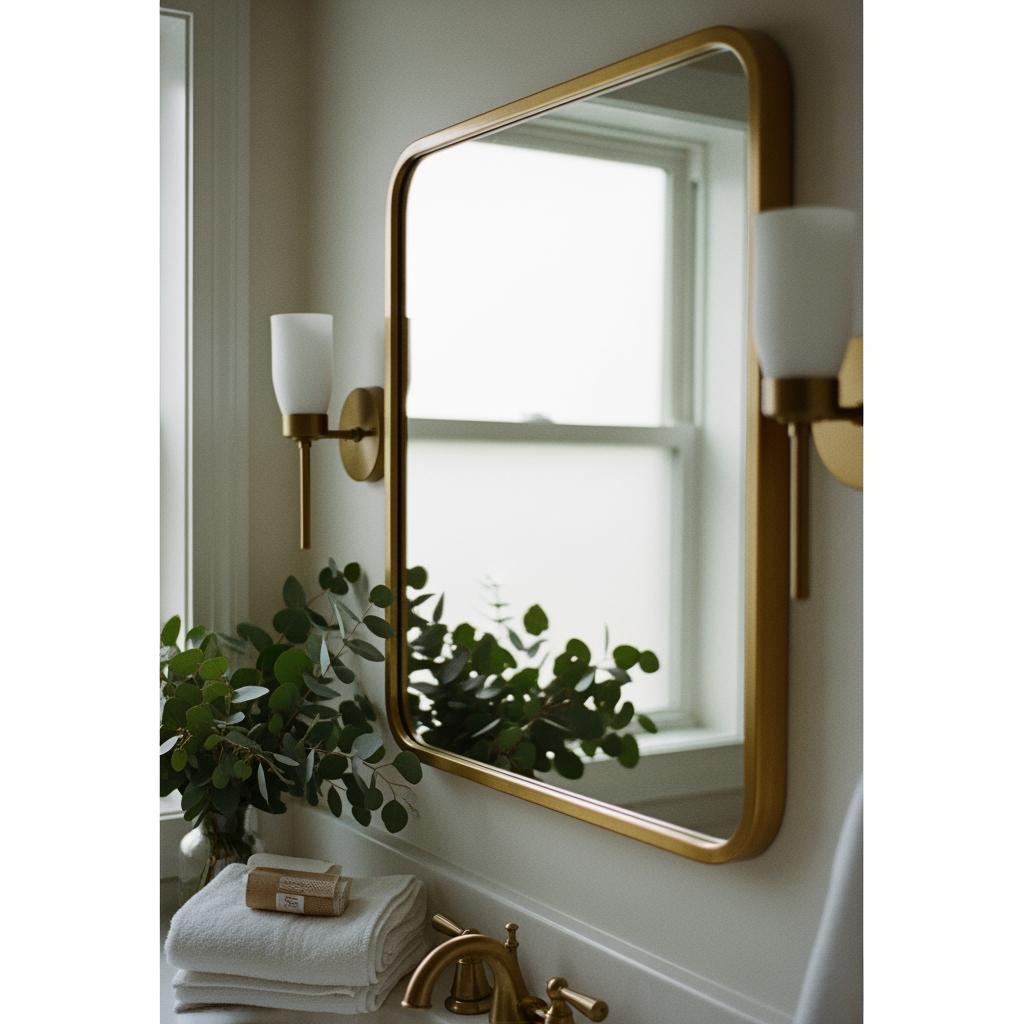
I’m obsessed with unlacquered brass specifically because it ages. It gets a little patina over time and starts to look like something you inherited rather than something you just bought. There’s a lived-in quality to it that I find really appealing.
In my bathroom it anchors the faucet and the mirror frame. Those are two spots your eye naturally goes, so having warmth there first sets the whole tone.
One thing I’ll say: brass can lean yellow in certain lighting. If your bathroom has cooler light, test a brass piece before you commit. I had to swap out one fixture that looked almost greenish under my overhead bulbs. Not cute.
What Matte Black Adds (Hint: It’s Not Just Edge)
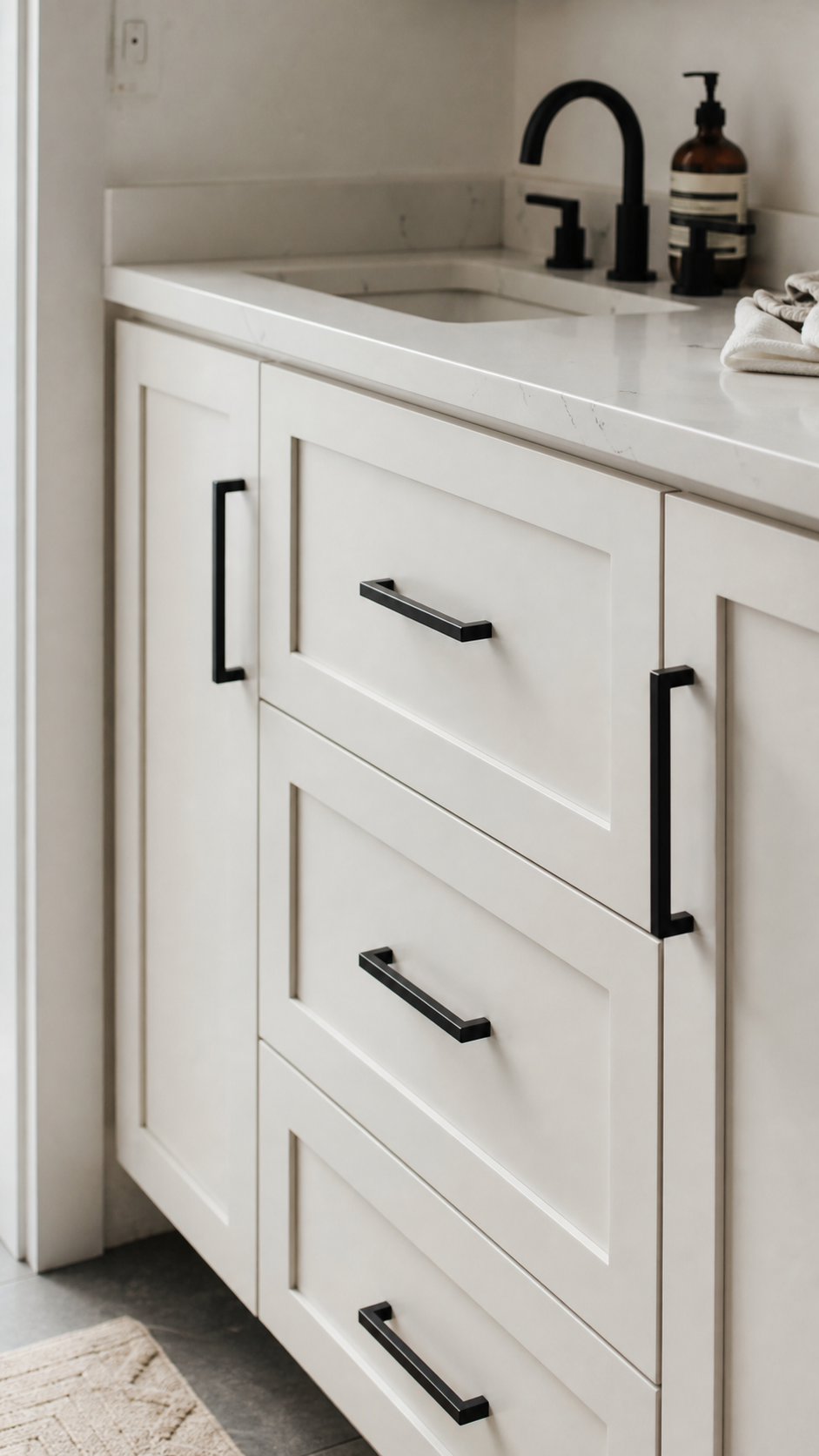
People associate matte black with modern or industrial spaces, and sure, it can do that. But it’s so much more versatile than that reputation suggests.
In a warm, traditionally styled bathroom, matte black acts like a grounding note. It stops things from going too precious or too soft. It adds weight.
I used it on my cabinet pulls and on the light fixture above the mirror. Small touches, but they make the brass feel intentional rather than just vintage-y.
The matte texture is key. Glossy black would have been too harsh. The flat finish absorbs light instead of bouncing it, which keeps it from competing with the brass or the chrome.
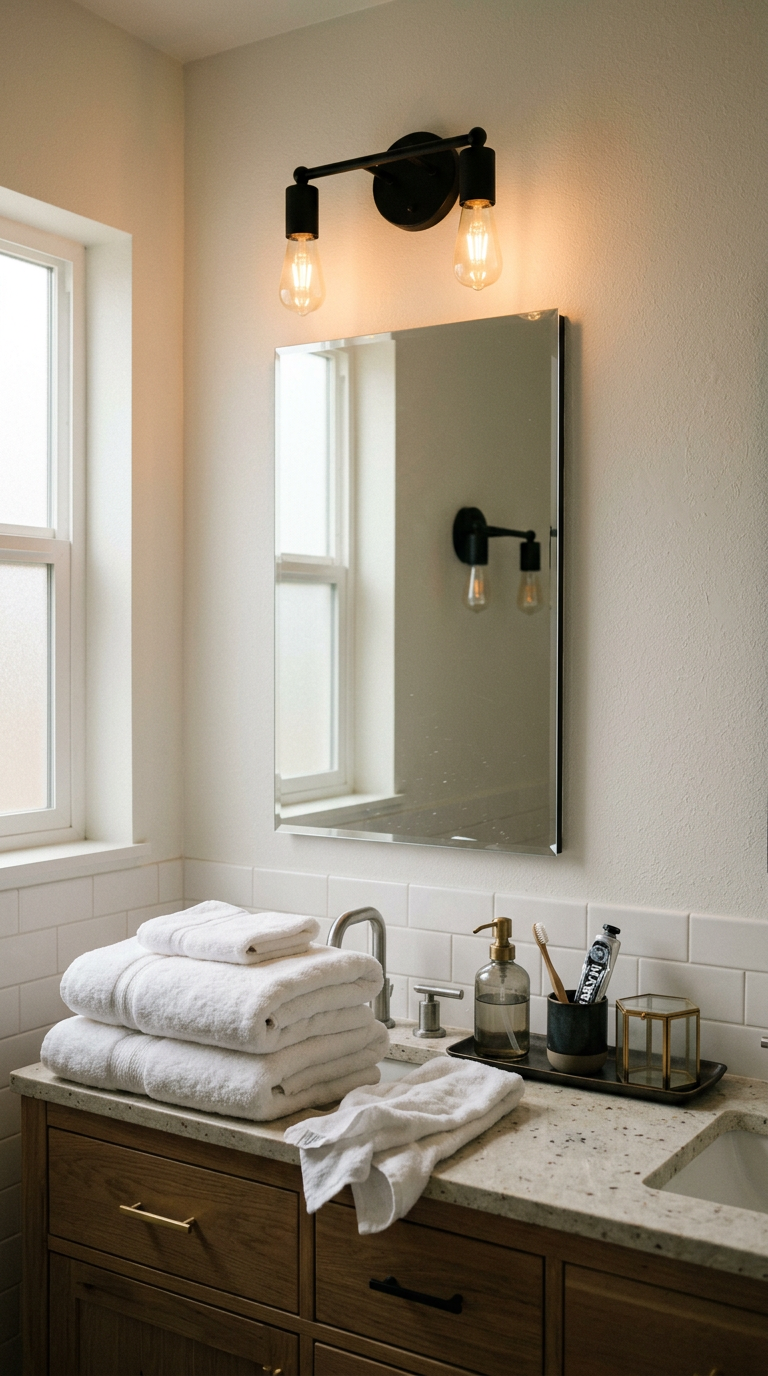
If I had a small hallway bathroom, I’d honestly start with matte black hardware before anything else. It’s the easiest way to make a space feel considered.
Where Chrome Fits In (This One Surprised Me the Most)
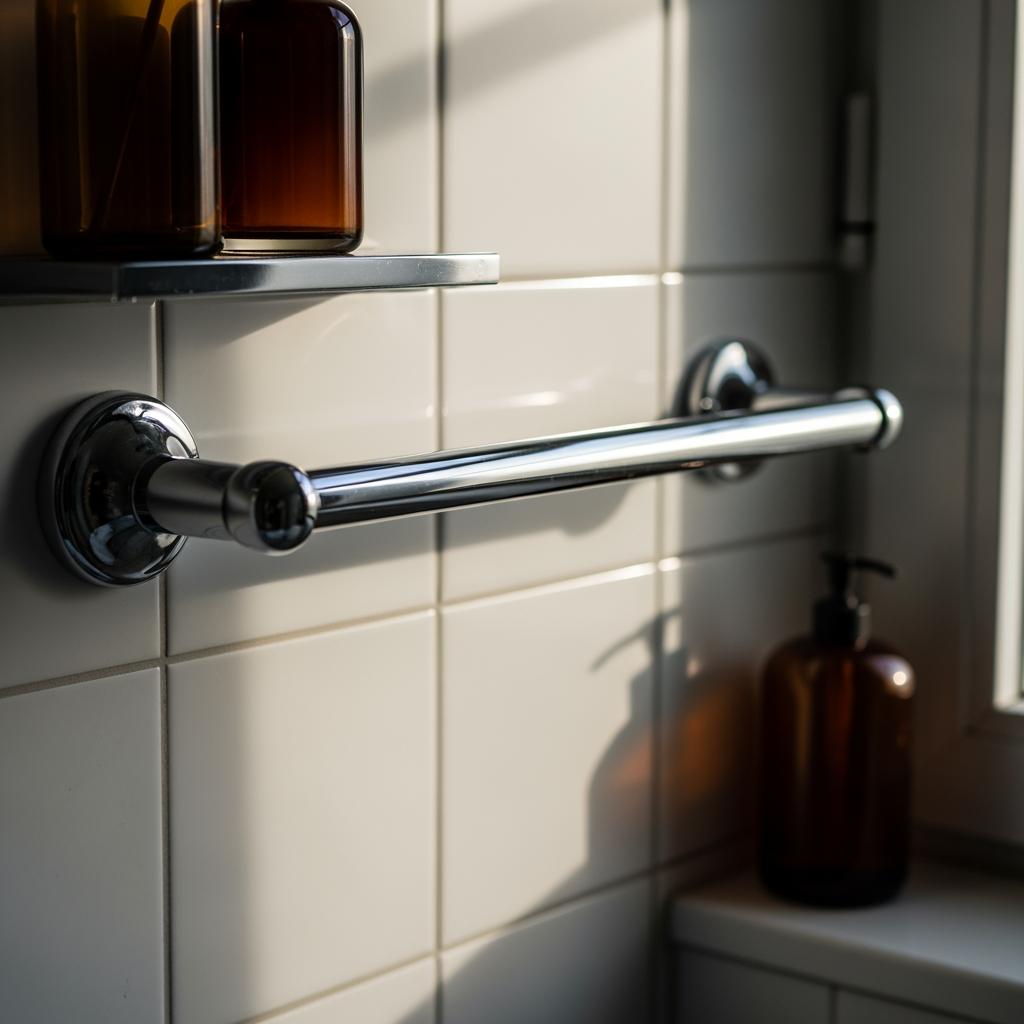
I’ll be honest. Chrome was my least favorite going in. It felt sort of dated to me, sort of ’90s builder-grade bathroom energy.
But keeping my existing chrome towel bar taught me something. In the right context, chrome reads as crisp and clean. It adds a kind of brightness that brass can’t and that black definitely won’t.
It works like a highlight in the room. The way a little shimmer in a painting draws your eye. It’s reflective in a way that makes the space feel larger.
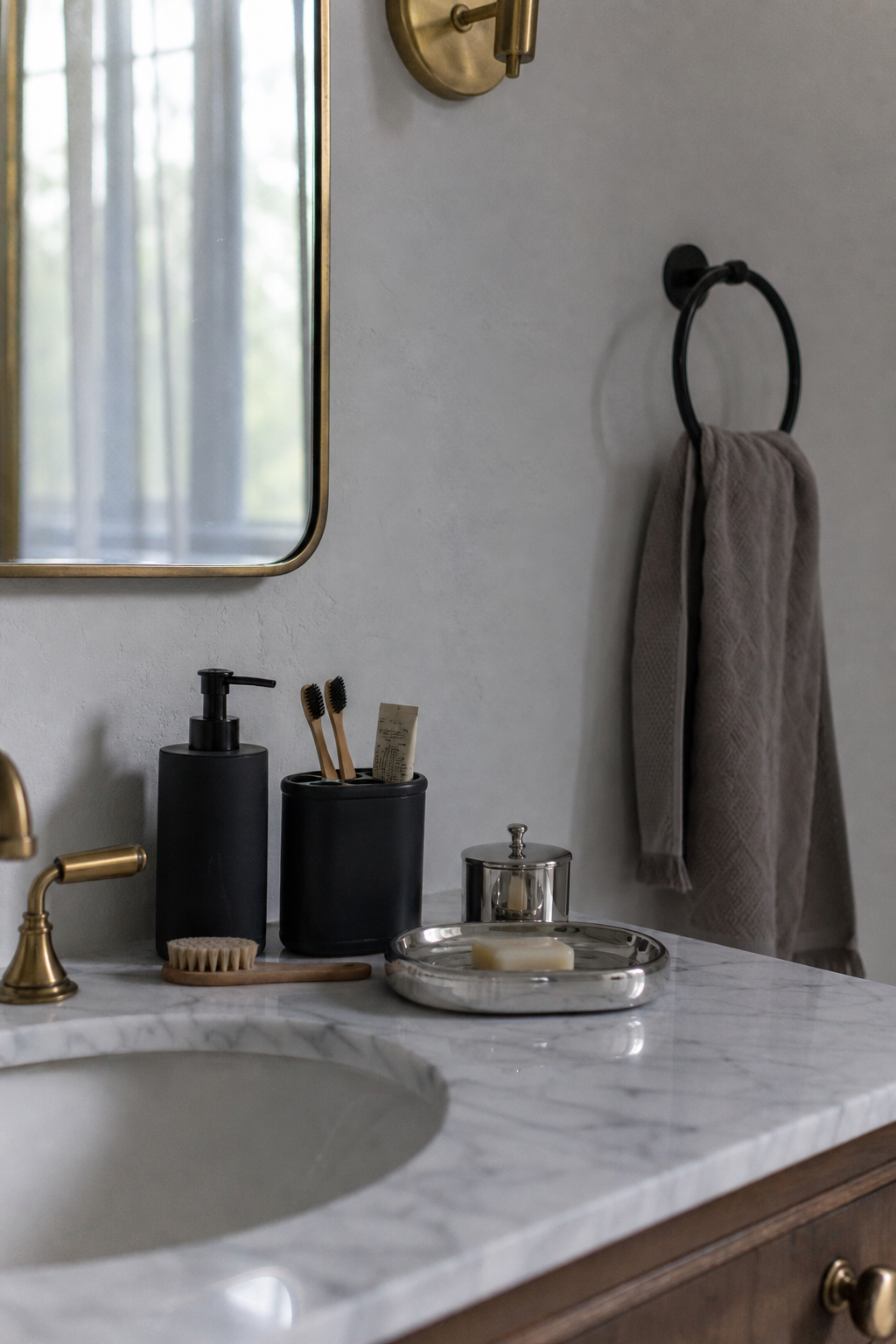
I’ve since warmed up to chrome considerably. I even added a small chrome soap dish near the sink and it just feels right. Cool and clean next to all that warm brass.
The Finish Pairings That Work and the Ones That Don’t
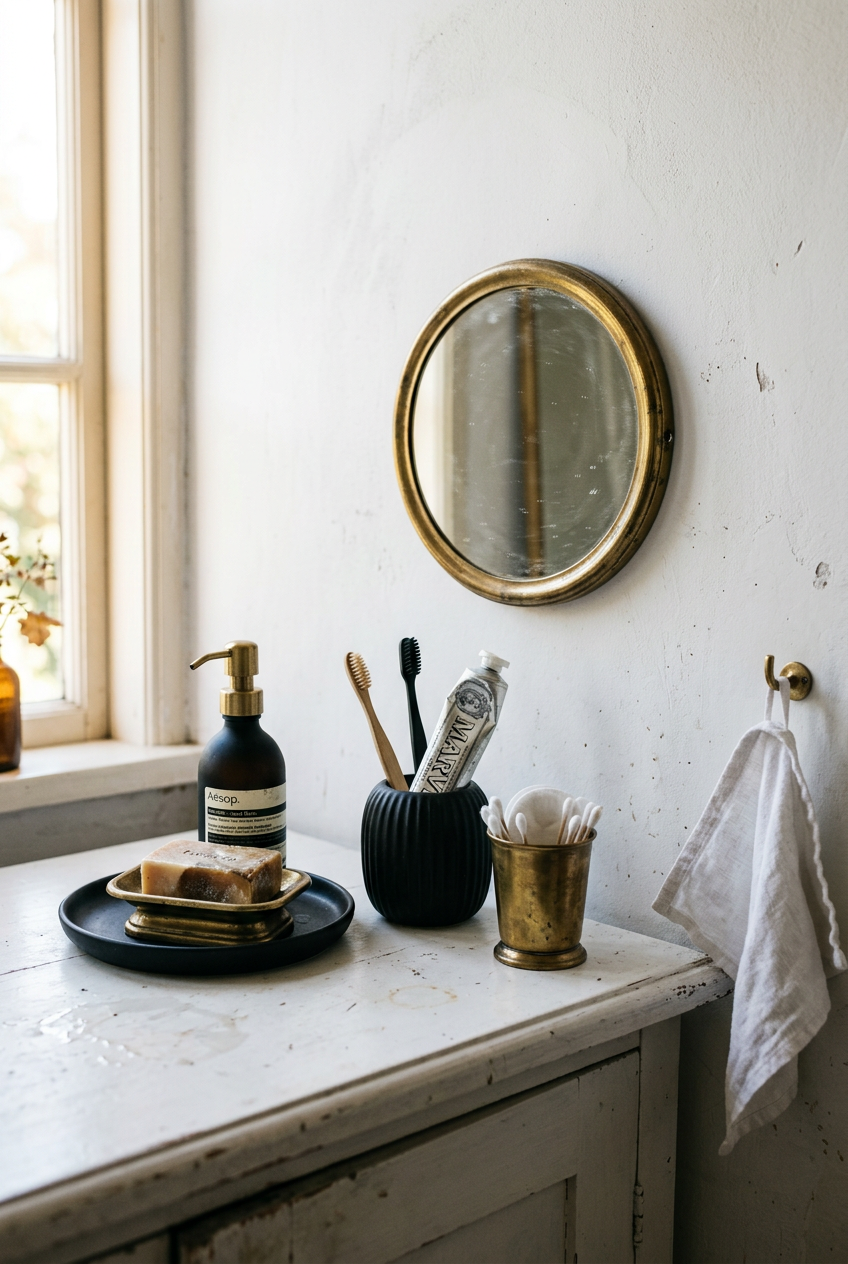
Not every combo is created equal. Brass and matte black are basically best friends. They have just the right amount of contrast without fighting each other.
Chrome and brass need a buffer. Put them right next to each other and the warm-cool clash is a bit jarring. But separate them across the room and they balance each other beautifully.
The pairing I’d steer away from: polished gold and chrome side by side. Too similar in sheen but different enough in tone to look like a mistake rather than a choice.
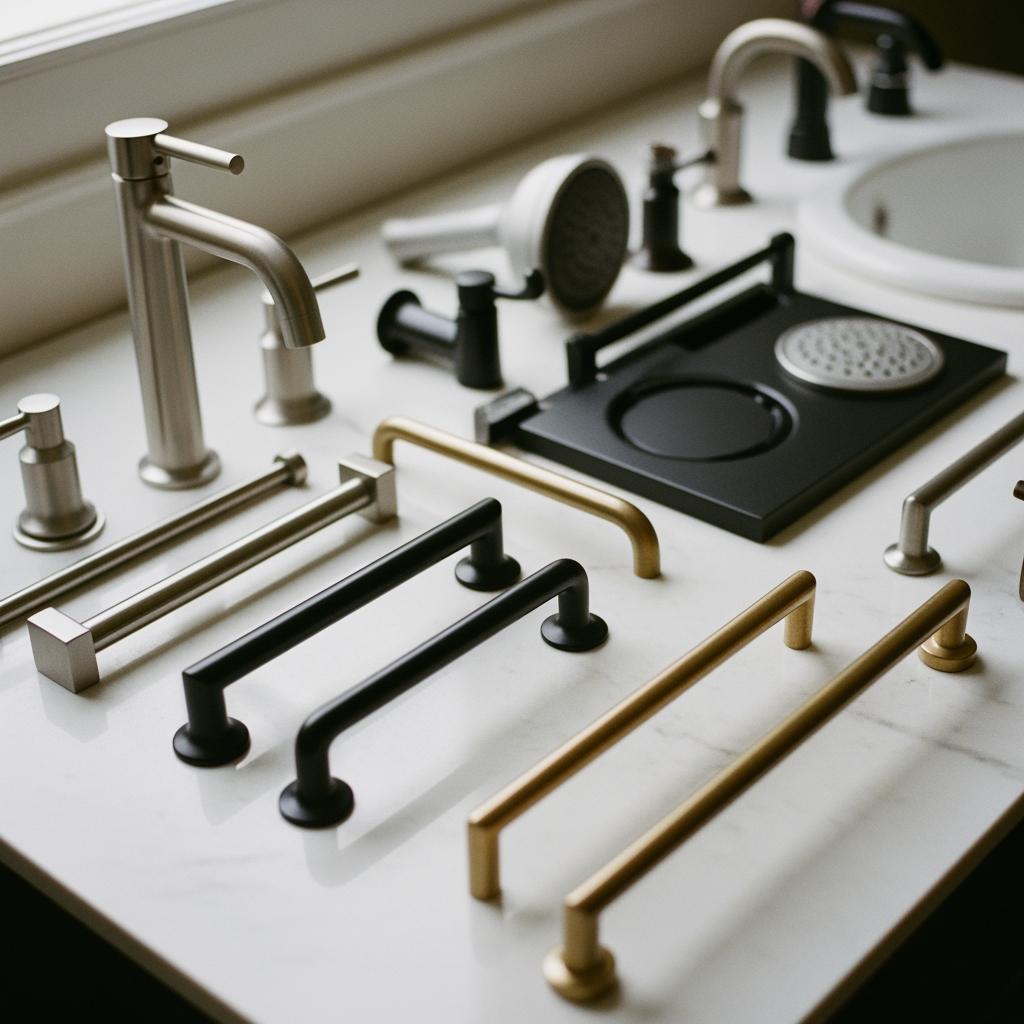
Satin nickel is sort of the wild card. It’s close enough to chrome that it can blend, and it has a warmth that bridges toward brass. Worth knowing about if you’re mixing and feeling unsure.
How to Decide Which Finish Gets the Most Real Estate
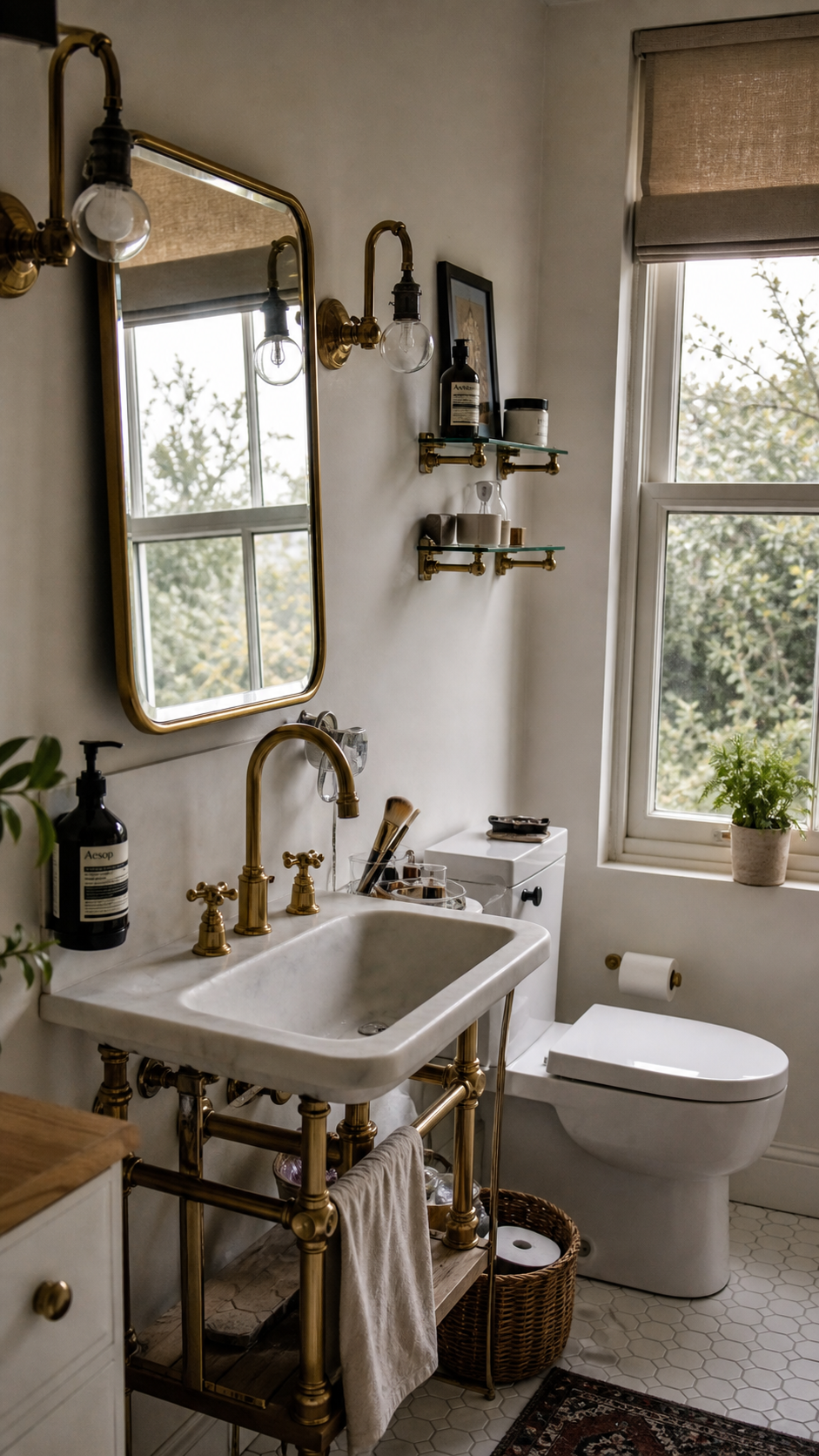
Think of your metals like a color palette. You pick a dominant, a secondary, and an accent. Same logic applies here.
In my bathroom, brass is dominant. It shows up in the biggest, most visible pieces: faucet, mirror frame. It sets the overall warmth of the room.
Black is secondary. Hardware, light fixture. Enough presence to ground the space, not so much that it takes over.
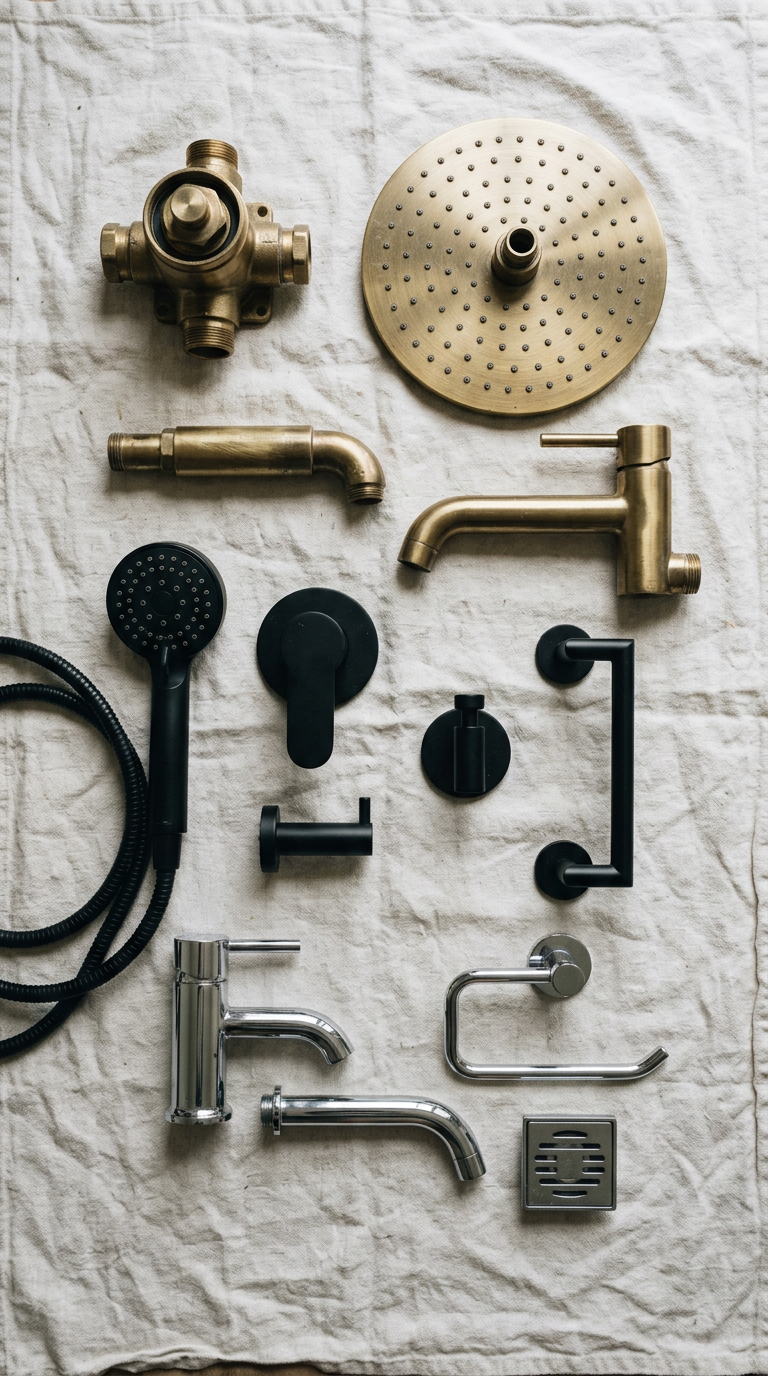
Chrome is the accent. Just a few pieces. It does a specific job (adds brightness, feels fresh) and then steps back.
If you flip those ratios, the whole room shifts. More black than brass and it starts feeling moody. More chrome than anything and it cools down fast. Play with the balance before you commit.
Lighting Changes Everything (Seriously, Don’t Skip This)
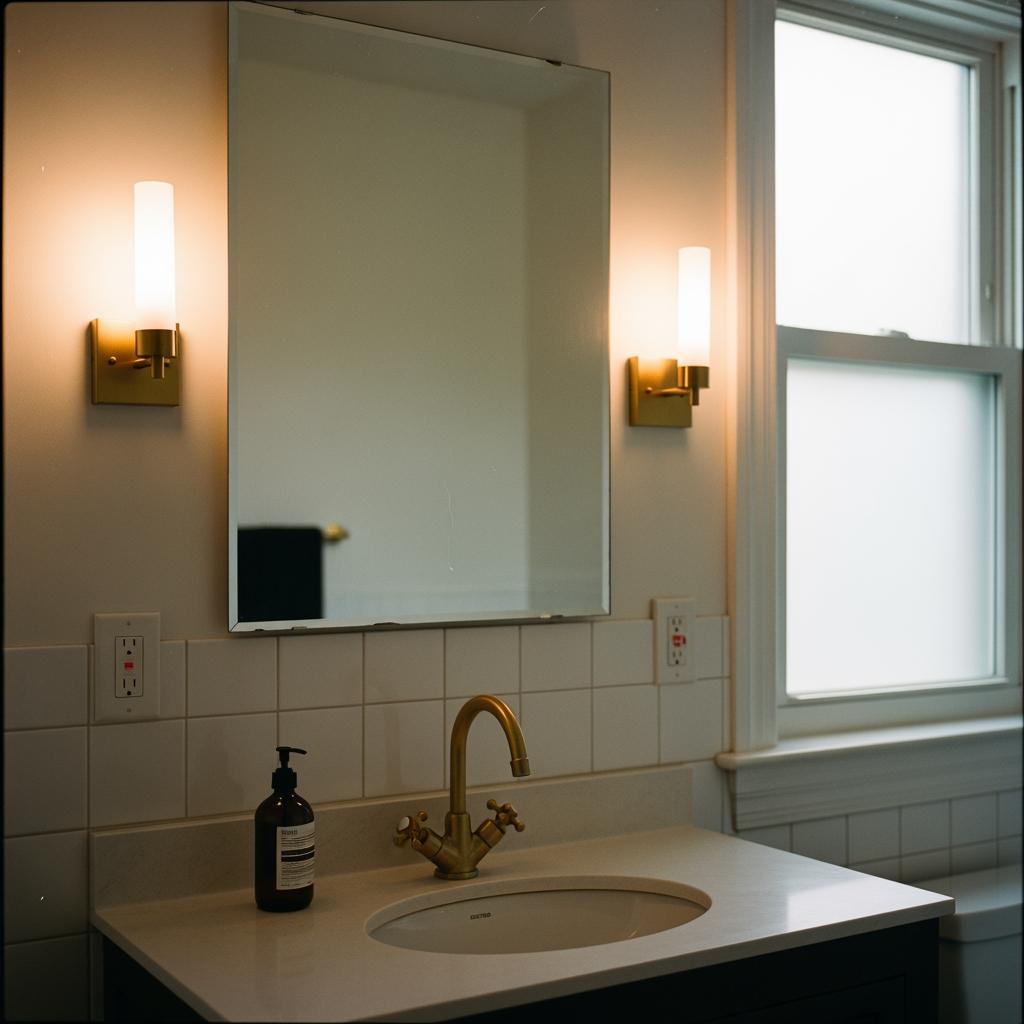
The same brass faucet can look gold and gorgeous or yellow and cheap depending entirely on your lighting. I learned this the hard way.
Warm bulbs (think soft white, around 2700K) are best friends with brass. They bring out the richness. Cool or daylight bulbs make brass look tired and make chrome feel clinical.
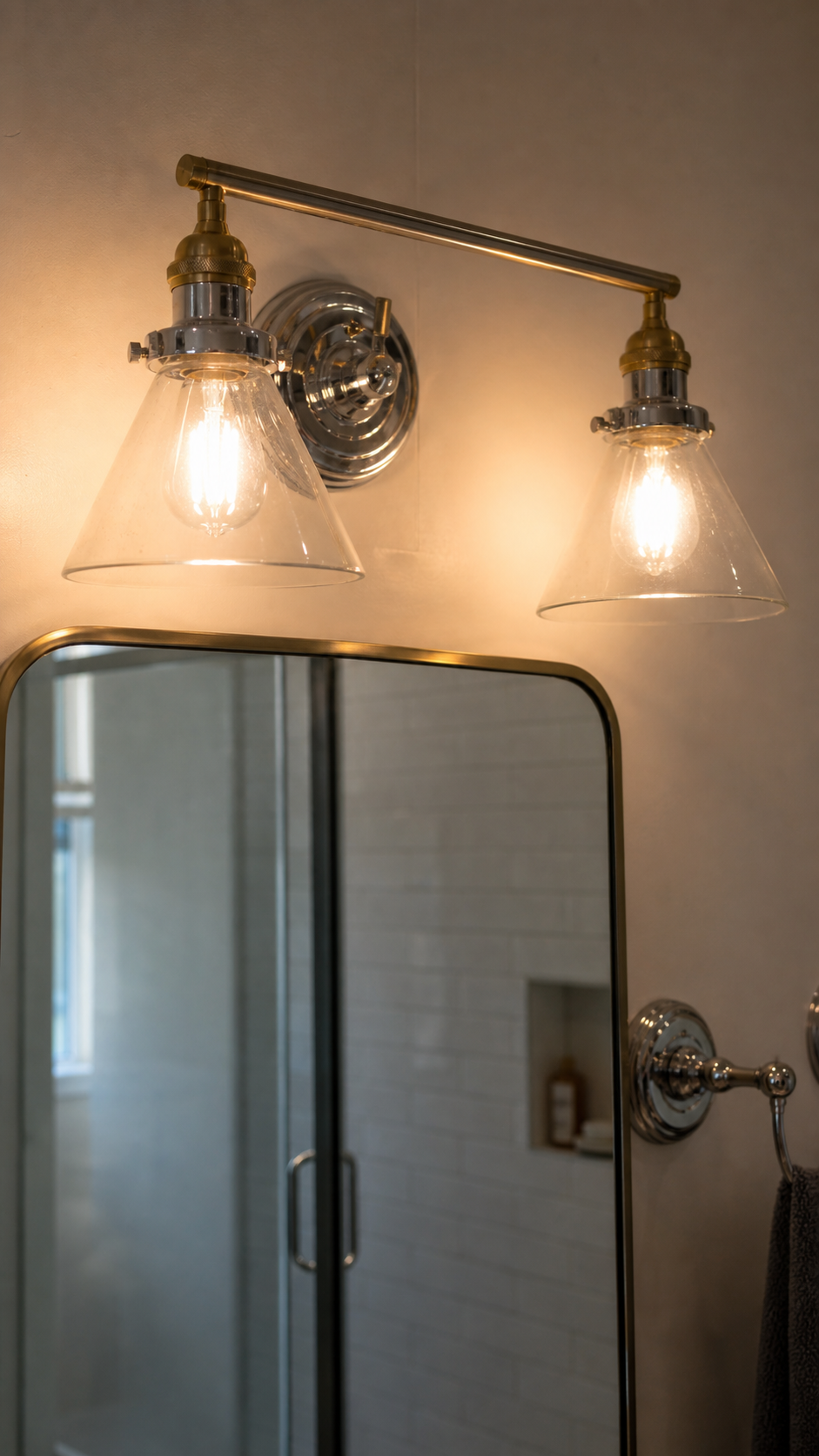
The corner of my bathroom that gets harsh afternoon light through a west-facing window was genuinely a problem. The brass there looked brassy in the bad way. I added a small warm-toned sconce nearby and it completely changed the reading.
Before you buy any fixture in any finish, hold a sample in your actual bathroom light. Different times of day. Not just the store display. This one step has saved me so many returns.
Working With What You Already Have (Don’t Start From Scratch)
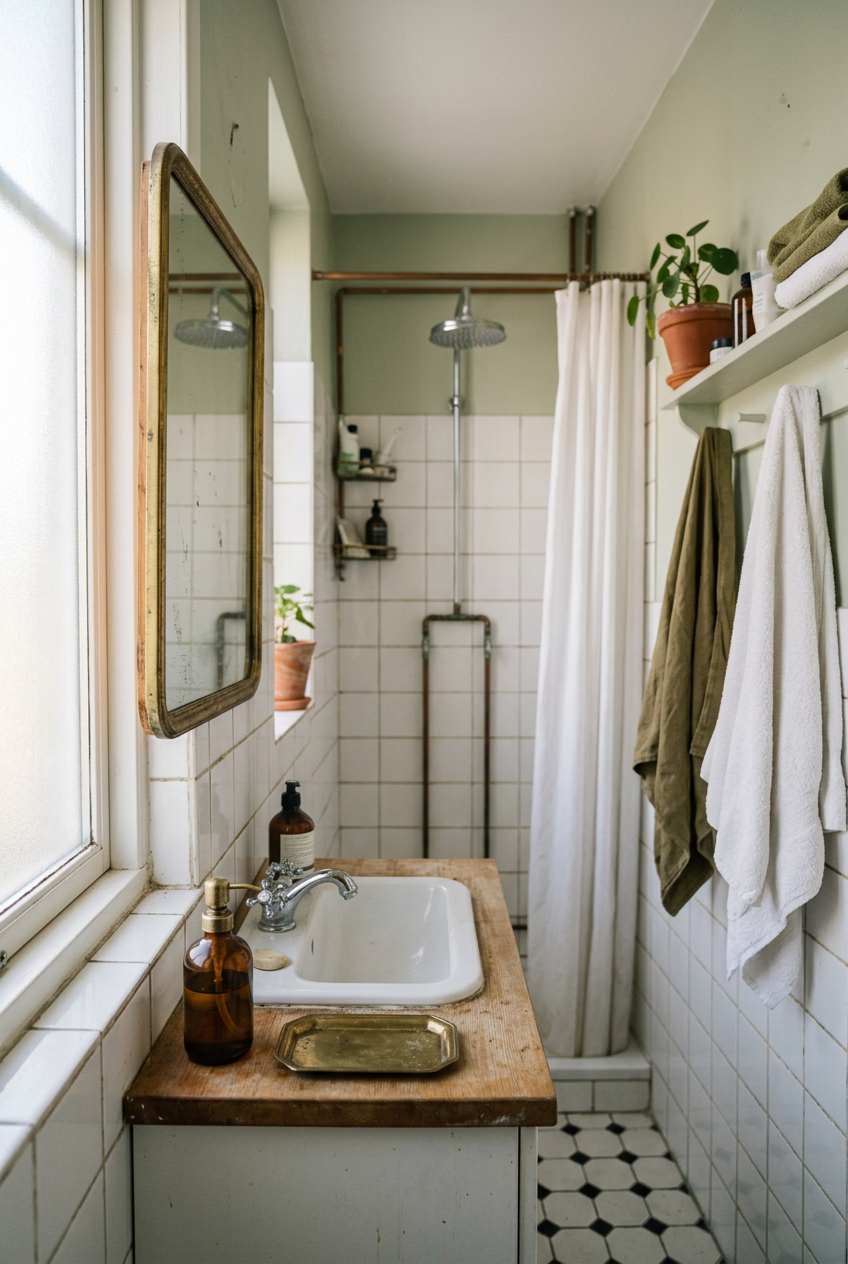
When I tackled my own guest bath last fall, I had zero budget to replace everything. Like, zero. So I had to work with what was already there.
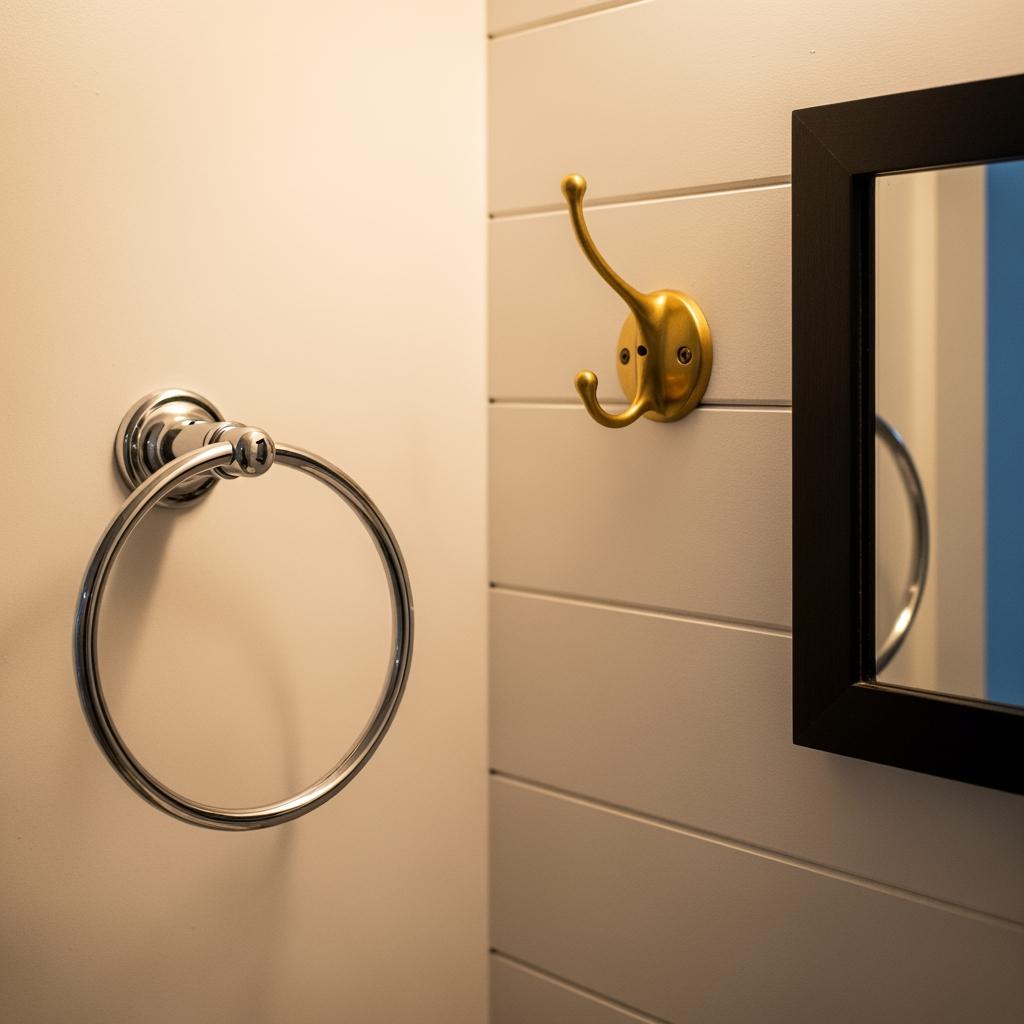
I had builder-grade chrome everything. Instead of scrapping it, I added brass accents strategically. A brass soap dispenser. A small framed brass mirror I found at a thrift store for twelve dollars. A brass wall hook.
The chrome suddenly looked intentional. Like I’d chosen to keep it for contrast. Nobody would ever guess I didn’t plan it from the start.
That’s sort of the magic of mixing metals. It gives you permission to use what you have and add to it gradually. You don’t need a full renovation. You need a few well-placed pieces.
The Styling Details That Tie Mixed Metals Together
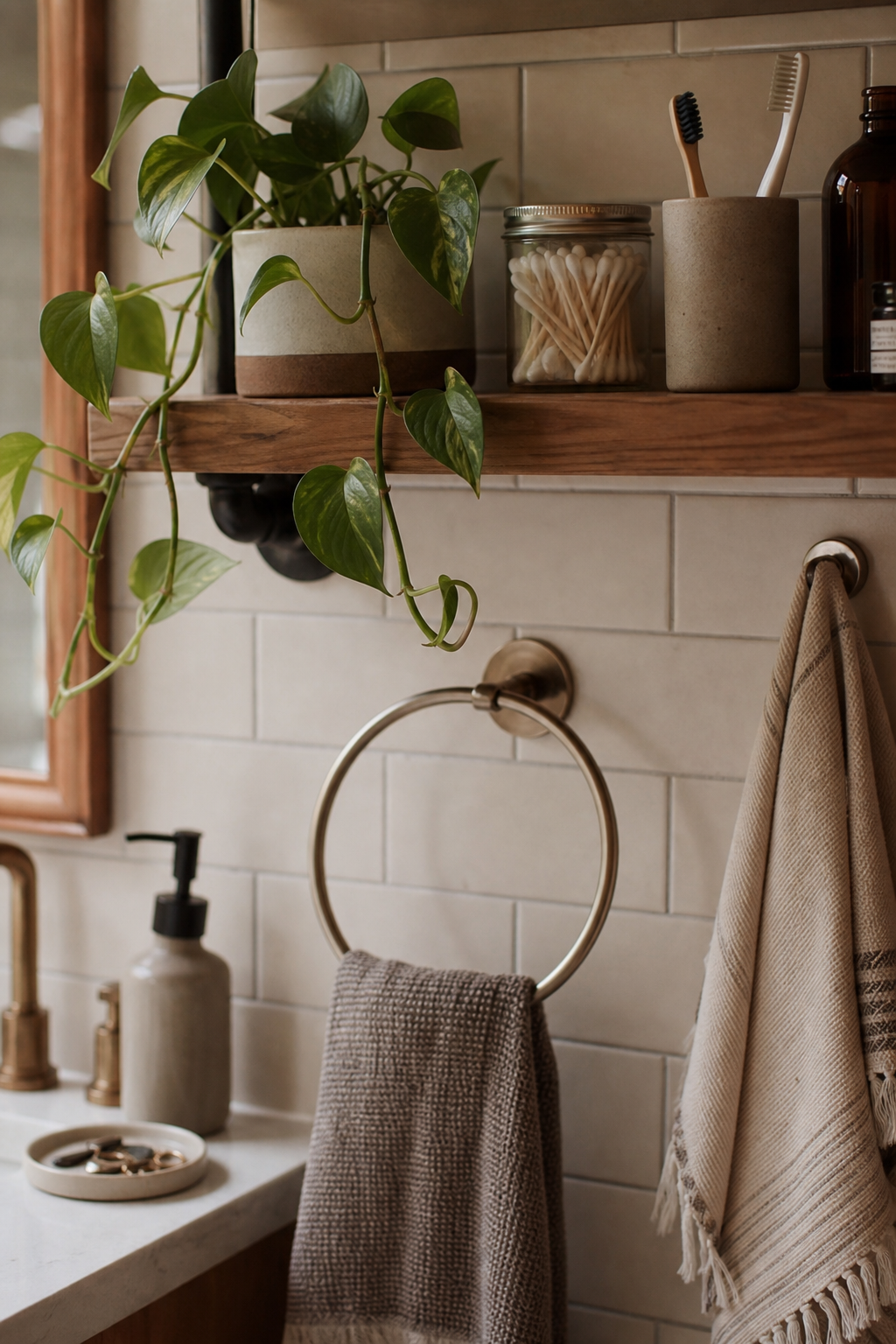
Hardware and fixtures don’t exist in isolation. The other stuff in your bathroom either supports the mix or fights it.
Warm neutrals help. White, cream, beige, soft wood tones — these give all three metals room to breathe without competing. My bathroom has white subway tile and a light oak floating shelf, and both of those just let the metals be the story.
I’d avoid very cool grays alongside this combo. Gray pulls toward chrome and makes the brass look out of place. Learned that one the not-fun way with a bath mat I had to return.
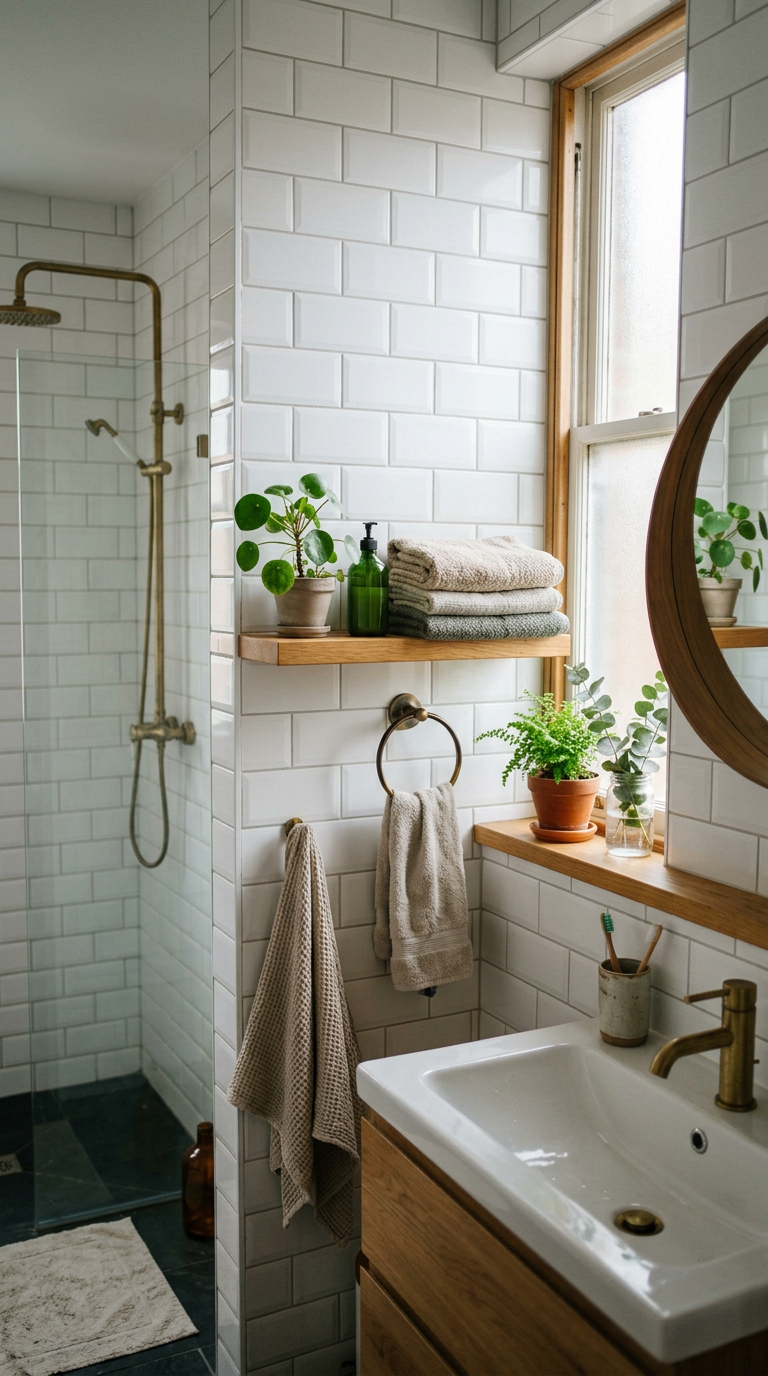
Plants are always a yes. Green is neutral enough to work with literally any finish. I have a little pothos on my shelf and it pulls the whole thing together in a way I can’t fully explain but I fully stand by.
Common Mistakes I See (And One I Made Myself)
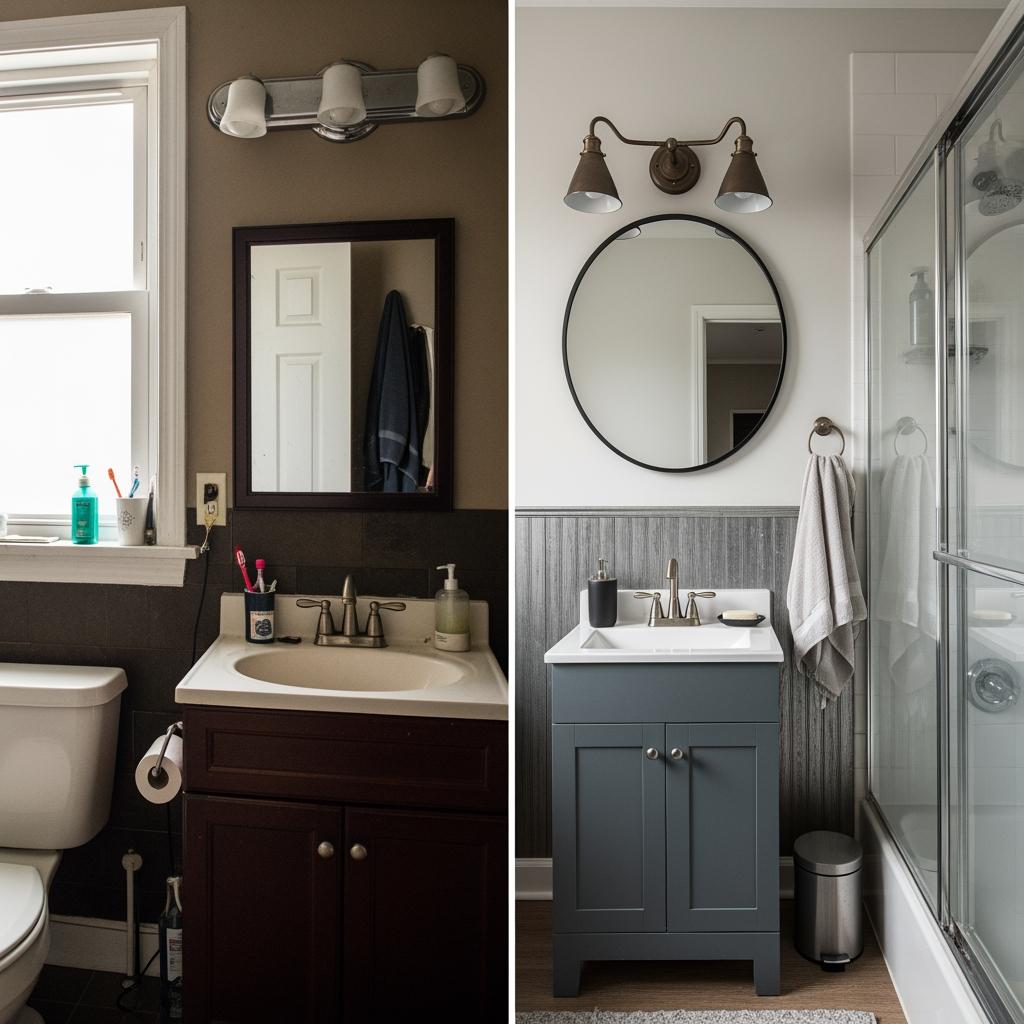
The biggest mistake I see is going too many finishes. Brass, black, chrome, satin nickel, and polished nickel in the same room? That’s not curated. That’s chaos.
Three is genuinely the sweet spot. Maybe four if one of them is very subtle. Beyond that and the eye doesn’t know where to land.
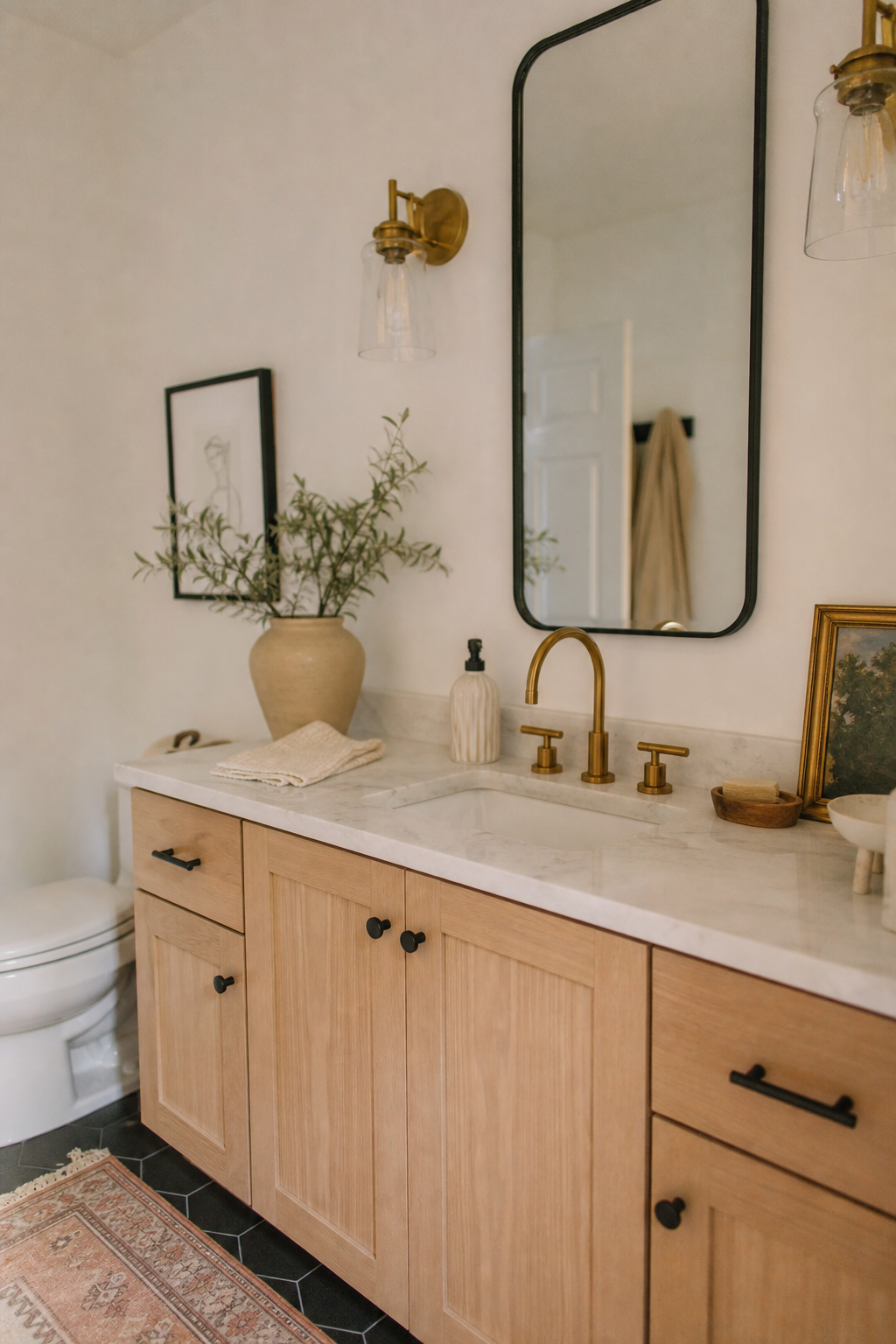
I personally made the mistake of using too much black early on. I had black everything and the brass just disappeared. The room felt heavy and sort of serious. Not what I wanted from a bathroom.
I pulled back the black to just the hardware and light fixture. Immediately better. Sometimes editing is the whole job.
My Honest Takeaway After Living With This for Months
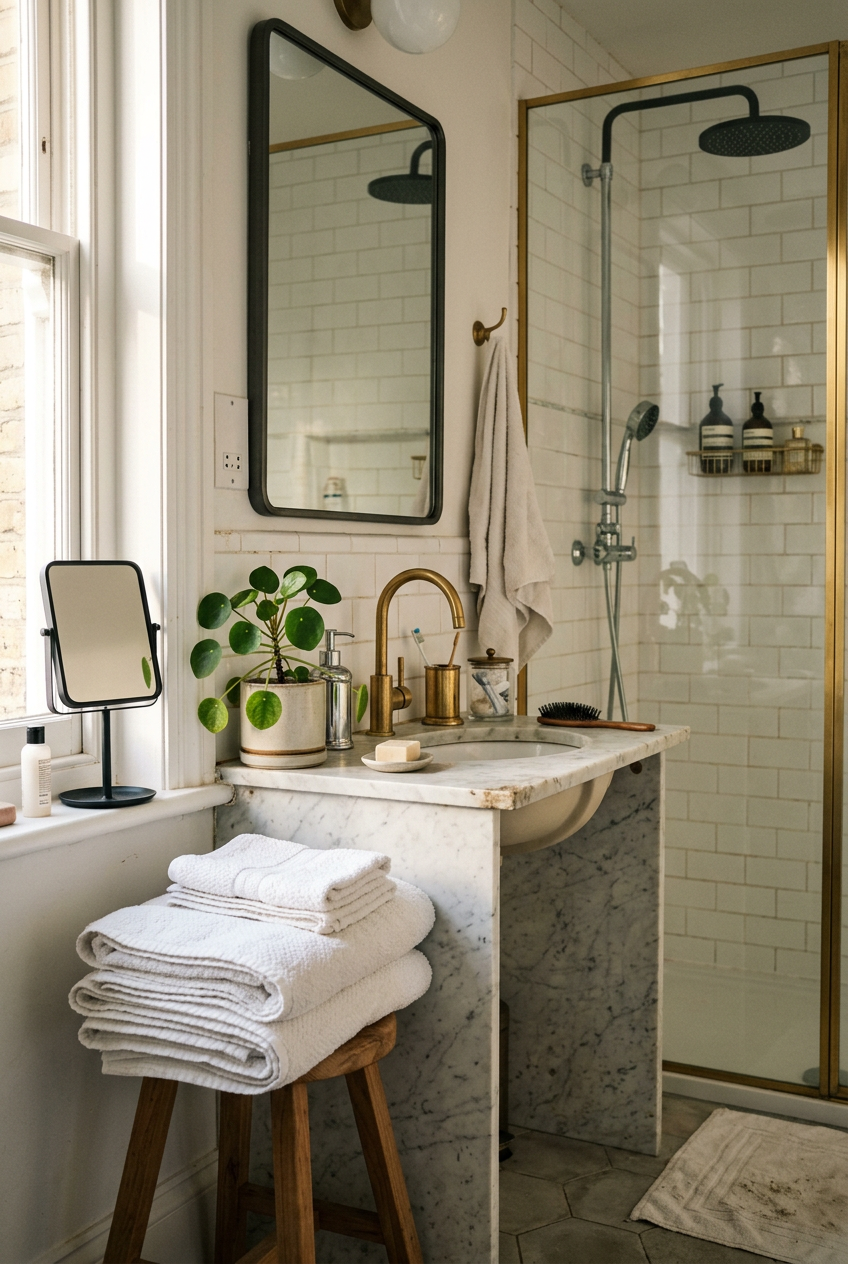
I genuinely look forward to going into my bathroom now. Which sounds small but it’s not, you know? The space feels like mine.
Mixed metals made it feel layered in a way I couldn’t have gotten by sticking to one finish. There’s warmth from the brass, crispness from the chrome, and a grounding quality from the black that all work together.
I’ve had friends ask if I hired someone to style it. I did not. I just stopped following a rule that didn’t actually serve the space.
If you’re sitting on the fence about mixing metals, consider this your sign. Start small. Add one piece in a different finish. See how it feels. I think you’ll be surprised how right it looks.