My first cork board had three pins in it: two grocery lists and a birthday card I never mailed. It hung crooked above my desk for a year and a half, and every time I looked at it, I felt vaguely bad about myself. That board could have been something. Scroll down and I’ll show you exactly what I do now instead — including a $4 fabric trick that makes a cork board look like a boutique hotel piece, a tile method that turned a blank laundry room wall into a full command center, and the lighting move that makes the whole thing glow like a gallery installation.
Why Cork Boards Deserve Way More Credit Than We Give Them
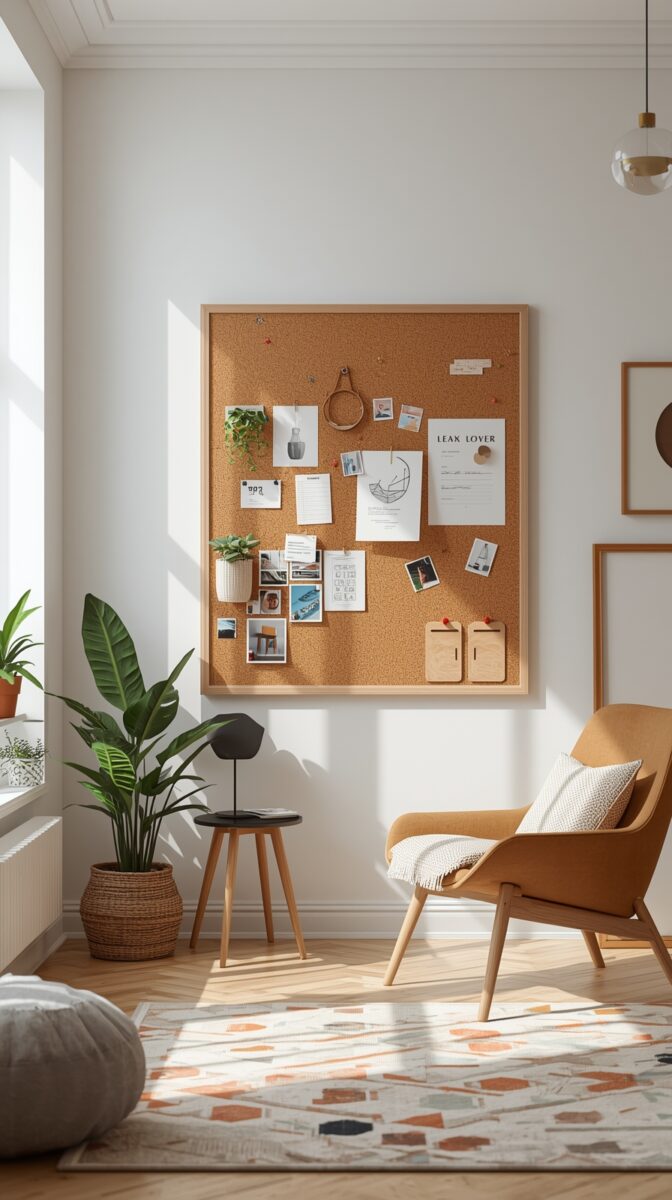
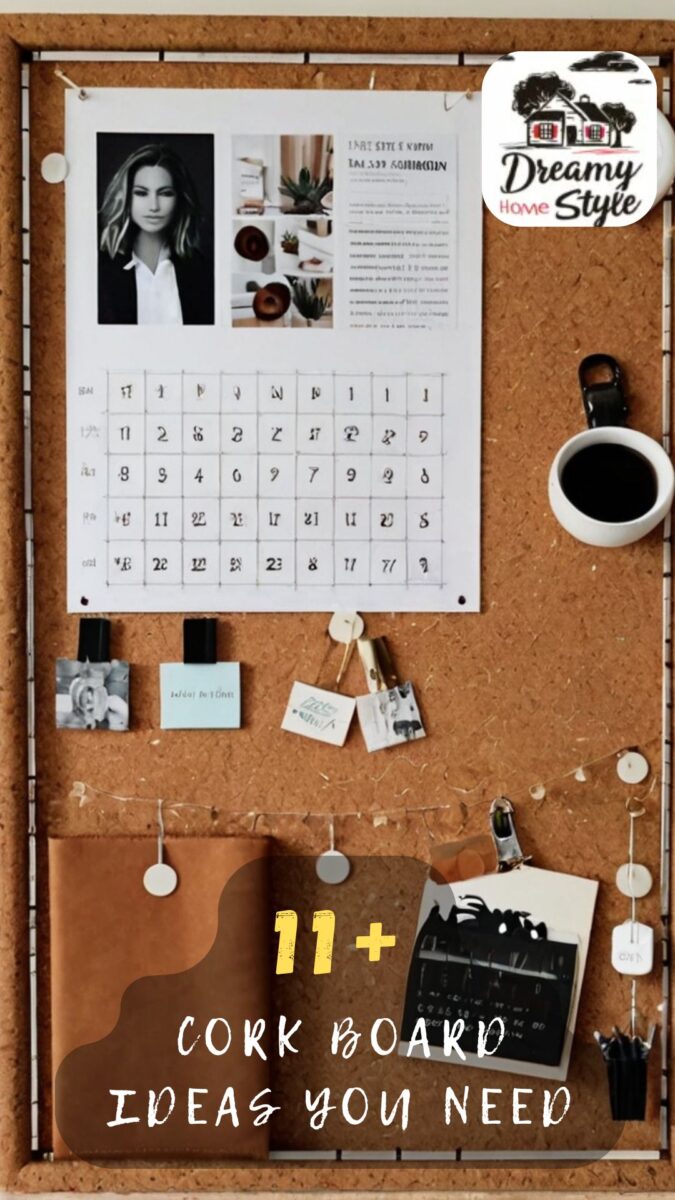
Cork boards have been living in the shadow of pegboards and floating shelves for way too long. And I think it’s because most people only ever see them used in the most boring, functional way possible — a beige square covered in flapping papers and half-dead pushpins. That’s not a cork board’s fault. That’s a styling problem.
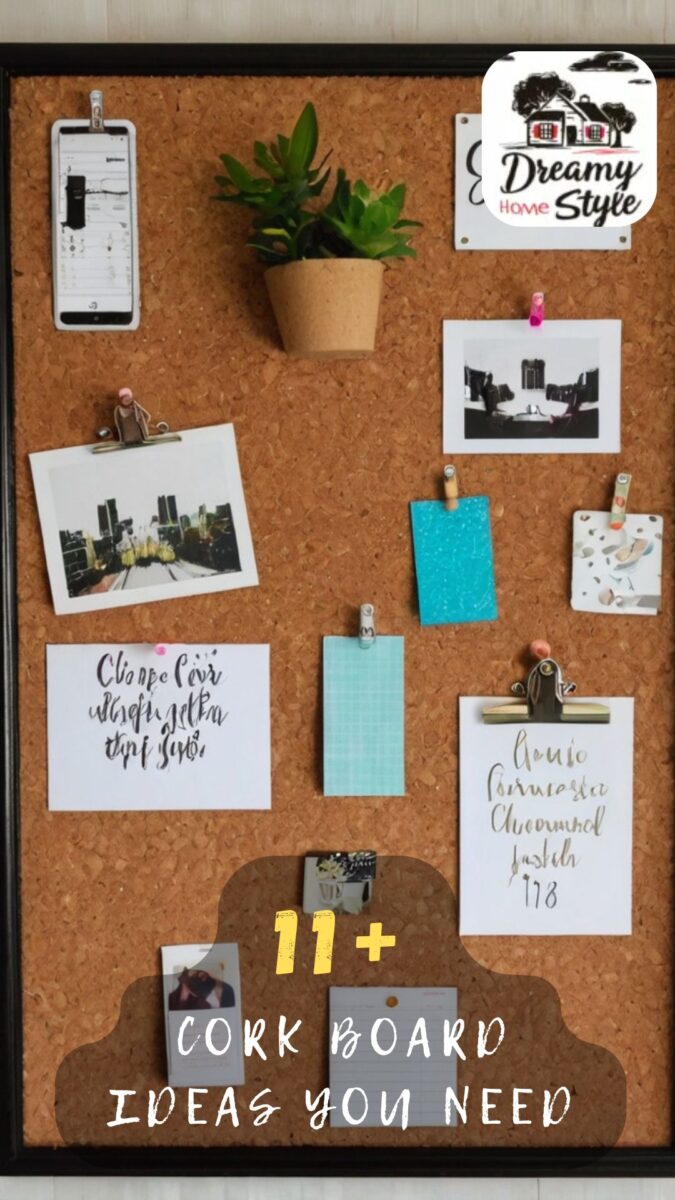
A cork board is basically a living mood board that hangs on your wall and grows with you. You can change it on a Tuesday because you feel like it. You can make it soft and romantic, or clean and editorial, or layered and personal and a little wild. There are no rules, and that’s sort of the whole magic.
When I started treating my cork board like a design element instead of a chore organizer, everything shifted. The whole corner of my office started to feel warm and intentional. Like it actually said something about me. And that feeling is exactly what I want for you too.
Further down I’ll walk you through my favorite ideas — from the painted-board trick that gets guests asking if you got new art, to a memory wall method that honestly makes me emotional, to cork tile installations that look completely custom. Let’s get into it.
Paint Your Cork Board First (Yes, Really)
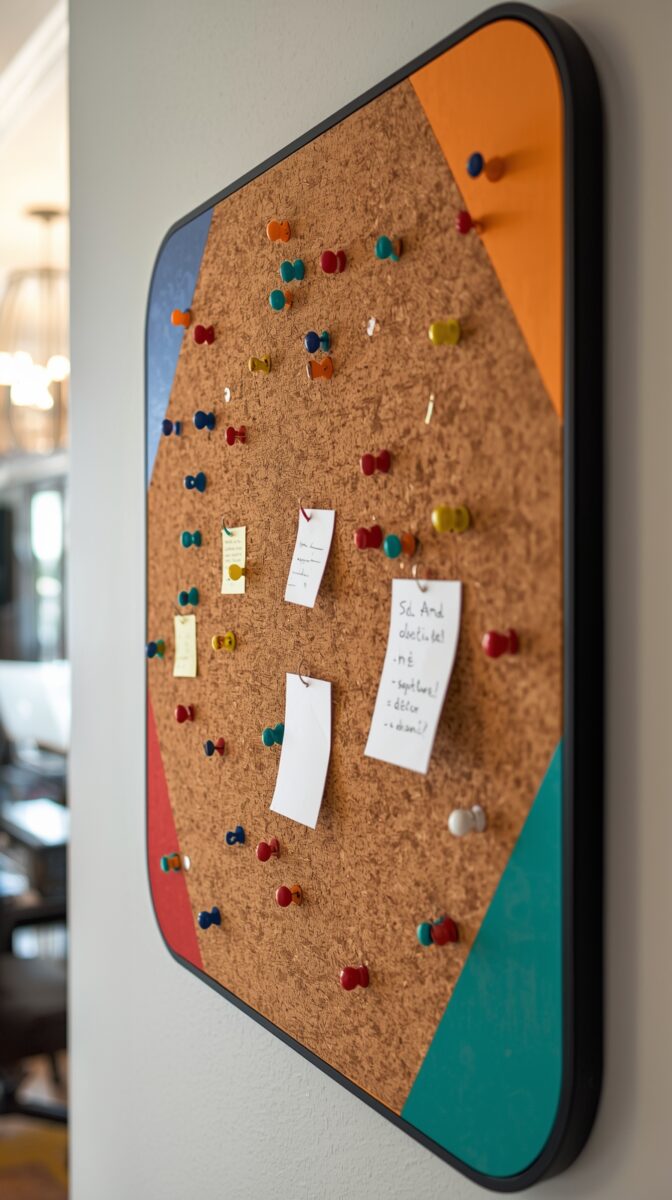
This is the single tip I wish someone had told me before I spent years staring at that raw, beige cork texture. Paint it. Just grab some chalk paint or even leftover wall paint and give your cork board a solid base color.
I did mine in a dusty sage green and I’m still not over how good it looked. The cork still holds pins just fine — I was nervous about that too, don’t worry. One light coat is enough. Two if you want full coverage. Just let each coat dry completely before you start pinning anything, otherwise you’ll lift the paint.
Color-wise, you have real options here:
- Soft and neutral: creamy white, warm taupe, blush. These blend into the room so the content of the board is the star.
- Bold and moody: deep navy, terracotta, forest green. These make the board itself a statement, even when it’s mostly empty.
- Unexpected: pale lavender, dusty mauve, warm butter yellow. These are my personal favorites for bedrooms and reading nooks.
If I had a tiny studio apartment, I’d do a rich emerald board framed in brass and hang it above a writing desk. The whole corner would look like something from a design magazine for about twelve dollars in paint.
Honestly, the paint trick alone upgrades the entire piece by a thousand percent. It’s one of those small changes that makes guests stop and say “wait, did you get new art?” and you just smile and say nothing.
Quick how-to: sand the cork lightly with 220-grit sandpaper first (removes the dusty surface so paint sticks better), wipe it clean, apply chalk paint with a foam roller in thin coats. Done in under an hour. Chalk paint is my pick over regular latex because it grips the cork without needing primer and dries matte, which looks a million times more expensive than glossy.
Frame It Like a Piece of Art
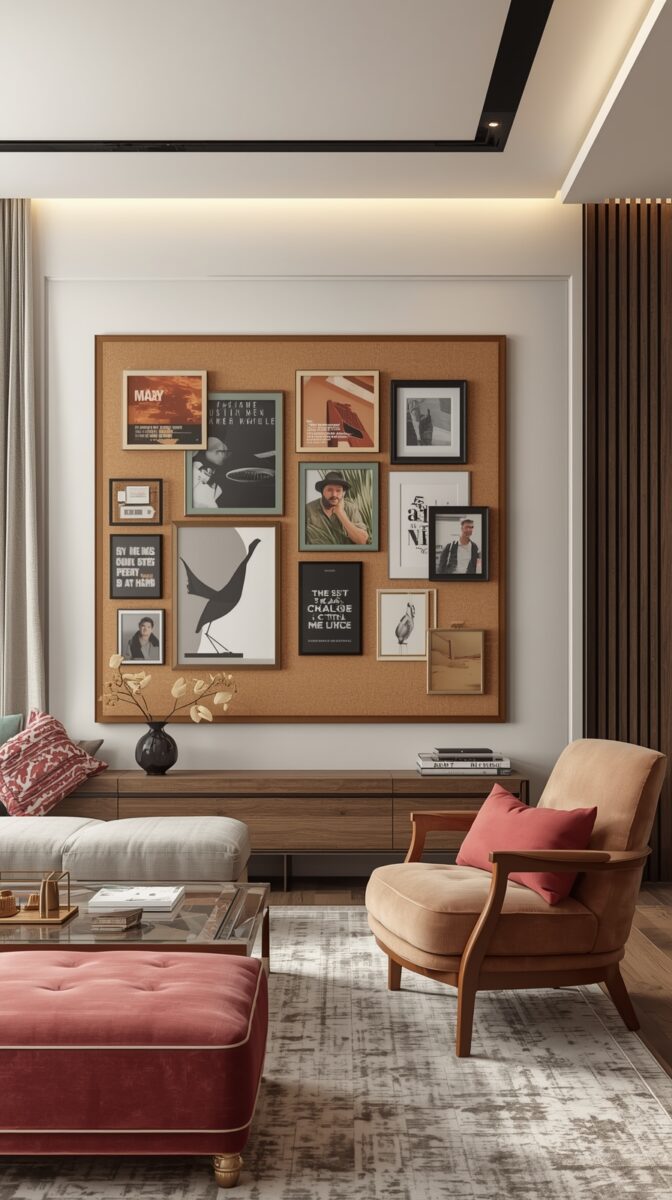
Speaking of art — the frame situation matters so much more than people realize. Most basic cork boards come with this thin, flimsy wood edge that makes the whole thing look like it belongs in a middle school classroom. It undercuts everything else you do to the board.
What I did was remove the original frame entirely and hot-glued chunky wood trim from the craft store around the edges. I painted it matte black. The transformation was kind of insane. It went from “office supply store” to “I meant to do that” in about forty-five minutes.
A few other approaches that work really well:
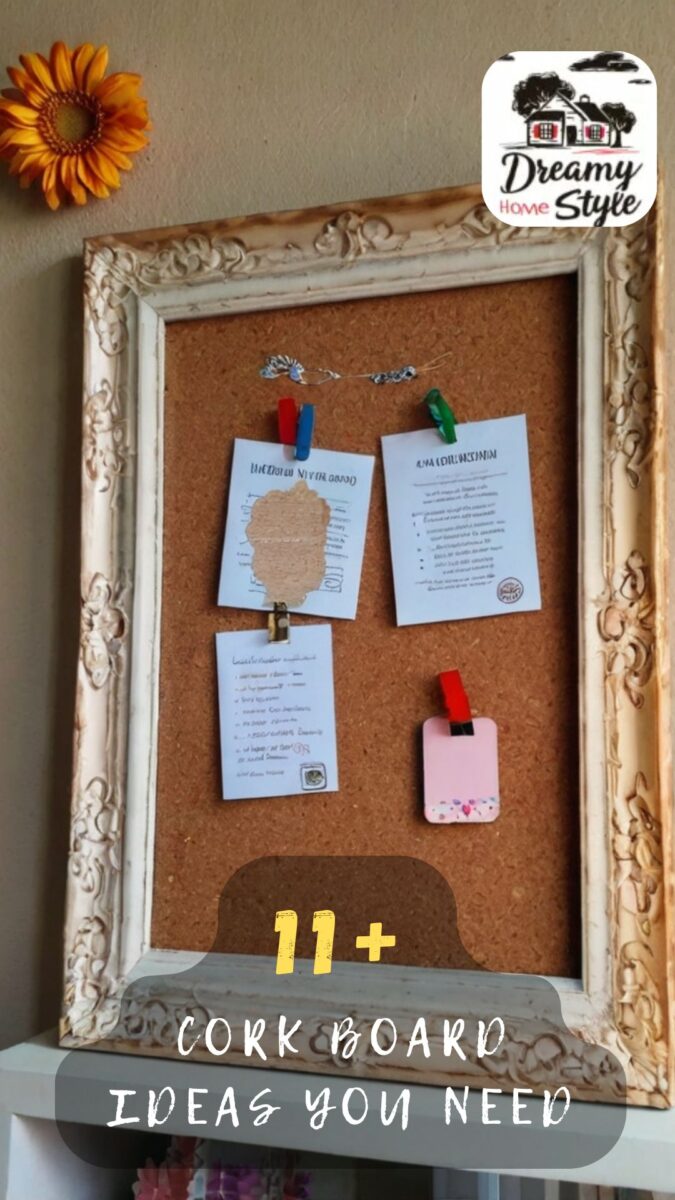
- Thrift store frame swap: Find a beautiful large frame at the thrift store (I’ve scored gorgeous ones for $3 to $8), pop out whatever was inside, and replace it with cork sheet cut to size. Cork rolls are cheap — usually $10 to $15 for a 24″ x 48″ piece — and you can cut them with regular scissors.
- Chunky gold frame + blush cork: Looks genuinely like something from a boutique hotel room. I’ve seen this combination stop people mid-conversation.
- Distressed white frame + raw natural cork: Feels very French farmhouse. Very cozy. Very “I found this at a flea market in Provence” even if you made it on a Saturday afternoon.
The frame sets the whole personality of the board before you even put a single pin in it. It’s worth spending the extra twenty minutes getting it right. (I learned this after living with the wrong frame for six months because I was too lazy to fix it.)
Turn It Into a Menu Board for Your Kitchen
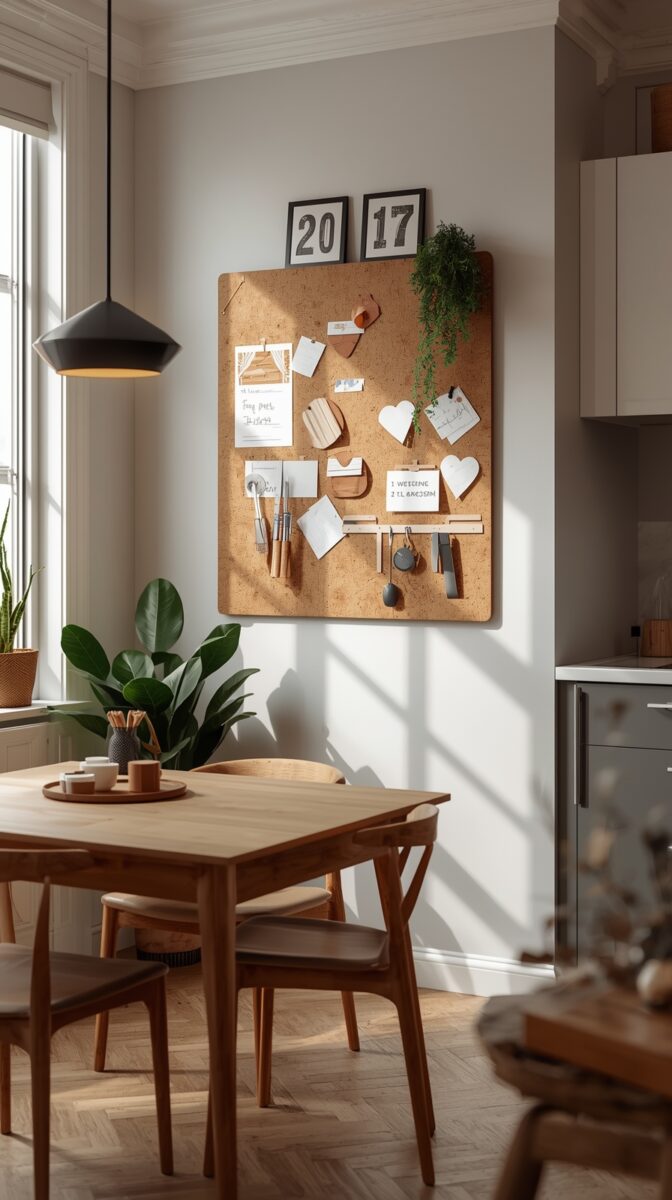
This one honestly changed my weeknight life and I don’t think that’s dramatic at all. I hung a medium-sized cork board inside my kitchen pantry door — painted white, framed in thin black trim — and every Sunday I pin our week of dinners on it. Little handwritten cards, one for each night.
It sounds so simple. But the act of physically pinning a card makes me feel like I actually have a plan. The visual of seeing “Tuesday: pasta, Wednesday: tacos” is so much more satisfying than a buried note on my phone that I forget to check three hours before dinner when I’m already stressed.
How I set mine up:
- Cut index cards in half. Each half = one dinner card.
- Write the meal in marker, add a small ingredient note if needed.
- Pin seven cards in a row across the top of the board — one per day.
- Keep a small “grocery needs” strip along the side where anyone in the house can pin a note when we run out of something.
- On Sunday nights, rotate the cards: anything still relevant stays, the rest get recycled into a little recipe file I keep in the pantry.
For the cards themselves, kraft paper feels rustic and warm. Index cards with washi tape borders feel cheerful. I’ve tried both and honestly I switch depending on my mood that week. Very on-brand for me.
If I had a bigger kitchen, I’d do a massive cork wall section just for this. But even the pantry door version hits different. It makes the kitchen feel more pulled together, which makes cooking feel less like a chore. That’s worth something.
Make a Cozy Memory Wall With It
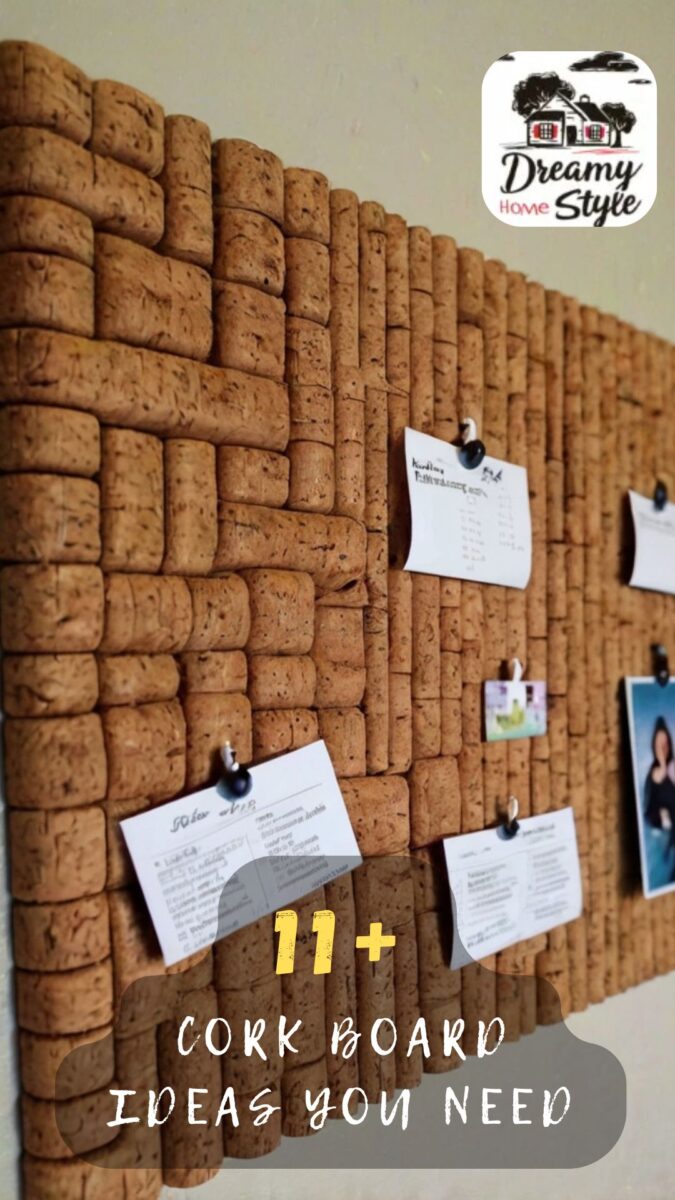
Okay, this is the section where I get a little sentimental. One of my all-time favorite things I’ve ever done with a cork board was turning it into a memory display in my bedroom. Not a digital photo frame. Not a canvas print. Just a cork board covered in real printed photos, handwritten notes, ticket stubs, a dried flower from a birthday bouquet, a postcard from a trip we almost didn’t take.
It’s messy in the best possible way. Every single thing pinned to it has a story. And in the morning when I’m still half asleep and not fully ready to face the day, I look at that board and feel this little wave of warmth.
Like a visual hug. Biscuit also stares at it sometimes, which tells me nothing but makes me feel validated.
The thing that makes this work, though, is letting it be genuinely imperfect. Overlap your photos. Mix sizes — a 4×6 next to a 2×3 next to a Polaroid-style print. Add handwritten notes or quotes that mean something to you specifically, not just pretty things that look good in photos. Tuck in small physical objects: a matchbook from a restaurant, a fortune cookie slip, a pressed leaf.
This kind of board doesn’t need to match your decor. It needs to match your life. Those are very different things, and I think the best memory boards lean into that difference completely.
One practical note: use flat-head map pins instead of regular pushpins for this. They’re less obtrusive and don’t cast harsh shadows on your photos. You can find them at most craft stores for around $4 for a pack of 100. Small thing, real difference.
Use It as a Vision Board That You Actually See Every Day
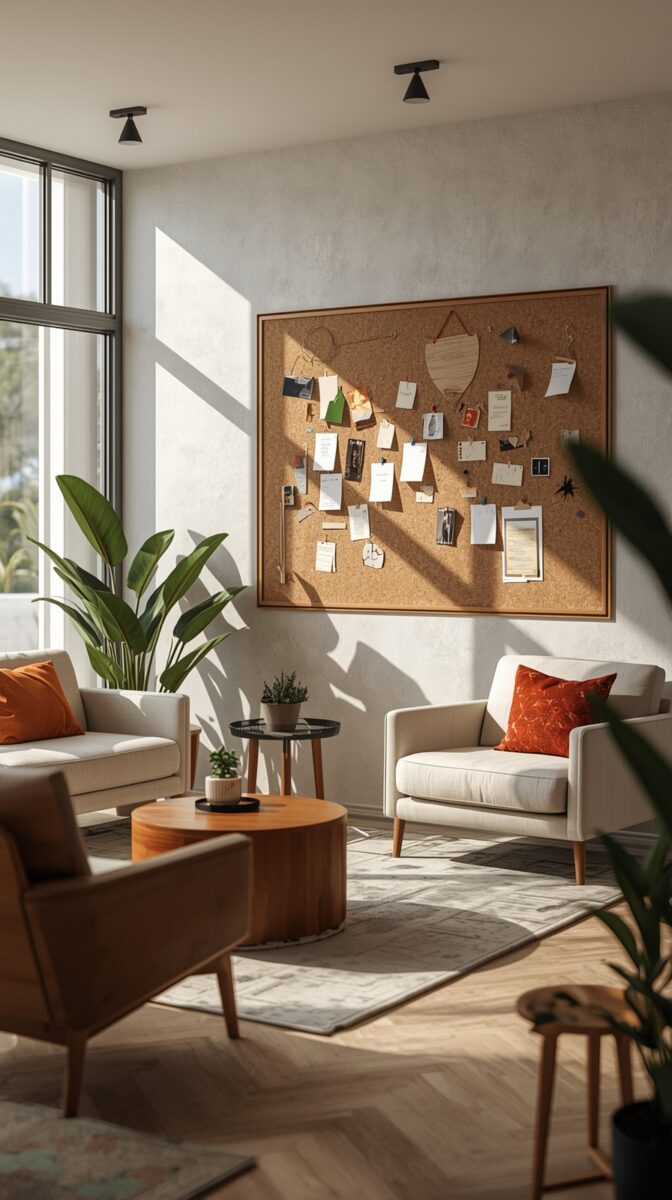
I’ve done the vision board thing before — cut up magazines, glued everything to a poster board, felt great about myself for approximately six days, then rolled the whole thing up and shoved it under the bed by February. Every time.
Classic.
But then I started using a cork board for my vision board and everything changed. Because it’s always in front of me. I hung it right across from my desk where I look up constantly, which means I actually absorb what’s on it instead of forgetting it exists.
And I didn’t fill it all at once. That was the other shift. I added things slowly, as I found images or words that genuinely resonated — not just things that looked aspirational in a magazine, but things that actually stirred something in me.
A torn page of a kitchen I want someday. A handwritten word that feels like a personal mantra. A color swatch from a paint store that represents a feeling I’m chasing. A receipt from a meal that reminded me what I’m working toward.
It’s sort of alive. I take things off. I add new things. I rearrange when something stops feeling true. And because it’s a cork board, there’s zero commitment — nothing is glued, nothing is permanent. Weirdly, that makes it feel more intentional, not less. Because everything on it is there because I actively chose to keep it there.
If you’re going to do this, hang the board somewhere with good natural light and at eye level. That last part matters more than people think. A vision board at floor level is a vision board you stop seeing within two weeks.
Create a Kids’ Art Gallery (That Stays Organized)
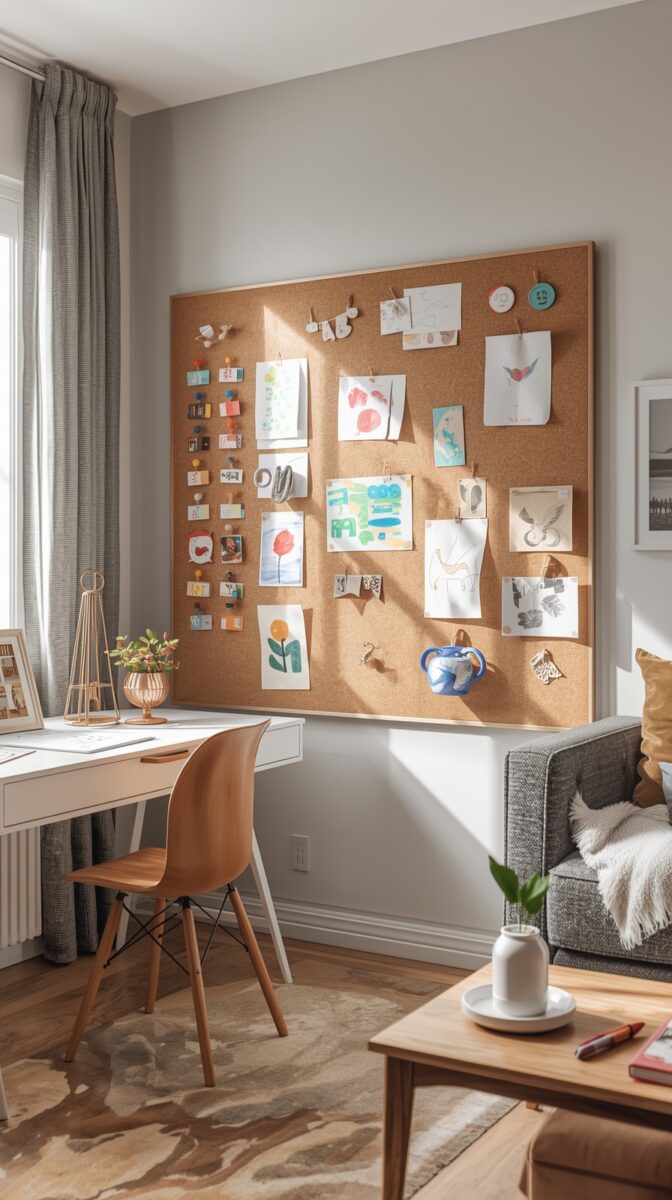
If you have little ones at home, you already know the struggle of what to do with the absolutely endless stream of artwork that comes home from school. The fridge can only hold so much. The rest gets shoved in a drawer and forgotten, which feels terrible.
My solution is a dedicated cork board gallery wall in our hallway, and honestly it’s one of my favorite spots in the whole house now. I hung three matching cork boards side by side, painted soft white with thin gold frames. Each kid gets their own board. They choose what goes up. They swap things out when something new comes home that they’re proud of.
Because it’s their space, they actually care about it. Which I did not expect but should have.
A few details that make this work in practice:
- Hang the boards low enough that the kids can reach them and manage their own display. Around 42″ to 48″ from the floor works well for most elementary-aged kids.
- Give each board a small labeled section at the bottom — just a pinned card with their name. Makes it feel official, which matters to them enormously.
- Keep a small basket nearby with extra pins so there’s no excuse for “I couldn’t put it up.”
- Take a phone photo of each board every month or two before it changes. Easy digital archive, no effort.
The hallway used to feel like a transition zone — just a place you walk through. Now it feels warm and intentional. It also teaches kids that their creativity is worth displaying properly. Not stuck to the fridge with a magnet that falls off every two days. Not shoved in a drawer. Properly framed, properly displayed, properly celebrated. That means something real.
Style a Linen-Wrapped Cork Board for the Bedroom
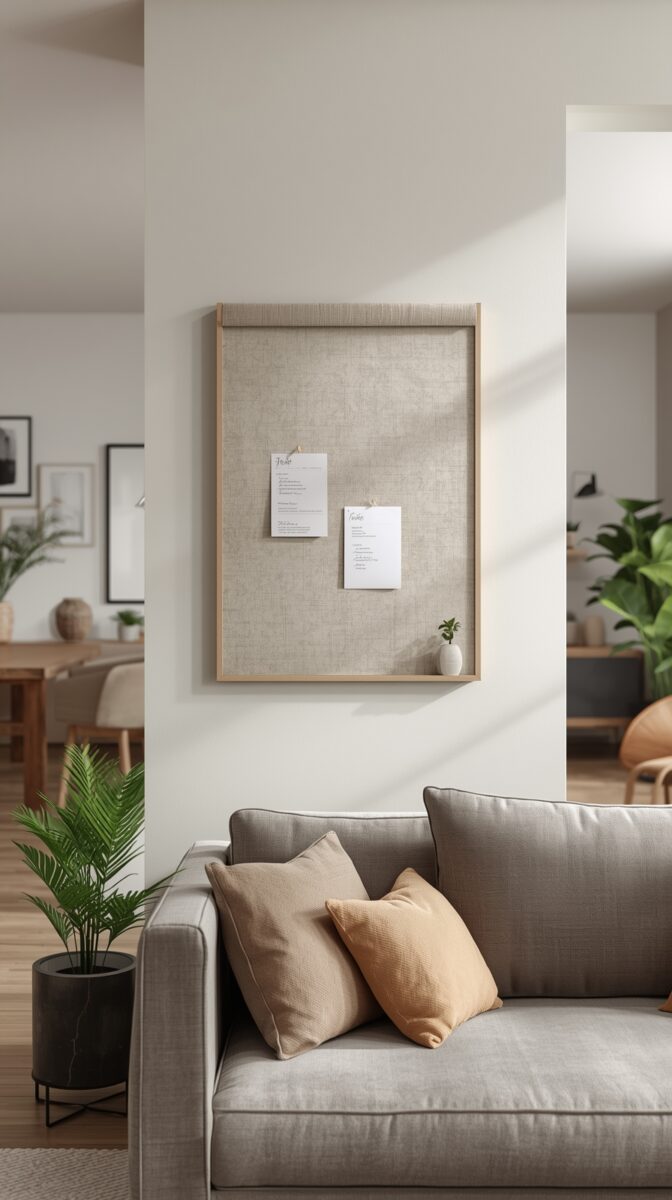
This one is for the soft, cozy aesthetic lovers. Which is me every single day, but especially in the bedroom where I want zero visual sharpness.
Take your cork board and wrap the cork surface with a piece of linen or light cotton fabric before you frame it. Use a staple gun on the back to pull it taut and secure it — it takes maybe fifteen minutes and costs almost nothing if you buy a quarter yard of fabric at the craft store (usually $3 to $5). The linen mutes the texture of the cork just slightly, gives it this warm, European, lived-in quality, and makes the whole board feel like a design piece rather than office supply.
You can still pin things right through the fabric. Works perfectly. I’ve been doing it for two years with no issues.
Linen comes in so many gorgeous natural tones — oatmeal, warm white, flaxen beige, natural undyed linen — and all of them blend into bedroom decor in a way that raw cork just never will. If your bedroom is warm and neutral, this board will look like it’s always been there.
I did a linen-wrapped board for my bedside nook and I pin little things there I want to see before I sleep: a quote that’s been on my mind, a photo I love, a small to-do list for the next morning so it’s out of my head and onto paper. It feels so much more intentional than a notebook or a phone. And because it looks beautiful, I actually use it every day instead of ignoring it. That’s the real test of any organizational tool.
Build a Rotating Seasonal Display
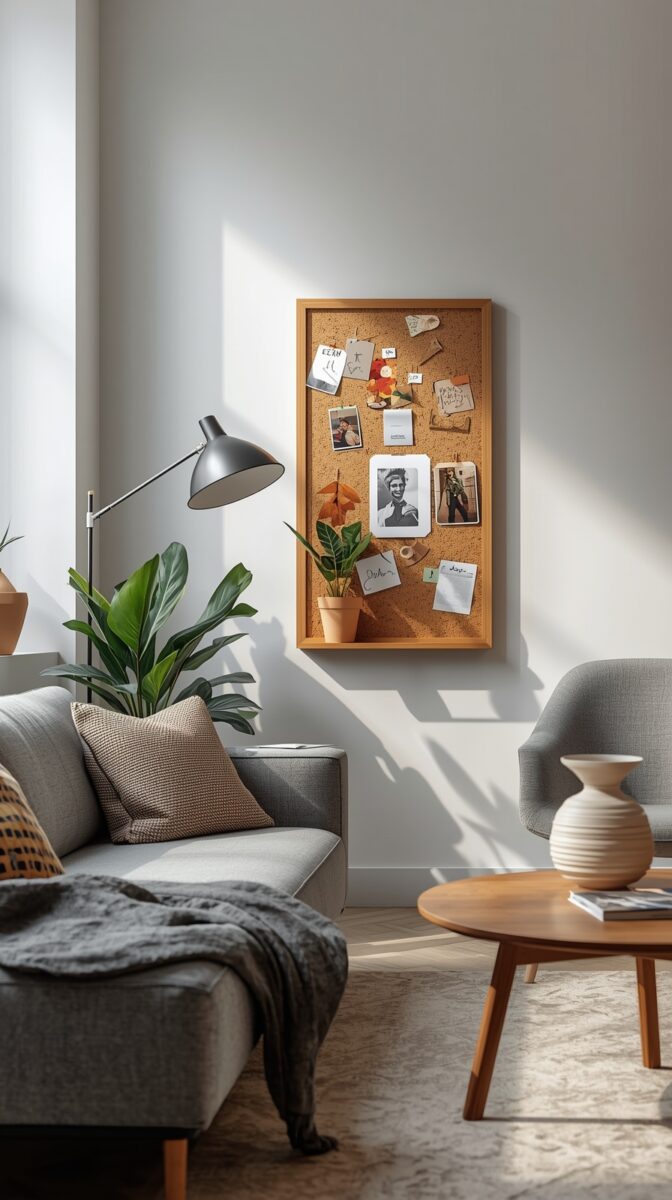
This one is genuinely so fun and I look forward to it every single season. My entryway cork board lives right by the front door and I redecorate it completely every few months. It takes maybe thirty minutes to switch out and it makes the whole entryway feel fresh and alive.
Here’s roughly what mine looks like each season — just to give you something concrete to work from:
- Fall: dried orange slices (I make these myself in the oven at 200°F for about two hours), pressed maple leaves, a little handwritten welcome card, some kraft paper and natural twine.
- Winter: small evergreen sprigs tucked through pins, silver ribbon, a few cozy quotes about staying in and drinking tea, a photo or two from holiday gatherings.
- Spring: pressed wildflowers, pastel ribbon, seed packets pinned with small handwritten labels, a little botanical illustration torn from an old calendar.
- Summer: Polaroid-style photos from recent trips, a menu from a restaurant we loved, pressed fern leaves, a postcard, maybe a ticket stub.
I keep a small lidded box in my closet where I store the off-season elements. Nothing gets lost, nothing gets crumpled, and pulling the box out each season feels like finding little gifts you left for yourself. I’m kind of obsessed with how much joy this thirty-minute ritual brings me.
Guests always notice it. And honestly, it makes me notice the season too — which sounds small but isn’t, really.
Use Cork Tiles for a Custom Installation
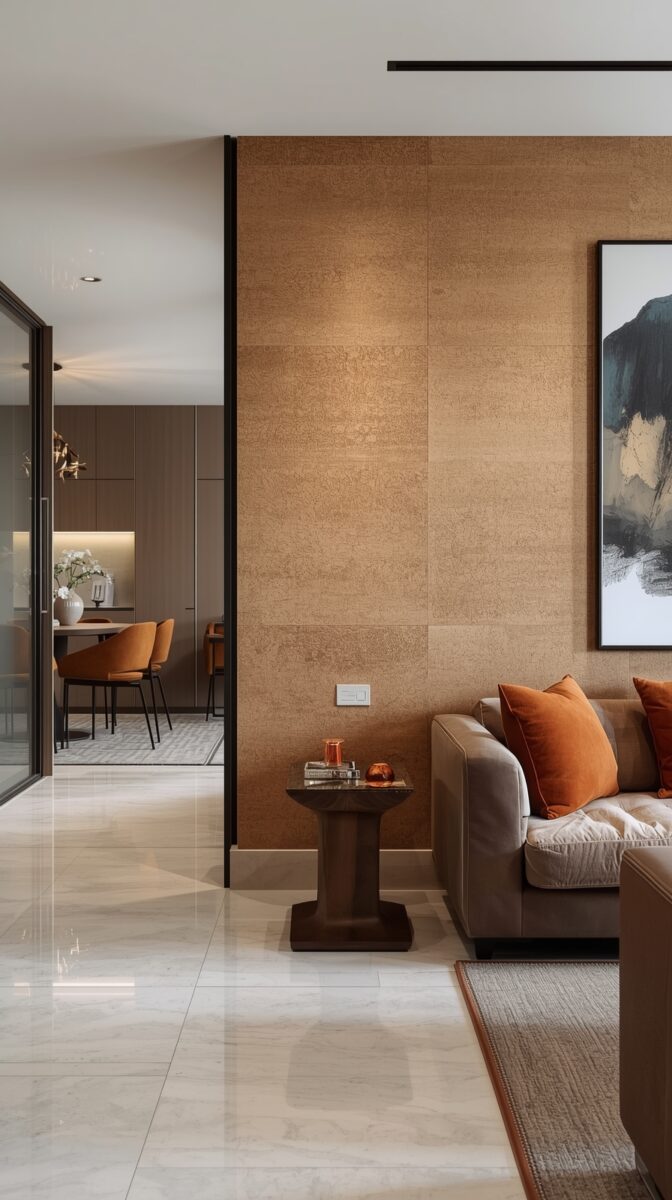
If you’re not married to the idea of a traditional framed cork board, cork tiles are the move and I will die on this hill. You can buy them in packs of 12 or 24 at most hardware or craft stores, and they’re either self-adhesive or easy to mount with simple pins or construction adhesive. Most common size is 12″ x 12″, though you can find 6″ x 6″ tiles for more intricate layouts.
The big advantage is shape. You can do any configuration you want:
- A wide, low rectangle above a desk (my personal favorite for home offices)
- An irregular asymmetric cluster on a gallery wall
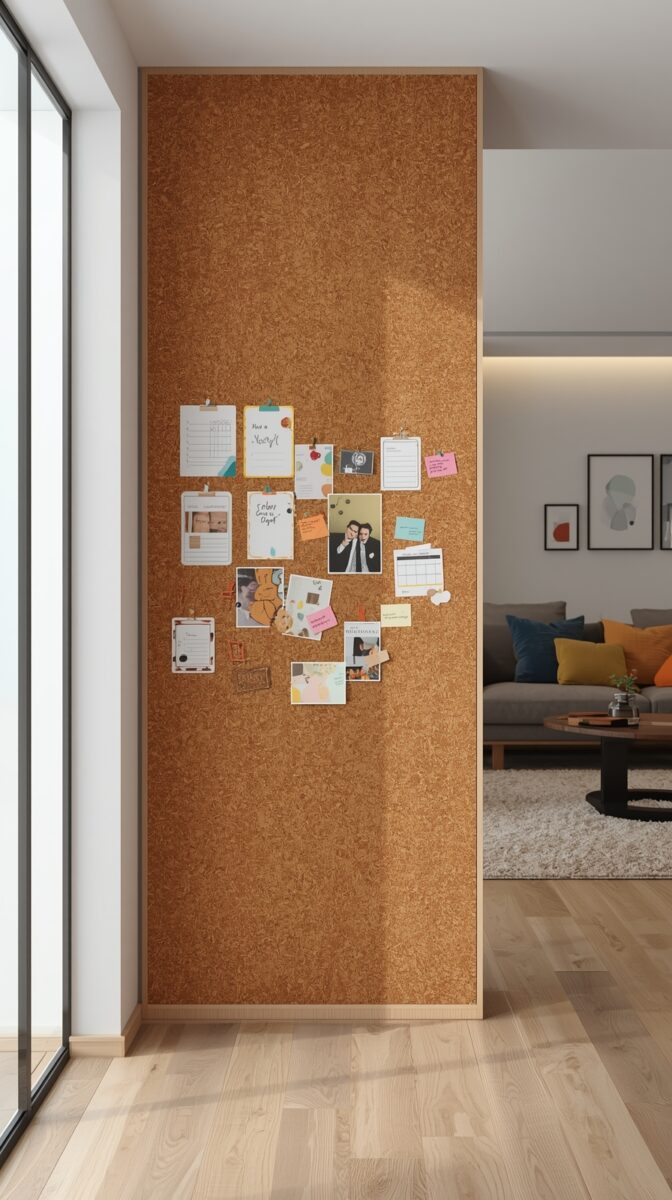
- A narrow floor-to-ceiling column in a tight hallway
- A full accent wall in a home office or craft room
I used cork tiles to cover an entire small wall in my laundry room — roughly 4 feet wide by 5 feet tall — and it became my full household command center. Grocery lists, school schedules, notes, ideas, mail to handle, all of it in one place. It doesn’t look like a cork board. It looks like a design feature, especially because I mixed in two small chalkboard tiles in the upper corner for a little contrast.
Total cost for the laundry room wall: around $35 in tiles and maybe $8 in construction adhesive. The impact is completely disproportionate to that number. Whenever someone sees it for the first time, they ask where I bought it, and I get to say I made it on a Saturday afternoon. Worth it every time.
Add Lighting to Make It a Real Focal Point
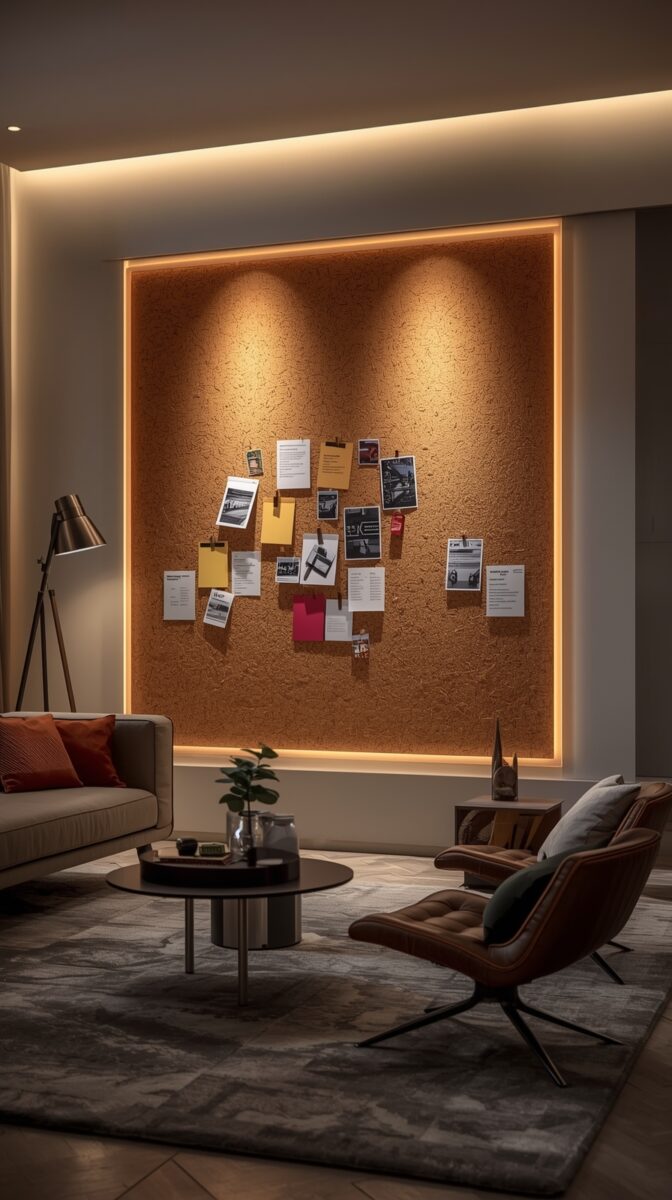
And finally — the thing that takes the whole situation from “cute” to genuinely stunning. Light your cork board.
I have a small clip-on picture light mounted above mine in the office (found it at a thrift store for $6, painted it matte black). The warm amber glow it throws over the whole board makes it look like a gallery installation. I’m not even joking. The light draws the eye immediately when you walk into the room.
A few different approaches depending on the look you want:
- Clip-on picture light: the most polished option. Looks intentional and architectural. Aim for a warm bulb (2700K), not cool white.
- LED strip behind the frame: creates a soft backlight halo effect. Very moody and modern. Peel-and-stick LED strips from the hardware store run about $12 to $18 and take five minutes to install.
- Fairy lights draped around the board: warm and whimsical. Better for bedrooms or personal memory boards than for office or kitchen setups, honestly.
The light signals that what’s on this board matters. It gives the board presence in the room even when it’s not the largest thing on the wall. And in the evening especially, when everything else gets a little dim and quiet, a lit cork board becomes this glowing, warm little world on your wall.
It’s the kind of thing that makes you actually love being in the room. Which is, at the end of every decorating decision I’ve ever made, exactly the point.